Tools
Tools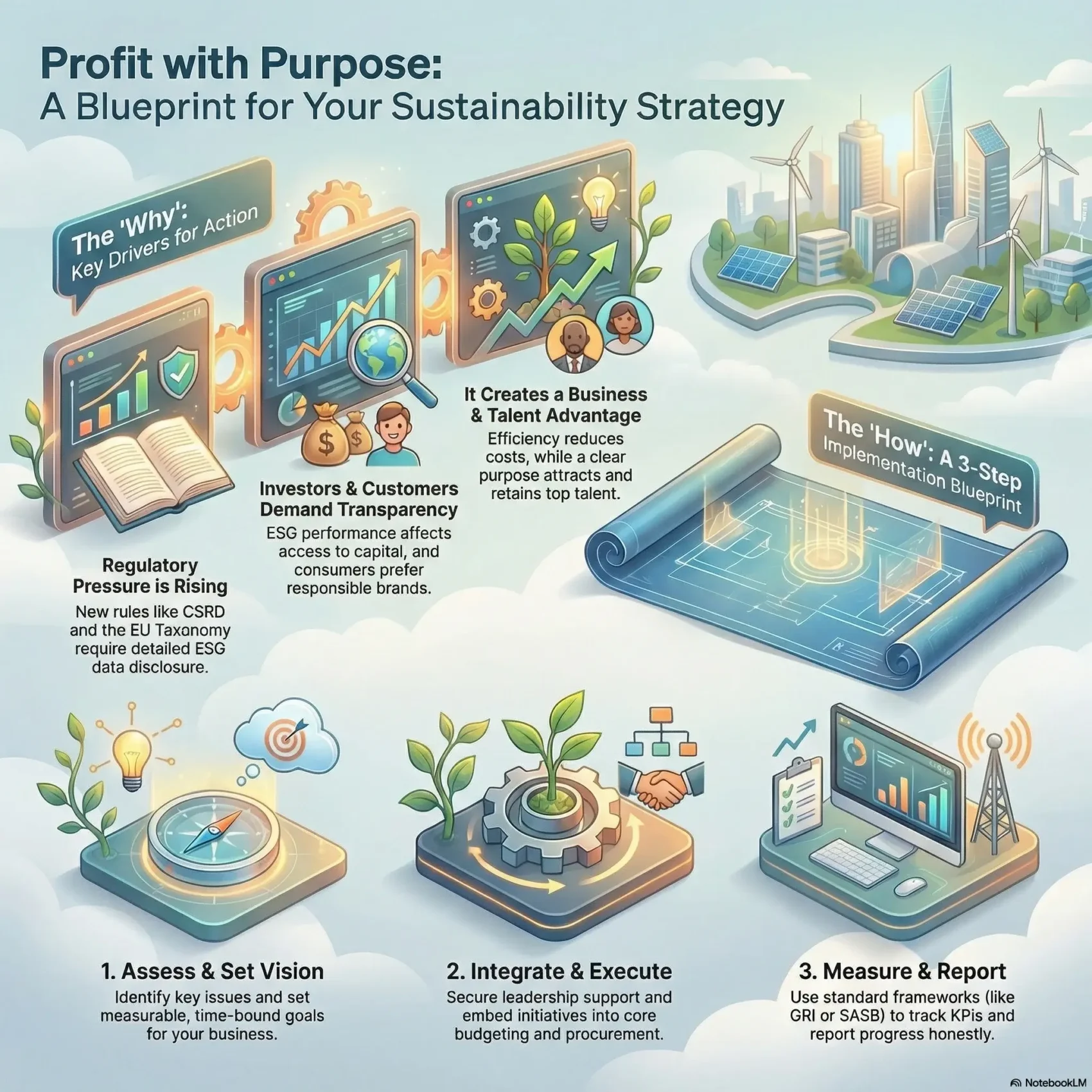
Last Updated on March 23, 2026
You’re not choosing between profit and purpose. A clear sustainability strategy helps your company reduce harm, cut costs, and stay relevant in markets that reward responsibility. This introduction shows what a practical plan looks like and why it matters to your business today.
Think of it as a long-term approach that ties daily actions to social, economic, and environmental goals. Leading companies embed these plans into decisions, policies, and operations so they save energy, cut waste, and strengthen trust with investors and customers.
The link to capital and reputation is real. Investors screen companies for ESG, consumers prefer responsible brands, and rules like CSRD and EU Taxonomy raise reporting expectations. With clear goals and credible reporting, you protect short-term results and build resilience for the future.
Key Takeaways
- A concise plan aligns business actions with social and environmental goals.
- Embedding the approach across operations creates cost savings and trust.
- Investor and consumer expectations make early action an advantage.
- Clear metrics and disclosures help you avoid greenwashing.
- This article walks you from goal-setting to measurement and reporting.
Why aligning profit with purpose matters today
Aligning what you sell with what you stand for now shapes market access and long-term performance.
Regulators and capital markets expect measurable disclosure. Rules like CSRD and ESRS, plus the EU Taxonomy, push companies to record detailed ESG data and prove their claims.

Transparent practices reduce risk and attract investment. When you set clear goals and report progress, you cut compliance costs and gain trust from stakeholders, customers, and investors.
- Lower risk and better access to capital through verifiable performance.
- Stronger market position as buyers reward credible actions and measurable goals.
- Improved talent attraction because employees favor companies with clear values.
Purpose-aligned plans also help you foresee supply chain and environmental issues that threaten operations. That foresight conserves resources and boosts resilience.
“Purpose-driven business is about measurable impact, not slogans.”
Start early to turn requirements into advantage — learn current CSR trends and build a compact plan that links your goals to real performance for employees, society, and the bottom line.
What a sustainability strategy is and what it includes
A clear plan turns broad commitments into concrete actions that run across your business. It defines how your operations, products, and services meet environmental, social, and economic priorities over the long term.
Definition and long-term value
This blueprint ties daily activities to measurable goals. You map material topics, set targets, and link initiatives to value creation. That protects cash flow and builds resilience as rules and expectations change.
Core components
- Goals: time-bound targets tied to material issues and the UN SDGs.
- Policies & practices: operational rules for procurement, energy, and labor.
- Actions: projects like energy efficiency, waste reduction, and ethical work practices.
- Accountability: assigned owners, KPIs, and regular reporting.
- Measurement: frameworks such as GRI, SASB, and GRESB to quantify impact.
Tangible benefits
You’ll see cost savings, stronger brand equity, and better relationships with stakeholders and investors. A well-built approach also helps your company reduce negative impact on the environment while securing long-term economic viability for society and your workforce.
Key drivers shaping your sustainability strategy in the present
Several powerful forces now shape how companies set priorities and report progress. You must weigh regulation, capital markets, customer expectations, costs, and people to make practical choices that deliver measurable gains.
Regulatory momentum and reporting expectations
CSRD and ESRS require detailed ESG data disclosure, and the EU Taxonomy defines which activities qualify as environmentally sustainable. That changes where you invest and how you disclose progress.
Investor pressure and access to capital
Investors fold ESG into valuations and credit decisions. Clear targets and consistent reporting now affect financing and market access, so performance metrics matter to your bottom line.
Market transparency and customer demands
Greater transparency makes greenwashing risky. Credible evidence of progress improves competitive positioning and builds customer trust.
Cost, risk, and resource efficiency
CO2 pricing, raw material volatility, and supply chain due diligence (e.g., LkSG, CSDDD) raise costs. Energy efficiency and circular approaches can deliver real cost reduction and protect margins.
Employer brand and talent
Your company’s public commitments influence hiring. A recognized approach attracts Gen Z and millennial talent and helps retain skilled teams.
Translate these drivers into priorities by focusing on material issues, aligning governance and incentives, and setting measurable targets so your company can respond quickly to policy and market changes.
How to develop a sustainability strategy step by step
Begin by identifying the issues that matter most to your company and to the people it affects. A clear, phased plan helps you turn priorities into measurable action.
Run a double materiality assessment
Map external and internal impacts. Use the assessment to find issues that affect your business and where your company affects people or the environment.
Set a vision, goals, and time-bound targets
Frame a concise vision and pick measurable goals like emissions reduction, energy efficiency, and waste reduction. Assign targets and deadlines so teams know what success looks like.
Define governance and stakeholder engagement
Clarify decision rights and assign owners. Engage employees, customers, investors, and suppliers to validate priorities and build buy-in.
Integrate with your core business
Link initiatives to product, procurement, and budgeting decisions. Build playbooks for suppliers, pilots for energy projects, and regular review cycles to update your plan as conditions change.
Putting your strategy into action across the business
Real change in your company happens when leaders back projects with time, people, and budget. You need clear sponsorship, aligned resources, and short-term wins to make any sustainability strategy live inside operations.
Secure leadership sponsorship and allocate the right resources
Senior backing unblocks decisions, sets priorities, and signals that work is funded. Match budgets and headcount to the initiatives most likely to deliver results and reduce risk.
Build a cross-functional team and workflows
Create an operating system with representatives from operations, finance, procurement, product, and HR.
- Define roles, decision rights, and a regular cadence for reviews.
- Run pilots to test approaches and scale what works.
- Link milestones to capital planning and procurement criteria.
Enable employees with training, tools, and day-to-day practices
Equip employees with short toolkits and clear routines that turn commitments into repeatable practices.
Train, measure, and iterate. Set near-term milestones, capture lessons, and keep teams accountable so your company sees steady progress and better results.
Measuring performance, reporting progress, and staying credible
Measuring what matters turns good intentions into verifiable results you can act on. You need clear KPIs, reliable data controls, and plain-language disclosures so stakeholders trust your work.
Choose KPIs and targets
Pick measurable KPIs for emissions, energy use, waste streams, and social metrics that match your material issues. Set time-bound targets so you can track year-on-year improvement.
Use frameworks and tools
Adopt GRI, SASB, or GRESB and map your data to CSRD/ESRS requirements. Consider CSRD-aligned software to automate collection, standardize disclosures, and speed audits.
Monitor, adjust, and stay honest
Build governance, controls, and audit trails to reduce errors and support assurance. Link metrics to decisions and incentives so performance drives real change.
“Transparent reporting reduces greenwashing and builds lasting credibility.”
- Standardize data across entities for apples-to-apples results.
- Publish methods and boundaries so readers can verify claims.
- Review KPIs regularly and adjust practices as new issues arise.
Embedding a culture of sustainability and employee well-being
A values-driven culture turns daily choices into measurable benefits for people and the planet. Embed your vision so every leader and team member sees how decisions affect employees and the environment.
Make sustainability part of your mission, values, and decisions
Put clear values into job descriptions, procurement rules, and performance reviews. When leaders model those behaviors, they become part of your day-to-day decisions.
Design sustainable work: engagement, safety, and mental health
Prioritize safety, fair pay, and mental health programs that let employees bring their best work. These actions boost engagement, productivity, and retention.
- Train managers in compassionate leadership and peer support.
- Offer flexible work, resource-efficient offices, and clear travel policies.
- Link well-being initiatives to measurable business outcomes like output and customer satisfaction.
Plan for the future with leadership development and succession
Build leadership pipelines and clear succession plans so commitments last beyond a few champions. Align performance management and recognition with contributions to the company vision.
“A culture of care strengthens employer brand and drives long-term success.”
Make these practices part of how your company operates and you’ll protect results, support society, and keep the future bright for your teams and business.
Sustainability strategy examples and practical actions you can start today
Concrete business moves—like swapping products for services—turn abstract goals into measurable results. Use practical examples to spot ideas you can pilot this quarter and scale next year.
Business model shifts: dematerialization, circularity, and product-as-a-service
Dematerialization cuts raw resource use. Netflix moved from DVDs to streaming and saved logistics and material costs.
Product-as-a-service and circular models (think leasing, take-back, repair) open new revenue while lowering environmental impact.
Company snapshots: Netflix, Unilever, Holcim
- Netflix: dematerialization reduced physical resource flows and logistics emissions.
- Unilever: aligns goals with SDGs while cutting plastic and CO2 across products.
- Holcim: develops low-CO2 concrete and circular construction materials.
Operational quick wins and a manufacturing scenario
Start with small wins: energy audits, LED retrofits, and tighter supplier standards deliver fast payback and risk reduction.
For a manufacturer, baseline emissions, set clear targets, then pursue efficiency, onsite renewables, and waste reduction.
- Measure emissions and hotspots.
- Prioritize projects by cost and impact.
- Engage suppliers, redesign products, and track results.
“Pilot small, measure rigorously, and scale what proves profitable and credible.”
Using your sustainability strategy to drive competitive advantage
Turning new rules and customer demands into a growth engine separates winners from laggards. You can move beyond compliance and make measurable gains in market share, margins, and resilience.
From compliance to innovation: turning disruption into opportunity
When transparency rises, early movers invent products and services that meet new expectations. You can redesign offerings for durability, repairability, and verified low-carbon footprints to win customers.
That shift opens green financing, new partnerships, and better unit economics through efficient design and operations.
Linking ESG goals to financial performance and long-term resilience
Align ESG goals with capital allocation and pricing so your initiatives show up in financial KPIs. Tie projects to cost savings, revenue upside, and lower risk to make the case to investors.
- You’ll use scenario planning and fast decision governance to stay adaptable.
- You’ll quantify benefits in cost, revenue, and risk terms to access favorable financing.
- You’ll strengthen ties with stakeholders by proving real results over time.
“Frame success not just by quarters, but by the future competitiveness you protect.”
Conclusion
strong, Small, consistent actions—backed by clear roles and data—produce the compound gains companies need.
To develop sustainability strategy, start with materiality, set measurable goals and targets, assign owners, and embed reviews into your planning cycle.
Make execution the focus. Integrate initiatives with budgets, measure outcomes with credible data, and report transparently so your company builds trust and reduces risk.
Early movers win: better access to finance, stronger customer preference, and improved talent retention. Use a short checklist—priorities, resourcing, timelines, KPIs, and feedback loops—to keep progress real.
You’re ready to act: launch an assessment, refine your roadmap, or scale proven projects. Persistent, integrated decisions turn ambition into lasting business success.