Tools
Tools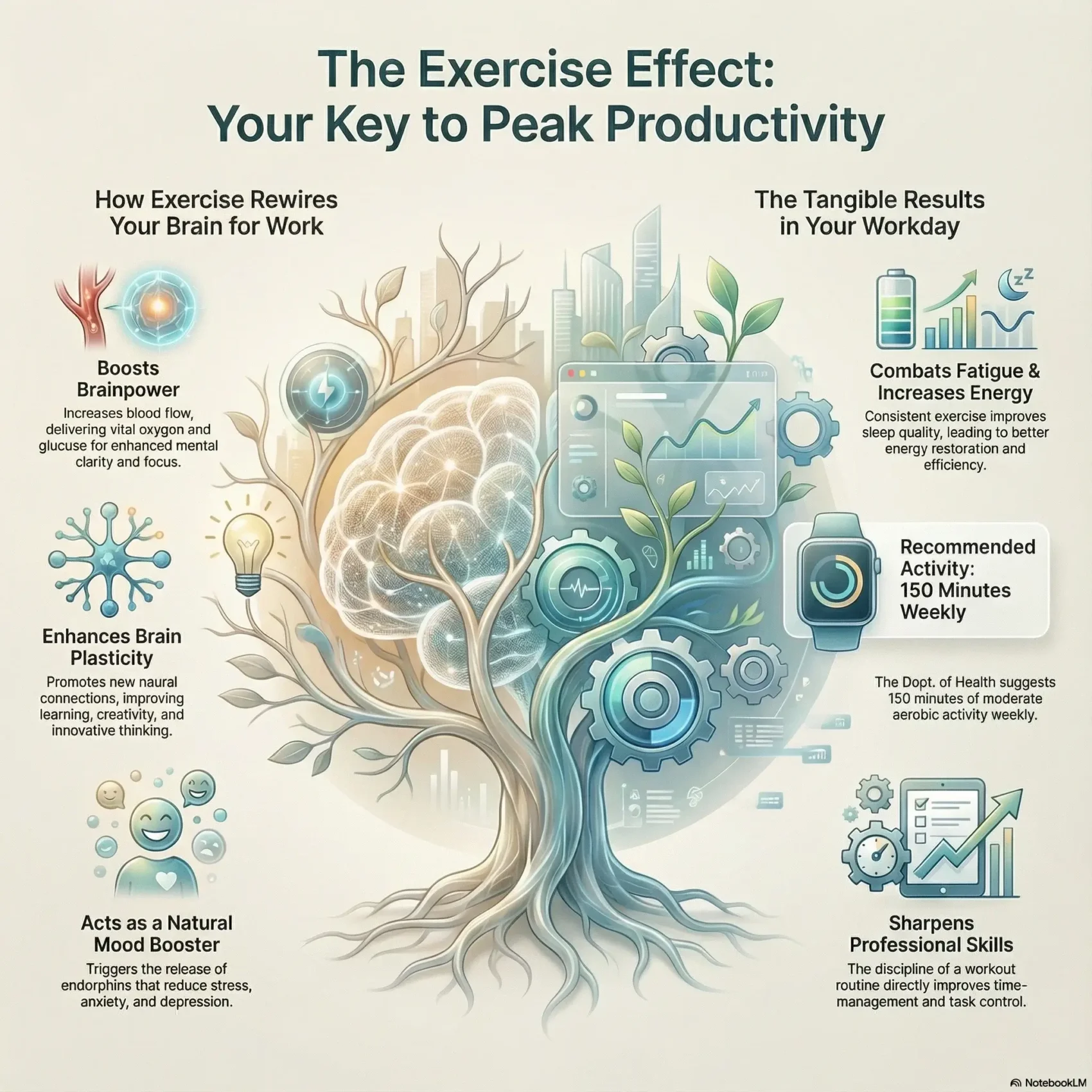
Last Updated on January 3, 2026
Regular physical activity is essential for both your health and work productivity. By adding exercise to your daily routine, you can significantly improve your productivity. Studies show that even simple exercises can increase your energy, sharpen your focus, and enhance your mood. These benefits lead to better task performance and stimulate creative thinking. Adopting exercise as a lifestyle choice is a powerful strategy for professional success.
Key Takeaways
- Regular exercise enhances concentration and stimulates brain plasticity.
- Physical activity effectively reduces stress and improves sleep quality.
- Consistent exercise boosts energy levels and combats fatigue.
- Engaging in physical activity enhances mood and work performance.
- Incorporating exercise improves time-management skills and task control.
- Exercise increases creativity and innovative thinking capabilities.
Introduction to Exercise and Productivity
Exercise is essential for boosting productivity at work. Daily physical activity not only increases energy levels but also sharpens mental clarity, leading to greater efficiency. The advantages of exercise go beyond physical health, impacting cognitive functions vital for overcoming work challenges.
A 2023 study by Harvard Business Review highlights exercise as a key productivity hack. It found that daily physical activity enhances work performance by improving sleep quality and increasing focus on tasks. This concept of ‘resource caravans’ underscores the link between exercise and better work outcomes.
Additionally, a 2017 study by the University of California showed that corporate wellness programs, focusing on exercise, cut down on absenteeism by up to 10%. Employees who adopted healthier lifestyles through diet and exercise saw marked improvements in their daily performance.
Physical activity is more than just about fitness; it’s crucial for mental health. By boosting productivity through exercise, one can reduce stress, improve mood, and enhance creativity. The connection between movement and mental acuity is clear, making exercise a fundamental part of a productive work life.
Understanding the Link Between Physical Activity and Work Performance
Regular physical activity significantly enhances mental health, profoundly impacting your professional life. Studies reveal that prioritizing fitness leads to higher job satisfaction and better productivity. This connection goes beyond just enjoyment, as exercise boosts concentration, making you more effective at work.
Moreover, physical activity stimulates creativity. Active employees show greater resilience to work challenges, thanks to lower stress and improved mood. Exercise enhances blood flow to the brain, improving memory, attention, and decision-making skills.
Many overlook the fact that physical activity is a natural mood booster. It stimulates endorphin production, reducing anxiety and depression. This keeps you focused and energized, enhancing your ability to manage daily tasks. Clearly, an active lifestyle is crucial for maximizing your work potential.
Benefits of Exercise for Enhanced Concentration and Focus
Regular exercise is key to boosting your concentration and focus. It ensures your body maintains optimal glucose and oxygen levels, vital for mental clarity. By combining exercise with focus in your daily life, you’ll see notable improvements in productivity.
Keeping Glucose and Oxygen Levels Optimal
Ever wondered how exercise affects your brain? It boosts blood circulation, ensuring glucose and oxygen reach your brain efficiently. A study on children showed that after-school physical programs enhanced their focus and attention. This highlights how regular exercise significantly impacts cognitive abilities.
By taking routine breaks for physical activity, your body optimizes glucose and oxygen levels. This leads to better focus and concentration on tasks.
The Impact of Exercise on Brain Plasticity
Exercise does more than just improve focus; it also enhances brain plasticity, the brain’s adaptability. Research indicates that moderate exercise, even for 20 minutes, can uplift mental performance. Long-term aerobic activities boost creativity and innovative thinking.
Joining classes or programs that emphasize physical activity can significantly improve cognitive functions. This leads to enhanced work performance. For more insights on adding exercise to your routine, visit this guide on morning routines that boost productivity.
Exercise’s Role in Reducing Workplace Stress
Work-related stress affects millions globally. Job insecurity, high demands, and poor work-life balance are major contributors. Regular physical activity is a key solution, offering significant mental health benefits and stress reduction. Movement provides relief and rejuvenation, impacting both mental and physical health positively.
How Exercise Mimics Stress Relief Mechanisms
Exercise activates the fight-or-flight response, similar to preparing for stressful situations. This prepares your body to handle daily stress better. Regular physical activity boosts mood and energy by releasing endorphins, making it a top productivity hack. Activities like jogging, yoga, or brisk walking help release tension and improve focus.
Improving Sleep Quality for Better Work Performance
Quality sleep is crucial for mental clarity and calmness at work. Regular exercise helps you sleep more deeply, which is key for energy restoration. Better sleep leads to better concentration and efficiency in work tasks. This highlights the link between exercise and mental health, leading to increased productivity. Incorporating short breaks for stretching or walking during the workday can fight stress and rejuvenate your mind and body for a better work life.
Combatting Fatigue Through Regular Exercise
Fatigue can significantly reduce your productivity and efficiency. Regular exercise offers a powerful solution to this issue. By engaging in physical activity, you boost your energy levels through the release of endorphins. The Department of Health and Human Services suggests at least 150 minutes of moderate aerobic activity or 75 minutes of vigorous exercise weekly to maintain energy and focus.
Boosting Endorphins and Energy Levels
Consistent exercise enhances self-confidence and mood. The American Psychological Association notes that regular physical activity helps reduce mild depression and anxiety symptoms, thereby improving energy levels. Interval training, which involves short, intense activity periods, offers similar benefits to longer workouts. This approach makes it easy to fit exercise into your daily schedule.
The Effects of Aerobic Exercise on Sleep
Aerobic exercise improves sleep quality, reducing burnout and fatigue. Activities like walking, dancing, or yoga are not only fun but also promote relaxation. Adding exercise to your routine helps you feel calm and fight off fatigue. Short periods of physical activity make it easier to stay energized throughout the day.
Boosting Mood and Happiness Through Exercise
Regular physical activity offers numerous benefits of exercise, enhancing mood and happiness. Exercise triggers the release of neurotransmitters like endorphins, which boost feelings of well-being. This, in turn, improves your ability to focus and work effectively.
Studies show that regular physical activity reduces symptoms of depression and anxiety. It leads to lower emotional distress levels. This highlights exercise’s role as a key productivity hack for mental health.
To boost happiness through exercise, try mixing up your activities. Here are some mood-boosting options:
- Walking outdoors
- Joining a yoga class
- Engaging in dancing or aerobics
- Participating in team sports
Even moderate exercise, like a daily 30-minute walk, positively affects your mood over time. By adopting these routines, you gain the benefits of exercise and create a happier, more productive work setting.
Improve Productivity with Exercise: Time-Management Skills
Exercise is not just for staying fit; it also sharpens your time-management skills. Regular physical activity teaches you to be organized and efficient. This skill helps you handle daily tasks and deadlines more effectively. By making exercise a part of your routine, you improve your well-being and gain essential skills that enhance productivity.
How Exercise Promotes Discipline
Exercise significantly boosts your time management abilities by promoting discipline. Regular workouts make you prioritize your activities, leading to task completion. Studies indicate that those with strong time-management skills tend to enjoy their work more, boosting motivation. This discipline from physical activity also applies to other life areas, making it easier to take on responsibilities confidently.
Corporate Wellness Programs and Productivity
Many companies value corporate wellness programs that promote physical activity among staff. These programs create a healthier work environment, leading to increased productivity. Employees in these programs report better well-being and lower stress, which improves job satisfaction. A steady exercise routine not only improves time-management skills but also builds teamwork and camaraderie, further enhancing productivity.
Creativity and Innovation: Exercise as a Catalyst
Regular physical activity can significantly boost your creativity and innovation. Studies reveal that those who exercise before tackling creative tasks outperform those who don’t. Exercise not only aids mental health but also sharpens your brainstorming and problem-solving skills. Walking, whether indoors or outdoors, can nearly double the creative ideas you generate compared to sitting still. This highlights how simple actions can be powerful productivity hacks to improve your work.
Engaging in fun exercises like axe throwing stimulates key neural pathways for creative thinking. These activities enhance leisure and boost cognitive flexibility and concentration. Companies prioritizing physical well-being often see improved decision-making and higher employee engagement. For digital marketers, this means creating more engaging content and innovative marketing strategies.
Despite challenges like time constraints and lack of motivation, finding enjoyable activities and scheduling exercise can help. Practical strategies like starting small or using fitness apps can make exercise a part of your daily life. Embracing physical activity enhances your creativity and problem-solving skills, aiding success in various areas. So, if you aim to boost your innovative thinking, remember that movement is key to success!