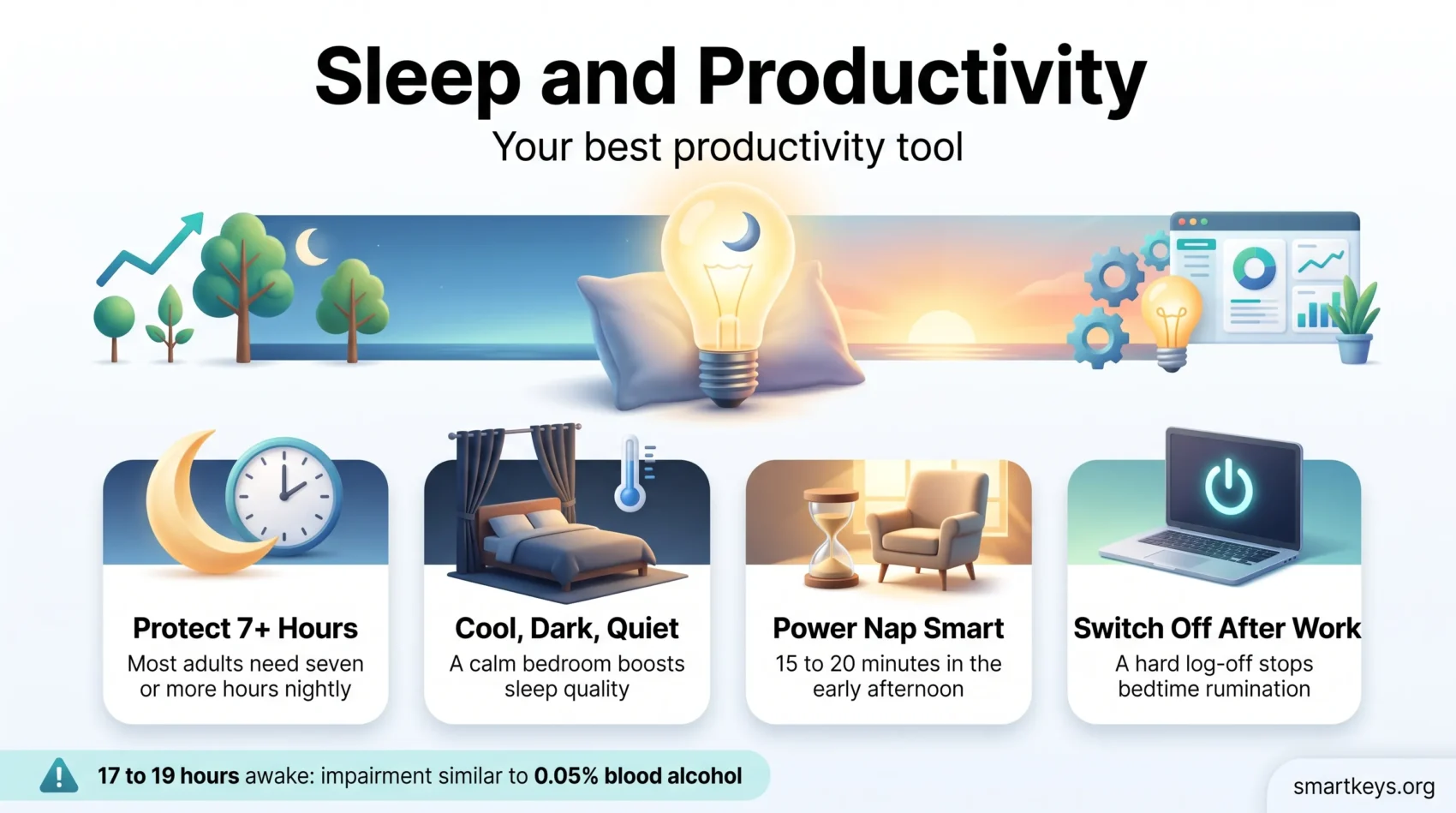
You rely on clear thinking at work. When your nights are short, reactions slow, mistakes rise, and focus slips. Most adults need seven hours or more per night. Yet in 2024, 30.5% of US adults slept less than that on an average day, according to the CDC’s National Center for Health Statistics.
Fatigue is not just personal discomfort. A large survey published in the Journal of Occupational and Environmental Medicine found that about 38% of US workers had felt fatigued in the previous two weeks. The researchers put the cost of fatigue-related lost work time at roughly $136.4 billion a year. The study dates from 2007, so treat the dollar figure as a scale, not a current price tag.
This guide explains why better rest is the most powerful lever you have to improve your work, cut errors, and protect your health. You will get plain-English science on what happens overnight, practical steps to protect your nights, and simple checks to track progress.
Key Takeaways
- Most adults need seven or more hours of sleep per night as a baseline.
- Fatigue reduces attention, slows reaction time, and raises error rates at work.
- Small changes to your evening routine compound into large performance gains.
- Simple tools (a sleep log, a two-minute self-check, a wearable) help you track progress.
- Leaders can lower costs and accidents by building schedules that allow real recovery.
Why Sleep Is the Foundation of Work Performance
Your nightly recovery sets the tone for how well you think, decide, and handle pressure at work. During sleep, the brain clears waste products, files away what you learned, and resets the networks you need for attention. Your heart, immune system, and hormones recover at the same time.
How rest restores your brain and body for the workday
Sleep rebuilds the neural networks that handle attention, working memory (the mental scratchpad you use to hold a few facts at once), and creative insight. That is why a problem that felt stuck at 11 p.m. often looks simple at 8 a.m.
Your body refuels overnight too. Rested people have more physical energy and cope better with a demanding day without burning out.
The link between rest, focus, creativity, and decision-making
Consistent nights strengthen your executive functions: the mental skills you use to plan, prioritize, catch errors, and weigh risks. Good sleep also steadies your mood, which matters in tense meetings and difficult customer calls.
- Skimping on sleep reduces vigilance and causes microsleeps, which are brief lapses of a few seconds where the brain switches off. They ruin long, detail-heavy tasks.
- Memory consolidation during sleep helps you connect ideas, which is where better solutions come from.
- Doing your hardest work when you are naturally most alert, and keeping steady bed and wake times, makes a measurable difference. Our guide to managing energy instead of time shows how to find those windows.
The bottom line: protecting your nights is not optional. It is the foundation of reliable performance and long-term health.
What Sleep Loss Does to Your Work
Cutting sleep to gain hours usually backfires. Your alertness slips, your reaction times slow, and you make more mistakes that need fixing later.
What the research says about alertness, attention, and errors
When you are sleep deprived, your attention drops and your reactions lengthen. That raises the chance of omissions and simple errors. A well-known study by Dawson and Reid, published in Nature in 1997, tested people after 17 to 19 hours without sleep. On some tests they performed as poorly as someone with a blood alcohol level of 0.05%.
Microsleeps become more frequent as well. In safety-critical roles like healthcare, trucking, and emergency response, these lapses can cause serious accidents. The US Occupational Safety and Health Administration (OSHA) cites research showing that injury rates are about 30% higher on night shifts than on day shifts.
How it shows up in an ordinary workday
You notice the effects within hours. Thinking slows, so you make more typos and find conversations harder to follow, especially in the afternoon. Brief lapses derail tasks like spreadsheets, documentation, or driving between sites.
Mood and judgment change fast. You get irritable and react more strongly to stress, which strains teamwork. Your sense of risk weakens, so routine choices become error-prone under pressure.
- Daily red flags: rereading the same line, missing checklist steps, zoning out in meetings.
- Slower reaction time is a real risk in roles with tools, vehicles, or time-sensitive responses.
- Chronic short sleep raises long-term health risks, including weight gain, heart disease, and cognitive decline.
The hidden cycle: trading sleep for work creates more work
The cycle is simple and damaging: you stay up late to finish tasks, you perform worse the next day, you create more rework, and you need more time to fix it. The 2007 workforce study mentioned above found that fatigued workers lost about 4.1 productive hours per week, mostly through reduced performance while at their desks rather than through absence.
“When people try to outwork lost rest, they often dig a deeper productivity hole.”
Break the loop by protecting a consistent sleep window, scheduling deep work during your natural alertness peaks, and setting hard stops for late-night inboxes.
- Track your attention dips for a week and place routine work in the low-energy windows.
- Treat rest like a pre-shift safety step in high-risk roles.
- Use schedule data, not guesswork, to reduce errors and accidents.
Understanding Sleep Quantity vs. Sleep Quality
How many hours you spend asleep matters, but what happens during those hours often matters more.
How much adults need: aim for seven or more hours per night as a baseline. Most adults function best at or above that threshold for health and performance.
Sleep efficiency, awakenings, and how rested you feel
Quantity is simply total time asleep. Quality covers sleep efficiency, the number of times you wake up, and whether you feel refreshed in the morning.
Sleep efficiency is the share of your time in bed that you actually spend asleep. Eight hours in bed with six hours asleep is 75%. High efficiency plus few interruptions usually means sharper attention the next day.
- You can log 7-8 hours yet still feel foggy if sleep apnea (repeated pauses in breathing during sleep) or frequent awakenings fragment your rest.
- Track bedtime, wake time, and overnight awakenings for a week to spot fixable patterns.
- Small environment changes (cool, dark, quiet) and a steady pre-bed routine often boost efficiency more than gadgets.
If you suspect a disorder, talk to a clinician. Combine protected hours with better efficiency to guard your daily performance.
What Fatigue Costs Employers
When fatigue creeps into a team, small attention slips cascade into costly errors. In safety roles they lead to accidents. In office roles they lead to rework, missed details, and slower decisions.
Dollars and data
The 2007 study by Ricci and colleagues estimated that fatigue-related lost work time costs US employers around $136.4 billion a year. A later study by Rosekind and colleagues put fatigue-related productivity losses at almost $2,000 per employee per year. The US National Institute for Occupational Safety and Health (NIOSH) cites that figure in its training material. OSHA also cites research linking 12-hour workdays to a 37% higher injury risk.
Both cost studies are more than a decade old, so the exact dollar amounts have moved. The pattern has not: tired staff cost more and produce less.
- Fewer errors and less rework reduce direct costs.
- Encouraging people to switch off after hours improves next-day focus and output.
- High-risk teams should use checklists, buddy checks, and planned breaks to cut incidents.
- Screenings, education, and access to clinical care protect health and pay for themselves in fewer sick days.
- Track fatigue-related near-misses on safety dashboards to guide investments.
If you manage people, factor fatigue into staffing and shift patterns. Persistent tiredness across a team is also an early warning sign worth taking seriously, as our guide to burnout prevention explains.
Shift Workers: Protecting Performance on Nonstandard Schedules
Nonstandard hours force your body clock to adapt. Your circadian rhythm is the internal 24-hour cycle that tells your body when to be alert and when to sleep. Night work runs against it, but simple habits can cut errors, lower risk, and protect your long-term health.
Planning before, during, and after shifts
Before night duty, bank extra sleep over the previous 24-48 hours. Time your main sleep as close to the end of your shift as possible. Use blackout shades for daytime sleep and keep the room cool.
Short, planned naps
A 15-20 minute nap mid-shift boosts vigilance and reduces sleepiness. Keep it short to avoid deep grogginess. After a nap, allow a 10-15 minute buffer before high-risk tasks; light movement helps you wake up fully.
Managing circadian disruption and recovery
Use bright light at the start of your shift and wear dark glasses on the commute home. Anchor one main sleep period when you rotate. Forward rotation (morning, then afternoon, then night) is easier on the body than the reverse. After several nights in a row, take longer off periods so your body can rebound. If you plan rosters, our guide to intelligent shift scheduling covers the tools.
- Quick wins: time caffeine early in the shift, hydrate, and eat balanced meals.
- For teams: push for planned nap opportunities and smarter schedules to reduce error rates.
- Travel tip: shift your light exposure in the days before crossing time zones.
Create Your Personal Sleep-For-Performance Plan
A clear, personal plan turns vague intentions into real gains at work and in health. Keep it small, testable, and focused on what you can defend on most days.

Baseline your current rest and daytime sleepiness
For one week, log bedtime, wake time, total hours in bed, awakenings, caffeine timing, and how alert you feel each day. This shows your true patterns, which is especially useful if your schedule is irregular.
Set a consistent window that fits life and work
Pick a window you can defend (for example, 11 p.m. to 7 a.m.). Keep it steady to stabilize your circadian rhythm and improve next-day performance. A steady morning routine anchors the wake time; a steady evening routine anchors the bedtime.
Stack habits for the next 14 days
- Choose two or three high-yield habits: a screen cutoff, a 20-30 minute wind-down, a cooler and darker room. Habit stacking (attaching a new habit to one you already have) makes them stick.
- Bank extra sleep before heavy work: add 30-90 minutes per night for 3-5 days to boost alertness during a demanding stretch.
- Use a short mid-afternoon nap (15-20 minutes) in busy weeks to reduce lapses without hurting your night sleep.
Reassess weekly: tweak habits and note fewer snoozes, steadier focus, or faster starts on deep work. A simple habit tracker keeps the plan visible. Protect it with a written next-day schedule and firm evening guardrails.
Sleep Hygiene That Moves the Needle on Work Outcomes
Sleep hygiene means the habits and surroundings that make good sleep more likely. Simple, repeatable evening habits produce measurable gains in daytime focus and fewer errors. Small changes to your room and your timing help your brain recover so you hit peak performance more often.

Environment: light, temperature, noise, tech
Keep the room cool, roughly 60-67°F (16-19°C). Block light with blackout curtains and mask noise with a fan or white noise. These moves improve sleep quality and reduce overnight awakenings.
Routine: wind-down, caffeine cutoff, meals and activity
Dim screens 60-90 minutes before bed. Cut caffeine by early afternoon; it stays in your system for hours. Be careful with alcohol, too. A nightcap can help you nod off, but once your body has broken the alcohol down, sleep in the second half of the night turns lighter and more broken. You also get less REM sleep, the dream stage linked to memory and mood. Keep late dinners light as well, because a heavy or spicy meal close to bedtime can keep you awake with discomfort. Finish vigorous exercise 2-3 hours before bed and try light stretching or a few minutes of slow breathing exercises instead. Our guides on nutrition and exercise and productivity cover timing in more detail.
A warm shower or bath can help as well. Researchers at the University of Texas at Austin reviewed the evidence in 2019. Bathing in water of about 104-109°F (40-42.5°C) one to two hours before bedtime helped people fall asleep around 10 minutes faster on average. The warm water draws heat out to your hands and feet, which speeds up the natural drop in core body temperature that prepares you for sleep.
- Create a tech boundary: charge your phone away from the bed to stop late scrolling.
- Use a short brain dump: spend ten minutes listing tomorrow’s tasks so your mind can let go of work.
- Keep a steady wake time: even after a rough night, get morning light to stabilize your body clock.
Tip: if you cannot fall asleep after about 20 minutes, get up for a quiet activity in dim light and return when you feel sleepy. A full evening routine makes these steps automatic.
Use Naps as a Precision Productivity Tool
A planned short nap is a precise tool for alertness on long days. It delivers fast gains in attention, reaction speed, and memory without wrecking your night sleep, as long as you keep it short and early.
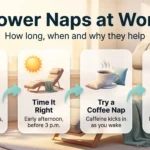
The 15-20 minute power nap: set an alarm, keep it brief, and you will sharpen focus and lower your error risk. The best time is early to mid afternoon, when many people hit a natural dip in alertness. Our guide to afternoon slump cures explains where that dip comes from. Night workers do best with a nap mid-shift. Avoid late naps that push into your night sleep. Our full guide to power naps at work covers the research in detail.
- Try a “coffee nap”: drink a small coffee, nap 15-20 minutes, then wake as the caffeine kicks in.
- Buffer after waking: take 10-15 minutes of light movement and bright light before high-stakes tasks to shake off sleep inertia, the groggy feeling right after waking.
- Night shifts: plan naps at your predictable circadian lows to protect vigilance.
- Severe deprivation: a 30-minute nap can help, but expect more grogginess. Avoid critical tasks immediately afterward.
Normalize short, restorative breaks. They are smart energy management, not weakness.
Protect Your Focus: Detach From Work to Sleep Better
A firm end to your workday reduces late-night rumination and improves morning clarity. Clear boundaries help your brain switch from job mode to home mode, so you wake more alert with fewer intrusive thoughts.
Evening boundaries that work
Set a hard log-off time. Close the loop with a brief ritual: list the top three tasks for tomorrow, save your drafts, then step away. This small act prevents replaying unfinished items at bedtime. Our guide on setting boundaries at work has scripts for the hard conversations.
Practical steps to protect your night
- Silence notifications, use do-not-disturb schedules, and hide work apps from your home screen. See our guide to managing work notifications.
- Share your boundaries with teammates and clients so fewer requests arrive after hours.
- If thoughts race, try a five-minute brain dump before a relaxing activity in dim light. More ideas in our stress management guide.
- Leaders: model these practices. When managers stop sending late messages, employees rest better and perform better the next day.
- If insomnia persists, ask about CBT-I (cognitive behavioral therapy for insomnia), a structured program that is the standard first-line treatment.
“Psychological detachment after work reduces stress spillover and supports next-day focus.”
Measure What Matters: Simple Ways to Track Sleep and Alertness
Objective checks reveal patterns that feelings alone miss. Use a mix of short logs, consumer devices, and quick tests to turn vague impressions into useful information.
Sleep logs, wearables, and what their data can (and cannot) tell you
Polysomnography, the overnight lab test with sensors, is the clinical gold standard. Wearables give at-home estimates. Keep a one- to two-week log of bedtime, wake time, awakenings, and how rested you feel.
Note: consumer devices often overestimate total sleep and miss brief disruptions. Use them for trends, not absolutes. Our piece on wearable technology at work explains what the data is good for.
Quick sleepiness checks you can use during the workday
- Use the Stanford Sleepiness Scale for how you feel right now, and the Epworth Sleepiness Scale for your typical daytime drowsiness. Both are short, free questionnaires.
- Run a short reaction-time test (a psychomotor vigilance test, or PVT) before safety-critical work to catch lapses. Free apps exist for this.
- Track daytime factors such as caffeine timing, exercise, and evening light to see what moves your scores.
Practical step: review your numbers weekly. If you suspect a disorder, bring the log to a clinician. Objective data also helps you negotiate safer shift timing or workload with your manager.
If You Are Sleep Deprived Right Now: Triage for Today and Tonight
Short-term triage reduces risk today and sets up recovery tonight.
Safer choices for driving, meetings, and critical tasks
Delay or delegate safety-critical tasks when you feel impaired. Do not drive drowsy; use a ride, public transit, or share the trip with a colleague.
- Add peer checks for high-stakes work to catch errors before they reach clients or equipment.
- Use checklists and deliberate pacing. Avoid multitasking, which makes attention lapses worse.
- Limit caffeine to an early, strategic dose. A late dose harms tonight’s recovery.
- Take short movement breaks and get daylight; both give a brief lift in alertness.
Tonight’s plan to start reversing the sleep debt
Try a 15-20 minute power nap before a long commute or key meeting, then allow a 10-15 minute buffer before important decisions.
Keep meals lighter and hydrate; heavy food plus fatigue deepens the afternoon crash. Set a firm wind-down: dim lights, low-stimulation activities, and a consistent lights-out time.
If insomnia appears, avoid clock-watching. Get out of bed until you feel sleepy. Aim for consistent timing over the next three nights; steady timing beats perfect timing when you are recovering.
“Small, safe steps today protect you from accidents and speed recovery over the next few nights.”
When to Talk to a Doctor or Sleep Specialist
If nighttime problems keep coming back, seek medical advice rather than toughing it out. A clinical assessment can diagnose common disorders that fragment rest even when your total hours look normal.
Red flags that warrant evaluation
Talk to your doctor if you have trouble falling or staying asleep, loud snoring, or breathing pauses someone else has noticed. Daytime drowsiness that will not lift is another red flag. These signs can mean insomnia, sleep apnea, or other conditions that harm your health and your work.
What to bring and what to expect
- Bring a two-week log and any wearable summaries to speed up the evaluation.
- If you work shifts and cannot sleep by day or stay alert at night, ask about shift work disorder.
- Treatments range from behavioral programs like CBT-I to medical devices, targeted medication, and lifestyle changes.
Safety note: if drowsy driving or on-the-job errors are a risk, ask for interim strategies while tests proceed. Most conditions are highly manageable once identified.
Leaders and HR: Designing Workplaces That Support Quality Sleep
Leaders cut errors and costs when they build schedules that fit human body clocks. Roster rules that protect recovery windows reduce fatigue-related risk. Small changes to schedules and policy create measurable gains in health and performance.
Scheduling principles: forward rotation, shift intervals, and recovery
Design forward-rotating rosters so moves from night to day are gradual. Align shift intervals with circadian timing to help workers rebound faster.
Set minimum rest periods between shifts and avoid quick turnarounds. The EU Working Time Directive requires at least 11 consecutive hours of rest in every 24-hour period, which is a sensible benchmark wherever you operate.
Policies that work: nap opportunities, after-hours boundaries, fatigue risk management
Create quiet, dark rooms for short on-site naps in 24/7 operations. Planned naps during night duty improve reaction times and lower sleepiness.
- Protect after-hours limits: stop routine messages in the evening so people can switch off and return sharper.
- Protect focus in the day: a focus time policy with no-meeting blocks lets people do hard work while they are alert, instead of late at night.
- Train managers: spot fatigue risk, reassign tasks when needed, and use non-punitive reporting for near-misses.
- Build a fatigue risk management system: screening, reporting, and response protocols that reduce costs and improve safety.
Offer practical sleep education, for example a short session on planning sleep around a rotating roster or winding down after a late shift. Add access to sleep apnea screening, and brighter lighting with scheduled breaks on night shifts. Track incidents, absenteeism, and near-misses to measure the results.
The business case for rested employees
Well-rested teams finish tasks faster, make fewer errors, and deliver better client outcomes. Protected recovery, nap options, and realistic workloads lower near-misses for shift workers. Sleep-supportive benefits such as education, screening, and treatment improve health and reduce downstream costs, and they fit naturally into a broader employee wellness program.
Practical approach: pilot one change, measure errors, absenteeism, and claims, then scale what works. Start small with no-meeting morning blocks, predictable rosters, and manager training. When leaders model rest-friendly choices, teams follow.
“Engage employees in schedule design; their input improves adherence and real-world outcomes.”
Conclusion
Protect a steady sleep window. That one choice gives you clearer thinking, fewer mistakes, and better decisions at work. Treat it as your highest-leverage habit.
Use small changes: align key tasks with your peak alertness using time blocking, add short naps when needed, and track trends with quick logs. If you feel impaired today, choose safety, triage your tasks, and plan a reset tonight.
Leaders: design rosters and norms that make real recovery possible. One habit you start tonight and one policy you push this month will pay back in safer work, stronger performance, and better health.
Found this useful?
Make SmartKeys a preferred source on Google, and our articles will surface more often in your Top Stories, AI Overviews, and AI Mode.
Add as Preferred Source