Murf AI is a cloud-based text-to-speech platform: you paste in a written script, pick a synthetic voice, and the tool renders a finished audio file. No microphone, no studio, no voice actor.
It advertises 200+ voices across 35+ languages, plus dubbing into 20+ languages and video synchronization. It plugs into Canva and Google Slides and offers a separate developer API.
This review covers where the tool earns its keep, namely fast voiceovers for explainers, training, and presentations, and where a human narrator still wins.
You will also see the limits worth knowing before you buy: quality that varies by language, voice cloning locked behind Enterprise, and time buckets that expire instead of rolling over.
Key Takeaways
- Strong fit for explainers and e-learning, where speed and consistency matter more than acting.
- Large voice library and wide language support, but test your target accents before you commit.
- Simple editor and Canva/Slides integrations help small teams ship quickly.
- Voice cloning and unlimited generation are Enterprise-only, which is a real gate for small teams.
- Annual billing is roughly a third cheaper per month, and unused minutes do not roll over.
Quick Take: Is Murf AI worth it for you right now?
If you need fast, consistent narration for explainers and training, Murf is a sensible pick. For short segments of neutral, informational speech, most listeners will not flag the audio as synthetic. Quick demos and internal content come together in minutes rather than days.
Try Murf AI for free
For longer scripts, plan for extra edit time. Pacing tends to drift over many paragraphs, and the occasional word lands flat. The output is good for informational content, not a replacement for an emotional narrator on storytelling projects.
- Pricing: entry tiers look cheap, but paying monthly instead of annually costs roughly 50% more per month. Unused generation time does not carry over.
- Capacity: the Creator plan covers about two hours of finished audio per month. If your output spikes, model that number before you sign up.
- Gates: voice cloning sits on Enterprise only, and the API is billed separately from your Studio subscription.
Bottom line: good enough for most informational content and much faster production cycles. If your project needs deep emotion or narrative nuance, budget for human reads.
What Murf AI is and who it is built for
Murf turns written scripts into polished narration in minutes. It was founded by Sneha Roy, Ankur Edkie, and Divyanshu Pandey, and it targets creators, businesses, and educators who need studio-like output without a studio.

The core product in plain terms
The platform is built around Murf Studio, a browser editor where text becomes speech. Core features include SSML support, a pronunciation library, multi-track editing, and video sync so your audio lines up with a timeline.
SSML, short for Speech Synthesis Markup Language, is a set of tags you wrap around words to control pauses, emphasis, and how names are pronounced. You do not need to code to use it, and the editor exposes most of it through buttons.
The workflow is deliberately plain: drop in text, adjust pauses and emphasis, preview, render. That simple interface is the main reason non-technical users get usable audio on their first afternoon.
Who gets the most value
Three groups tend to see the fastest payback. Course creators who publish the same lesson in several languages. Marketing teams that need consistent narration across dozens of short videos. Internal comms and training teams who update the same modules every quarter and cannot re-book a voice actor each time.
If you produce one flagship video a year, a freelancer will serve you better. The value here comes from repetition.
Voice quality and editor experience
The first thing you notice is clear pacing and natural phrasing on short to mid-length content. Pauses land where a human would place them, and sentence-level intonation is convincing most of the time. That is why quick explainers and training modules sound polished with little effort.
Natural intonation and emotional limits
Calm, cheerful, and serious tones come across well. What the models do not do is act. Sarcasm, grief, building tension, and a character shifting mood mid-paragraph all flatten out. On long reads you will also hear the occasional odd stress on a word that a human would never emphasize.
A practical example: a two-minute product explainer sounds professional straight out of the editor. A five-minute brand story with an emotional turn in the middle needs either heavy hand-editing or a human read.
Controls that actually help
The editor gives sentence-level control over pitch, speed, pauses, and emphasis. SSML and the pronunciation library let you fix brand names and technical terms once instead of re-recording.
- Audition several voices on the same paragraph before you commit to one for a whole series.
- Small moves beat big ones. A slight pitch or speed change adds more realism than heavy processing.
- Build a pronunciation list early so your product names sound identical across every campaign.
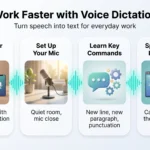
Generate a rough read first, then polish the handful of lines that sound off. That order saves more time than perfecting each sentence as you go, and it mirrors the way voice dictation workflows speed up approvals by getting a draft on the page fast.
Explore the Voice Studio
Voices library and languages: breadth versus consistency
A catalog of 200+ voices across 35+ languages makes quick localization realistic. The catch is that quality is not evenly distributed. Plan a test round before you localize a whole course.
Where quality shines and where it falls short
English (US, UK, Australian), European Spanish, French, and German are the most consistent. These handle client-facing narration with minimal cleanup.
Hindi, Mandarin, Arabic, and several regional English variants are more uneven. Accent accuracy and tonal nuance often need extra proofreading and manual pronunciation fixes. If one of these is your primary market, run a full script through the editor before you buy an annual plan.
Accents and regional gaps
- Shortlist two or three tested voices per language and reuse them, so your back catalog stays coherent.
- Preflight dialect-sensitive lines and loanwords. Brand names borrowed from English are the usual failure point.
- For multilingual rollouts, pair the voice test with your translation tooling so you catch wording and pronunciation problems in the same pass.
- Keep a reference recording of each approved voice. It makes it obvious when a model update shifts the sound.
Voice cloning reality check
Creating a cloned voice takes more than a few clicks. It needs clean recordings, signed consent, and a sales conversation.
Voice cloning sits behind Enterprise plans and separate legal agreements. Enterprise is quoted per organization rather than published as a list price, so there is no way to try cloning without talking to sales first. For a solo creator or a small team, that is usually the deciding limitation.
What cloning actually requires
Expect to supply several minutes of clean reference audio recorded in consistent conditions. Studio-grade source material improves fidelity and cuts the number of retraining rounds. A clone handles straightforward narration convincingly, while strong emotion and unusual phrasing still expose the seams.
Consent, rights, and internal controls
Consent must be explicit and documented. Get written permission that covers commercial use, future updates, and the right to switch the voice off. Treat cloned audio as sensitive data and restrict who can export or edit it.
If you operate in the EU, factor in the transparency duties for synthetic media described in the EU AI Act before a cloned voice goes public.
“Plan for iteration. Early clones usually need more samples before pronunciation and tone settle down.”
- Budget Enterprise fees plus the internal time for legal review.
- Secure signed consent and define commercial rights in writing.
- Compare cloning against a well-chosen stock voice. For most teams, the stock voice is good enough and available today.

Pricing, plans, and hidden costs
The list price is only part of the bill once you add seats, storage, and API usage. The free plan gives 10 minutes of total generation with no downloads and no commercial rights, so treat it as a demo rather than a starter tier.
Creator runs $19 per month on annual billing or $29 billed monthly, and covers about two hours of voice generation per month. Business sits at $66 per month annual or $99 monthly, with roughly eight hours per month and team features. Enterprise is custom-quoted.
Paying monthly instead of annually costs roughly 50% more per month, and unused generation time does not roll over. Annual billing only pays off if your output is steady; if it is seasonal, you will forfeit minutes in quiet months.
What sits behind the Enterprise gate
Enterprise is the only tier that unlocks voice cloning, advanced dubbing, and unlimited generation. Because it is quoted per organization, you cannot compare it against rivals from a public price page. Ask for the total figure including setup, seats, and any cloning work before you compare.
The API is billed separately
The developer API is not included in a Studio subscription. It is pay-as-you-go at $0.03 per 1,000 characters with a $2 minimum purchase, and a free trial grants 100,000 characters. Murf lists two model families: Gen2 for prerecorded content and Falcon 2 for low-latency, real-time use.
To put that in context, 1,000 characters is roughly a short paragraph, or about one minute of speech. A 50-episode course with 3,000 characters per episode costs a few dollars in API charges, so for most content teams the API is cheap; the cost only becomes material in high-volume, always-on applications.
“Model your minutes first. The plan that looks cheapest per month is rarely the cheapest per finished hour of audio.”
Map your content cadence before choosing a tier, and compare the total against freelancers and rival platforms. If you are budgeting a wider stack, the same discipline applies to every subscription, which is why marketing teams increasingly audit tool spend line by line.
Integrations and workflow fit
How a tool hooks into your stack usually decides whether it saves time or adds a step. Murf’s integrations are shallow but genuinely useful for presentation and short-video work.
Canva and Google Slides
The Canva integration works smoothly for simple projects and short timelines. You drop narration into slides or a template and export a usable clip in minutes. On complex edits, timing can drift and you end up finishing in a real editor anyway.
The Google Slides add-on is easy to install and fine for basic narration inserts. Timing against slide transitions is limited, so expect manual refinement after export if your deck has animations. Teams already standardized on Google Workspace will find this the least friction path.
API access and implementation friction
The API is self-serve and documented, which is a change from the days when everything ran through sales. The friction now is engineering time rather than access: someone has to wire up requests, handle retries, and store the returned audio. Budget developer hours, not just usage fees.
- Quick win: Canva speeds up short videos and presentation drafts more than any other integration here.
- Limit: Google Slides gives you narration, but slide timing often needs a manual pass.
- Workflow: script in a doc, generate in Murf, polish in an audio editor, assemble in your video editor.
- Adjacent tools: if voice is one piece of a larger automated pipeline, see how teams structure AI agent workflows before wiring everything together.
Agree on file naming and export settings early so regenerated lines drop into an existing timeline without a rebuild.
Use cases that work well today
Murf is at its best on steady, repeatable narration for educational and marketing content. It performs where consistent tone matters more than performance, and it keeps one brand voice across formats.
Explainers, e-learning, and internal training
YouTube explainers come together quickly: consistent narration, clean pronunciation, export, assemble. For courses, pick one voice, load a pronunciation library, and scale across modules and languages without re-booking talent. That matters most for content you revise often, which is the usual pattern in remote corporate training and in microlearning programs where lessons are short and updated constantly.
Course platforms are the natural downstream step. If you publish on a hosted platform such as LearnWorlds, generated narration slots straight into the lesson builder.
Create professional voiceovers
Podcast segments and marketing demos
Standard podcast elements are a good fit: intros, outros, sponsor reads, and legal disclaimers, where consistency beats personality. Teams running internal podcasts use this to keep a weekly cadence without booking studio time, and tools like Jellypod take the same idea further into full episode production.
- Repurpose one script into shorts, reels, and slides while the voice stays identical across all of them.
- Create regional narration variants and test which accent performs better with each audience.
- Regenerate a line when a price or product name changes, instead of rebooking a recording session.
- Turn written notes into listenable summaries, which pairs well with audio note workflows for teams that review on the move.
Where Murf struggles
If your script depends on small vocal cues or shifting personas, you will hear the gaps. The system handles steady narration well and struggles with layered emotion.
Storytelling, strong emotion, and long-form consistency
Dramatic arcs and distinct characters underperform against experienced narrators. Scenes that rely on a subtle emotional turn tend to flatten.
Very long scripts can drift in pacing. The common workaround is to generate in sections and stitch them together, which keeps tone steady across chapters.
- Break scripts into sections of a few minutes each to avoid pacing drift.
- Content filters can block profanity and mature themes, so scripted dialogue may need sanitizing.
- High-stakes brand spots still benefit from human reads, because persuasion lives in small vocal cues.
- Extra pauses, emphasis tweaks, and SSML help, but they narrow the gap rather than close it.
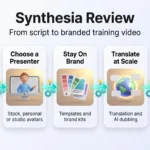
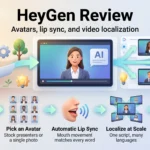
Practical rule: human reads for flagship brand pieces, Murf for everything instructional and internal. If your video also needs a presenter on screen, an AI avatar tool like HeyGen or Synthesia covers that side, and Creatify or Syllaby handle short-form ad and social video.
Video synchronization and exports
Generated files drop into a timeline quickly, but how cleanly they lock to picture depends on the project. For single-track explainers, the built-in sync usually holds.
Simple timelines versus complex edits
For short sequences and slide-based videos, audio lines up with captions and cuts without fuss. That makes Murf well suited to demos and internal decks.
Multi-camera cuts, dense b-roll, and dialogue replacement need manual alignment. Editors typically export segments and nudge them in an editor to hit precise visual beats.
Formats and editor compatibility
Exports are MP3 and WAV. Those play everywhere, but detailed bitrate and mastering controls are not exposed, so final loudness work happens in your own audio editor.
- Tip: generate short chunks for sequences with tight on-screen timing, then assemble.
- Choose WAV when the audio goes on for further processing, and MP3 when it ships as is.
- Keep a template project and strict file names so a regenerated line replaces the old one in seconds.
“Exports are clean for simple sequences. Intricate cuts still need manual fine-tuning.”
How Murf compares to ElevenLabs and Speechify
Each of the big voice platforms optimizes for something different. Pick based on what your work actually demands.
Voice quality, emotion, and usability
ElevenLabs generally leads on emotional range and expressive delivery, especially in longer reads. It is the better choice for audiobooks and character work.
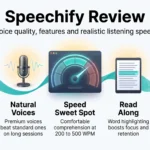
Murf wins on simplicity. The editor is cleaner, the team features are more obvious, and a non-technical marketer can ship a finished file on day one. Speechify sits in a different lane again, focused on listening to existing documents rather than producing narration for an audience.
One difference matters more than any demo clip: Murf gates voice cloning behind Enterprise, while ElevenLabs includes instant cloning on its entry paid plan for a few dollars a month. If cloning is your reason for buying, that gap decides it.
Pricing models
Murf sells time buckets, which suits predictable monthly output. Usage-based rivals bill per character or per minute, which suits spiky, unpredictable workloads.
Work out your rough monthly minutes first. Steady volume favors a time bucket, while bursty generation favors pay-as-you-go, and picking the wrong shape costs more than picking the wrong brand.
Ecosystem and integrations
Canva and Slides hooks save real time on presentation and video work. There is no deep integration with professional editing suites, so editors still export and import by hand. Weigh that against how much of your production actually happens inside an editor.
“Choose the vendor that matches your production rhythm, not the one with the best demo clip.”
Performance and reliability
Render speed and uptime shape your production calendar more than raw voice quality does.
Rendering time scales with script length. Short paragraphs return almost immediately, while a long script takes noticeably longer and is more prone to timing out. Murf does not publish a public uptime figure, so if delivery deadlines are contractual, ask for an SLA in writing rather than assuming one.
- Segment long reads. It cuts timeout risk and makes re-rendering a single section cheap.
- Keep your source text outside the tool so a failed job is a copy and paste away from a retry.
- Schedule large batches outside your own peak hours, and leave buffer before a deadline.
- Track how the models handle your technical vocabulary, so surprises surface in testing and not in a final cut.
Customer support and documentation
Support quality varies by plan, and that difference is worth pricing in. Lower tiers rely on chat, email, and the knowledge base. Enterprise customers get named contacts and faster routing.
Recurring complaints in public reviews cluster around billing for unused time, quality inconsistency between voices, and occasional sync problems with the Canva and Slides integrations. Most are avoidable with a short internal checklist.
- Self-serve first: keep a troubleshooting note covering billing, sync timing, and exports.
- Document the issue: log the exact script, voice, and settings before you open a ticket. It halves the back and forth.
- Train the team: point people at the knowledge base before they escalate, and capture recurring fixes in your own docs. The same habit that makes AI meeting notes useful applies here: write the fix down once.
- Deadlines: if late delivery costs you money, factor Enterprise support into the total price.
Security, privacy, and compliance
Before you upload voice recordings, know where that data lives and who can reach it. Murf publishes a security page listing SOC 2 Type II, ISO 27001, and ISO 42001, the AI management systems standard, alongside GDPR and CCPA compliance and participation in the EU-U.S. Data Privacy Framework. ISO 42001 is still uncommon among voice vendors and is a useful signal for regulated buyers.
Where data sits and how long it stays
Murf states that customer data, including backups, is stored in AWS data centers in Ohio (US-East-2) and is not replicated outside that region. That matters if your policy requires EU-only storage, because it means transfers to the US are part of the deal.
On retention, Murf says data is deleted within 90 days of account termination unless you request deletion sooner, and that data is encrypted at rest and in transit. Get your specific retention requirements confirmed in the contract rather than relying on a public page.
Consent in practice
The platform positions cloning as consent-first, but enforcement still depends on your own contracts and controls. Put the practical safeguards in place yourself.
- Define policies for collecting, storing, and deleting cloned audio.
- Check the gaps: the published set covers SOC 2, ISO 27001, ISO 42001, GDPR, and CCPA. If you need HIPAA or FedRAMP, confirm status directly.
- Harden consent so no clone is created without written authorization on file.
- Restrict export rights for cloned voices to a small, named group.
“Treat a cloned voice as sensitive data. Document consent, control access, and review it on a schedule.”
ROI, buyer fit, and total cost
For teams with repeatable narration needs, the math usually favors generated audio. A voice actor charges per session and per revision; a subscription does not care how many times you regenerate a line. The savings come from revisions and volume rather than from any single project.
View plans & pricing
Who should buy now and who should wait
Buy now if you publish instructional or multilingual content on a steady schedule and can consume an annual allocation predictably.
Wait if your production is sporadic, you need genuine emotional performance, or voice cloning is the whole reason you are shopping. In that last case, a rival with self-serve cloning will get you there faster and cheaper.
Costs beyond the subscription
Count the subscription, any Enterprise add-ons, API usage if you automate, and staff time for quality checks and versioning. The staff time is the line most teams forget, and on multilingual content it is the largest one.
- Budget a short training session so the team actually uses SSML and the pronunciation library.
- Compare the annual figure against freelance rates for your real volume, not a hypothetical one.
- Test your critical languages before scaling, so a clarity problem does not surface after 40 modules.
- Set governance early: file naming, access rights, and a review cadence.
Getting started: best practices and pitfalls
Run short samples of your own real text through several voices before you decide anything. Marketing copy on the vendor site tells you nothing about how a model handles your product names.
Testing, SSML, and pronunciation libraries
Compare three to five voices on the same paragraph and pick the clearest fit for your audience, not the most impressive one in isolation.
Use SSML for pauses, emphasis, and breaths, then save those settings as templates so the whole team produces the same cadence.
Build a pronunciation dictionary for product names, acronyms, and regional terms. It is the single highest-return thing you can do in the first week, because it removes an entire category of rework.
Planning minutes, access, and integrations
Batch jobs and segment long scripts. Segmenting stabilizes timing and makes later edits far cheaper.
Test your integrations before a deadline rather than during one. Confirm export formats and timing behavior in a dry run, especially if slides are involved.
- Record typical minutes per project so your plan matches real consumption after month three.
- Align seats and permissions with roles, so reviewers do not consume generation time by accident.
- Keep a short QA checklist covering clarity, correct terminology, and timing.
“Test with real text, automate pronunciation, and map your minutes. That keeps the pipeline predictable.”
Conclusion
Murf AI does one thing well: it turns written scripts into clean, consistent narration fast. For training, explainers, and much marketing content, that is exactly the job.
Plan the pricing carefully. Time buckets expire, monthly billing carries a real premium, and cloning plus unlimited generation sit behind an Enterprise conversation. Test a few voices and the SSML and dictionary features during the free tier before you commit to a year.
The practical takeaway: this is a tool for creators and teams who need repeatable output and quick iteration. For emotive range or flagship spots, budget human reads and a proper audio polish. If you want a broader view of where synthetic speech is heading in daily work, our overview of voice AI assistants covers the wider category. Found this useful? Make SmartKeys a preferred source on Google, and our articles will surface more often in your Top Stories, AI Overviews, and AI Mode.
Get started with Murf AI
FAQ
What is Murf AI and who is it built for?
How natural do the voices actually sound?
How many voices and languages does Murf offer?
Can you clone a real voice with Murf, and what does it require?
How much does Murf AI cost, and where do the hidden costs sit?
Does Murf have an API, and how is it priced?
How well does Murf sync with video, and which formats can you export?
Which integrations does Murf offer?
How does Murf compare with ElevenLabs and Speechify?
How does Murf handle voice data, privacy, and compliance?