Tools
Tools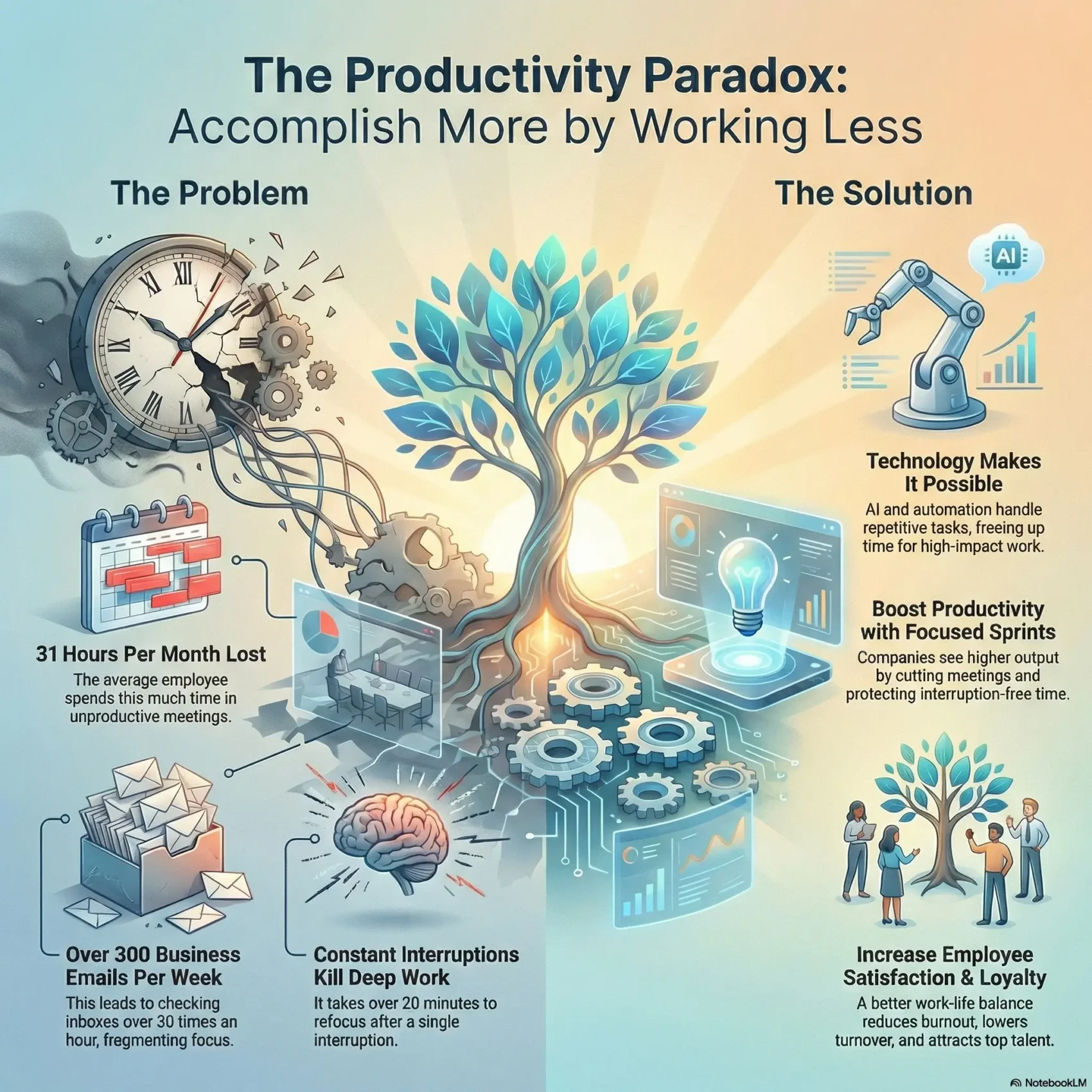
Last Updated on March 2, 2026
You might think trimming hours sounds radical, but the idea is gaining ground in the United States and beyond.
Long shifts became a badge of honor in many startups, yet they drive stress and burnout that the World Health Organization calls an occupational phenomenon.
Trials of five-hour days and a 32-hour week show that focused, interruption-free windows can boost results. When teams cut meetings to 15 minutes and stop constant interruptions, you get better outcomes in less time.
In this section, you’ll see how to reshape your work week around focus, energy, and outcomes rather than mere attendance. You’ll also learn why this shift can deliver clear benefits for your company and employees without hurting the job itself.
Key Takeaways
- You’ll learn how focused schedules can raise productivity and protect people from burnout.
- Shorter hours work best with fewer meetings, better priorities, and smart use of AI and automation.
- The idea might seem like a big change, but practical steps make it testable and measurable.
- Companies can keep pay steady while redesigning weeks to favor outcomes over time spent.
- You’ll get a roadmap to pilot five-hour days or a 32-hour week and scale what works.
What a shorter workday really means in today’s work week
Many companies are testing a leaner schedule that focuses on outcomes, not hours. You’ll learn how a true drop to about 32 hours per week differs from compressed shifts that still total 40.
From 40 hours per week to 32: how companies redefine full-time
Some businesses try four 10-hour workdays to keep 40 hours, but that isn’t the same as a genuine reduction. A 32-hour model usually means four eight-hour days or five shorter days, paid at full rate.
Why technology and automation make fewer hours possible
AI, automation, and cloud tools cut repetitive tasks so employees finish more in less time. That reduces context switching and helps teams preserve quality while trimming working hours.
- Clear difference: compressed schedules vs true reduction to ~32 hours.
- Cost wins: an extra closed day lowers office utilities and wear.
- Practical rollout: start with role-based pilots and define service coverage.
This shift may seem like a leap, but with defined outputs, streamlined approvals, and coverage plans it becomes manageable for most companies and their employees.
Benefits that make a shorter workday worth your time
Reducing scheduled hours often forces smarter priorities, not less output. You’ll see clear gains for productivity and well-being when teams protect focused blocks and cut low-value tasks.
Increased productivity: get more work done with focused hours
Focused windows help you get work done faster. Teams stop multitasking, trim meetings, and channel energy to high-impact tasks. That raises measurable productivity without adding time on the clock.
Higher employee satisfaction and loyalty
Employees report more satisfaction when they have predictable days off and fewer interruptions. That loyalty lowers turnover and makes hiring easier for your company.
“An extra day off each week improves balance and reduces burnout.”
- Cost wins: lower office utilities and equipment wear.
- Personal savings: less commuting, childcare, and daily expenses.
- Eco gains: fewer commutes and reduced energy use in the office environment.
For more on how this supports real work-life balance, see work-life balance best practices.
Shorter workday
The typical eight-hour day often hides wasted minutes that add up fast. You get bombarded by emails, meetings, and pings that fragment focus. That constant context switching makes the day feel full but lowers real output.
Why eight-hour days waste time: meetings, emails, and interruptions
Employees now receive more than 300 business emails per week and check inboxes over 30 times each hour. That behavior pulls attention away from deep tasks.
People spend about 31 hours per month in meetings that often yield little. After an interruption, it can take over 20 minutes to refocus. Those gaps stretch your working hours without letting you get work done.
Five-hour workdays and 25-32 hours per week: trials and takeaways
Trials of five-hour days trimmed meetings to 15 minutes, tightened agendas, and protected uninterrupted blocks. Teams reported higher output and satisfaction while keeping pay steady.
- Focus sprints: short, intense blocks for priority tasks.
- Meeting rules: 15-minute stand-ups and clear agendas.
- Measure outcomes: track throughput and quality, not just hours.
The shift might seem abrupt at first, but norms around fewer interruptions and planned touchpoints make the model practical. When you limit pings and set day-level goals, fewer hours often equal better work.
Challenges you should plan for before you cut working hours
Before you shrink scheduled hours, plan for the gaps that can appear in service, staffing, and deadlines. Skipping this step can lead to unfinished work, missed deadlines, and extra hires to handle workload.
Coverage and customer expectations when the office is closed
Customers may be upset if your office closes a day. Communicate changes early and clearly.
Use chatbots, an updated FAQ, and optional call-center support to handle urgent requests and reduce complaints.
Industry fit: when reduced hours don’t align with your business model
Some businesses — like healthcare, logistics, and security — need daily coverage. For these companies, staggered schedules or rotating teams usually work better than a uniform shorter week.
Scope creep: employees working longer hours to keep up
Watch for staff who extend their time to finish tasks. Set clear limits, track real workload, and cap overtime so people don’t revert to long hours and stress.
Policy shifts: PTO accrual, benefits, and scheduling procedures
PTO accrual and holiday calculations may need updates when working hours change. Keep pay and benefits steady, but revise payroll rules to stay compliant with wage-and-hour laws.
Team culture trade-offs: less unstructured time, fewer casual touchpoints
Less overlap can reduce informal bonding. Plan regular, short rituals or virtual coffee breaks that preserve team connection without eating focus time.
- Plan coverage: clear messaging and escalation paths so people aren’t surprised.
- Assess fit: pick pilot teams in roles where fewer hours are realistic.
- Policy update: revise PTO and holiday rules to match new schedules.
Pilot first: test in one unit, measure work done and satisfaction, then iterate before you scale across the company.
Practical ways to make fewer hours per week work for your company
Practical changes—small, repeatable steps—help your company keep output while cutting scheduled time. Start by setting weekly outcomes so your team knows what must be finished and when.
Break work into sprints with clear benchmarks and deadlines
Divide big projects into short sprints. Give owners visible benchmarks so people can focus on tasks and get work done without overtime.
Slash meetings and tame communication
Move to 15-minute stand-ups, assign owners, and cap agendas. Reduce tools, batch emails, and turn off noisy alerts during core hours to lower interruptions and stress.
Create a focused office environment and model flexibility
Designate a quiet zone and a decompress space in the office. Let employees set schedules and locations that match their energy peaks. Leaders should visibly take breaks to normalize balance.
Monitor, reward, and iterate
Hold regular one-on-ones to check workload, burnout risk, and satisfaction. Surprise high-performing people with paid reset days. Pilot a four-day week or a five-hour day, track hours per week and outcomes, then refine the plan.
- Keep rituals: twice-monthly lunches to keep team bonds.
- Coach managers: focus on job clarity and workload limits.
- Measure: use productivity and quality metrics, not just time.
Conclusion
Conclusion: When you redesign the work week around deep focus and clear outcomes, you often see higher output, less burnout, and better employee satisfaction.
Start with a small pilot: name owners, pick a timeline, and track hours per week alongside throughput and quality. Protect core focus blocks, keep pay and benefits steady, and document coverage plans so handoffs stay smooth.
Evidence from five-hour days and 32-hour weeks shows that trimmed schedules work when meetings shrink, interruptions fall, and teams measure results not time. Share early wins, adjust policies on working hours and PTO, and scale what improves satisfaction and reduces stress.
Start small, learn fast, and make every hour count for your people and your job.