You often have pockets of free time that slide into scrolling. That habit leaves your mind busy but not refreshed. When you pause, your brain can wander and form fresh ideas. This piece shows how short pauses fuel creativity and help you reduce stress.
Busy schedules push you to fill every minute, yet evidence shows real rest restores energy and prevents burnout. Many people skip relaxation during the day, and after-hours work may lift short-term output but harms recovery. Setting clear boundaries gives your brain room to shift gears and do better work.
In the coming guide, you’ll find ten practical activities to plug into idle moments. From podcasts and walks to journaling and nature, these small moves can make a lot of difference. Expect a friendly, no-jargon approach that respects your time and shows a simple way to invite more useful pauses.
Key Takeaways
- Small pauses can spark creativity and generate usable ideas.
- Real rest restores energy and helps you do better work, not just more.
- Set boundaries to protect recovery and reduce stress.
- Ten easy activities make idle moments productive without pressure.
- Purposeful breaks help your mind and brain shift into deeper insight.
Why embracing boredom now can supercharge your day
Small pockets of idle time are powerful if you use them on purpose. In a constantly connected world, most people fill every minute with work or scrolling. That habit raises stress and weakens focus the same day.
How to turn free minutes into meaningful gains
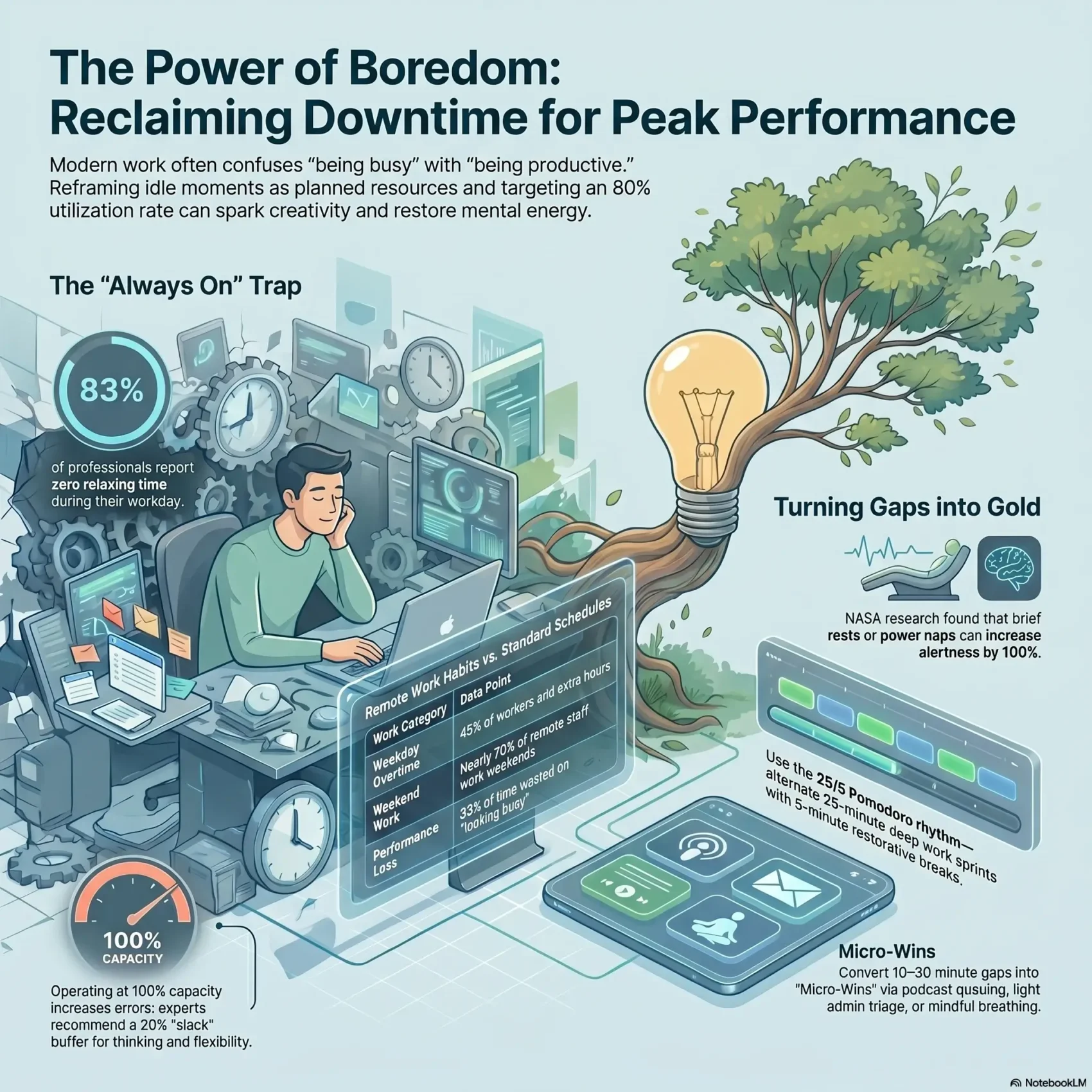
You can use short gaps to clarify intent and get higher-quality results without adding hours. Research shows 83% of people report no relaxing time in their day. Remote workers often log more time and work longer weeks, with 45% adding weekday hours and nearly 70% working weekends.
Present-day reality: stay connected, unplug wisely
Setting simple boundaries helps you reduce stress and protect mental health. Even five minutes of planned breaks can sharpen your focus and prevent burnout later.
- Use micro-pauses: turn idle minutes into small wins.
- Set limits: keep work blocks focused and real breaks real.
- Return sharper: short rests boost productivity without expanding your day.
What downtime really is: planned breaks, unplanned lulls, and everything in between
Think of idle moments as different types of pauses—some are scheduled, others sneak up—and each has a use. Defining these types helps you choose the right activity for the gap and avoid treating every pause as wasted time.
Planned breaks: scheduled rest, social time, and maintenance
Planned breaks include lunch, off-hours, scheduled maintenance, and team social activities like away days or early finishes.
These are deliberate windows where you can recharge, meet colleagues, or run upkeep that keeps systems healthy. Reserving some hours for this purpose protects creativity and reduces long-term strain.
Unplanned lulls: micro-gaps you can reclaim
Unplanned lulls are coffee breaks, quick walks, water-cooler chats, slow days from project delays, and tech outages.
You can treat these gaps as small resources. Use short activities — a light task, a 10-minute learning clip, or a stretch — to make the hour feel useful without pressure.
- Example: A scheduled maintenance window becomes a chance for team learning.
- Example: A late-afternoon slow day can host brainstorming or inbox triage.
- Management tip: Avoid 100% staff allocation; target about 80% utilization to leave room for creativity, sick leave, and flexibility.
When you reframe idle time as a planned resource, you improve morale and work quality. That mindset turns a perceived lack into room for small, effective activities and better long-term outcomes.
Downtime productivity: why boredom boosts your brain
When you let your mind rest, you often return to work with sharper focus and clearer answers. Deep work needs proper rest: tired people react slower, make more errors, and forget details. Short, planned pauses restore accuracy and recall so you can complete complex tasks faster.
Rest fuels focus: from deep work to better accuracy and recall
University of Illinois research found that taking breaks boosts output and attention. Even brief pauses or a power nap can double alertness—NASA observed this in pilots and astronauts.
Use short rests as a tool to protect concentration and reduce mistakes when you return to demanding work.
Creativity on cue: mind-wandering, “shower thoughts,” and fresh ideas
Letting your mind wander helps link distant ideas. Those sudden “shower thoughts” arrive when your mind has space to connect dots.
Build tiny routines—a five-minute walk or an eyes-off-screen break—to invite new ideas without forcing creativity.
Health wins: reduce stress and prevent burnout with real breaks
Regular breaks support sleep, healthier eating, and less screen strain. That combination lowers stress and protects your long-term health.
- Restore focus with planned short rests and naps.
- Use idle moments to spark creativity and new ideas.
- Create cues that remind you to step away and recharge.
For a practical approach to scheduled pauses, try a simple framework for structured recovery at structured downtime.
The danger of skipping breaks: busy ≠ productive
Long hours and visible activity are not the same as doing meaningful work. When you and your team fill every minute, visible motion often replaces real progress.
Boondoggling—busy work that looks active but moves nothing forward—now takes a lot of time. Slack (2023) found employees spend roughly 32% of their time on performative tasks. That eats into real focus and cuts quality.
Packing schedules to 100% utilization raises errors and speeds you toward burnout. Many people skip breaks: UK staff use only 24 of 40 entitled minutes, and many Americans leave vacation unused. This lack of real rest increases rework down the line.
Management that rewards long hours creates an “always on” culture. Aim for about 80% utilization, a practical target Tim Copeland recommends, to protect thinking time and higher-quality outcomes.
- Calling long hours a badge hides the true cost: more mistakes and extra days of rework.
- Spot context switching and trim it with small pauses that stabilize attention.
- Make one solid break each day non-negotiable so your best work gets the time it needs.
Smart ways to spend time: 10 productive downtime activities you’ll actually enjoy
Use small gaps to try one new thing that could save you time or lift your mood. Below are ten practical activities you can match to your energy and context. Pick whatever feels doable and low-pressure.
Explore new tech and tools
Try a simple Gen AI tool or automation that trims repetitive tasks. A small setup can free attention for higher-value work.
Take a quick course or tutorial
Stack micro-lessons to build skills. A 10–20 minute course adds up faster than you think.
Read or listen on the go
Queue podcasts or audiobooks so commuting becomes steady learning without extra effort.
Tame your inbox
Use short bursts to archive, unsubscribe, and add filters. Your future tasks land cleaner and faster.
Move and reset
Walk, stretch, or do light exercise to reduce stress and lift energy for your next task.
Meditate or journal
Three minutes of mindful breathing clears thoughts. A quick brain-dump turns scattered ideas into next steps.
- Pick activities that match your mood.
- Try one tool or course this week.
- Make listening a habit during transit or exercise.
Turn “gap time” into gold: micro-strategies for 10-30 minute windows
Small gaps add up: treat 10–30 minutes as repeatable pockets for learning or fast wins. With a little planning, you’ll use short slots without feeling rushed.
Queue your listening: playlists of podcasts and audiobooks
Preload a few podcast episodes or an audiobook playlist so you can start listening in seconds. This is a safe way to learn when you walk, commute, or wait.
Read-later apps, light admin, and quick wins
Save articles to Pocket or a read-later app and finish one in a single 15-minute window. Do light admin—email triage, calendar tweaks, or checklist updates—to clear mental clutter before your next work block.
Plan ahead, stay safe, and track your progress
Set a 10–20 minute timer, charge devices, and download content for offline use. If you drive, choose listening-only and avoid tapping screens. Track how you spend time to find what pays off.
- Tip: slot one short course lesson or an example task into a spare window each day.
- Tip: repeat the strategies that consistently help you make meaningful progress.
- Learn more: try short learning bursts for steady gains with this short learning bursts.
Time management strategies that protect your mental health
Shaping your day around clear cycles of work and rest helps you stay sharp longer. Use simple rules to slice your time into focused sprints and short recoveries. These moves support your mental health and make long work hours feel less draining.
Pomodoro and power naps: cycles of focus and recovery
Try the Pomodoro method to alternate 25-minute focus blocks with 5-minute breaks. That rhythm keeps your attention steady and makes it easier to take break cues.
Pair focused sprints with a quick nap when you can. NASA found pilots and astronauts were about 100% more alert after short naps. A timed rest plus a sprint can boost results in fewer hours.
No-contact hours, meeting-free days, and flexible schedules
Define no-contact hours so after-work pings stop. Mark meeting-free days to carve deep blocks for meaningful tasks. Test compressed schedules to match work to your peak energy.
- Visible boundaries: show limits in your calendar so others respect them.
- Small rituals: stretch, hydrate, or walk to clear your mind between sprints.
- Measure and refine: track what reduces stress and improves focus, then keep what works.
Make it stick at work: tools, policies, and workload balance
Treat time like a shared resource and you’ll see clearer work and steadier output. Small changes in policy let your team rest, think, and return to tasks with better focus.
Resource allocation and utilization that leave room to think
Set utilization targets near 80% so people have slack for creativity, sick leave, and unplanned needs. Review resource allocation regularly to balance hours across the team.
Check workload weekly and shift assignments before someone hits overload. That reduces rework and improves quality without adding hours.
Benefits and policies that encourage real breaks
Offer benefits that make healthy choices easy: gym passes, meditation apps, relaxation rooms, creative-time budgets, and generous holiday policies.
“Flexible rules like meeting-free days and no-contact hours protect deep work and sustain team health.”
- Set clear strategies: meeting-free days, no-contact hours.
- Encourage light social activities to build trust and spark creativity.
- Track quality, cycle time, and rework to show business gains.
Normalize breaks so your team returns focused, healthier, and more creative. Align policies with how people actually do their best work and you’ll improve outcomes across the business.
Conclusion
A simple shift in how you handle idle minutes can change the quality of your work and your day. Use short, intentional pauses so your mind returns with clearer ideas and better focus.
Practical ways matter: pick one small break to take today — a walk, a quick listen, or a three-minute journal. Evidence from the University of Illinois and NASA shows brief rests boost alertness and creative thinking.
At work, aim for about 80% utilization. Try one policy (meeting-free hours or flexible schedules) and two activities that fit your routine. Track one metric — quality, speed, or clarity — to see how rest reduces rework and lowers burnout risk.
Make productive downtime a feature, not a bug. Start with one tiny change this week and watch ideas arrive more often with less effort.
Found this useful?
Make SmartKeys a preferred source on Google, and our articles will surface more often in your Top Stories, AI Overviews, and AI Mode.
Add as Preferred Source