Tools
Tools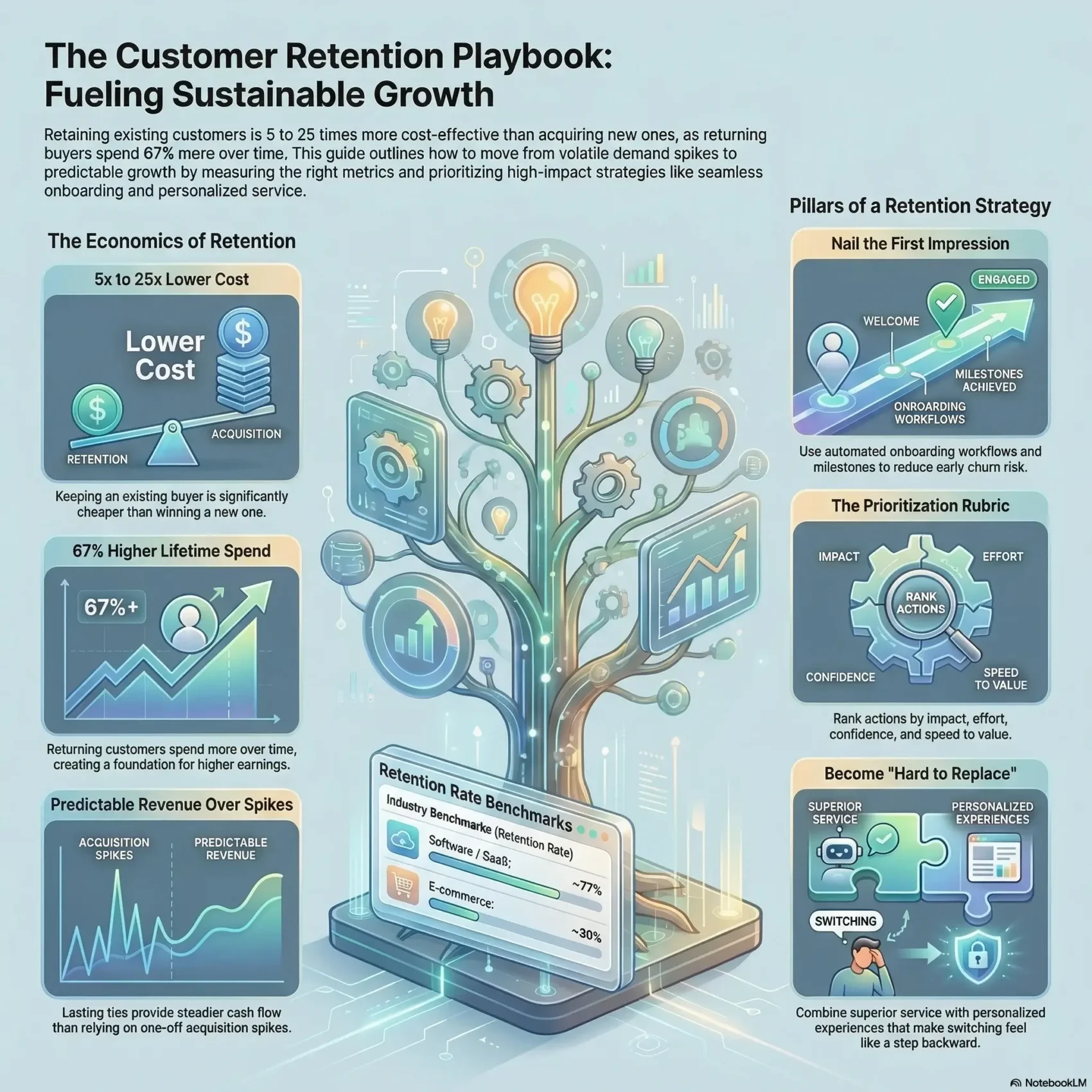
Keeping the people who already buy from you costs less and pays more over time. It often takes five to 20 times the resources to win a new buyer than to keep one. When returning buyers spend 67% more over time, you see clear value in focusing on lasting ties.
You’ll learn why a simple retention strategy matters now, when budgets tighten and predictable revenue wins over one-off spikes. Prioritizing existing relationships gives you steadier cash flow and higher lifetime value.
This listicle will guide you to measure what matters, then pick practical tactics—from onboarding and service to feedback, rewards, and community. Each tactic pairs with goals and resources so you can act without upending your operation.
Use these examples to build a stronger base, improve satisfaction, and grow a loyal group of advocates for your brand.
Key Takeaways
- Retaining buyers costs far less than acquiring new ones and boosts lifetime spend.
- Measure your rate first; metrics make long-term planning easier.
- Focus on onboarding, service, feedback loops, and rewards for quick wins.
- Small, consistent efforts compound into stronger brand loyalty over time.
- Choose tactics that match your goals and team capacity for steady growth.
Why Retention Beats Acquisition Right Now
Keeping people who already buy from you often costs far less and pays off faster than chasing new buyers. Holding onto buyers typically costs 5–25x less than winning new customers, and returning customers spend about 67% more over time. That math creates steady value for your business.
Retention forms the foundation of higher earnings and stronger brand authority. When buyers stay, they buy more often, take upsells, and reduce your reliance on paid media. Trust and familiarity lower friction and make serving people cheaper than hunting for new customers.
- Compare acquisition cost vs. keeping buyers to reallocate budget where it pays off.
- Balance acquisition and retention so your business avoids volatile demand spikes.
- Use simple metrics to align leadership and celebrate quick wins across teams.
- Leverage returning buyers as a way to amplify word-of-mouth without extra media spend.
Next step: shift a portion of your marketing and operations focus to initiatives that make existing customers feel valued. Small, consistent efforts compound into measurable benefits for your bottom line.
Measure What Matters: Retention Rate, Churn, and Customer Lifetime Value
If you track the right numbers, you’ll spot churn risks before revenue slips. Start with clear definitions and a fixed analysis period so your team shares the same data view.

Customer retention rate formula and a quick example
Customer retention rate (CRR) = [(E − N) / S] × 100.
Example: Start S = 80, End E = 60, New N = 20 → CRR = [(60 − 20) / 80] × 100 = 50%.
Churn and how it complements CRR
Churn shows who you lost: (Lost customers at the end of a period ÷ Total customers at the start) × 100.
Tracking both CRR and churn helps you find trends and act before small drops become large problems.
CLV, repeat rate, and purchase frequency to guide decisions
CLV = Average order amount × Purchases per year × retention rate. Use it to value segments and set budgets.
- Repeat customer rate = (Number of return customers ÷ Total number of customers) × 100.
- Purchase frequency = Number of orders ÷ Number of unique customers.
Set baselines, take an end-of-period snapshot, and automate reports with simple dashboards or tools so you spend time on action, not spreadsheets.
Customer Retention Strategies
Turn your retention metrics into a short, actionable plan that targets the biggest gaps first.
Once you know your CRR, you can tailor a plan by business type. Brick-and-mortar needs different plays than an online shop. Retained customers show you are meeting expectations.
Turn insights into action
Use a simple prioritization rubric with four lenses:
- Impact on retention: estimate lift if the issue is fixed.
- Effort: time and cost to build the change.
- Confidence: how solid is your data supporting the move.
- Speed to value: how fast results appear after launch.
Differentiate plays for first-time buyers versus existing customers. Time-box tests, assign owners, and set clear success criteria to avoid random acts of marketing.
Sequence work: fix friction, add delight, then scale personalization with responsible data use. Finish with a quarterly roadmap and a one-page brief to keep leaders informed and ensure success.
Nail First Impressions: Onboarding That Sticks
A strong onboarding makes the first few days a high-value experience that sets expectations and reduces confusion. Good first contact lowers churn risk and shapes how people feel about your product and service.
Workflows, timely emails, and a clear point of contact
Map an onboarding journey that sets expectations and builds confidence from the first interaction.
Automate internal tasks and reminders so your team follows up on time. Trigger emails, in-app tips, and a named contact so users never wonder what happens next.
Self-service knowledge base and celebratory milestones
Add a searchable help center with quick-start guides, FAQs, and short videos. Use your website to consolidate these resources so customers find answers fast.
Celebrate progress—first setup complete, first product use—to reinforce momentum and make the experience memorable.
- Collect light feedback during onboarding to spot friction early and prevent avoidable cancellations.
- Set SLAs for first response and resolution to show reliability when expectations are highest.
- Use milestones to increase confidence and repeat use of your products.
- Map journey and assign owner.
- Build email triggers, help articles, and a contact path.
- Monitor feedback, iterate, and document a simple example checklist for your business.
When you get onboarding right, you improve retention and make every new person feel like a win.
Personalize Every Touchpoint to Meet Real Needs
Personalization turns generic outreach into moments that actually help people reach their goals.
About 80% of companies see higher loyalty and stronger relationships after adding personalization. No two customers share the same needs, so templated solutions fall short.
Using data to tailor offers, timing, and channels
You’ll use behavioral and purchase data to segment audiences, tailor offers, and time outreach when people are most likely to act.
- Personalize across email, app, SMS, and support so each touchpoint feels helpful, not intrusive.
- Align product recommendations to goals and usage patterns to increase perceived value.
- Build lightweight profiles that respect privacy and power consent-based personalization.
Set simple rules to avoid repetition and over-communication. Test subject lines, send times, and offers to learn what works per platform.
Create a content matrix mapping needs to messages so people get the right guidance at the right time. Personalizing service—remembering context and preferences—makes interactions feel human and efficient.
Build Trust Through Reliability and Transparency
When your brand keeps its promises, people feel safer doing business with you long term.
Start with a clear brand promise and make sure every team delivers the same message across product and service touchpoints.
Set expectations up front. Tell buyers what to expect on delivery times, billing, and returns. Meeting those promises reduces anxiety and increases perceived value.
Be open about problems. If there’s a delay or outage, acknowledge it quickly, share a timeline, and follow through on fixes. That transparency keeps people informed, not blindsided.
- Publish measurable service standards so customers know what to expect.
- Use a simple incident playbook: acknowledge, give a timeline, and resolve.
- Align billing and return policies to be fair and easy to understand.
Finally, close the loop: capture frontline feedback and turn it into product improvements you can show. Predictable quality and on-time delivery demonstrate reliability and drive long-term success.
Customer Service That Prevents Churn
When support feels seamless across channels, you remove the friction that drives churn. Deliver a consistent experience so people get answers fast and feel valued. Use a clear customer retention strategy that ties service touchpoints together and reduces repeat work for your team.
Omnichannel support with continuity across channels
Design your workflow so people can start on chat, move to email, and finish by phone without repeating details. A unified view of conversations preserves context and speeds resolution.
Fast first response and expectation-setting
Reply quickly—even a short status update reduces anxiety and cuts churn risk. Set simple time-frame promises per channel so people know when to expect a follow-up.
Equip agents with context to avoid repeat explanations
Give agents a single platform that surfaces purchase history, preferences, and prior messages. With that data, your team resolves issues faster and creates fewer handoffs.
- Shared inboxes and macros to standardize replies.
- Practical SLAs by channel and templated expectations.
- Measure first-contact resolution, CSAT, and backlog trends.
Focus on continuity, speed, and context to make service a growth lever for your business and improve long-term retention.
Create a Feedback Loop That Actually Improves Experience
A steady loop of listening and fixing makes the experience better for real people.
Run regular NPS, short post-contact surveys, and CSAT checks so you collect timely feedback and usable data. Pair those with user tests and social listening to surface issues customers rarely report directly.
NPS, post-contact surveys, user tests, and social listening
- Set a cadence for NPS and quick surveys to capture feelings while they are fresh.
- Use moderated user tests to watch where people struggle with your product.
- Add social listening to find problems that don’t land in support tickets.
Root cause analysis to fix underlying issues
Route feedback to the right owners—product, service, and operations—so fixes happen where they matter most.
Do a simple root cause analysis (RCA) using a template: document the symptom, trace contributing factors, and record the permanent fix.
- Prioritize changes by impact on customers and effort to implement.
- Close the loop: tell people what changed because of their input to strengthen the relationship.
- Track themes and sentiment over time to prove which fixes move the retention needle.
Make customers feel heard. Use empathetic language when you respond, show next steps, and keep your teams accountable to act on what the feedback reveals.
Loyalty, Rewards, and Referral Programs That Drive Return Purchases
A clear rewards program makes every purchase feel like progress toward something valuable. Use points, tiers, and VIP access to collect useful data and nudge repeat behavior. Design each element so it boosts value without eroding margins.
Points, tiers, VIP early access, and exclusive offers
Compare models: points for frequency, tiers for status, and VIP events for high-value buyers. Pick the fit that matches your brand and goals.
Referral incentives that fuel retention and acquisition
Offer cash, store credit, or free products to reward people who bring new customers. Referrals create social proof and lower acquisition cost while reinforcing loyalty.
Gamification to keep customers engaged between purchases
Turn spend into points that unlock future discounts. Use progress bars, limited-time challenges, and badges to keep engagement high between orders.
- Track participation, redemption, and incremental revenue to prove benefits.
- Keep rules clear, address legal and operational needs, and personalize offers by product use.
- Use simple in-app prompts and an example welcome flow to inspire sign-ups.
Tip: Treat this as one pillar in your broader customer retention strategies and iterate based on data.
Make Buying Frictionless: UX, Delivery, Returns, and Payments
A smooth path to purchase makes people more likely to come back and buy again. Small improvements to checkout and delivery lower anxiety and drive more repeat orders.
Fast delivery options and easy, reasonable returns
Offer quick shipping choices and clear tracking so people know when their order arrives. Fast options encourage repeat purchases; Amazon’s two-day model set that expectation.
Make returns painless. A fair, transparent return policy signals confidence in your products and removes the fear that blocks a purchase.
Buy Now, Pay Later to reduce cart abandonment
About 76% of consumers are more likely to shop where payment plans are available. Add BNPL to lower cart drop-off and widen affordability without harming the checkout flow.
- Streamline checkout and website UX so buying feels fast and error-free across devices.
- Present costs, delivery dates, and return windows up front so there are no surprises at the end.
- Use proactive order updates and self-service returns to reduce support contacts and keep customers informed.
Measure page speed and drop-off points so you can fix friction quickly. These moves improve service and help retention in a concrete, measurable way for your business.
Lead With Values and Mission Your Customers Share
Lead with a clear mission and you give people a reason to stay beyond price. When your brand shows consistent action—like eco-friendly sourcing or giving programs—loyalty grows because people identify with what you stand for.
Use examples such as TOMS’ one-for-one approach to show how mission-led moves can sustain loyalty. Make donations, sustainability practices, or community work visible in product pages, packaging, and service notes so the value feels real, not performative.
- You’ll state a mission that aligns with your base and appears in everyday decisions.
- You’ll set transparency guardrails so contributions and impact are clear and verifiable.
- You’ll invite participation—round-up donations, volunteer days, or product-linked giving—to deepen ties.
Map values across marketing, product, and support so every touch shows purpose. Tell simple stories of impact to make customers proud to be associated with your business.
Result: when people see authentic action, they are more likely to come back and to recommend you. That consistency improves long-term retention and builds a stronger, mission-aligned base.
Cultivate Community and Word-of-Mouth on Social Media
Make social media a two-way street: listen, spotlight, and amplify authentic stories. Word-of-mouth builds confidence, so encourage UGC on platforms like Instagram and TikTok and reshare praise to make loyal customers visible.
Zappos showed how opening conversations beyond support creates empathy and deeper relationships. You can borrow that approach: invite stories, answer openly, and celebrate small wins.
- Build a community playbook that treats social media as a relationship engine, not just a broadcast channel.
- Spotlight customers and encourage UGC with prompts, challenges, and easy-to-use tags.
- Choose the right platform mix and adopt a friendly, human voice that invites participation.
- Set moderation and response standards so replies are timely, empathetic, and on-brand.
- Track referrals and conversations that lead to new customers and better retention.
Turn top contributors into ambassadors by recognizing them publicly and giving perks. Integrate social listening into your feedback loop to catch issues early and strengthen your base over time.
Tooling Up: CRM and Service Platforms That Scale Retention
A small set of well-chosen platforms can multiply the impact of every interaction your team has. Start by mapping what your business needs today, then pick tools that grow with you.
Shared inboxes, automation, and analytics
Adopt a CRM to record interactions and create tickets. Add a shared inbox so teams collaborate without losing context.
Automate routine alerts, routing, and follow-ups to boost response times. In practice, these moves can raise agent productivity by 30–40%.
“Centralize communication so context travels with the person, not just the message.”
Building a single customer view for personalization
Create a single view that merges order history, support notes, and engagement. When everyone sees the same data, personalization becomes practical and fast.
- Choose core tools: CRM, shared inbox, automation, analytics.
- Centralize interactions so teams act on up-to-date data across channels.
- Set reporting for CRR, churn, CLV, agent performance, and channel health.
- Document workflows that cut handle time and lift quality; use real examples to train staff.
- Align governance and data hygiene to protect privacy and keep insights accurate.
Build a lightweight roadmap so your tooling evolves with needs, not ahead of them. That keeps costs reasonable and makes your strategy easier to adopt.
Invest in Your Team to Elevate the Customer Experience
Investing in your team turns everyday interactions into memorable service moments that keep people coming back.
You’ll prioritize hiring, training, and coaching that equip your staff to deliver a standout experience. Start with clear service SLAs and simple soft-skill workshops focused on empathy, clarity, and ownership.
Build product training that shortens resolution time and boosts confidence. Lower turnover keeps knowledge in-house and creates continuity across interactions, which improves long-term success for your business.
- Career paths & recognition: reduce churn and preserve institutional knowledge.
- QA & calibrated reviews: ensure consistency and celebrate great calls or chats.
- Feedback rituals: route frontline insight to product and policy teams so your people influence change.
Tie goals to customer health, not just speed. Align incentives so your team focuses on lasting relationships. When leaders see engagement mapped to measurable outcomes, the ROI of people investments becomes clear.
Omnichannel strategies and unified tooling help agents hold context across channels, making every interaction feel seamless and informed.
Stand Apart: Become Difficult to Replace
Make your offer so distinct that switching feels like a step backward, not forward.
Create a clear identity for your product and brand so people see fewer good alternatives.
Apple is a useful example: long-term positioning and consistent delivery reduce direct comparisons. You want the same effect—clarity that makes staying the easier way.
- Define unique value: spell out the one problem your product solves end-to-end so customers view it as essential.
- Build complementary offers: package services, onboarding, and simple integrations to raise practical switching costs without lock-in.
- Design memorable cues: use tone, visuals, and rituals that make your brand stick in daily routines.
- Reinforce outcomes: show proof and results so a renewal feels like an upgrade, not a chore.
“Being hard to replace is not about traps; it’s about being the best answer for real needs.”
Use a focused retention strategy across roadmap, support, and messaging so every choice nudges people to stay by default.
Bringing It Together for the Present
Turn measurement into a short, practical plan you can run this year. Start by benchmarking your retention rate vs. peers (software ≈ 77%, e-commerce ≈ 30%). Use that gap to set a realistic target and quarterly checkpoints.
Pick three focused plays that match your capacity—onboarding, service, or loyalty—and run time-boxed tests. Prioritize actions that yield fast learnings and clear metrics.
- Assemble a communication calendar and monthly newsletter cadence to keep relationships warm between purchases.
- Track leading indicators: first response time, repeat contact rate, and NPS theme shifts to spot churn early.
- Report to execs with clear asks: budget, owners, and expected lift so decisions follow data.
Capture quick wins while building longer-term capabilities. Examples like Starbucks’ mobile order, Four Seasons Chat, and Dollar Shave Club’s proactive chatbot show how convenience and proactive service drive outsized gains.
“Measure, prioritize, and execute the top three plays that fit your business this year.”
Conclusion
Make customer retention a daily habit: tie a few clear metrics to actions you can repeat each week.
Seventy-three percent of business leaders link performance to customer service, so track retention rate, churn, and CLV. Use those signals to fix the biggest frictions in UX, service, and product experience.
Start two or three pilots that match your capacity, measure fast, and iterate. Fair policies, reliable delivery, and helpful support together build real loyalty and strengthen your brand.
In short: invest in customer retention, align teams behind simple goals, and celebrate small wins. Over time, these steady efforts deliver predictable growth and lasting success for your business in a noisy media landscape.