Tools
Tools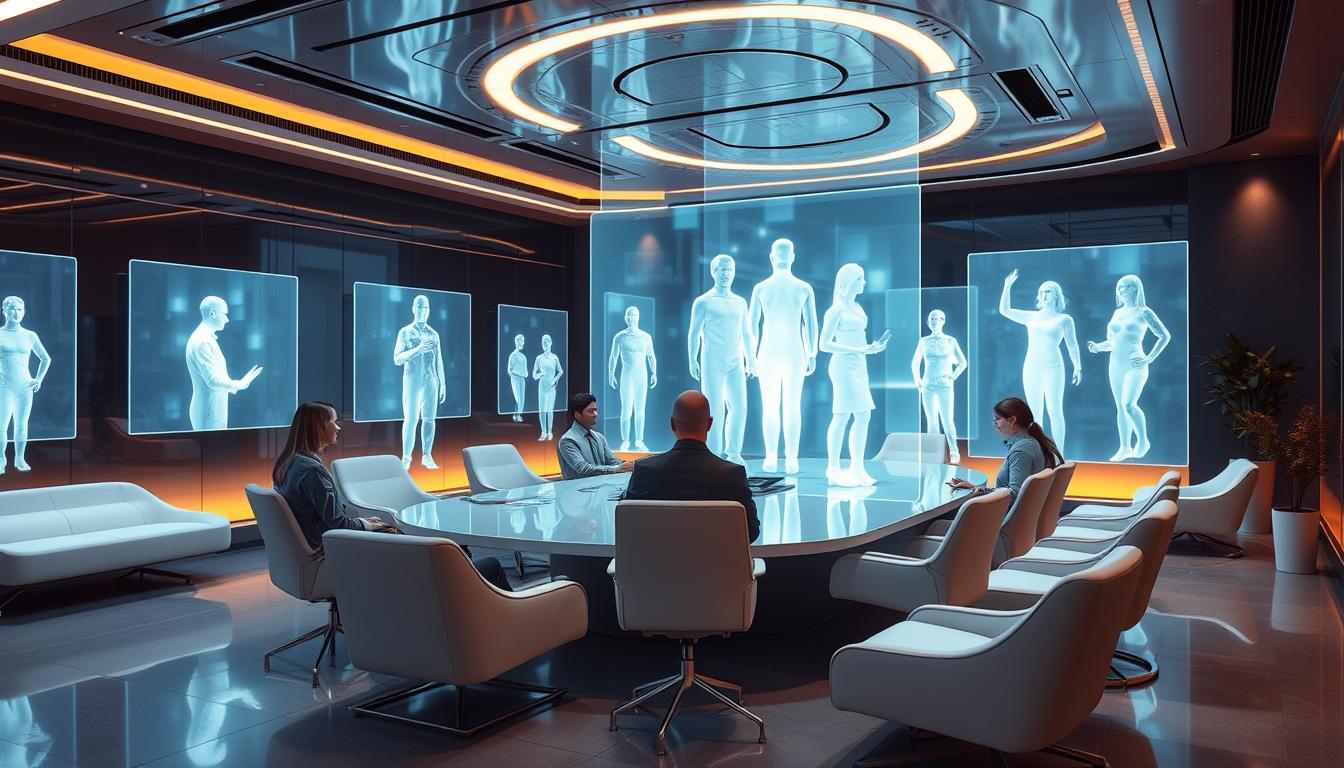
Last Updated on December 9, 2025
Welcome to a new era in meetings, where holographic communication is revolutionizing our interactions. Picture stepping into a virtual room, surrounded by life-sized 3D holograms, as if they were right there with you. Thanks to advancements in 5G and the Internet of Things (IoT), this is now a reality, opening up new possibilities for *hologram meetings*. Companies like Proto are at the forefront, developing platforms that boost engagement and productivity.
The holographic market, which was worth $1.13 billion in 2020, is expected to skyrocket to over $11.65 billion by 2030. This surge in demand underscores the need for cutting-edge *virtual communication* solutions. As businesses expand globally, the necessity for immersive communication tools grows.
Key Takeaways
- Holographic communication enhances interaction by simulating physical presence.
- The holographic market is projected to reach over $11.65 billion by 2030.
- 5G technology is critical for facilitating effective hologram meetings.
- Companies like Cisco are pioneering holographic tools in business communication.
- Holographic telepresence offers immersive experiences that traditional video cannot match.
- Industries like healthcare and education will significantly benefit from holographic technology.
The Rise of Holographic Communication in Modern Workplaces
The advent of holographic communication is reshaping corporate landscapes. It’s a response to the need for more engaging and efficient ways to work. Many companies are turning to holograms as a superior option to traditional video calls and in-person meetings. A staggering 77% of businesses saw a notable improvement in remote teamwork with holographic technology.
Thanks to futuristic communication technology like 5G and edge computing, high-resolution 3D images can be shared instantly. This allows employees to participate in virtual meetings even with simple devices. The results are impressive: healthcare has seen a 40% drop in travel costs for remote consultations. Education has also seen a 50% increase in student engagement with holographic classes.
Companies are also saving money. Holographic meetings have cut travel costs by 60% for sales and product demos. The entertainment world has seen a 25% rise in audience interaction with holographic shows. For more on its applications, check out this resource.
Holographic collaboration is making workplaces more cost-effective and engaging. It highlights the value of interactivity and real-time involvement. This leads to higher productivity among teams.
Understanding Holographic Communication Work
Holographic communication is changing how we connect in our personal and professional lives. It brings people together in a way that traditional methods can’t. Imagine stepping into a future where distance doesn’t matter, and conversations feel real.
What is Holographic Communication?
Holographic communication blends technology and creativity, offering interactive holograms for real connections. Unlike static images, holograms create an immersive experience. They make it seem like people are in the same room, enhancing communication in fields like healthcare and education.
The Technology Behind Holograms
At the heart of holographic communication are advanced technologies working together. Artificial intelligence, big data, and 5G networks are crucial. These enable the streaming of volumetric video, making interactions smooth and engaging. Nokia and Verizon show how private wireless networks improve speed and reliability, making collaboration effortless.
From 2D to 3D: A Transition in Communication
The move from traditional 2D communication to advanced 3D holographic technology is a major leap forward. It changes how we connect and work together. Standard video conferencing often fails due to engagement issues, lack of personal touch, and frequent technical problems. These shortcomings can make communication less effective in both work and personal life.
The Limitations of Conventional Video Conferencing
Many find traditional video calls lacking in personal touch and depth. Key challenges include:
- Engagement: People may struggle to stay focused during meetings.
- Connection: The absence of physical presence can make emotional connections harder to establish.
- Technical Issues: Technical glitches can disrupt conversations, causing frustration.
The Benefits of Holographic Communication Over 2D Methods
Holographic communication offers a groundbreaking solution to these issues. It brings:
- Enhanced Engagement: 3D visuals create a more lifelike experience, holding attention better.
- Improved Clarity: Clearer interactions reduce misunderstandings and miscommunications.
- Creative Collaboration: It fosters a collaborative environment that encourages innovative thinking and teamwork.
Companies like Ericsson are at the forefront, using 5G technology to provide immersive experiences through everyday devices. In education, this technology can revolutionize remote learning by allowing instructors to display 3D models. Imagine a surgeon guiding complex procedures with colleagues from afar through holographic technology. Such uses are enhancing human connections in various fields, making our world more dynamically engaged.
Real-Time Holographic Telepresence: A Game Changer
Real-time holographic telepresence is revolutionizing teamwork and collaboration. It lets you connect with colleagues from afar, feeling like you’re in the same room. The addition of 5G technology makes interactions smoother and more engaging.
The Role of 5G Technology
5G technology is crucial for holographic telepresence. It offers the bandwidth and low latency needed for seamless communication. Faster connectivity means conversations flow better, with immediate responses that boost discussion flow. Field tests, like those with Webex Hologram, show its significant impact on remote teams.
How Holographic Telepresence Enhances Collaboration
Holographic telepresence removes traditional communication barriers. It creates lifelike holographic images, making remote participants feel present. Platforms like Axiom Holographics show how interactions become richer and more meaningful, improving engagement in meetings or brainstorming.
The holographic market is set to double in growth, showing strong demand for immersive solutions. Companies like Proto provide life-sized projections that enhance presentations and collaboration. For those keen on remote collaboration trends, exploring remote work trends and the role of Holographic Telepresence is essential.
Immersive Meeting Experiences with Interactive Holograms
Interactive holograms are revolutionizing meetings, making them engaging and immersive. This technology enhances presence, turning collaboration into a dynamic experience. It encourages active participation, keeping everyone involved throughout.
Creating a Sense of Presence
Interactive holograms offer unparalleled interaction, merging participants in a virtual space. They allow for 3D visualization, simplifying complex information. This fosters an environment where ideas flow freely, overcoming traditional video conferencing barriers.
DVE’s Holo-Suite showcases the power of shared virtual spaces. It dramatically increases collaboration effectiveness, making everyone feel physically present.
Interactive Features That Engage Participants
These holographic experiences are enriched by interactive features. Imagine live demonstrations or real-time feedback through holographic interfaces. Such capabilities boost engagement and keep participants focused and connected.
Institutions and corporations are turning to DVE’s systems for holographic meetings. They provide unmatched detail and clarity, proving invaluable for team building and collaboration.
Transforming Industries with Holographic Collaboration
Holographic Collaboration is revolutionizing sectors by offering new ways to engage and educate. It transforms traditional communication methods, ensuring collaboration is both effective and engaging. This technology is reshaping the future of collaboration.
Applications in Education and Training
In education, holographic technology is enhancing learning experiences. It allows students to interact with complex concepts in a hands-on way. For example, schools can use holograms for interactive simulations, improving understanding and critical thinking.
With Holographic Presentation Tools, teachers can present lessons in a more captivating way. This approach grabs students’ attention and helps them retain information better.
Holographic Collaboration in Corporate Settings
In corporate settings, holographic collaboration is changing team interactions, especially for remote teams. Companies use it for training and internal communication, ensuring all employees feel connected. ARHT has demonstrated its capabilities through collaborations with leaders like Hilton’s CEO, enabling seamless communication.
The use of Holographic Presentation Tools in meetings boosts the impact of presentations. It encourages active participation and real-time dialogue among team members.
Holographic Presentation Tools: A New Way to Engage Audiences
Holographic presentation tools are revolutionizing how we connect with our audience. They span from basic projectors to sophisticated software that creates detailed 3D visuals. Technologies like AI, spatial light modulators, and 5G are at the core of these innovations. They transform virtual communication, offering an experience that goes beyond traditional presentations.
Types of Holographic Presentation Tools
- Holographic Projectors: Compact and portable devices that project 3D images into space.
- Software Solutions: Programs that allow users to create and manipulate holographic visuals easily.
- Interactive Holograms: Systems that enable audience participation, enhancing engagement.
Creating Stunning Presentations with Holograms
To craft compelling presentations, leverage holographic tools that draw attention and convey messages effectively. These systems enable:
- Dynamic visuals that adjust based on audience reactions.
- Clearer presentation of complex ideas.
- Immersive experiences that leave a lasting impact.
Augmented Reality Communication: The Future of Team Meetings
The future of team meetings is set to be transformed by augmented reality (AR) and holographic communication. This combination overlays digital information on the physical world, enhancing hologram meetings. It creates a more engaging environment for collaboration and learning.
The Integration of AR and Holography in Meetings
AR and holography together bring significant benefits to team interactions. Imagine a meeting where virtual avatars and 3D holograms represent your colleagues. This allows for seamless interaction, regardless of physical distance. Employers have seen a 32% boost in productivity and a 46% reduction in task time with AR.
Companies like Spatial are at the forefront, using tools like the Microsoft HoloLens 2 headset. They aim to improve remote collaboration.
Enhancing Visual Communication with AR
AR plays a crucial role in enhancing visual communication. It projects holographic information into your workspace, offering a new way to engage with your surroundings. In the U.S., employers spend $413 billion on on-the-job training annually.
AR could significantly enhance training, as seen in partnerships between Immerse and companies like DHL and Shell. As AR and holography evolve, they will become key to team meetings. They will create a dynamic experience that bridges gaps and fosters effective communication.