Notifications never stop, and the numbers prove it: in 2026, the average internet user spends roughly seven hours a day looking at screens, and nearly half of Americans describe themselves as addicted to their phones. A Digital Detox Routine is the structured answer. It helps you improve your focus and mental clarity by deliberately cutting down on digital distractions. It’s more than just putting away your devices; it’s about setting up digital wellness practices that put your well-being first.
Starting a Digital Detox Routine can bring many benefits. You’ll sleep better, feel less anxious, and enjoy better emotional health. By embracing mindful tech use, you can find a balance with technology and appreciate life beyond screens. This guide gives you a complete plan: how to assess your habits, set realistic detox goals, build tech-free routines, protect your sleep, and keep the balance long after the detox ends. You’ll find better focus in both your personal and professional life.
Key Takeaways
- A Digital Detox Routine enhances mental clarity and focus.
- Reducing screen time helps in improving emotional well-being and sleep quality.
- Mindful tech consumption fosters meaningful real-life interactions.
- Setting specific boundaries and tech-free zones makes the detox stick.
- Physical activities boost mood and focus during a digital detox.
- Regular audits help maintain a clutter-free digital space.
Understanding the Need for a Digital Detox
Technology has become a constant in our lives, making it essential to recognize the value of a digital detox. According to DataReportal’s 2026 global panel data, people now average close to seven hours of daily screen time across smartphones, computers, and TVs – more than 40% of waking hours. US adults check their phones well over 140 times per day, and around 69% report phone-related physical complaints such as eye strain, neck pain, or headaches.
Stepping away from screens offers real mental health benefits. The endless stream of information fragments our attention span, affecting our productivity and ability to focus. If constant pings from chat tools are part of the problem, clear instant messaging boundaries are a good companion strategy to any detox.

Creating a digital balance is key to overcoming these challenges. Simple actions like device-free meals or turning off notifications can significantly reduce stress and enhance mood. A digital detox helps you reassess your relationship with technology and shows how deeply embedded digital devices are in our daily routines. If you feel scattered by the sheer volume of inputs, our guide to managing digital overload pairs well with the steps in this article.
Defining Digital Detox and Its Importance
A digital detox means deliberately reducing or pausing your use of devices like smartphones and laptops to reset your mental state. Interest in the practice keeps growing: downloads of screen-time management apps rose by roughly 30% over the past year, and countries such as Australia have even introduced social media age limits for minors – a sign of how mainstream the concern about overuse has become.
Digital detox strategies are vital for combating the negative effects of excessive technology use. Research links heavy smartphone use to self-image issues, sleep deprivation, and increased anxiety. By adopting tech-free habits, you can improve sleep, reduce stress, and strengthen personal connections. These strategies counter digital fatigue, helping you reclaim your focus and your time for activities that actually matter to you.
A detox does not have to mean going offline for a month. Even short, structured breaks from screens reduce stress and help you live more in the present. Understanding how to implement a digital detox effectively shapes your long-term relationship with technology: you keep the benefits of your devices while protecting your mental wellness.
The Effects of Excessive Screen Time on Mental Health
Excessive screen time has a measurable impact on mental health. A 2023 analysis from the Yale School of Medicine found that children aged 9–10 who spend more time on screens are at higher risk for anxiety and depression. Newer cross-national data from 2026 shows that around 1 in 9 adolescents now display signs of problematic social media behavior – up from 7% in 2018. This highlights the need for effective screen time management at every age.
Endless scrolling can foster dependency and compulsive checking, which fuels feelings of inadequacy and mood swings. Sleep takes a direct hit, too: a systematic review of more than 30 studies published in BMC Medicine found that every extra hour of nighttime screen use is associated with roughly 15 to 25 minutes of lost sleep.
The good news: the effects are reversible. Capping recreational social media use, keeping devices out of the bedroom, and disconnecting in the evening all measurably improve mood and rest. Implementing screen time management tactics, such as tech-free zones and protected focus blocks, fosters healthier routines. Engaging in physical activities, reading, or hobbies offers rewarding alternatives to screen time – even short movement breaks help reset both body and mind.
Identifying Your Digital Demons
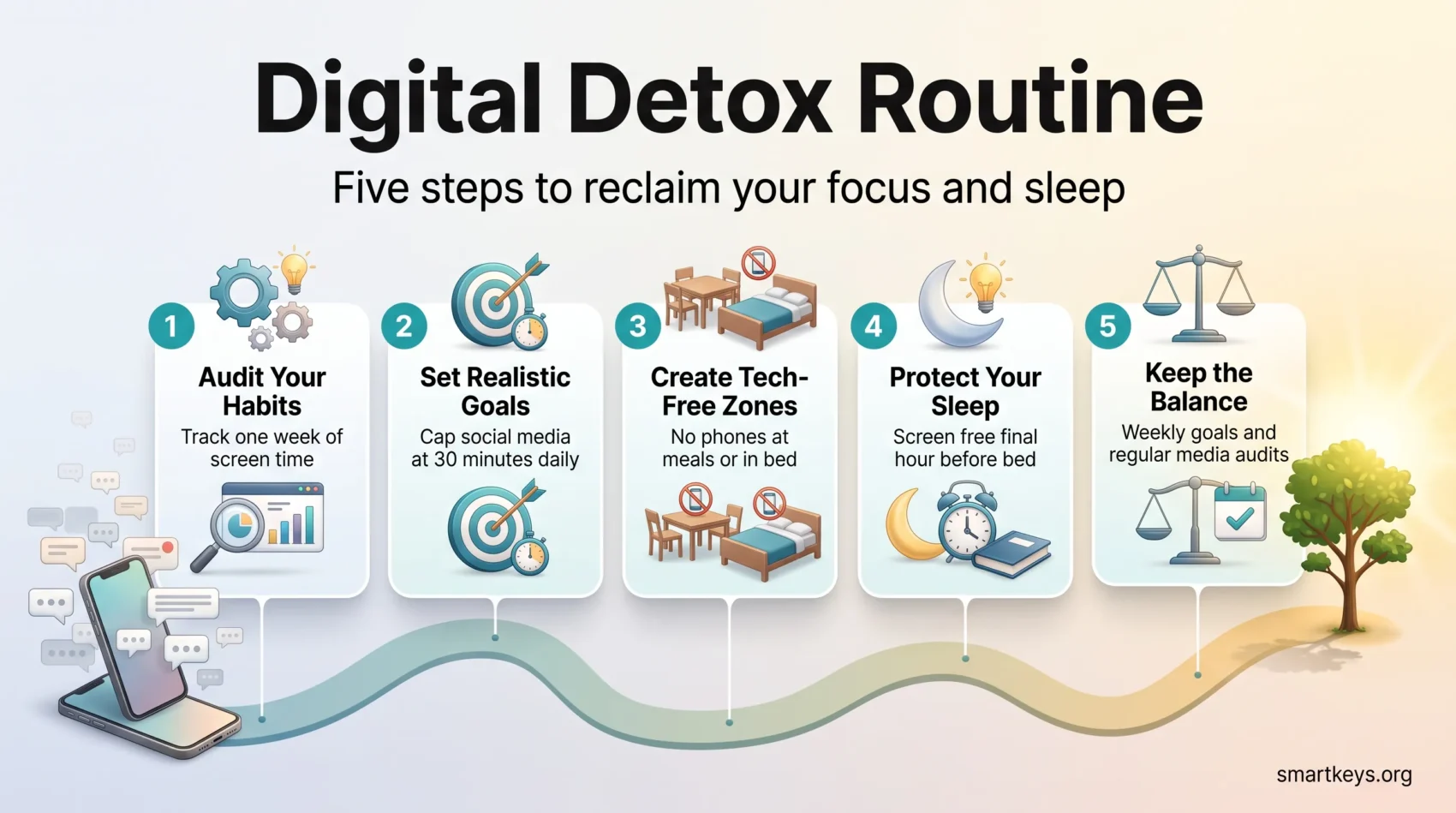
Starting a digital detox journey means pinpointing the behaviors that interfere with your daily life. This step is vital for effectively reducing screen time. Begin by using the built-in tracking features on your devices (Screen Time on iOS, Digital Wellbeing on Android) to monitor your usage. These tools show how much time you spend on different apps and platforms, highlighting areas for improvement.
Assessing Your Screen Time Usage
Examining your screen time usage sheds light on which tech aspects dominate your day. Consider these points:
- Track your daily usage for a week to spot patterns in your routine.
- Sort activities into productive and unproductive categories, noting which apps or platforms cause emotional stress.
- Establish limits on excessive usage in certain categories.
While you are auditing your habits, it’s worth clearing out the digital clutter itself – unused apps, dead bookmarks, overflowing inboxes. Our digital declutter guide walks through that process step by step.
Recognizing Emotional Responses to Your Devices
Being mindful of your emotional reactions to technology is key to changing your device interaction. Many people feel more stressed or anxious when checking notifications. Notice these feelings; they often motivate you to change. Here are some tips:
- Notice how your mood changes before and after using certain apps – does social media make you feel drained?
- Identify what makes you compulsively check your devices, especially when you’re not busy.
- Find better ways to lift your mood, like creative activities or outdoor time.
Creating Your Digital Detox Routine
Starting a digital detox routine demands careful planning. It’s crucial to set detox goals that align with your daily life. Begin with small steps, like avoiding screens during meals or an hour before bed. This gradual method helps you adapt without feeling overwhelmed.
Setting Realistic Goals for Your Detox
When setting detox goals, aim for what’s achievable and measurable. Good examples include:
- Limiting social media to 30 minutes daily.
- Establishing tech-free family mealtimes to strengthen connections.
- Creating screen-free mornings so your day starts with intention – a natural fit with a productive morning routine.
Clear, realistic goals are key to a successful detox, keeping you motivated every step of the way. Achieving small goals early builds the momentum for bigger changes.
Choosing the Right Detox Duration
The length of your detox depends on your habits and preferences. Detox periods can range from 24 hours to a week or more: a short detox delivers quick relief, while a longer one allows for deeper recovery. Consider your level of dependence on devices, how much your work relies on technology, and how much structure you need. Many readers succeed with a stepped plan such as a 30-Day Digital Detox Challenge, gradually extending screen-free windows while tracking progress.
Strategies for Effective Screen Time Management
In today’s digital world, effective screen time management is crucial for your well-being. Start by setting aside tech-free times throughout your day. This helps establish healthy boundaries, promoting digital self-care and reducing distractions. You might choose to unplug during meals or dedicate specific hours in the evening to family or personal time.
Apps designed to limit device usage can help monitor and enforce these boundaries. Set time limits for specific apps to prevent excessive use, and disable non-essential notifications to reduce interruptions. If you work from home, pairing these limits with a distraction-proof setup makes a big difference – see our tips for home office productivity.
Creating no-tech zones in your home, like the bedroom or dining area, promotes relaxation and connection. These zones encourage quality time with loved ones and offline activities that bring joy and creativity. And remember to take regular breaks from screens throughout your day: research on short breaks and work focus shows that brief pauses – stretching, a walk, a few mindful breaths – reliably reset attention.
Incorporating Tech-Free Habits into Your Routine
Adding tech-free habits to your daily routine improves your balance between digital and personal life. Taking daily breaks from technology helps you step back, reflect, and reconnect with your environment. This practice enhances focus and creativity, offering a respite from the constant digital noise.
Scheduling Daily Tech-Free Breaks
Creating daily tech-free breaks is crucial for your mental health. Here are some strategies to consider:
- Designate specific times for tech-free moments. Use these breaks for reading, walking, or simply enjoying your surroundings.
- Stay away from screens during meals to focus on your food and the people around you.
- Try physical activities or hobbies that don’t involve technology, such as gardening, exercising, or crafting.
A few minutes of stillness also compounds the effect – meditation practices train exactly the attention muscle that constant notifications erode.
Planning Weekend Digital Detoxes
Weekends offer a perfect opportunity to disconnect. A digital detox weekend can be a refreshing escape:
- Plan getaways to nature or peaceful locations where screens are less common.
- Inform friends and family about your tech-free weekend plans, and invite them to join you.
- Keep a journal during your detox to record your thoughts and emotions, deepening your self-awareness.
If your whole team struggles with always-on culture, the same idea scales up: some companies now run company-wide unplug days with measurable focus gains.

Sleep Hygiene: Protecting Your Nights from Screens
No digital detox is complete without addressing sleep. Evening screen light suppresses melatonin and delays your natural sleep cycle, and as noted above, each additional hour of nighttime screen use costs an estimated 15–25 minutes of sleep. Since sleep quality directly drives next-day concentration, protecting your nights may be the highest-leverage part of your entire routine – our deep dive on sleep optimization and productivity explains why.
Tech-free bedtime routines are the practical fix. Try replacing the last 60 minutes of scrolling with:
- Reading a physical book
- Journaling your thoughts from the day
- A few minutes of meditation or breathing exercises
- Light stretching or yoga
Charge your phone outside the bedroom and use a classic alarm clock instead. A structured evening routine makes these habits automatic within a couple of weeks, and better rest is one of the most commonly reported productivity benefits of good sleep.
Tools to Assist in Managing Device Usage
Effective tools for managing device usage are crucial for a successful digital detox. Productivity apps help track screen time, limit notifications, or lock apps during detox periods. Apps like Forest grow virtual trees as you resist distractions, while Opal lets you schedule focus sessions that automatically block distracting apps and websites. StayFocusd sets time limits for social media in your browser.
The Pomofocus online Pomodoro timer divides work into 25-minute blocks followed by short breaks, which pairs naturally with a detox plan and solid task management habits.
Freedom blocks chosen apps and websites across all your devices during set times. For those overwhelmed by tabs, OneTab groups all open tabs into one list, simplifying your workspace. Browser extensions like Unhook (for YouTube) and News Feed Eradicator remove endless-scrolling triggers, and RescueTime monitors your screen and app use so you can pinpoint areas for improvement.
Navigating Social Media Mindfully for Better Focus
Social media can be both a blessing and a curse, especially during a digital detox. Engaging with it mindfully can greatly improve your focus and mental health. If your feeds are the main time sink, a dedicated social media detox can reclaim hours of focus each week.
Developing a Strategy for Social Media Consumption
Creating a clear strategy for social media is essential for mindful consumption. Consider these practices:
- Limit your check-ins to a couple of times a day at fixed times.
- Unfollow accounts that drain your energy or trigger negative emotions.
- Set specific time limits for social media use to prevent disruptions in your daily routine.
Setting these boundaries safeguards your mental health and enriches your online experience. Engage only with content that adds value to your life.
Curating Your Digital Environment
Curating your digital space leads to a healthier, more fulfilling online presence. Focus on following accounts that promote positivity, creativity, and authentic interactions. Regularly reassess your feeds and engage in:
- Subscribing to content that inspires you
- Blocking or unfollowing negative influences
- Practicing active engagement rather than mindless scrolling
By consciously curating your digital space, you transform your experience from passive to active – and your social media strategy becomes a key part of your digital detox journey.
The Positive Outcomes of Establishing Boundaries
Creating clear digital boundaries offers numerous advantages. By setting these limits, you enhance focus and creativity, and reduced screen time allows for deeper thinking. Technology overuse is linked to sleep disturbances, increased stress, and less physical activity; staying within sensible usage limits helps avoid these problems and counteracts the exhaustion many describe as digital fatigue.
One key advantage of digital boundaries is better emotional wellbeing. Limiting screen time during meals and before bed improves family communication and sleep, leading to more meaningful interactions with loved ones.
A second, often underrated benefit is the rediscovery of offline life. When devices claim fewer hours, hobbies come back: exercise that releases stress and boosts endorphins, creative pursuits like painting, writing, or crafting, and time outdoors where nature does the calming for you. These activities provide a sense of fulfillment that passive scrolling never delivers.
For families, age-appropriate technology guidelines support cognitive development and prevent tech overuse in children. Parents modeling healthy screen time behavior positively influences their kids, and co-viewing content plus talking about online experiences builds resilience against issues like cyberbullying.
Adults gain just as much: scheduled disconnect times and device-free zones support work-life balance, while turning off non-essential notifications boosts productivity and focus. Review these boundaries regularly so they stay relevant as technology changes.
Maintaining Digital Balance Post-Detox
Returning to daily life after a digital detox offers a chance for reflection. It’s the ideal moment to examine your digital habits and assess technology’s role in your life. Achieving a sustainable digital balance post-detox hinges on maintaining a healthy view of device usage.
Reflecting on Your Digital Habits
Start by evaluating the positive and negative aspects of your digital habits. Identify triggers for excessive screen time. Journaling your thoughts helps you connect with your needs and priorities.
Creating Long-Term Digital Wellness Practices
Creating lasting digital wellness strategies is crucial. Consider a daily tech-free hour for relaxation, plus regular media audits to monitor screen time. Practical anchors for the long run:
- Set weekly screen time goals and check them in your device’s dashboard.
- Keep one recurring tech-free day or evening for quality time with loved ones.
- Maintain your no-phone bedroom rule – it protects the sleep gains you’ve made.
Continuing these practices is key to long-term digital wellness. A balanced relationship with technology improves mental and physical health. Engage in hobbies, outdoor activities, and face-to-face interactions – prioritizing these enriches your life beyond the screen.
Conclusion
Starting a digital detox can greatly boost your focus and emotional health. With average screen time near seven hours a day in 2026, stepping away from screens – even briefly – helps you understand and reshape your habits. The advantages of digital wellness go beyond the detox period: they help you build lasting routines that promote mindfulness and health in daily life.
Research consistently shows that reducing evening screen use improves sleep quality, and that even brief breaks from social media lead to healthier smartphone habits, less stress, and improved wellbeing. By choosing deliberately how you use technology, you strengthen your relationships and find a better balance with your devices.
Embracing a digital detox as a lifestyle choice leads to increased productivity and well-being. Forming a healthy relationship with technology is a continuous journey – one that empowers you to value human connection and live a fulfilling life beyond the screen.
Found this useful?
Make SmartKeys a preferred source on Google, and our articles will surface more often in your Top Stories, AI Overviews, and AI Mode.
Add as Preferred Source