Tools
Tools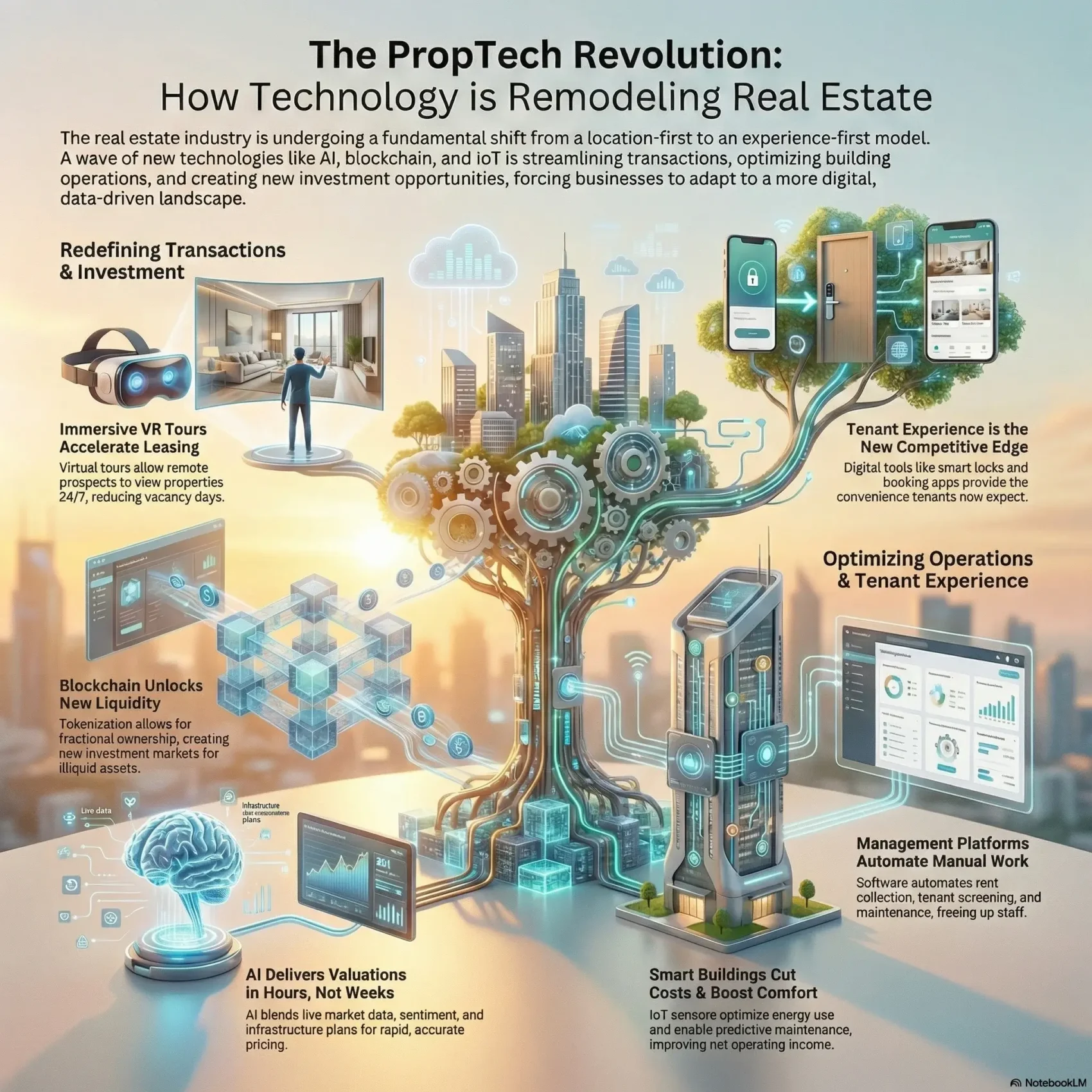
Last Updated on February 6, 2026
You are entering a moment when digital tools change the real estate value chain end to end. In 2025, a mix of blockchain, AI, IoT, 5G, and analytics is speeding up listings, closings, and property management.
Smart platforms now offer tokenized assets, fast smart-contract closings, VR tours, and integrated building systems that cut friction. Leading names such as RealT, Propy, Zillow, Redfin, and JLL Spark show how these trends move from pilot to standard.
Expect faster timelines, clearer data, and new investment paths like fractional ownership. These shifts lift NOI by turning location advantages into service and efficiency wins.
This introduction sets the stage for practical examples and strategic moves you can prioritize over the next 12 months. You’ll learn which tools and platforms matter, what governance and security to demand, and how to measure time-to-value for your deals.
Key Takeaways
- Digital transactions and tokenization are now core capabilities for competitive real estate businesses.
- AI valuation, VR tours, and integrated BMS speed decisions and cut operational cost.
- Fractional investment platforms open new capital sources and expand your buyer pool.
- Data-first workflows shift value toward experience, service, and efficiency.
- Security, standards, and governance shape the right partner choices.
- Prioritize pilots that deliver measurable time-to-value and avoid tech dead-ends.
The new real estate reality: from location-first to experience-first
Tenant expectations now center on seamless digital experiences that start with a contactless tour and end with app-based move-in. You no longer compete just on address or square footage; you compete on convenience, comfort, and control.
Quick wins—smart locks, amenity reservations, smart lighting, and thermostats—deliver visible value. These upgrades delight tenants and cut service calls, freeing management to focus on higher-value work.
AI-powered marketing personalizes outreach, automates follow-ups, and brings qualified prospects even when leases are signed sight-unseen. Integrated platforms tie discovery, access, and daily services into one smooth flow.
Use reservation, access, and service data to prioritize low-cost investments that raise satisfaction. Shift your messaging from physical specs to outcomes tenants feel—safety, ease, and instant control.
- Start small: deploy smart locks and a booking app this quarter.
- Measure: track usage, service tickets, and Net Promoter scores.
- Choose tools: keep only platforms that advance retention and reduce ops load.
PropTech disruption in the United States market: what it means for your strategy
The U.S. market is racing ahead as startups and incumbents stitch listings, underwriting, and closings into single digital flows. You now see transaction names—Compass, Opendoor, Zumper—working alongside tokenization players like RealT and Propy and management software such as AppFolio.
That consolidation reshapes how your real estate business wins clients. Integrated platforms reduce handoffs, speed pricing, and tighten servicing.
What to do: map where you sit on the adoption curve. If you lag, prioritize software that cuts cycle time. If you lead, use data to scale wins and defend pricing power.
- Balance innovation and risk: vet data governance, smart-contract enforceability, and cross-border rules.
- Broaden access: tokenization and 24/7 markets can widen your investor base and liquidity options.
- Operationalize: align teams so new tools don’t break legacy workflows.
Use national trends to shape local plans. Match investments to your asset types, tenant profiles, and regulatory landscape so pilots convert to steady revenue.
AI-powered valuation and market intelligence reshaping pricing, marketing, and operations
AI engines now blend live comps, sentiment signals, and infrastructure data to give you pricing guidance in hours rather than weeks. These systems move beyond old AVMs by applying deep learning to multi-source inputs from Zillow, Redfin, and HouseCanary.
From AVMs to deep learning: real-time comps, sentiment, and infrastructure signals
Modern models pull local economics, transit plans, and social sentiment to refine comparable prices. That intelligence helps you time listings and set tactical incentives.
Investment analysis with risk, income, and ESG scoring
Tools like Cherre and ReAlpha add risk and ESG forecasts to cash-flow models. Use these scores to prioritize assets with durable income and lower downside.
Personalized leasing and tenant retention
AI-driven segmentation adapts leasing offers and timing to each prospect. Automation routes leads, triggers follow-ups, and handles renewals so managers focus on high-value conversations.
- Choose software that shows model transparency and data lineage.
- Map operations impacts: reskill staff, outsource selectively, measure uplift.
- Govern pricing with human-in-the-loop controls and privacy guardrails.
Blockchain and tokenized real estate: liquidity, transparency, and faster transactions
Digital tokens let you sell fractions of properties to buyers anywhere, bringing liquidity to long-held assets.
Tokenization divides ownership into digital shares that trade on compliant platforms such as RealT, Propy, and SolidBlock. These platforms embed custody, KYC, and compliance so global investors can participate with lower minimums.
Tokenization and fractional ownership
Why it matters: fractional ownership expands your investor base and creates secondary markets for traditionally illiquid properties. That can change how you raise capital and manage portfolio allocation.
Smart contracts for title, escrow, and payments
Programmable smart contracts automate title transfers, escrow, and rent distribution. This can collapse closing time from weeks to hours and cut error rates and fraud risk.
- Compare platforms: primary issuance, secondary trading, and rent-distribution solutions.
- Assess risk: jurisdiction rules, identity checks, and wallet security.
- Pilot approach: choose one property, limit share classes, and test controlled liquidity.
For managers and owners, the practical changes are clear: different fee models, new custody workflow, and faster settlement. Integrate token data with your systems to keep tax and audit trails clean and to control operational risk.
Smart buildings and IoT: energy, maintenance, and the tenant experience
Connected building systems turn scattered sensors into clear signals that cut energy waste and simplify maintenance. IoT-enabled BMS from firms like Honeywell, JLL Spark, and View Inc. centralize HVAC, lighting, and access control so you can act on occupancy trends in real time.
Integrated control, comfort, and cost
Integrated systems let you reduce energy intensity while improving tenant comfort. Centralized controls sync HVAC and lighting with occupancy analytics to avoid overconditioning empty spaces.
Predictive maintenance that lowers downtime
Predictive maintenance spots failing components before they cause outages. That means fewer emergency repairs, longer equipment life, and lower maintenance costs for managers.
ESG dashboards and certification readiness
ESG dashboards link energy meters to carbon accounting and speed LEED or WELL submissions. Automated reports cut reconciliation work and keep audits transparent.
Quick wins you can deploy this quarter
- Smart locks and self-guided access for faster leasing and fewer keys.
- Lighting controls and smart thermostats that tenants notice and bills reflect.
- Unified work-order software that reduces vendor friction and tracks inventory.
Evaluate network reliability and cybersecurity when retrofitting. Train staff on dashboards and mobile apps so alerts become automated actions that protect NOI and asset value.
VR, AR, and digital twins: from touring to lifecycle optimization
Immersive VR and AR experiences now let prospects walk a suite, test layouts, and feel daylight before they ever visit. That capability speeds leasing and widens your funnel to remote prospects and corporate relocations.
Immersive tours and self-guided leasing for remote prospects
Offer headset, mobile, and web-based 3D tours that buyers and renters can use 24/7. Self-guided leasing shortens cycle time and increases conversion by letting viewers explore on their schedule.
Integrate tour analytics with your CRM and marketing automation so follow-ups reflect which rooms and layouts viewers engaged with most. Reuse 3D content across listings, social, and email to save time and marketing budget.
Construction and facilities: AR overlays and twin-driven training
Use AR overlays during development to visualize MEP conflicts, reduce change orders, and keep timelines on track. Export as-built models so operations gets clean files for work orders and asset registers.
Leverage digital twins to monitor systems performance, forecast maintenance, and run safe, repeatable training for technicians. Pilot one building to prove ROI and create a template for scaling twins across your portfolio.
- Quick wins: faster leasing, fewer vacancy days, higher conversion.
- Operational gain: fewer post-handover issues and reduced service calls.
- Selection tip: pick software and platforms that connect to your existing property management systems to avoid duplicate data entry.
Platforms redefining brokerage and property management workflows
Modern brokerage and management platforms stitch listings, approvals, notarization, and signatures into a single digital workflow that you can audit end-to-end. This change shortens cycle time and cuts manual handoffs that used to slow deals.
End-to-end digital transactions: listings, approvals, notarization, and e-signatures
Companies like Compass, Opendoor, Loft, and Zumper combine listing flows with virtual notary and e-signature steps. You get a clear, time-stamped path from offer to contract.
Result: fewer errors, faster closings, and an auditable trail that simplifies compliance and reporting.
Property management as a service: rent automation, AI screening, and maintenance bots
Software from Buildium, AppFolio, and Hemlane automates rent collection, AI-based tenant screening, and maintenance coordination via bots.
That lets property managers move from firefighting to revenue and relationship work.
How platforms change your cost structure and team focus
Evaluate solutions by API depth, partner ecosystems, and onboarding time. Compare license costs to the labor you remove.
- Scale: platforms let you add doors without linear headcount increases.
- Risk: AI screening improves tenant selection while you enforce fair housing rules.
- Data: standardize fields so owner statements and reports match across the estate.
Practical steps: pilot one building, measure time-to-sign and service-ticket reductions, then phase rollout. Pick tools that integrate with accounting, payments, and your preferred service networks so managers adopt changes with confidence.
Fintech-enabled real estate financing and investment access
Fintech tools are widening access to capital by turning complex underwriting into fast, data-driven decisions. You can now onboard borrowers and investors with less friction while keeping controls in place.
Mortgage tech and AI risk assessment for broader borrower profiles
Instant income verification and AI risk models let you evaluate gig, contract, and non-traditional income quickly. That expands who can qualify without increasing default risk when you pair models with human review.
Crowdfunding, REITs, and blockchain rails for 24/7 trading
Platforms like Fundrise, RealCrowd, and Arrived Homes make fractional investment easier. Blockchain-powered REITs add continuous trading, lower fees, and more transparent reporting for LPs.
- Underwriting: AI-enhanced models expand borrower access while flagging risk for manual checks.
- Platform choice: compare minimums, liquidity, fees, and reporting quality before you list.
- Ops: use software that unifies onboarding, KYC/AML, distributions, and tax forms.
- Strategy: leverage platform analytics to target investor segments and shorten diligence cycles.
Track regulatory limits as you scale and tie every new investment product to a clear risk framework. For a broader view of current options and market movement, read more on fintech trends.
AI-driven city planning and zoning: permitting, density, and resilience
City-scale simulations now let you test zoning, transport, and climate scenarios before a shovel hits dirt.
UrbanFootprint, Replica, and Sidewalk Labs provide the data and models that let you see how density, emissions, and transit shifts affect a site’s feasibility. Use these platforms to build clearer cases for rezoning and to align entitlements with local policy priorities.
Digital simulations for transport, climate, and demographic shifts
Run scenario modeling to compare sites by permitting odds and infrastructure fit. Simulate transport, climate, and demographic change to set parking ratios, resilience measures, and density targets.
How developers use planning data to reduce delays and risk
Integrate model outputs into design and pro forma to cut change orders and shorten schedule risk. Coordinate earlier with planners and communities using clear, data-backed visuals.
“Early visibility into constraints turns unknowns into negotiable tradeoffs.”
- Shared systems for managers: keep assumptions consistent from plan to construction.
- Permitting playbook: sequence studies, meetings, and submissions to save time.
- Feedback loops: update models with field data so each project improves the next.
Metaverse and virtual land: speculative frontier or strategic complement?
Buying virtual land is less about quick yield and more about learning, audience reach, and brand experiments. Brands and companies are acquiring parcels in Decentraland and The Sandbox to host events, sell NFTs, and build communities.
NFT-based deeds can grant ownership, royalties, and programmable rights. That structure lets you monetize experiences and capture ongoing fees without heavy physical overhead.
Treat virtual property as a low-cost lab. Start small, cap investment, and test 3D storefronts, pop-up events, and commerce tools that link back to your physical locations.
- Check ownership rules: understand royalties, transfer rights, and platform governance before you buy.
- Measure outcomes: audience growth, conversion lift, and insight data that inform physical leasing and placemaking.
- Assign management: decide who runs virtual spaces and how that role maps to marketing and property management teams.
Watch interoperability trends and startups shaping standards. When the market shows durable utility, scale investments that tie your digital experiments to clear business metrics.
Regulation, privacy, and cybersecurity: de-risking your PropTech stack
You must treat data practices and cyber hygiene as core asset-management tasks, not IT afterthoughts. GDPR and state privacy laws are tightening consent, retention, and audit requirements across the real estate industry. Security events now hit valuation, insurance, and tenant trust.
Data governance, identity, and zero trust for platforms
Build a privacy program with explicit consent, clear retention limits, and audit-ready logs across platforms.
Adopt zero trust: verify every user and device, segment networks, and enforce least privilege so managers can limit exposure.
Smart contract enforceability and crypto-transaction standards
Validate smart contract templates for enforceability and add dispute resolution language before you launch. Track regulatory shifts so transactions comply with evolving estate and industry rules.
- Choose identity solutions that prevent account takeover and speed investor and tenant onboarding.
- Align management policies with cyber insurance to avoid exclusions.
- Run vulnerability scans, systems hardening, and incident-response drills on schedule.
- Confirm vendors meet encryption, logging, and breach-notification timelines.
- Watch startups offering RegTech automation to simplify compliance and reporting.
Practical rule: tie every technology selection to measurable risk reduction and regulatory alignment you can show to auditors, owners, and insurers.
Your 12-month PropTech playbook: practical steps to modernize without disruption
Start with a clear audit of your estate’s data and OPEX to find high-impact, low-cost upgrades.
Assess
Map your data sources, major operating costs, and tenant pain points across buildings. Give teams a short checklist so owners and managers see gaps quickly.
Select
Pick interoperable systems and open APIs to avoid vendor lock-in. Compare software by integration depth, security posture, and real implementation timelines.
Pilot
Run phased pilots: VR tours on top listings, access-control upgrades at one property, and starter analytics dashboards. Set time-bound milestones and clear owners.
Measure
Track outcomes in one scorecard—NOI lift, energy savings, vacancy days, turn times, and service tickets. Standardize reporting so managers can scale what works and retire what doesn’t.
- Train: give property managers playbooks and office hours to boost adoption.
- Decide: scale solutions that meet ROI thresholds and redeploy budget fast.
- Culture: build a “use, learn, improve” habit to keep time and costs under control.
Conclusion
You’ll find that tech-led models are no longer optional; they shape every property decision from acquisition to exit. Real estate moves faster when you tie data, contracts, and operations into one flow.
Start with interoperable platforms and small pilots that prove ROI. Use proptech and modern tools to digitize transactions, modernize buildings, and reduce cycle time across your estate.
Protect value with clear governance, privacy controls, and cyber hygiene. The industry rewards teams that pair speed with audit-ready controls and dispute-ready workflows.
Over the next 12 months, focus on high-ROI pilots, ruthless measurement, and scalable development plans. Align every technology choice to measurable goals—NOI, retention, energy, and time-to-income—and iterate until results stick in this shifting landscape.