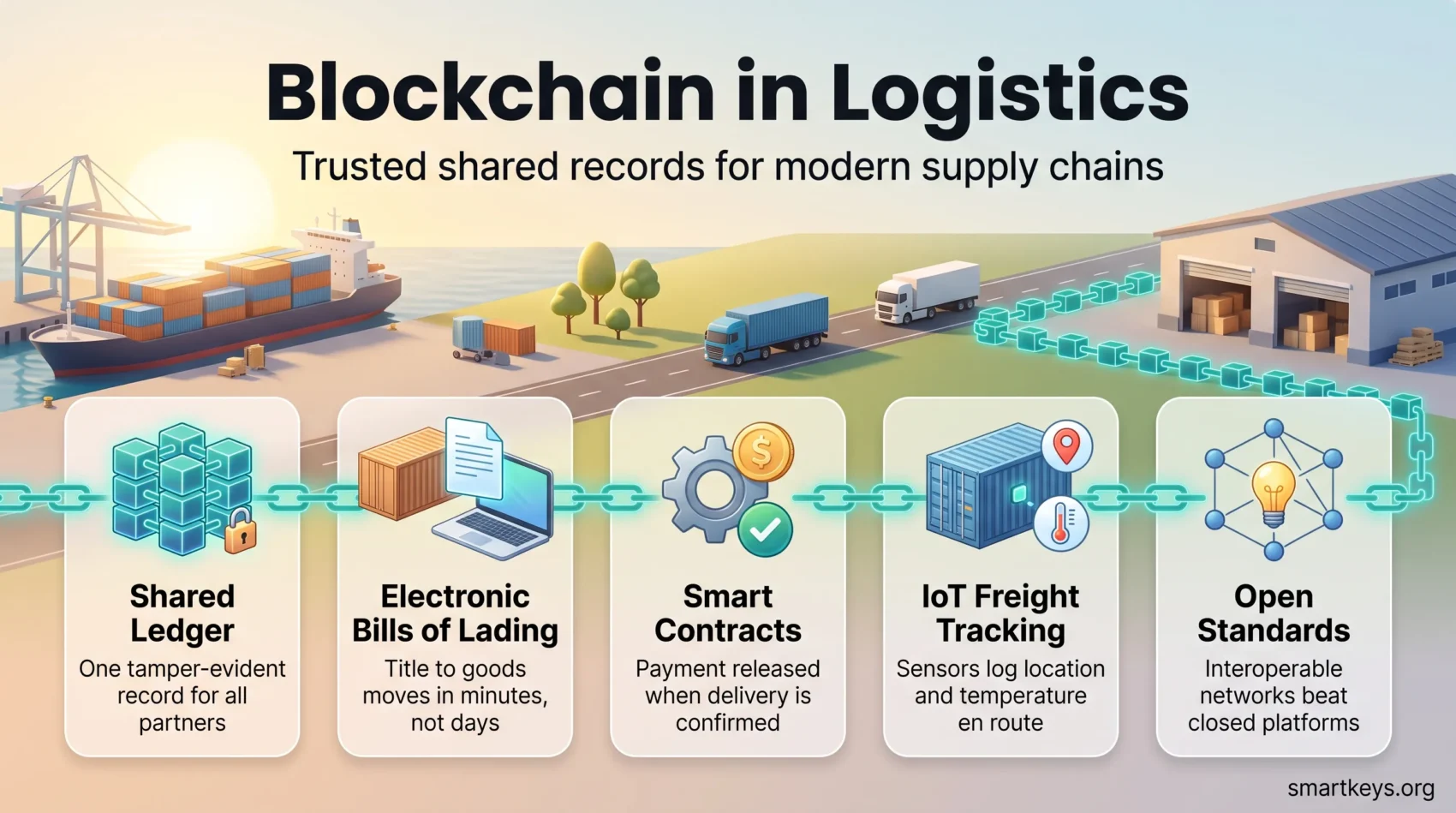
Blockchain has moved past the hype cycle in logistics. The early promise was a single shared ledger that every carrier, port, bank, and shipper would join. That version largely failed: the flagship platform TradeLens, run by Maersk and IBM, shut down at the end of 2022 for lack of industry-wide participation. What survived is more useful and more concrete. In 2026 the real story is standardised, interoperable digital trade documents, with the electronic bill of lading (eBL) as the centrepiece.
This article explains where blockchain and distributed ledgers actually add value in supply chain management today, where they stumbled, and what your business can realistically expect from electronic bills of lading, smart contracts, freight tracking, and the regulations pushing traceability forward.
Key Takeaways
- Blockchain improves transparency and traceability, but only where partners agree on shared standards.
- The industry shifted from closed consortium platforms to open, interoperable standards led by the Digital Container Shipping Association.
- Electronic bills of lading are the clearest win: roughly 11% of ocean bills were electronic in 2025, up from about 1% in 2021.
- Nine major ocean carriers have committed to 100% electronic bills of lading by 2030.
- Smart contracts can automate payments and reduce disputes when terms are clear and data is trusted.
- New laws (UK, Singapore, India) and EU product-passport rules are turning traceability from optional into required.
Understanding Blockchain in a Supply Chain Context
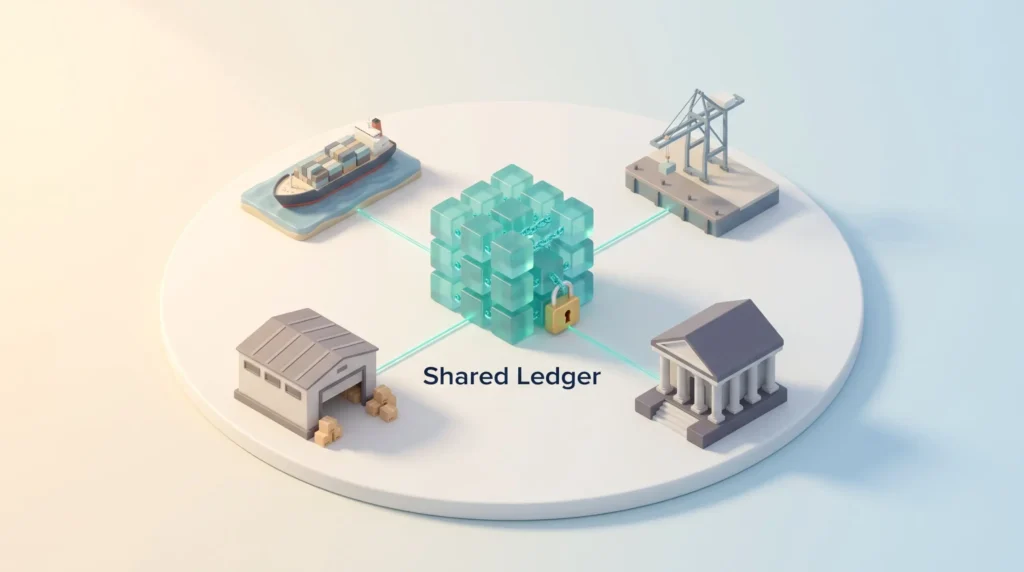
Blockchain is a shared, append-only digital ledger. Instead of each company keeping its own private record and reconciling later, authorised participants read from and write to the same record. For logistics, that matters because a single shipment can pass through dozens of hands, and every handoff is a chance for paperwork to go missing or conflict.
What Blockchain Actually Does
Each transaction is recorded as a block and cryptographically linked to the one before it. Once enough participants agree a record is valid, it becomes very hard to alter without everyone noticing. That gives three practical properties: a tamper-evident history, a shared version of the truth, and proof of who did what and when.
Key Features That Matter for Logistics
- Tamper evidence: records cannot be quietly changed after the fact, which supports audits and dispute resolution.
- Shared visibility: authorised parties see the same data, cutting the endless email chains and phone calls to confirm status.
- Cryptographic security: access is controlled and every entry is signed, reducing fraud and document forgery.
- Automation hooks: smart contracts can trigger actions (a payment, a release) when agreed conditions are met.
How It Differs from a Traditional Database
A traditional database is owned and controlled by one company. Blockchain spreads that control across participants, so no single party can rewrite history unilaterally. The trade-off is coordination: the technology only helps when the partners in a chain actually agree to use the same system and standards. That coordination problem, not the cryptography, is what sank several early projects.
Used well, shared ledgers can cut reconciliation work and speed up document handling. Companies wanting the broader picture can explore how blockchain adoption is evolving across business and how it fits alongside connected IoT devices.
The Current State of Supply Chain Management
Modern supply chains are under steady pressure: volatile demand, geopolitical disruption, tighter sustainability rules, and customers who expect fast, trackable delivery. Businesses are adapting to evolving expectations and reporting requirements while trying to keep costs under control.
Where Traditional Chains Still Struggle
The core problem is fragmented information. Data sits in separate systems that do not talk to each other, so no one has a full, trusted view of where goods are and what state they are in. Paper documents still dominate parts of trade, slowing handoffs and inviting errors. When disruptions hit, that lack of shared visibility makes it hard to reroute quickly or prove what happened.
What Changed After the Pandemic
The disruptions of the early 2020s pushed digitisation up the agenda. Shortages and delays exposed how brittle paper-based, siloed processes were, and how long it took to settle disputes when documents did not match. That experience, more than any single technology, is why carriers, ports, and banks have since invested in shared standards for digital documents and real-time tracking. The lesson was less “adopt blockchain” and more “stop relying on paper and disconnected systems.”
Blockchain and Logistics: Where It Delivers Today
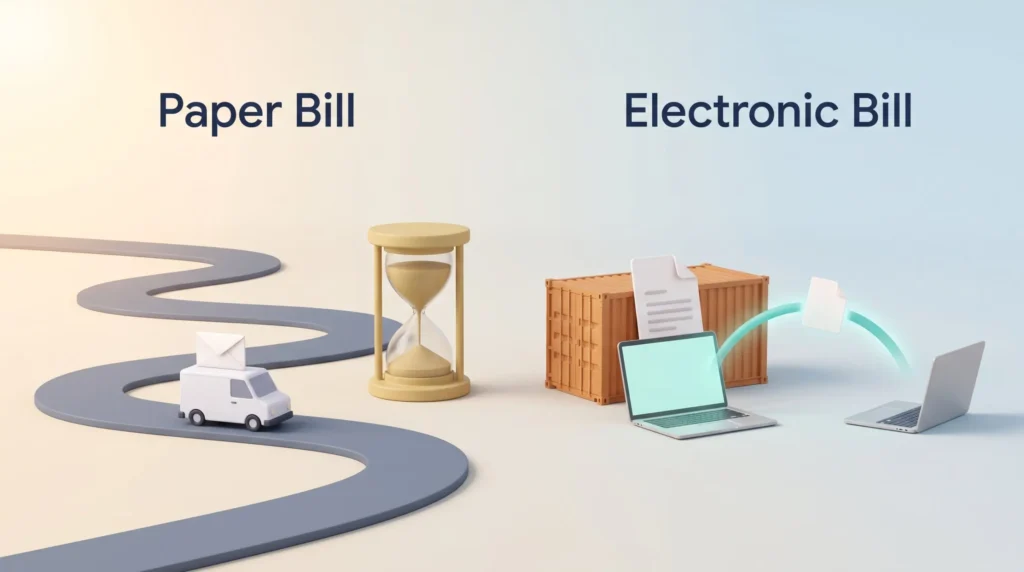
The clearest, most measurable use of distributed ledgers in logistics is the electronic bill of lading. A bill of lading is the document that proves ownership and control of goods in transit. On paper it is slow, easy to lose, and vulnerable to fraud. As a secure digital record it can move in seconds instead of days.
Practical Benefits Being Realised
- Faster document transfer: title to goods can change hands digitally in minutes rather than waiting on couriered paper.
- Fewer disputes: a shared, signed record reduces arguments over what was agreed and when.
- Better traceability: combined with sensors, a ledger can log conditions and custody at each step, valuable for food, pharmaceuticals, and high-value goods.
- Automation: smart contracts can release a payment automatically once delivery is confirmed, cutting manual processing.
Adoption in the Real World
Electronic bills of lading are gaining real ground. Industry bodies report that roughly 11% of ocean bills of lading were issued electronically in 2025, up from around 1% in 2021, according to the FIT Alliance and DCSA. In February 2023, nine of the world’s largest container carriers, coordinated by the Digital Container Shipping Association, committed to issuing 100% of bills of lading electronically by 2030. More than 240 organisations have since signed the FIT Alliance eBL Declaration backing the shift. Walmart’s earlier food-tracking work with IBM showed the traceability upside, though the company later scaled back its use of that platform, a reminder that adoption follows business value, not novelty.
Lessons from the Platforms That Failed
The most instructive story in blockchain logistics is not a success but a shutdown. TradeLens, the Maersk and IBM joint venture, was the highest-profile attempt to build an industry-wide supply chain blockchain. It closed in early 2023. The technology worked; the business model did not, because competing carriers were reluctant to route their data through a platform associated with a rival.
Why It Matters for Your Decisions
The takeaway is simple. A shared ledger is only as valuable as the network that uses it, and networks form around neutral standards rather than any one company’s platform. That is why the industry has coalesced behind the DCSA’s open bill-of-lading standards and interoperability rules, which let different eBL providers exchange documents without breaking the chain of title. If you are evaluating a solution, favour open, interoperable standards over closed platforms that lock you in.
Decentralised and Networked Logistics
Beyond documents, the broader shift is toward networked logistics: independent carriers, warehouses, and providers coordinating through shared data rather than one central owner. Distributed ledgers are one tool for this, giving every participant the same trusted view without handing control to a single gatekeeper. When partners work from one verified record, they can reroute around disruptions and settle accounts with less friction. That is especially useful across borders, where differing legal systems make trust harder to establish and a neutral, verifiable record helps satisfy customs and regulatory checks. For related operational technology, see how robotics and automation are changing physical workflows and how predictive maintenance keeps equipment running.
Smart Contracts in Logistics
Smart contracts are agreements written as code that execute automatically when set conditions are met. Built on a ledger, they remove manual steps and reduce the need for intermediaries to verify that terms were satisfied.
What They Are
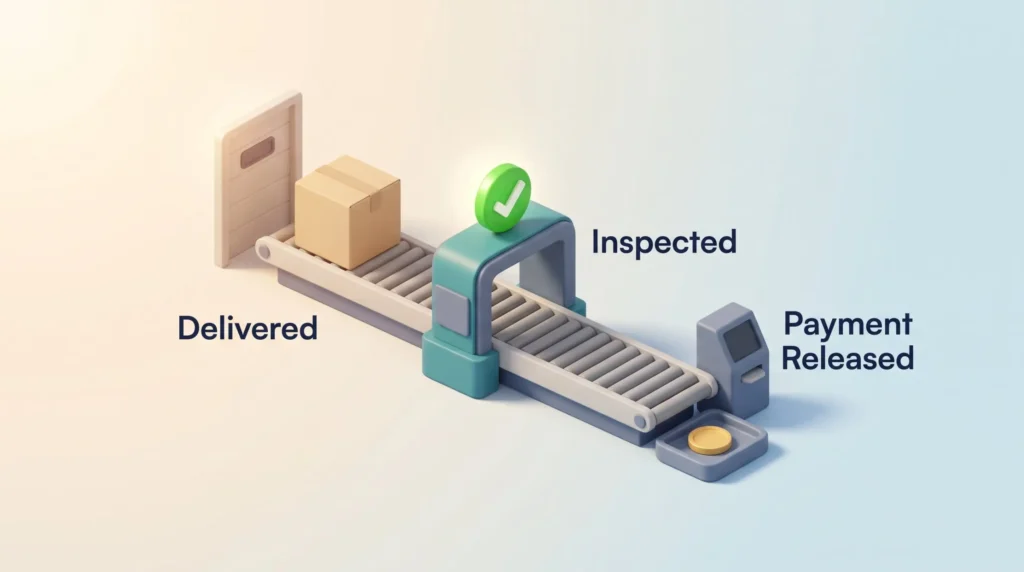
A smart contract follows simple “if this, then that” logic. If a shipment is confirmed delivered and inspected, then payment is released. Because the code and the conditions sit on a shared ledger, both parties can trust that the agreement will run as written, without one side stalling or disputing it.
Advantages in Supply Chain Processes
- Speed: automated steps replace slow manual approvals.
- Lower cost: fewer intermediaries and less paperwork per transaction.
- Accuracy: rules execute the same way every time, cutting human error.
- Transparency: both sides see the same conditions and the same outcome.
Where They Fit Best
Smart contracts work best for clear, rule-based processes: releasing payment on confirmed delivery, triggering penalties for missed conditions, or automating multi-party settlements. They struggle where terms are ambiguous or the underlying data is unreliable, which is why trusted connected sensors and well-designed contract logic matter as much as the ledger itself.
Freight Tracking and IoT
Visibility is where logistics teams feel the most pain, and where ledgers plus sensors combine well. On their own, tracking systems can be edited or disputed. Anchored to a shared, tamper-evident record, tracking data becomes something all parties can rely on.
Improving Visibility and Accountability
A shared ledger gives everyone in the chain one status record rather than several conflicting ones. That cuts the back-and-forth needed to confirm where a shipment is and shortens the time to resolve exceptions. The value is not the ledger alone but the trust it lends to the data on top of it.
The Role of IoT
IoT integration is what makes tracking rich. Connected sensors report location, temperature, shock, and humidity, and those readings can be logged to a ledger as they happen. For cold-chain goods like vaccines or fresh food, an unbroken, verifiable record of conditions is a genuine competitive advantage. Pairing sensors with automation is central to how business automation is advancing.
Secure Data and Transparent Transactions
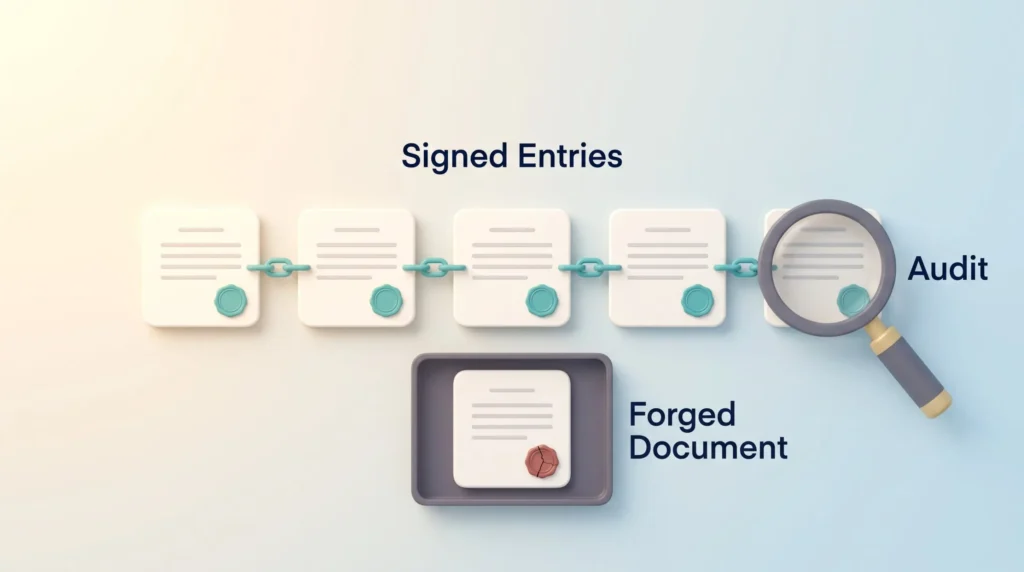
Trust between trading partners rests on secure, verifiable data. Blockchain’s design, cryptographic signatures on a distributed record, makes entries hard to forge and easy to audit. Each transaction is validated by the network before it is recorded, and every entry is signed, so unauthorised changes are evident. For sensitive trade data, that reduces the risk of fraudulent documents, a real problem in traditional paper-based trade finance.
Why Transparency Pays Off
When every authorised participant sees the same record, audits get simpler and compliance becomes easier to demonstrate. That matters more each year as regulators tighten traceability rules. The EU’s Digital Product Passport, established under the Ecodesign for Sustainable Products Regulation, will require detailed product data starting with batteries from February 2027, with textiles and other categories to follow. Verifiable supply chain records are becoming a legal expectation, not just a nice-to-have, alongside broader data privacy and governance rules.
Blockchain, Automation, and What Comes Next
Blockchain rarely works alone. Its value grows when combined with automation, IoT, and analytics into a connected logistics stack: the ledger provides trusted records, while automation and AI act on them. Companies like Amazon and Walmart already run heavily automated warehouses with robotics for picking and packing, and verifiable records layered on top help prove provenance end to end. The pattern that works is pragmatic: use ledgers where a trusted shared record genuinely solves a problem, and use AI-driven analytics to act on that data.
Practical Advice for Businesses
- Start with a specific pain point, such as slow document handoffs or disputed deliveries, rather than “adopting blockchain.”
- Favour open, interoperable standards over closed platforms.
- Make sure your partners will actually use the same system; a ledger with no network is just a slow database.
- Combine ledgers with trusted IoT data and automation so the records are both reliable and actionable.
Conclusion
Blockchain in logistics is no longer about grand, industry-spanning platforms. After the closure of TradeLens and the scaling back of several early projects, the winning approach is narrower and more durable: open standards, electronic bills of lading, and trusted data shared across willing partners. Adoption is climbing steadily, regulation is pushing traceability from optional to mandatory, and the carriers moving the most cargo have set clear targets for going fully digital.
For businesses, the message is practical. Focus on real problems, choose interoperable standards, and combine ledgers with sustainable, resilient supply chain practices and automation. Those who do will gain faster, cleaner, more trustworthy operations.
Found this useful?
Make SmartKeys a preferred source on Google, and our articles will surface more often in your Top Stories, AI Overviews, and AI Mode.
Add as Preferred Source