Tools
Tools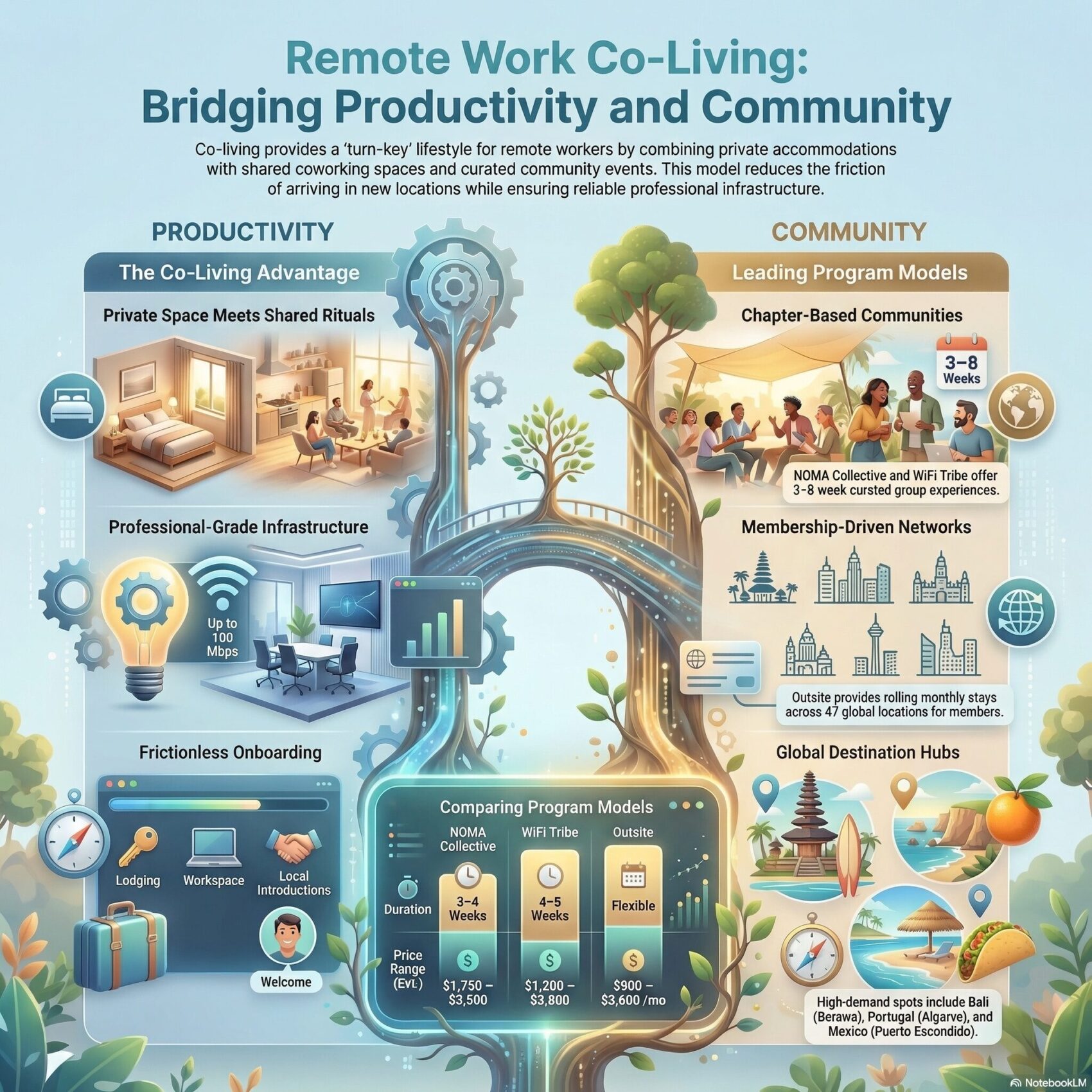
Last Updated on April 4, 2026
Coliving combines private rooms with shared areas and pairs naturally with coworking to give you both focus and company.
You’ll find reliable internet, dedicated desks, and equipment that help you get work done right away. Programs like NOMA Collective, WiFi Artists, WiFi Tribe, and Outsite bundle lodging with curated community events.
This approach solves isolation and speeds up onboarding in new places. It gives nomads a stable place to plug in, meet people, and keep productivity high.
In this guide you’ll see how these models fit your lifestyle and travel plans. You’ll learn pricing ranges, what’s included, and whether joining a ready-made community fits this part of your life.
Key Takeaways
- Coliving mixes private rooms with shared community areas for balance.
- Coworking provides the desks, gear, and internet to keep you productive.
- Programs like NOMA Collective and Outsite sell community as much as lodging.
- These spaces reduce friction when landing in new places and boost connection.
- This guide will help you match destinations and programs to your lifestyle.
What Is Co-Living for Digital Nomads and How It Works
Think of coliving as a ready-made neighborhood: you have your own private room paired with communal kitchens, lounges, and shared desks so daily life and social time are easier.
Defining the model
Coliving combines a private bedroom—often with an en suite—with common areas designed for affordability and connection. Coworking complements that by supplying high-speed internet, meeting rooms, and dedicated desks.
Layout and amenities
Typical setups include a private room, shared kitchen, lounge, and an in-house desk area or a nearby coworking hub. Platforms like Mapmelon and Coliving.com list verified locations and details about Wi-Fi, rooms, and facilities.
Who benefits
- Digital nomads and freelancers who want social life plus quiet rooms for focus.
- Small teams and remote workers seeking predictable desks and meeting spaces.
- People who value routine and easy access to community events and amenities.
“Coliving reduces friction when you arrive somewhere new by offering both private space and dependable shared areas.”
The Big Benefits: Productivity, Community, and a Flexible Lifestyle
Coliving blends practical work needs with social rituals so you can get more done and feel at home fast.
From high-speed Wi-Fi to dedicated workspaces that help you get work done
Coworking hubs tied to these programs deliver fast Wi-Fi, bookable meeting rooms, and private phone booths. That means fewer interruptions and cleaner calls.
You save time because desks and meeting spaces are nearby. You avoid hunting for signal or noisy cafés when deadlines arrive.
Community, events, and support that turn new places into home
Community activity—skill-shares, networking nights, and local outings—creates quick bonds and useful connections.
Community managers and local hosts offer day-to-day support so errands, tips, and logistics don’t slow you down.
“The right mix of space, people, and routine lets you bring your best work while enjoying the place you call home.”
- Consistent Wi-Fi and quiet areas for focused blocks.
- Structured events that build real connection fast.
- Flexible rhythms that protect deep work and social time.
Remote work co-living
Turn-key coliving programs now package housing, desks, and local introductions so you can arrive and settle faster.
You often stay within walking distance of a nearby coworking hub or use an on-site work area. That proximity saves time and keeps your daily routine steady.
These options bundle essentials—housing, workspace access, and curated activities—so you spend less time on logistics and more on productivity and exploration.
- Flexible lengths, from month-long chapters to shorter stays.
- Built-in community programming and local introductions to speed integration.
- Predictable access to desks and reliable infrastructure across the world.
“A turn-key setup preserves your schedule and makes new locations feel like home fast.”
Think about how location choices affect your time zones, gym and transit access, and daily rhythm. Those small factors decide whether a packaged option fits your current bandwidth or if you should assemble your own stay.
Top Program Models You Can Join Today
Choose a program that fits your rhythm—some run tight chapters while others offer rolling monthly stays. Below are four proven models so you can compare inclusions, pricing, and the social format that suits your season as a digital nomad.
NOMA Collective (formerly Hacker Paradise)
NOMA Collective runs 3–4 week editions with a local community manager, private rooms with cleaning, coworking access, skill-shares, yoga, and weekend excursions.
Prices start at about $1,750 for 3 weeks; 4-week editions range $2,490–$3,590. Local SIMs and curated events speed your onboarding and help you meet new friends while you focus on getting work done.
WiFi Artists
Flexible month-long programs let you join with or without accommodation. Inclusions can cover lodging, a coworking pass, a team lead, airport transfer, and backup tech.
Pricing runs roughly $800–$920 monthly for program-only, and $1,770–$2,300 with a private bedroom and cleaning. This is a solid option if you want modular accommodation and clear costs.
WiFi Tribe
WiFi Tribe runs 4–8 week “Chapters” for 12–25 people. You apply and interview, then join a global Slack group. There’s a $500 annual membership and chapter fees of $1,200–$2,800.
This model creates a close-knit group experience with in-home workspace setups and built-in connection across countries and destinations.
Outsite
Outsite is membership-based (annual $149 or lifetime $399) and offers fully furnished coliving spaces with ~100 Mbps Wi-Fi, community managers, and 24/7 support.
Accommodation ranges from about $900 to $3,600/month across 47 locations worldwide. If you value predictable access and flexible stays, Outsite’s model simplifies logistics.
- Compare: how each model bundles rooms, accommodation, coworking spaces, events, and daily support.
- Plan: match pricing and inclusions to your schedule so your stay and productivity stay aligned.
Popular Destinations and Coliving Spaces Around the World
From Bali to Portugal to Mexico, select locations deliver both lifestyle and practical facilities for digital nomads.
Bali — Berawa
Berawa offers modern tropical apartments with an on-site coworking area and a pool.
Amenities include fast Wi-Fi, a kitchen, gym, and multiple workspaces.
Rates start around ~$887/month and many listings carry a 4.9 rating (53 reviews).
Portugal — Algarve (Fuseta) & Ericeira
Choose Fuseta for higher-end beachfront accommodation or Ericeira for budget-friendly surf hubs.
Fuseta listings start near ~$1,508/month; Ericeira can begin around ~$420/month.
Both places include fast Wi-Fi, pools, kitchens, and yoga or surf-friendly communities.
Mexico — Puerto Escondido
Puerto Escondido blends vibrant beach life with dependable infrastructure.
Expect fast Wi-Fi, gym access, pools, and dedicated workspaces from about ~$1,261/month.
This destination suits nomads who want social energy plus a quiet room option for focused hours.
- Scan ratings and amenity lists to compare spaces across countries.
- Consider rooms and room types (private vs shared) when planning your budget.
- Match the destination’s vibe and time zone to your schedule and travel goals.
How to Choose the Right Coliving or Coworking Space
Begin with the essentials: stable internet, a real desk, and clear house rules. These basics shape your daily flow and let you spot viable options quickly.
Key criteria to check
Confirm Wi-Fi reliability and in-house desks. Ask whether meeting rooms and quiet zones are included or bookable.
Verify transparency and quality control. Use platforms that visit listings and publish community activity details, like Mapmelon.
Look at support and member access. Memberships such as Outsite’s unlock member-only spaces, perks, and predictable amenities.
Rooms, budgets, and memberships
Compare rooms and accommodation types. Ask about leases, deposits, cleaning, and utilities to avoid hidden charges.
- Evaluate flexibility: date changes, cancellation windows, and length of stay.
- Assess location trade-offs: proximity to coworking spaces, transit, groceries, and noise.
- Match the worker mix and events to your goals so experiences add value, not distraction.
“A short trial stay or a clear cancellation policy saves time and keeps your plans flexible.”
Building Connection: Community, Events, and Professional Growth
Building real connection makes a short stay feel like home fast. Many programs pair skill-shares, networking, community meals, and curated local experiences so you plug in quickly.
Skill-shares, networking, and local experiences that support your lifestyle
Coliving and coworking spaces create regular events that turn neighbors into collaborators and new friends.
- You learn to join community sessions—skill-shares, dinners, and outings—that seed partnerships and client referrals.
- Recurring events build a steady sense of home while you travel, so short stays feel meaningful.
- You can host a workshop or lead a local experience to give back and grow professionally.
- Community managers and program leads provide the support you need to run meetups and onboard into the local scene.
Balance is key: pick groups with the pace you want, whether a full calendar or a lighter rhythm that protects focus. Keep contacts after you move on by tapping alumni networks and simple follow-ups—those ties often become long-term collaborators across the world.
“Small, regular gatherings create the kind of serendipity that leads to real projects and lasting friendships.”
Plan Your Stay: Timing, Length, and Travel Logistics
Plan your arrival so your calendar, deadlines, and local rhythm all line up with the space you choose. Programs like NOMA Collective, WiFi Artists, and WiFi Tribe publish fixed dates and destinations. Outsite offers continuous availability across 47 locations with reliable internet and on-site desks.
Aligning your schedule with dates and access
Choose a time horizon that fits your goals. Four to eight weeks gives stability. Shorter stays help you sample different places.
- Sync dates: plan around chapter start times so calls and deep focus blocks align.
- Protect your calendar: pick a room with walkable access or an on-site desk for reliable access to meeting spaces.
- Logistics: account for visas, local holidays, and travel buffer days before big calls.
Budget for your stay—include transportation, memberships, and any coworking passes. Decide if a group program gives the community you want or if booking independently suits your need for quiet.
“A short buffer before your first big call keeps time-zone surprises from derailing your day.”
Conclusion
Conclusion
Wrap up by choosing a place that balances focus, company, and clear costs so you can start strong.
You’ve seen how coliving and coworking setups deliver private rooms, reliable desks, strong Wi-Fi, and easy-to-join community activities across destinations around the world.
Now shortlist a few coliving spaces and compare prices, room types, and the level of structure you want. Pick options with good desks, quick internet, and the events or group size that energize you.
When ready, confirm availability, lock in workspace access and a comfortable room, and arrive knowing you can get work done from day one. For more on how digital nomads fit into the modern workforce, see digital nomads workforce.