Tools
Tools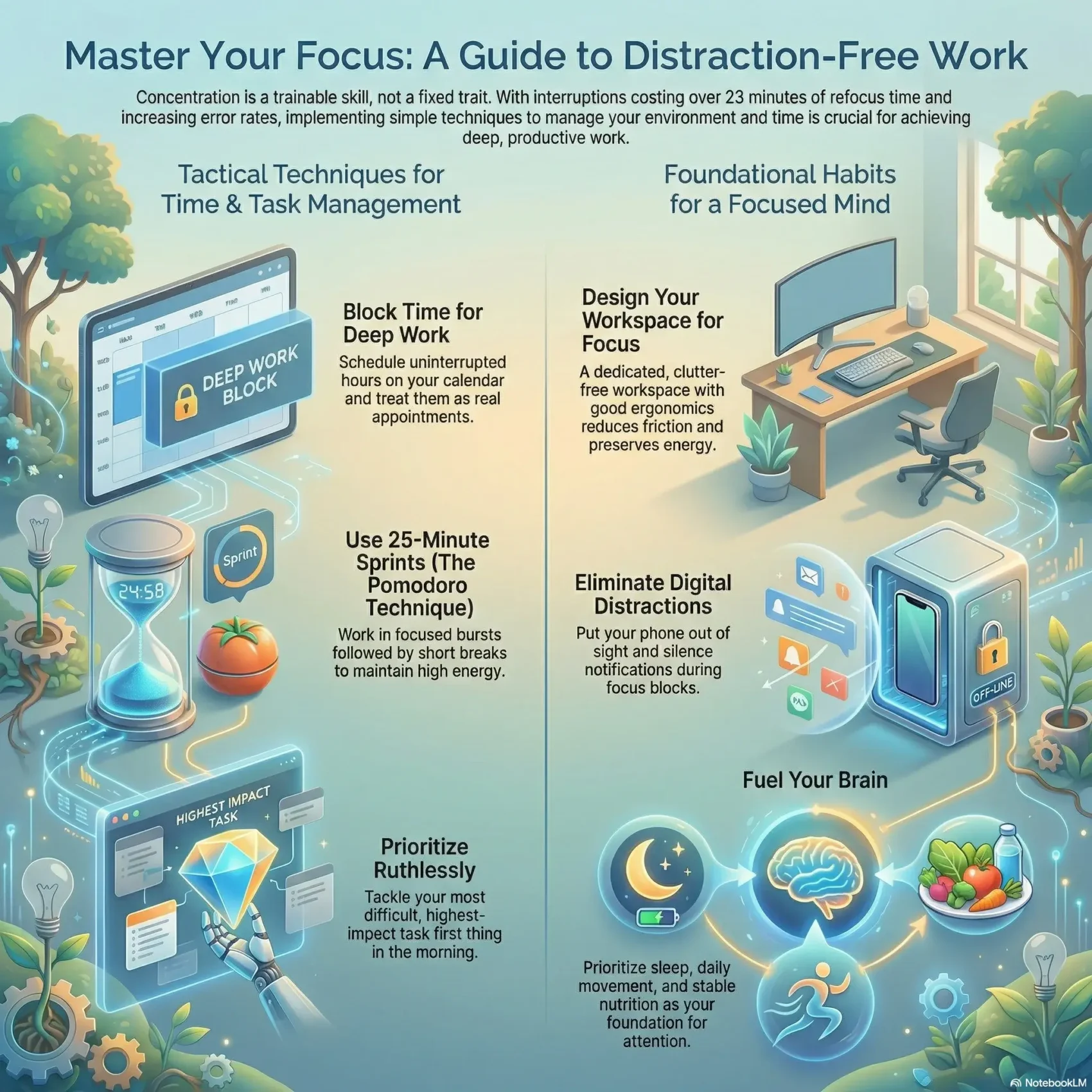
Last Updated on March 5, 2026
You can strengthen your attention and get more done each day by treating concentration as a skill, not a trait. Small changes—like a dedicated workspace and hiding your phone—help your brain resist interruptions and improve focus.
Research shows that interruptions cost time: it can take over 23 minutes to refocus after a break, and errors rise when you switch tasks often. Simple habits such as time blocking, short micro-breaks, and the Pomodoro method give you clear windows for deep work.
Across the rest of this guide, you’ll get seven actionable ways to cut distractions, support your brain with sleep and movement, and build routines that let you stay focused and enjoy real productivity. Use this practical information and apply one thing today to see quick wins. For tips on silencing alerts and handling team interruptions, check this resource on how to manage work notifications.
Key Takeaways
- Concentration is trainable—treat it as a habit you can build.
- Design your space and hide your phone to reduce distractions fast.
- Use time blocks and Pomodoro-style windows for deep, error-free work.
- Support focus with sleep, movement, and steady nutrition.
- Track simple metrics like minutes of deep work to measure progress.
What you’ll learn today to improve your focus and productivity
Here are proven, easy-to-test steps that help you work with your natural energy and get more done each day.
This guide gives you practical ways to protect attention in noisy workplaces full of messages, notifications, and meetings. You’ll find clear steps for handling email and emails, structuring time, and translating big goals into a small, doable list you can finish today.
How this How-To Guide helps you stay focused in a hyper-connected world
You’ll learn how to set boundaries with notifications so interruptions drop and error rates fall. Evidence shows it can take over 23 minutes to regain concentration after a break, so small changes matter.
The guide also gives simple time management and Pomodoro suggestions to split your day into focused sprints. Use those steps to match work to your energy peaks and improve performance without overhauling your routine.
- Protect attention with notification rules and email batching.
- Turn goals into a short list of achievable tasks for today.
- Pick one or two simple steps to try this week and measure progress.
“Limit interruptions and your productivity and quality both improve.”
Understanding focus vs. attention so you can target the right thing
Start by separating broad attention from tight concentration so you can pick the right approach for each task. Attention is the mind’s gatekeeper: it selects which information to process and which to ignore. Focus is a narrower state that sustains effort on one thing while filtering out distractions.
Attentional vs. cognitive focus: Where your brain filters and processes information
Your prefrontal cortex helps sort incoming signals and hold steps in working memory. That lets you complete complex tasks without losing track of the next action.
Sensory distractions—noise, clutter—compete with task-related input. Emotional distractions—stress, worry—pull resources away from the task. Know the types so you can remove the right barrier.
Cognitive control: Attention, working memory, and goal management in action
Cognitive control ties attention, working memory, and goal-setting together. It gives you the ability to switch plans when needed while protecting progress on primary goals.
- Label distractions as they come to make returning to work quicker.
- Choose a simple method to sort tasks: deep work, batch, or defer.
- Remember: multitasking splits attention and costs time.
Focus management techniques
Use simple calendar rules and timers to shape your day into repeatable wins. These proven approaches help you protect long stretches of deep work while keeping small tasks under control.
Time blocking for deep work windows without guilt
Time blocking reserves hours on your calendar for uninterrupted effort. Close email and put your phone out of sight. When you mark a block, decline meetings and treat it as a real appointment.
The Pomodoro Technique: Use a 25-minute timer and short breaks to stay on task
The pomodoro technique breaks work into 25-minute sprints, then a 3–5 minute break. After four cycles, take a longer break. This method gives you reliable minutes of progress and lowers start-up friction.
Eisenhower Matrix and GTD to organize tasks by urgency, importance, and next actions
Sort tasks with an Eisenhower matrix: urgent vs. important. Then apply GTD steps—capture, clarify, organize, reflect, and engage—so each item becomes an actionable next step you can complete.
Prioritize and finish faster
Pick your “frog” first—tackle the hardest, highest-impact task early. Use Pareto analysis to spot the 20% of actions that drive most results. Apply Parkinson’s Law by tightening deadlines to speed completion.
- Batch similar work (email, calls) to reduce multitasking and protect one type of work per block.
- Rely on a timer to cue hyper-focus and predictable breaks.
- When you’re stuck, switch deliberately to a related, simpler task to keep momentum.
“Small, repeatable steps and a clear schedule let you get more done in less time.”
Eliminate distractions and reclaim your attention
To reclaim uninterrupted time, start by removing the small, recurring distractions that eat minutes and drain energy. A few intentional changes make your workday calmer and more productive.
Create a dedicated workspace and keep your phone out of sight. Research shows your cognitive capacity improves when a device is not visible. Make one clear spot for tasks and nothing else.
Create a clear phone rule and tidy your desk
Put your phone in another room or a drawer during deep blocks. Tidy your desk at day’s end so tomorrow starts with fewer tasks and less friction.
Silence notifications and close social media during blocks
Turn off pings, close social media tabs, and batch messages and emails into two or three windows each day. Choose a short list of allowed apps for focus blocks and block the rest with site blockers.
- Schedule time blocks on your calendar and add a visible timer so people learn not to interrupt.
- Remove one thing that reliably steals attention—swap it for a quick Pomodoro Technique sprint.
- Test lighting, seating, and headphones to cut media noise and preserve deep work.
“Simple rules—one workspace, a hidden phone, and silenced alerts—give you back minutes every hour.”
Digital hygiene: Email, messages, and social media without derailing your day
Clean digital habits stop your inbox from setting the day’s agenda and give you back real working time. Choose two or three planned windows for email and messages so incoming information doesn’t push your priorities aside.
Use a simple triage list—delete, delegate, defer, or do—to process each item fast. Create canned replies for routine emails and save them so common replies take seconds instead of minutes.
Try a short Pomodoro Technique session with a timer to clear communication piles. Work in focused bursts, then take a brief break to refresh.
Turn off badges and lock-screen previews for social media and media apps to cut visual noise. Keep your phone in another room during deep blocks and bring it back only during scheduled communication windows.
- Standardize response times with your team so expectations are clear.
- Batch messages into time management blocks to prevent constant switching.
- Pick two tips to test this week, track minutes saved, and refine your strategies.
“Batching communication and using short bursts for inbox work protects your day and boosts productivity.”
Mindfulness and present-moment focus you can use today
Short mindfulness habits calm your nervous system and sharpen your attention for real work. Use quick breath cues and tiny rituals to steady your mind when distractions appear.
Simple breath practices to bring your mind back to the task at hand
Try a 60–120 second breath reset before a time block. Breathe slowly in for four, out for six. Repeat twice to calm your brain and restore energy.
Pair that breath cue with a start-of-work ritual. A short body scan—feet, shoulders, jaw—helps you find tension and release it. This clears mental clutter so you can stay focused.
- Label passing thoughts: “planning,” “worrying,” or “remembering” to redirect attention without judgement.
- Place a small visual anchor on your desk to remind you to return to the present.
- Use mindful transitions between tasks so old ideas don’t follow you into the next block.
Integrate one two-minute practice into a daily block and reflect on when your attention slips most. Small, repeatable steps build your ability to sustain focus across the day and life.
Sleep, exercise, and nutrition that boost your brain’s ability to stay focused
Small daily habits—curbing late-night screens, moving your body, and choosing steady meals—pay big dividends for attention and energy.
Sleep hygiene: calm nights and better next-day performance
Set a screen curfew to reduce blue light in the hours before bed. Blue light suppresses melatonin and can shorten deep sleep, so use filters or stop screens 60–90 minutes before sleep.
Treat sleep as your highest-leverage method. Protect consistent hours and avoid late caffeine so your ability to concentrate improves the next day.
Move daily: simple exercise to sharpen attention
Even a brisk 20–30 minute walk raises dopamine, norepinephrine, and serotonin. Those neurochemicals lift alertness and boost task performance.
Plan a brief movement break before long work blocks. A short pre-focus ritual—water, two minutes of breathing, and a stretch—primes your brain for sustained work.
Eat for stable energy: meals that prevent sugar crashes
A Mediterranean-style plate—fish, olive oil, nuts, and leafy greens—stabilizes blood sugar and supports cognitive function. Avoid sugary snacks that create energy dips and more distractions.
Try one nutrition tip this week and note how your focus on tasks changes across the day. Use a timer to add a 45–60 minute work block, then take a quick break to reset and sustain productivity.
“Protect sleep, move often, and eat steady meals — these strategies compound into clearer thinking and better time on task.”
Use short breaks to maintain high performance
Short, scheduled pauses during your day refresh mental energy and keep output steady. You’ll protect attention by stopping the slow decay that happens when you push without rest.
Set a timer for 25–60 minutes, then take a short break for a few minutes. Stand, walk, or do a quick mobility drill to bring oxygen and motion back into your body.
Pick one simple thing for every break—water, a breath exercise, or a stretch—so you avoid drifting into distracting apps. Return to the task right after the minutes are up to keep time and momentum aligned.
- Schedule short breaks every 25–60 minutes to reset attention and protect performance across long stretches of work.
- Use a timer to cue the pause, then move briefly to raise energy and clarity.
- If stuck, switch to a short, related task so you stay productive without abandoning the main task.
Track which minutes of your day deliver the best work and design break times around those peaks. Small adjustments in cadence can measurably boost productivity over the course of a day.
“Micro-rests are not wasted time; they are strategic seconds that keep your productivity sustainable.”
Nature and soundscapes to reset your brain between tasks
Brief outdoor breaks and gentle soundscapes give your brain a fast reset between tasks. You can use small, repeatable rituals to clear mental clutter and return ready for the next block of work.
Micro-doses of nature: plants, walks, and attention restoration
Add a plant to your desk. Studies show greenery raises concentration, satisfaction, and productivity. A short 3–5 minute walk outside also refreshes your attention and lifts energy.
Use simple rituals: finish a block, stand, step outside, water a plant, and come back. This example routine signals your mind that one task is done and the next can begin.
What to listen to: light music or nature sounds vs. lyrics
Choose light music or nature sounds for steady background audio. Tracks with lyrics and human voices often compete with your verbal processing and become distractions.
- Test different types of ambient audio and note which help you re-enter focused time fastest.
- Use a quick outdoor reset instead of scrolling social media to protect your minutes and energy.
- Set a simple rule: headphones on means “in focus,” which signals people not to interrupt.
“A five-minute change of scenery or gentle sound can reboot your mind and improve how you handle the next task.”
Set a daily priority and plan your list the smart way
Start each day by naming one clear priority and a short list you can complete today. This simple step aligns daily work with your bigger goals for the week and makes progress obvious.
Break big goals into smaller steps. Take a large project and split it into the first three actions. Schedule the first action now so momentum builds in minutes, not days.
Break big goals into smaller steps and celebrate quick wins
Pick one method to rank tasks—Eat That Frog or an Eisenhower-style choice works well. Then batch similar work so you stay in one mode and reduce switching costs.
- Create a compact list anchored by one priority that matches your weekly goals.
- Use a timer or the Pomodoro Technique to carve steady minutes toward each task.
- Capture your strategy in a short template so decisions become faster and consistent.
“Small wins trigger motivation. Celebrate them and the next step gets easier.”
Design a workspace that supports deep work all day
A clear work zone cuts friction so your attention lands on the right task the moment you sit down. Set aside one dedicated area for work and keep non-work things out of sight.
Adjust lighting, chair height, and monitor distance to reduce strain and preserve energy through long sessions. Add a task light or better lumbar support as a small upgrade that pays off every day.
Keep your phone off the desk and use noise-canceling headphones to block ambient distractions. Store frequently used items within reach and put everything else away to limit pulls on your attention.
- Choose one clear zone for work and remove visual clutter.
- Set ergonomic basics: chair, screen, and light for longer task blocks.
- Test one upgrade (lamp, chair pad, or plant) and note improved productivity.
End the day with a quick reset routine: clear the surface, note tomorrow’s top tasks, and close open tabs. A simple layout checklist helps you improve focus consistently with minimal effort.
“A calm, organized desk makes deep work easier to start and maintain.”
Lead your team’s focus: Time blocks, clear goals, and fewer interruptions
Put simple rules in place so your team can do deep work for meaningful hours. Clear expectations cut the cost of interruptions and raise quality. Leaders who protect heads-down windows help people get more done with less stress.
Why it matters: lost minutes and higher error rates
Interruptions have a real price. It takes about 23 minutes and 15 seconds to regain concentration after a break, and frequent interruptions can raise error rates by roughly 20%.
That means one ping or unplanned meeting can cost your team hours and harm performance.
Promote a culture of boundaries and regular breaks
- Establish shared time blocks for deep work and align team goals so people work uninterrupted.
- Batch messages and emails into set windows to cut rework and drop distractions.
- Adopt norms: meeting-free mornings, clear agendas, documented decisions, and visible status indicators.
- Measure outcomes, not busyness; role-model breaks and run quick retros to fix one or two things each sprint.
“Protecting time for deep work improves productivity and reduces costly errors.”
Measure progress and sustain your new focus habits
Track a few simple metrics so you can see real change in your daily routine. Small, regular checks give you clear information to tweak what works and drop what doesn’t.
Track minutes, completed tasks, and energy
Create a short list of metrics: deep work minutes, completed tasks, and perceived energy. These three numbers show progress at a glance and keep productivity honest.
- Use a timer or the pomodoro technique to log minutes and count cycles.
- Note one task at hand you avoided and plan a tiny next step to remove the barrier.
- Map when your brain performs best and schedule hard tasks at that time of day.
Review the data once a week. Mark which method gave the best performance, what drifted, and one adjustment to try next week. Over time, small wins add up into lasting success.
“Measure minutes and outcomes, not busyness; that information tells the truth about your progress.”
Conclusion
Make a simple pact: one 25-minute sprint and a quick end-of-day note. This small thing helps you build steady wins and improve focus over time.
Combine environmental shifts—phone out of sight and a tidy space—with proven time blocks and brain-supporting habits like sleep and movement. These elements work together to protect your best minutes and raise your productivity.
Pick one tip today and track minutes or completed tasks. Revisit your plan weekly and make one tweak. For a practical way to run short sprints, try the focus sprints guide to stay focused and aligned with your goals.