Work-life balance matters more now that technology keeps communications flowing around the clock.
You’ll get a clear, friendly walkthrough of what the right to disconnect means today in the united states and how it affects employees and employers. This concept aims to limit expectations for availability outside assigned hours and cut burnout.
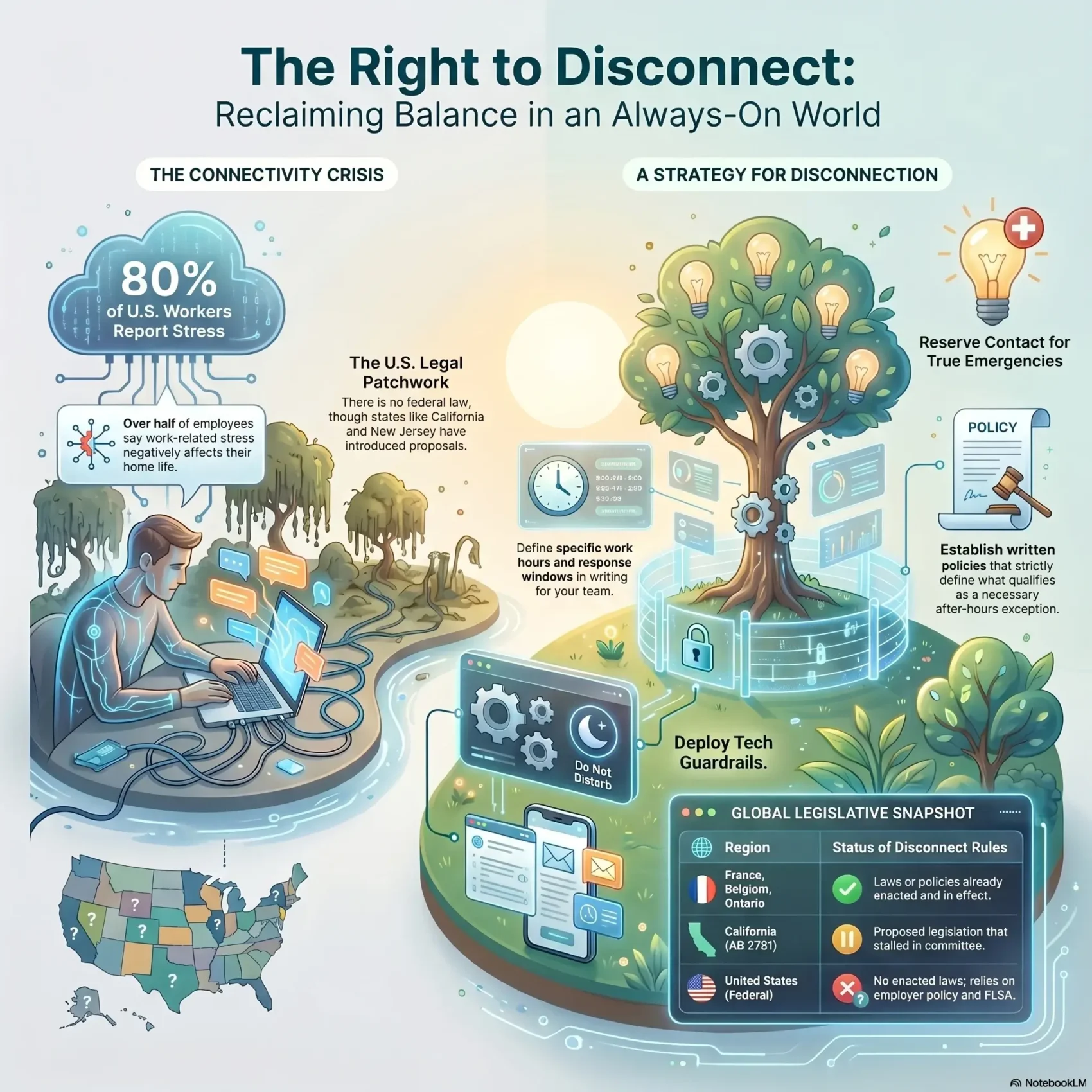
Many countries already have laws or policies that curb off-hours outreach — France, Belgium, Ontario and others have set rules that reshape workplace culture and protect mental health. In the present, the U.S. has no federal law in effect, though proposals and company policies are emerging.
In short: you’ll learn what this idea looks like in practice, how always-on technology pressures workers, and practical steps you can take to safeguard your time while keeping work relationships strong.
Key Takeaways
- Understand how the right disconnect concept shapes work-life balance for employees.
- See which countries already limit after-hours expectations and why employers watch those trends.
- Learn simple steps to manage communications and protect your time.
- Know the current U.S. landscape: no federal law yet, but proposals and policies are appearing.
- Discover how healthier norms can improve focus, reduce burnout, and help business culture.
Where You Stand Today in the United States: Laws, Bills, and Real-World Implications
You face a patchwork of proposals and company practices when it comes to after-hours outreach across the united states.
The present legal landscape has no enacted right disconnect laws at the federal level. That means your off-duty availability mostly follows employer policy, written agreements, and existing wage-and-hour rules rather than a standalone statute.
The key state proposals
- California (AB 2751): This bill would have required a written policy granting an employee right not to engage in employer communications during nonworking hours, with emergency and last-minute scheduling exceptions. It stalled in committee.
- New Jersey: A September 2024 proposal mirrors CA by defining nonworking hours outside regular assigned times, requiring a written policy, and allowing emergency or within-24-hour scheduling exceptions. Thresholds discussed ranged from 10+ to 50+ employees.
- Other attempts: Prior proposals in Washington and new york were defeated, while countries such as France, Belgium, and Ontario already have laws addressing after-hours communications.
Practical effect: until a disconnect law passes, day-to-day expectations come from your manager and company rules — though pending legislation signals change ahead.
What you should watch: whether future legislation clarifies what counts as an emergency, how assigned work hours are set, and whether enforcement runs through labor agencies. Also note existing laws like the FLSA can create liability if off-the-clock work occurs for non-exempt workers.
Your right to disconnect: What It Means for Work-Life Balance and Mental Health
Setting clear availability can protect your mental health and keep work from bleeding into personal life.
Research links continuous connectivity with stress and burnout. OSHA finds over 80% of U.S. workers report work-related stress and more than half say it affects home life. International rules that limit after-hours communications aim to lower burnout and boost health.
Limiting nonessential outreach outside assigned hours helps everyone focus during work and recharge after it ends.
- Protect your time: realistic boundaries around hours guard mental health and sustain performance.
- Shared expectations: an employees right approach helps you and your manager set response windows and reduce decision fatigue.
- Watch for risks: true emergencies require exceptions, which is why many proposals and policies include emergency and last-minute scheduling carve-outs.
- Track pressure: if you feel obliged to answer off-hours, log requests and raise patterns with your manager so employers can adjust.
- Negotiate on-call terms: agree on windows, coverage, and pay so off-hours work is predictable and fair.
For practical ideas on strengthening your boundaries and improving work-life balance, see more on work-life balance.
How You Can Disconnect After Work Hours Without Burning Bridges
You can protect your evenings without harming work relationships by setting smart, simple boundaries. Start with a short availability statement that defines your work hours, typical response times, and any on-call windows. Share it with your manager and team so expectations are clear.
Set clear availability boundaries
Define your work hours and on-call rules. Say when you will check messages and how best to reach you for emergencies. Use a written policy request if you need formal clarity.
Use technology wisely
Enable Do Not Disturb, schedule emails for the next morning, and mute chat notifications outside work hours. Many employers pilot delayed send or after-hours blocks to cut needless pings.
Communicate expectations with your manager
Try this script: “To keep my focus sharp, I’ll check messages until 6 p.m. If something urgent comes up later, please call and mark it urgent; otherwise I’ll reply first thing.”
Know your rights and when to escalate
- Non-exempt employees may face FLSA issues if they respond off-the-clock — raise compensation questions early.
- Document repeated after-hours requests, restate your availability, and ask HR for guidance when patterns persist.
- Negotiate on-call pay, rotating coverage, and clear escalation criteria for outside regular needs.
“Clear habits and simple tools help you keep home time sacred while staying a dependable employee.”
How Employers Can Build a Sustainable Disconnect Policy That Works for Business and People
Employers can design practical rules that protect staff time while keeping business needs covered. Begin with a plain-language policy that defines nonworking hours tied to assigned schedules, lists who is covered, and forbids retaliation when employees don’t answer after hours.
Create clear exceptions and guardrails
Reserve after-hours outreach for true emergencies and documented last-minute scheduling needs. Require manager sign-off for exceptions and keep a simple log so the rule isn’t abused.
Reduce legal risk and align practices
- Match procedures with the FLSA for non-exempt staff and track any off-hours work.
- Coordinate with ADA and FMLA when ongoing communication needs affect mental-health accommodations.
- Keep records that show you enforced the policy fairly to lower employer risk.
Tooling, training, and vendor norms
Enable default email delays, after-hours message blocks, and monitoring of aggregate after-hours contacts (not message content).
Train managers to plan workloads inside business hours, label urgency clearly, and model boundaries. Ask vendors and partner companies to follow your SLAs.
Publish simple metrics and review the policy quarterly with employee feedback to keep improvements measurable and honest.
For more ideas on protecting your time and improving work-life balance, see work-life balance.
Conclusion
This final note gives a short roadmap you can act on now, even without a national law.
In the united states there’s no enacted right disconnect law yet; recent bills like California’s AB 2751 and a New Jersey bill stalled. Still, employees and employers can cut after-hours pressure today.
Start small: write an availability statement, use delayed send, and train managers on FLSA-compliant practices. These moves protect time, lower burnout, and strengthen work-life balance.
Expect more bills and debate. Learn from countries with laws, keep the dialogue open at your company, and treat true emergencies as clear exceptions. Small steps now build a healthier culture and steadier performance for workers and employee wellbeing.
Found this useful?
Make SmartKeys a preferred source on Google, and our articles will surface more often in your Top Stories, AI Overviews, and AI Mode.
Add as Preferred Source