You can build a gentle, practical plan tonight that helps you wind down and set tomorrow up for a clearer start. A simple cue—like an 8:40 p.m. phone reminder—can prompt a helpful chain: turn off news and feeds with iPhone Downtime and grayscale, finish skincare, lower lights, change into pajamas, then meditate or read with Night Shift on an e-reader.
Consistency in the couple of hours before bed reduces anxiety and supports better mornings, even if you don’t follow it perfectly every night. When you protect this time, you preserve mental energy for the next day and improve sleep quality.
This short guide shows a flexible approach you can adapt to your life. You’ll get practical steps to use most nights, smart tools to quiet inputs, and a way to personalize the flow so it feels realistic—not rigid.
Key Takeaways
- Use a small cue, like a nightly phone reminder, to trigger a calming sequence.
- Limit screens with Downtime, grayscale, and Night Shift to lower stimulation.
- Build short, repeatable habits—skincare, dim lights, pajamas, and reading or meditation.
- Protect the two hours before bed to reduce anxiety and boost your morning clarity.
- Partial consistency beats perfection; aim for practical steps you can keep on busy nights.
Why Your Evening Routine Shapes Tomorrow’s Productivity
The choices you make in the last hours before sleep steer your brain toward rest or alertness. Your internal clock begins signaling winding down well before lights-out. A steady bedtime and wake-up time train sleepiness to arrive on cue, making mornings easier and more predictable.
The science of wind-down and your sleep-wake cycle
Between 30 and 60 minutes of calm activity helps melatonin rise and supports the body’s natural temperature drop. This physiological shift improves sleep quality and shortens the time it takes to fall asleep.
Real-life benefits: less stress, better sleep, more focus
When you limit late news and dim lights, you reduce night-time arousal. That lowers next-day stress reactivity and sharpens attention.
- You’ll see how timing cues the brain to power down, easing the move to sleep.
- Small actions—dimming lights and cutting screens—nudge sleepiness naturally.
- Better night quality translates into steadier energy and clearer focus all day.
Set Your Intention: How You Want to Feel Tonight and Tomorrow Morning
Set a clear aim for the night so your choices match how you want to wake up. Naming one simple purpose focuses your actions when energy is low. That purpose could be rest, light prep, or connection.

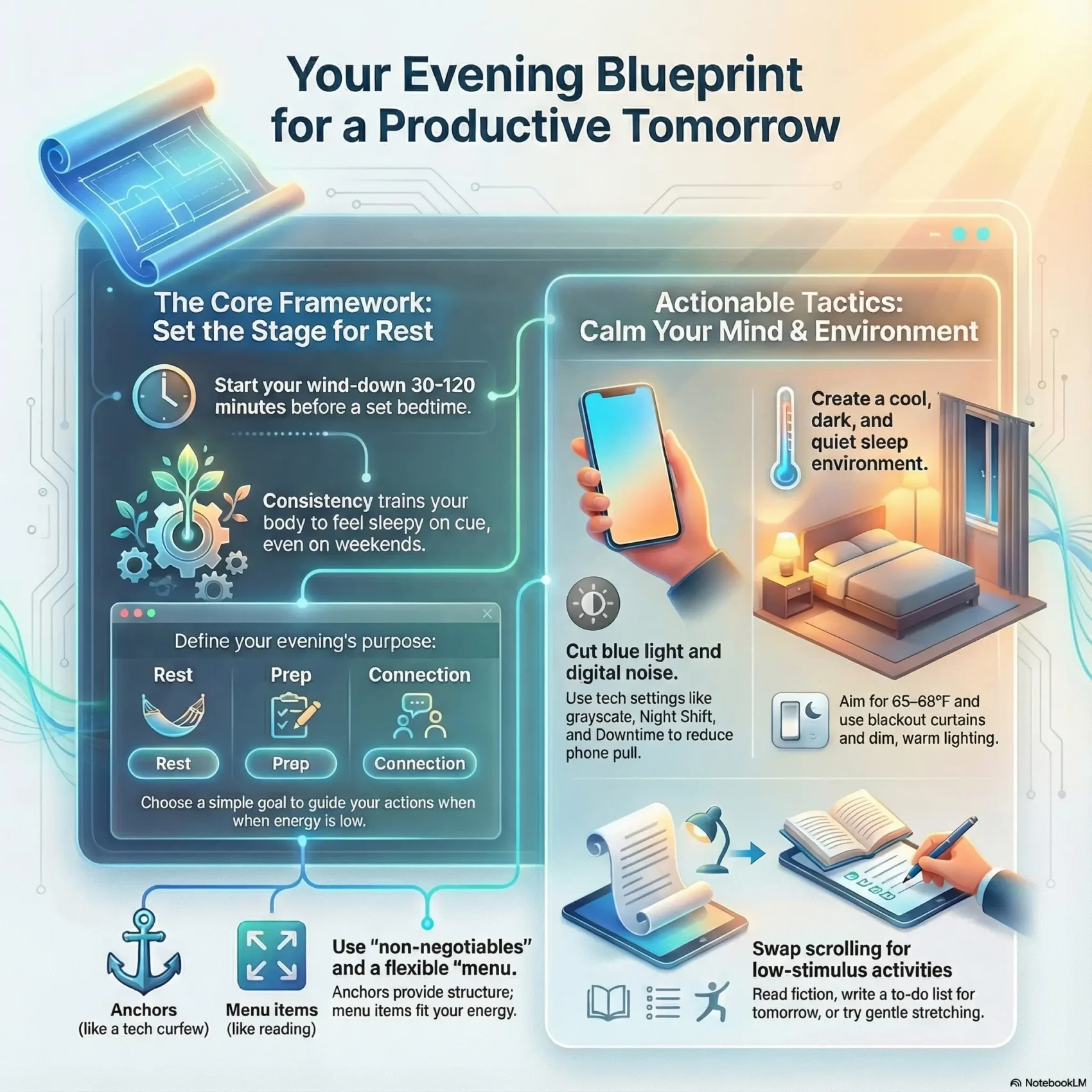
Define the purpose of your evening (rest, prep, connection)
Decide which of the three fits your current life and pick a couple of non-negotiables that serve it. For rest, choose low-stimulus tasks. For prep, pick two small wins that clear the morning. For connection, plan a short, undistracted check-in with a partner or friend.
Choose outcomes that guide your habits, not perfection
Frame outcomes like “wake up clear” or “feel less stress.” Let those outcomes shape your habits instead of chasing a perfect plan.
- You’ll pick a simple purpose so decisions feel aligned, not random.
- You’ll match habits to how you want your mind to feel at lights-out and at your first alarm.
- You’ll keep the list short to avoid overloading life with too many things.
- You’ll use intention as a north star on nights that go off script.
Design Your Timing: When to Start and How Long to Wind Down
Choose a clear start time for your wind-down so the rest of the night follows naturally. Pick a steady bedtime and wake-up time that you follow daily, including weekends. This consistency trains your body to feel sleepy around the same hours each day.
Pick a consistent lights-out and wake-up time (even on weekends)
Decide on a realistic lights-out moment and stick to it. When you lock in a steady bedtime, your brain learns the cue for sleep and you wake up clearer in the morning.
Set a practical alarm or notification to mark the end of stimulating tasks. A timed cue—like an 8:40 p.m. notification—works well for many people.
Start your routine 30 to 120 minutes before bed
Begin winding down between 30 and 120 minutes before lights-out. Choose a window that fits your life: 30, 60, or 120 minutes works depending on how busy your evenings are.
- You’ll set a reminder so you start on time when nights get busy.
- You’ll split the window into chunks: unplug, hygiene, then relax.
- You’ll pick a short plan for late nights and a longer one for calm nights—both tied to the same bedtime.
- You’ll track your minutes for a week and adjust if the window feels too tight or too loose.
Evening Version of You: Build a Routine That Matches Your Energy
Match your night to your energy. Your energy and mood after a long day often look different from your daytime self. When you respect that shift, you avoid extra friction and make small wins easier.
Assess your nighttime energy, mood, and bandwidth
Start by noting how you usually feel after work. Do you have a little energy or very little? Track two simple categories: easy things and draining things.
Write down what feels doable and what you avoid. This helps you stop forcing habits that clash with your actual capacity.
Create structured and flexible options
Build a short menu with two modes: one more structured for calm nights, one flexible for busy or low-energy nights.
- Structured: two non-negotiables plus one relaxing choice.
- Flexible: pick one gentle win from your menu when you don’t feel like much.
- Quick cues: a note by your phone or a 3-step checklist to reduce decision friction.
“Small anchors beat big intentions when your energy is low.”
Honor your season of life and adjust the plan as work, family, or stress changes. This is the best way to keep momentum without adding a lot of pressure.
Evening Routine
A clear set of nightly anchors helps you move from busy to calm without overthinking each step. Use 3–5 non-negotiables as the spine of your plan, and keep a short menu of relaxing options you can pick from when energy is low.
Non-negotiables vs. menu items
Non-negotiables are simple anchors you do most nights: tech curfew, 10 minutes of skincare/hygiene, and dimming the lights. These create reliable signals that the day is ending.
Menu items are flexible: a short meditation, a chapter of fiction, light stretching, or a warm cup of tea. Pick one so you don’t pile on tasks.
Sample flow: a gentle step sequence
- Block news and social feeds with Downtime and switch to grayscale to reduce pull.
- Spend ~10 minutes on skincare and hygiene—quick and soothing.
- Lower warm lights to cue melatonin and change into pajamas.
- Choose one calming activity: read fiction or meditate (use Night Shift if you must use a device).
- Lights out at your set end time to protect sleep.
Quick wins to track:
- You’ll define compact habits so the plan is easy to keep on busy nights.
- You’ll use simple tech settings to make unplugging automatic.
- You’ll test this flow for a week and promote the parts that help you fall asleep faster.
“Small anchors beat big intentions when energy runs low.”
For a calmer morning, pair this with a short prep plan like the one in your morning routines. Keep steps flexible in length so the flow fits real life.
Cut Blue Light and News Noise to Calm Your Brain
Lowering digital stimulation in the last hours before bed calms the brain and lowers stress. Electronic screens emit blue light that delays melatonin and keeps your mind alert. That makes it harder to fall asleep and to recover after a long day of work.
Use Downtime, app limits, and grayscale to reduce phone pull
Put your phone on Downtime so distracting apps lock during your wind-down hours. Turn on app limits for social and news to save willpower when you’re tired.
Switch your display to grayscale and enable Night Shift or a red-light filter well before lights-out. These quick settings cut blue light and lower visual compulsion.
Swap scrolling for low-stimulus activities that help you relax
Replace news and social feeds with calm choices: soft music, light stretching, or a paper book. These options help your body build sleepiness naturally.
- You’ll put your phone on Downtime so apps lock during wind-down hours.
- You’ll switch to grayscale and Night Shift to cut blue light exposure.
- You’ll block news sources at night to stop the brain from spinning on current events.
- You’ll save willpower with app limits that make slipping back into old habits harder.
- You’ll replace scrolling with calmer choices like light stretches or a paper book.
“You’ll notice how much easier it is to relax when you stop letting blue light hit your eyes late.”
Create a Sleep-Friendly Bedroom Environment
Make the space where you sleep a clear signal to your brain: cool, dark, and quiet settings help your body prepare for rest.

Set the thermostat between 65–68°F to support your body’s natural temperature drop. Use blackout curtains to block street and neighbor light so the room stays dark.
Cool, dark, and quiet: simple changes that help
Consider white or pink noise to mask sudden sounds; pink noise, like gentle rain, can improve sleep quality. Keep gadgets muted or outside the room so beeps and LEDs don’t disturb you.
Dim warm lights to cue melatonin
Use a low-watt bedside lamp or dimmable smart lights with a warm tone to mimic sunset. Lowering bright lights before bed sends a clear “night” signal to your brain.
- You’ll set the thermostat to 65–68°F to aid your body’s cooling.
- You’ll use blackout curtains and warm lights to cut stimulation.
- You’ll add white or pink noise to smooth disruptions and boost sleep.
- You’ll declutter the bedroom so visual noise doesn’t keep you alert.
- You’ll place the bed away from bright street light and hide flashing LEDs.
“A consistent sensory cue—cool, dark, quiet—tells your mind it’s time to sleep.”
Relaxation That Works: Breathing, Yoga, and Sound
Simple breath work, a tiny yoga flow, and sound can guide your body and mind toward rest. These tools lower tension quickly and are easy to repeat most nights.
Deep breathing and progressive muscle relaxation basics
Slow, diaphragmatic breathing calms your nervous system. Try 4–6 second inhales and 6–8 second exhales for a few minutes.
Progressive muscle relaxation is a clear step: tense each muscle group, hold, then release. Move from feet to face to reset tension in the body.
Gentle yoga and stretching for better sleep
A short yoga sequence that targets hips, back, and neck eases stored tightness. Even five minutes of gentle poses can improve sleep quality.
Keep movements slow and simple so people with low energy will still do them.
Music, white noise, and pink noise to ease you into rest
Soothing music helps redirect worry. Test white versus pink noise to find which masks sounds best where you live.
Use breathing as your first tool if you wake at night; it helps you return to sleep with less effort.
- You’ll practice slow breathing to settle your nervous system.
- You’ll weave in a tiny yoga flow and progressive muscle release.
- You’ll test music and noise to see what helps you drift and stay asleep.
Read and Reflect: Books and Five-Minute To-Do Lists
A soft lamp, a fiction book, and a five-minute list can settle your mind. Pick fiction so ideas stay gentle and don’t spark new plans or debates. Read outside the bedroom in warm light and go to bed only when your eyes feel heavy. This helps keep the bed linked to sleep, not wakeful thinking.
Why fiction beats stimulating nonfiction at night
Fiction often slows thought. Complex nonfiction can prime you to analyze and plan, keeping you alert at bedtime. Choose a calm book and avoid cliffhangers or dense ideas right before lights-out.
Journaling prompts and a quick list to clear your head
Spend five minutes writing a short to-do list of upcoming tasks. Research shows lists of future tasks help you fall asleep faster than listing completed items. Keep the list actionable and brief so it reduces worry instead of adding more things.
- You’ll pick a calming book—often fiction—so your brain isn’t revved up.
- You’ll try a five minutes brain dump focused on upcoming tasks and a short list to park worries.
- You’ll use three prompts: What went well today? What needs a simple tomorrow plan? What can wait?
- You’ll keep a pen and pad by your reading lamp to capture tasks without opening your phone.
“A small reflection ritual quiets your mind and gives sleep a smoother on-ramp.”
Food, Tea, and a Warm Bath: What to Add (and Avoid) at Night
A few mindful snacks, a warm soak, and the right tea make falling asleep easier.
Light snacks that support sleep and what to skip
Avoid heavy meals and alcohol close to bed. They can cause indigestion, reflux, and midnight awakenings. Keep portions modest so your stomach can relax before lights-out.
If you’re hungry, pick gentle options linked with better sleep: cherries, grapes, kiwi, plain rice, or a small handful of nuts. These foods are easy to digest and can help you nod off rather than wake up wired.
Herbal tea rituals and timing a warm bath
Build a calming tea ritual with non-caffeinated blends like chamomile or lavender. Sip slowly and stop about 30–60 minutes before you get in bed so you’re not waking to use the bathroom.
A warm bath works well when taken at least an hour before sleep. It raises your body temperature, then the cool-down afterward signals sleepiness. Adjust the minutes you soak so this transition fits your schedule without feeling rushed.
- You’ll skip heavy or late meals that disrupt sleep.
- You’ll choose cherries, kiwi, rice, grapes, or nuts as light snacks.
- You’ll make chamomile or lavender tea a nightly cue and time it wisely.
- You’ll take a warm bath an hour before bed to help your body cool and cue rest.
“Treat these choices as supportive, not strict rules—small changes add up to better sleep quality.”
Build Your Personal Routine Menu and Anchors
Draft a compact playbook—one page of choices—to help you finish the day with less fuss. Keep a short menu you can scan when you’re tired so decisions take no energy.
Menu ideas for different nights: solo, social, low-energy
Create three quick versions: solo, social, and low-energy. For solo nights, pick reading, a warm cup of tea, or gentle stretch.
For social evenings, choose one calming anchor you can do after guests leave. For low-energy nights, pick one tiny win—a 2-minute tidy or a short breathing practice.
Choose simple anchors: skincare, tidy-up, phone curfew, lights-out
Pick four anchors that appear on most routines: skincare, a two-minute tidy, a phone curfew, and a set lights-out time. These glue the variations together.
- You’ll draft a menu with options for solo nights, social evenings, and low-energy stretches.
- You’ll assign short tasks that reset your space and head without dragging out the night.
- You’ll include at least one screen-free activity and a small celebratory habit to end the day on a positive note.
“Let simple anchors hold your plan so you can adapt your life without losing the habit.”
Make It Stick: Tiny Habits, Gentle Tracking, and Course-Correcting
A single tiny step, repeated, builds momentum far faster than a big overhaul. Begin by adding one or two small changes so the effort feels easy. Tie new actions to something you already do, like 30 seconds of breathing after skincare. When you slip, forgive yourself and restart—this keeps progress steady, not perfect.

Start small, track lightly, forgive slip-ups
Track wins without stress. Spend five minutes a week noting what worked. A quick checklist reduces churn and helps you notice patterns.
Create variations for weeknights, weekends, and travel
Design three compact versions of your plan: a busy week option, an easy weekend flow, and a travel-friendly set. This keeps anchors intact across life changes.
- You’ll add one or two tiny habits to build momentum.
- You’ll track lightly and treat missed nights as blips.
- You’ll course-correct when a step doesn’t serve you and update it.
- You’ll sync a small task with your morning routine so tomorrow starts clearer.
“Small, repeated steps beat big, brittle plans.”
Conclusion
You’ll wrap your day with a few small, chosen actions that make sleep easier and mornings clearer.
Cut stimulating inputs, dim warm lights, read gentle fiction, jot a brief list, and add a light snack or tea when needed. Set your bedroom cool, dark, and quiet so the end of the day signals rest.
Start small and use a couple of anchors you can keep across different nights. Adjust the plan to fit busy or low-energy evenings and treat progress, not perfection, as the goal.
This simple way of winding down protects your attention and supports a steadier morning, one tiny step at a time.