Tools
Tools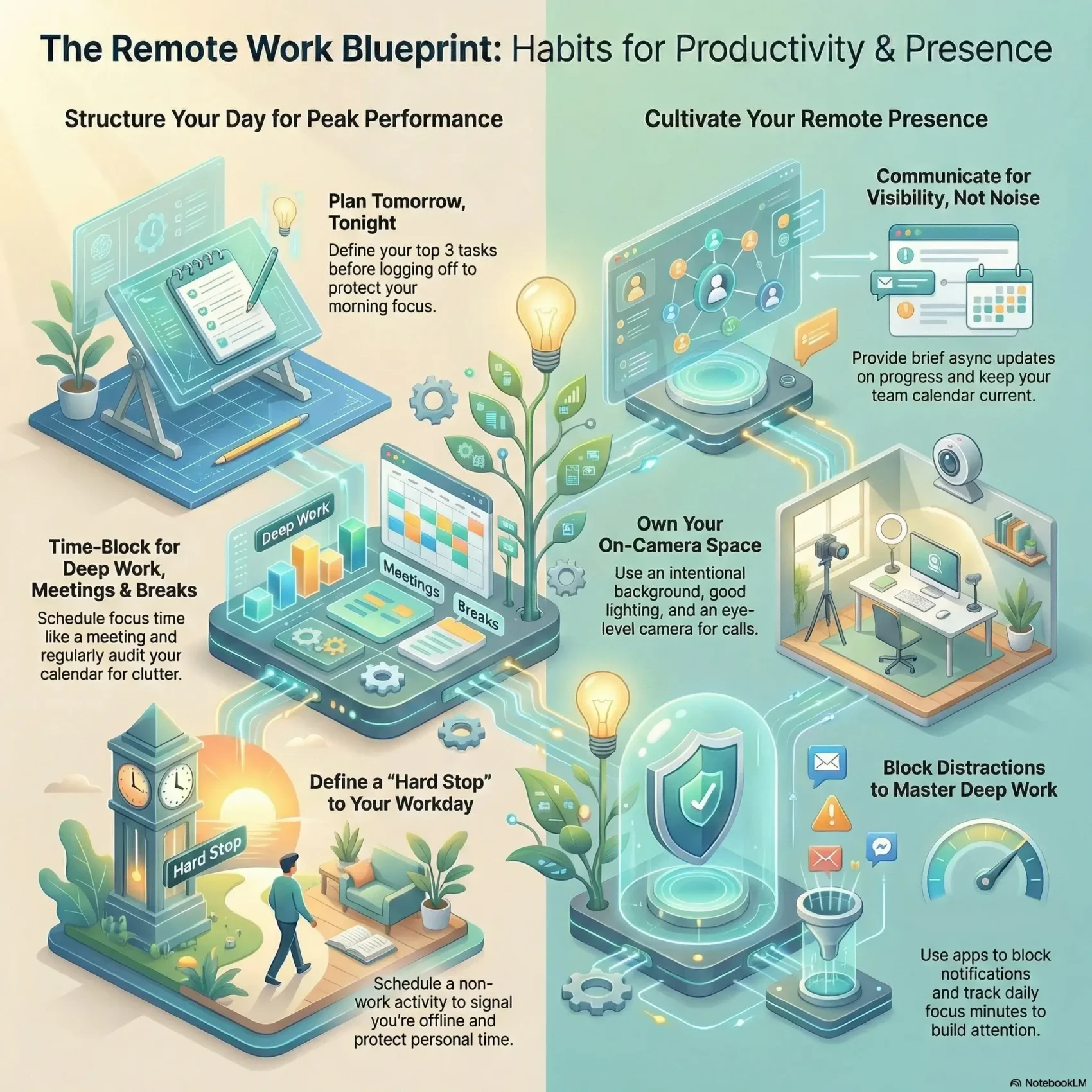
Last Updated on February 10, 2026
You can make your day feel structured and calm by choosing simple, repeatable routines that set clear expectations for you and your team.
Set clear boundaries for when you are on and off, and protect morning focus by planning tomorrow tonight. Small rituals—like a five-minute calendar check—reduce chaos and keep your time focused on results.
Show presence with thoughtful communication and regular updates in team tools so colleagues trust your progress. Own your on-camera space, schedule short social check-ins, and audit stale meetings to cut fatigue.
Block distractions for deep focus, use apps that help you stay on task, and track daily focus minutes to build attention. These steps protect work-life balance and make your productivity visible to others.
Key Takeaways
- Commit to short, repeatable routines to structure your day.
- Use clear boundaries so your time doesn’t stretch endlessly.
- Give meaningful updates in tools so your team can rely on you.
- Plan tomorrow tonight to protect morning focus.
- Block distractions and track focus minutes to grow deep work.
What “remote work habits” really mean right now
Consistency in tiny actions makes a split life—home and office—feel like a single, productive rhythm.
You define these practices as short, repeatable cues that make each day predictable. These cues help people move from morning plans to focused output without frantic inbox dives.
For remote workers in office‑heavy companies, presence is a practiced mindset. Share progress early on your calendar and team channels. Keep availability clear so colleagues know when to ask questions and when to expect results.
Camera-on engagement, eye contact, and speaking up in meetings boost visibility. Intentional rapport—virtual coffees and casual threads—replaces hallway chats and keeps your relationships intact.
- Design your day: plan ahead and protect your morning focus.
- Communicate with clarity: brief updates that move things forward.
- Coordinate availability: set shared windows to cut back‑and‑forth.
Communicate to stay visible: build presence, not noise
Clear, timely updates keep your team aligned and show progress without adding noise. Post short notes on milestones and blockers early in the day so others can plan. Ask questions openly in the thread — your question may help others too.
Share progress early and often on team tools
Use collaboration tools for brief, useful updates. Prioritize clarity and brevity so each message adds value.
Tip: Choose async posts for status and live chats for nuance.
Set clear working hours and keep your calendar current
Publish your hours, focus blocks, and lunch breaks. An honest calendar prevents back‑and‑forth and makes meeting scheduling straightforward.
Block time for deep focus and leave buffers for casual conversations on in‑person days.
Turn your camera on and engage with eye contact
Use a camera at eye level and clear audio. Good eye contact on video builds trust similar to being in the office.
Avoid chatting in chat apps during a meeting so your contributions land the first time.
Schedule relationship time: virtual coffees and casual threads
Book recurring virtual coffees and join non‑task threads to build rapport. Calibrate cadence to be consistent but measured, and tailor your style to others’ preferences.
- You’ll post short progress notes early so the team knows your status.
- You’ll keep your calendar honest—hours, focus blocks, and breaks visible.
- You’ll use your camera with good eye contact and audio to replicate office trust.
- You’ll schedule virtual coffees and reserve time for casual connection.
Design your schedule and stick to routines that work for you
A short, intentional plan the night before keeps your first hour focused and calm. Write one clear objective and the first task you will do. This removes decision friction and defends your morning from inbox pulls.
Plan by chronotype: if you’re a morning person, block deep time early. If you’re a night owl, reserve mornings for light admin and protect prime creative hours later.
Plan tomorrow tonight and protect your morning focus
Before you log off, capture new tasks and assign them a time slot unless they’re urgent. Keep a short list of the top three tasks for the day so you can resume quickly after interruptions.
Time-block for meetings, breaks, and deep work
Use calendar features to end meetings 5–10 minutes early and add buffers between sessions. Block dedicated deep work periods and schedule short recovery breaks to reset energy and maintain productivity.
Audit your calendar regularly to cut stale meetings
Review recurring meetings each week. Drop or shorten those that no longer add value. Treat calendar cleanup like a maintenance task to keep your day lean and focused.
- You’ll write a simple plan the night before so you start with intent.
- You’ll time‑block deep work, meetings, and breaks to match your energy.
- You’ll set meetings to end early and audit recurring items weekly.
- You’ll use tiny resets—five minutes to breathe, stretch, or jot the next focus.
- You’ll capture incoming requests, schedule them, and return to your blocks.
For digital clarity, declutter your digital workspace so your schedule and tasks stay visible and manageable.
Professional mindset at home: act like you’re in the office
Treat your home like an extension of the office by adopting small rituals that signal “on” time.
Dress the part to shift your mindset before a meeting. Dressing one level up for important calls helps you feel confident and communicates respect.
Light pre-meeting routine
Quick cues—tidy your desk, open the right apps, and gather notes—so you can join a call without scrambling.
- You’ll define a clear start ritual and end ritual to mark your working hours and protect your focus.
- You’ll curate what appears on camera so colleagues see your professional setting and consistent routines.
- You’ll keep essentials—water, headset, concise talking points—within reach to avoid last‑minute searches.
- You’ll treat home like a satellite office during “on” time and limit casual distractions until breaks.
- You’ll refine these actions into a habit so the mindset shift becomes automatic, not a willpower drain.
Consistency matters. When you show up the same way, you build trust and make it easier to focus, contribute, and finish the day on time.
Optimize your workspace for comfort, focus, and flow
Ergonomic tweaks and a tidy backdrop help you move through meetings with confidence. Make small changes in a clear way so your desk supports long stretches of focused work without pain.
Create an ergonomic setup: chair, monitor height, and sit-stand options
Set your monitor at eye level and keep wrists neutral to avoid strain. Use a chair with lumbar support and consider an adjustable desk so you can sit and stand during the day.
Tip: Treat ergonomics as regular maintenance—comfort is the quiet edge that keeps you productive.
Own your on-camera space: intentional backgrounds over blur
Choose a tidy wall or a simple shelf rather than relying on blur. Devices like Neat can keep you framed while you stand, and features that block background activity cut visual distractions during meetings.
Stage light toward your face and place the camera near eye level for natural eye contact.
Declutter weekly to keep essential tools and docs within reach
Do a short weekly tidy: file papers, clear the desktop, and set chargers and headsets in one spot. This saves search time and reduces interruptions when a quick break or call pops up.
- You’ll set monitor height at eye level and use a supportive chair.
- You’ll choose an intentional background and frame your camera for meetings.
- You’ll run a weekly declutter so tools and documents are easy to grab on time.
Master focus: remove distractions and practice deep work
Protect blocks of concentrated effort and treat them like meetings you cannot cancel. When you guard uninterrupted time, your attention can build and deliver real progress on meaningful tasks.
Block social media and notifications during focus blocks
Use apps like Forest or Zero Willpower to block social media and sites that steal your attention. Put your phone on do‑not‑disturb and close irrelevant tabs before you start.
Use outcome-focused goals and quick prioritization frameworks
Pick one framework—Eisenhower or Eat That Frog—to rank tasks fast and start decisively. Tie each block to a clear outcome so your session aims at results, not just minutes.
Track daily deep work minutes to build your attention muscle
Set a realistic target and keep a simple tally. Start with 25–50 minute sessions, take a short break after each, and lengthen sessions as your focus improves.
“You should schedule and tally deep work to retrain attention and lower the cost of interruptions.”
- You’ll block notifications and batch shallow tasks into short windows.
- You’ll log deep minutes, capture stray ideas on a pad, and return later.
- You’ll measure outcomes, not just time, and celebrate consistent progress over perfection.
Leverage the right tools and technology, not just more tools
Choose a compact toolset that streamlines how your team shares updates and makes decisions. Pick clear channels by purpose: async updates in docs or project tools, and live discussion for nuance. This keeps your workspace tidy and reduces the time people spend hunting for status.
Standardize channels for async and live collaboration
Decide where to post status, where to request help, and where to store decisions. Keep one place for updates and one for action items so tasks don’t get lost.
Use purpose-built video and meeting devices to reduce friction
Consider one‑touch hardware that launches a meeting fast. Devices like Neat Boundary block people entering the room and keep focus on participants. Neat Symmetry frames faces and keeps audio clear with multiple speakers, cutting setup delays and background distractions.
Document norms: response times, etiquette, and summaries
Write your “how we work” guide with response expectations, agenda rules, and note templates. Require a short summary and clear next steps after each meeting so decisions stick and absent teammates can catch up. Audit your tools quarterly and sunset the ones that cause friction.
- You’ll pick clear channels for updates, requests, and decisions.
- You’ll favor a short tool list and one‑touch video hardware to save time.
- You’ll document response times, meeting etiquette, and summaries.
Boundaries that protect your work-life balance
Protecting your evenings helps you recharge and keeps your day from bleeding into personal time. A clear end-of-day ritual—like a firm unplug time—anchors the day and signals family, friends, and teammates that you’re offline.
Set a hard stop for working hours and schedule your “off” time
Pick a hard stop in your schedule and attach a real activity to it: a class, dinner plans, or a walk. Pre-booking an off day each month helps you recover and prevents burnout.
Declare your hours on your calendar so colleagues see when you answer messages. This reduces the always-on pressure and protects deep work blocks.
Choose your workspace with intention
Decide whether home, a cafe, or coworking fits your tasks and energy today. Coworking boosts focus but can cost more; cafes are casual but may lack outlets or steady Wi‑Fi.
- Use discovery tools like Breather, WorkFrom, or LiquidSpace to find reliable spaces.
- Ask your employer about subsidies for part‑time coworking memberships.
- Keep short breaks in the afternoon to reset and stop evening drift.
Conclusion
Wrap up your day with a short ritual that turns intention into progress.
You’ll leave with simple, repeatable tips: plan ahead, show presence, and measure outcomes. These remote work habits help steady your pace and boost productivity.
Focus on a few things each day—priorities, deep work, and recovery—so small wins compound. Invest in your home office and on‑camera setup so you look and feel ready when opportunities pop up.
Keep communication clear and kind. Use purpose-built tools and occasional in‑person time to strengthen the people who help move your tasks forward.
Protect a hard stop for true downtime. Come back fresh tomorrow, track results, and iterate—because you’re going to build stronger work habits one step at a time.