Tools
Tools
Last Updated on December 9, 2025
Exploring automation in blue-collar jobs reveals a world where technology is rapidly changing labor landscapes. The global industrial robot market, valued at $48.50 billion in 2022, is expected to soar to $142.8 billion by 2032. This growth not only boosts productivity but also raises important questions about job security across different sectors. Currently, the average robotic density in manufacturing is 126 robots per 10,000 employees, a leap from 66 in 2015.
These advancements prompt questions about the future of blue-collar work and the changes it may bring. Understanding this evolving landscape is vital for navigating the challenges and opportunities that lie ahead.
Key Takeaways
- The global industrial robot market is projected to grow to $142.8 billion by 2032.
- Manufacturing currently has an average of 126 robots per 10,000 employees.
- Automation poses a 53% risk for jobs in manufacturing and construction sectors.
- For every robot introduced, wages may decrease by 0.42% in the United States.
- Some blue-collar jobs, like electricians, have low risks of automation.
The Rise of Automation in Blue-Collar Work
The blue-collar work landscape is undergoing a significant transformation with the advent of automated machinery. Industries, especially manufacturing, are embracing robotics to handle repetitive tasks more efficiently. This move has boosted productivity and cut operational costs. The 2023 landscape highlights a trend towards digital transformation in blue-collar jobs, reshaping job structures and functions across sectors.
A recent McKinsey study indicates the COVID-19 crisis may hasten the automation of up to 25% of jobs in the United States. This rapid change raises concerns about the workforce’s readiness. Research from the Brookings Institution reveals that only 30% of workers in sectors like transportation, production, and food preparation have the digital skills needed to thrive in an automated environment.
The integration of AI in blue-collar sectors poses challenges for workers facing the risk of becoming obsolete. A concerning scenario is emerging where widespread job displacement and unemployment could occur without addressing the skill gap. This could lead to significant socioeconomic disparities, affecting workers’ mental health and family well-being due to job uncertainty.
As industries evolve, the necessity for adaptation and learning new technical skills becomes paramount. The current workforce may not be adequately prepared to meet the demands of automated systems. Those unable to adapt are at a high risk of job loss, as automation threatens traditional roles. It is crucial for blue-collar workers to engage in upskilling initiatives to counterbalance the rapid changes brought by automation.
Understanding the Impact of Technology on Blue-Collar Jobs
The integration of technology in blue-collar jobs is profoundly reshaping the workforce landscape. As industries adopt automation, the automation impact on manual labor becomes increasingly evident. Many sectors are witnessing a shift from traditional manual tasks to AI-driven processes. This transition offers both opportunities and challenges, particularly for those in lower and middle-class positions.
Statistics show that the presence of robots in the workplace has significant implications. For instance, for every robot added per 1,000 U.S. workers, wages decline by 0.42%, and the employment-to-population ratio drops by 0.2 percentage points. Such figures indicate that specific occupations face vulnerability as automation progresses, often resulting in job losses. Notably, routine manual occupations in manufacturing, like machinists and assemblers, bear the brunt of these technology effects in labor sectors.
The automotive industry is one of the frontrunners in robot adoption, showcasing up to 7.5 robots per 1,000 workers. This level of integration highlights the potential for blue-collar job transformation within that sector, as well as in others like electronics and plastics. States with higher robot adoption rates see significant declines in job numbers; for example, estimates suggest that adding one robot in a commuting zone could reduce employment by six workers. Workers without college degrees particularly suffer, emphasizing the necessity for programs that help upskill employees to prevent job displacement.
It is vital for companies to communicate continuously about changes brought by automation. Employees need clear guidance on how to adapt to evolving job requirements and to bridge any skill gaps that may arise. This proactive approach will facilitate a smoother transition into an increasingly automated environment.
Automation Blue-Collar Jobs: An In-Depth Look
Automation is reshaping the world of blue-collar jobs. An in-depth analysis shows that over 30% of workers might see significant changes in their tasks due to generative AI. This shift is especially pronounced in sectors like manufacturing, retail, and agriculture, where the influence of robotics is clear.
The integration of AI in industrial jobs is redefining traditional roles. For example, fast-food chains are now using robots for tasks like flipping burgers and making smoothies. This change cuts labor costs, boosts efficiency, and ensures consistency. The retail sector has also adopted automation, with systems like Amazon Go enabling automatic payments and item tracking. This reduces the need for cashiers and other retail staff.
Many Americans believe generative AI will significantly impact the job market, with most seeing negative effects over the next two decades. While some sectors may innovate through automation, others like healthcare are seeing AI used for tasks like disease diagnosis. This could lead to a decrease in demand for certain healthcare roles.
Several factors will shape these changes in the workforce. The demand for skilled labor is expected to increase, while unskilled labor will decline by three percentage points in the next five years. Data shows that companies failing to adapt their workforce strategies could lose up to 14% in productivity bonuses by 2025.
In this evolving landscape, being aware of these trends and the role of AI in industrial jobs is crucial. Understanding the impact of robotics on trades and preparing for these changes is vital for your career growth and resilience in the changing job market.
Current Trends in Automation and Robotics
The automation landscape is rapidly changing, driven by robotics trends that are transforming industries. Robot deployment, especially in manufacturing, is noteworthy. The likelihood of full automation in manufacturing is a striking 53%, exceeding the average risk of 34% in other sectors.
The rise in industry automation advancements threatens traditional roles at an alarming rate. Studies show that introducing one robot on a manufacturing line can displace 6.6 jobs. By 2030, robots could replace up to 20 million jobs worldwide, according to Oxford Economics. This data sparks deep reflection on the future of employment.
Companies must prepare for a workforce transformation, with roles like call center jobs at high risk. Generative AI systems are poised to dominate these tasks, leaving little room for human involvement. The “IKEA effect,” where consumers assemble products, further diminishes the need for manual labor in manufacturing and logistics.
These changes raise significant economic concerns. Automation could affect about 300 million jobs globally by 2023, Goldman Sachs predicts. This leads to a widening wage gap between high-skilled workers and those with lower skills. Such disparities threaten income equality and workforce stability.
Views on automation’s impact are diverse. Some predict widespread job loss, while others foresee the creation of new roles. A collaborative effort among governments, tech companies, and educational institutions is crucial. It will help in retraining workers for the evolving job market in sectors heavily impacted by automation.
The Effect of Automation on Manual Labor
The evolution of manual labor has seen a significant shift with the advent of automation. Factories and warehouses now employ robotics, taking over tasks once done by humans. This change raises critical questions about job security and the future of blue-collar work.
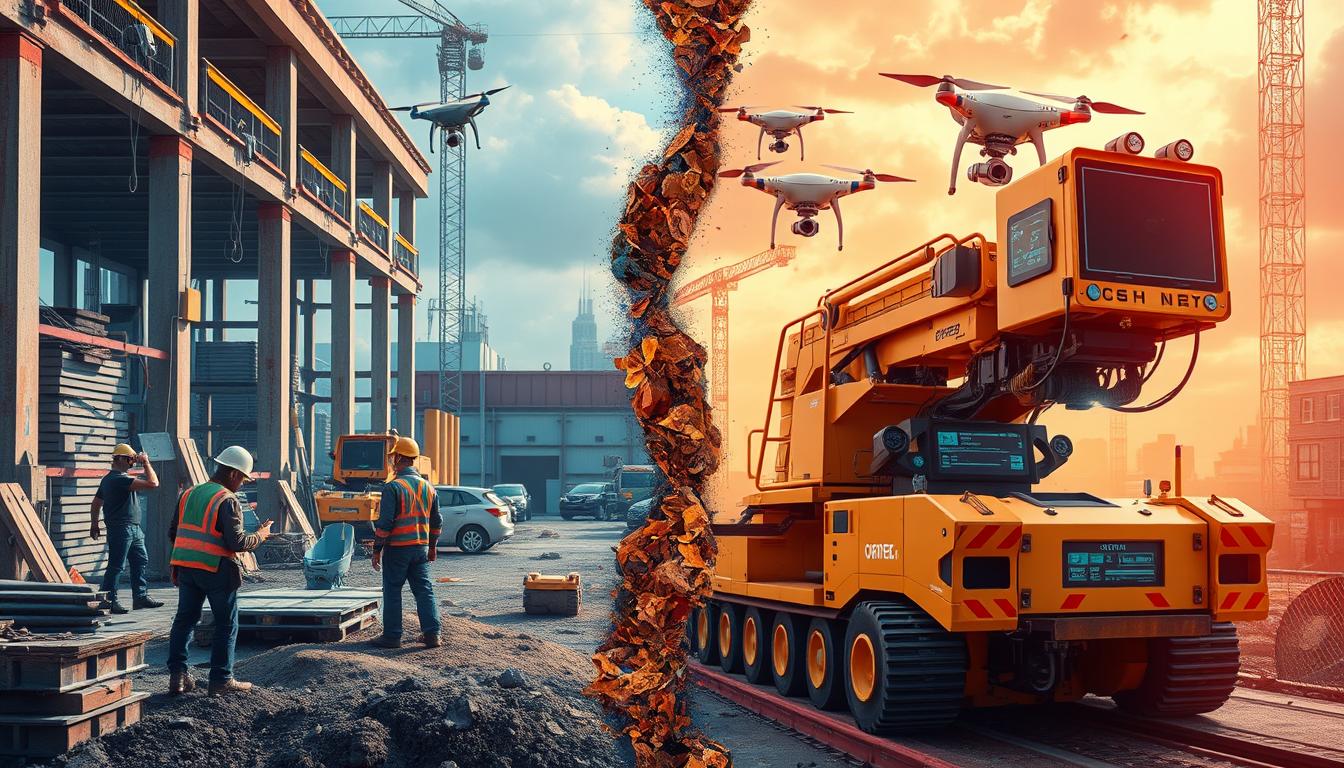
Studies across various sectors show a notable rise in automation and job displacement in manufacturing. Robots and automated systems have boosted productivity in blue-collar jobs but reduced job availability. For example, adding one robot per 1,000 workers has led to a 0.42% decrease in wages. These figures highlight the need for manual laborers to adapt to automation.
In transportation and logistics, autonomous vehicles bring both benefits and challenges. They offer improved efficiency and longer working hours but also threaten to concentrate job opportunities in higher-skilled roles. This shift leaves many lower-skilled workers at risk of job loss. However, the demand for skilled workers to maintain and oversee these systems is increasing, reshaping the employment landscape.
The workforce is responding to these changes with a focus on upskilling and training. Developing new skills is essential to navigate today’s job markets. While automation can enhance productivity in blue-collar jobs, keeping up with technological advancements is vital. This will help mitigate the risks of job displacement and ensure workers remain relevant.
Future of Blue-Collar Work in an Automated Environment
The future of blue-collar work is evolving rapidly, driven by technological advancements and automation. Despite fears of job loss, many workers remain hopeful. Interestingly, 27.4% of those without a college degree believe automation will boost their job security. This contrasts with 23.7% of college-educated individuals. In Black and Hispanic communities, the perception is even more positive, with 38% and 39% respectively seeing automation as a positive force.
Experts predict a shift in job roles rather than a complete elimination. The construction industry, for example, is expected to see a significant increase in its AI market. It will grow from $2.57 billion in 2022 to $15.16 billion by 2032. This growth highlights the need for skilled workers who can manage and operate these systems. It aligns with employment trends in trades that blend human oversight with technological capabilities.
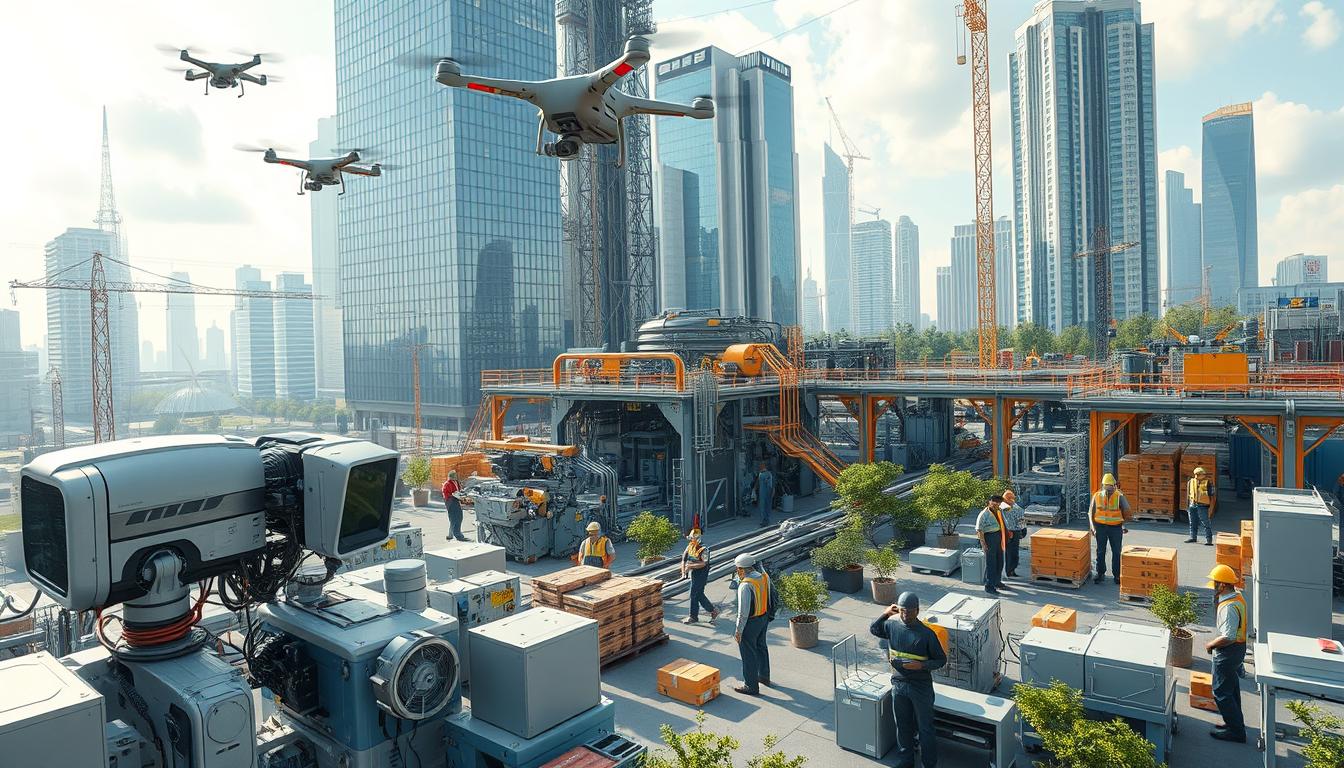
Looking ahead, it’s crucial to understand the evolving nature of jobs. Instead of disappearing, many roles will require more technical skills and supervisory abilities. Companies are increasingly using AI to improve safety, efficiency, and decision-making. This creates a demand for reskilling programs that help workers adapt to these new roles.
Automation may change the workforce, but history shows we can adapt. The introduction of ATMs, for instance, didn’t eliminate bank teller jobs. Instead, it transformed them into more customer-centric roles. We can expect similar outcomes as automation becomes more prevalent in blue-collar jobs, creating a future that balances technology and human expertise.
Machine Learning and AI in Blue-Collar Industries
Machine learning and AI are transforming blue-collar industries in groundbreaking ways. New technologies are boosting efficiency and precision, especially in construction and manufacturing. Automated machinery now handles complex tasks, leading to better productivity and safety. This rapid evolution is changing the face of blue-collar work.
The integration of AI in manufacturing offers a significant advantage: predicting maintenance needs through advanced analytics and IoT. This reduces downtime, ensuring smoother operations and lower costs. Training programs, like CNC Machine Operation, are vital. They prepare workers for this new era. Without such training, even experienced workers risk being left behind as industry standards evolve.
The need for skilled labor is increasing with AI and robotics in blue-collar jobs. By 2025, about 50% of blue-collar workers might need to reskill. Continuous learning is key, especially in stone-cutting and manufacturing, where technology is essential for success.
AI’s progress shows the potential for job transformation in blue-collar sectors. In five years, AI could affect up to 23% of jobs worldwide. By 2030, 375 million workers might need to change roles due to technological changes. Embracing these changes can lead to new opportunities and innovation.
Industry and government are launching initiatives to support worker development. They provide vocational education funding and training programs. These efforts are crucial as blue-collar wages are expected to grow faster than white-collar jobs in the next decade. Adapting to technological advancements will ensure blue-collar workers not only survive but also thrive in their careers.
Job Vulnerability: Which Occupations Are Most Affected?
In today’s fast-paced job market, grasping job vulnerability is key for workers in all sectors. A job vulnerability analysis shows that middle-skilled jobs are at high risk of automation. Roles like medical transcription and assembly line work are particularly vulnerable to technological advancements.
The shift away from routine cognitive and physical jobs is evident. Between 2000 and 2016, the percentage of people in these jobs dropped from 39.2% to 33.3%. This decline poses significant threats to industries heavily reliant on these roles.
Workers are increasingly moving to lower-wage positions due to automation. Currently, 19% of American workers are in jobs highly exposed to AI, facing a high risk of replacement. On the other hand, 23% are in roles less likely to be affected by AI, highlighting the job security gap.
- Higher education is linked to job vulnerability; 27% of workers with a bachelor’s degree or higher are in high-exposure jobs, compared to 12% with only a high school diploma.
- Demographic disparities are evident, with women (21%) and Asian workers (24%) more likely to hold at-risk roles.
- Jobs requiring unstructured cognitive work are less vulnerable to automation threats.
By understanding these factors, you can better navigate the changing job landscape. This prepares you for the potential impacts of automation on your industry.
Blue-Collar Jobs at Lower Risk of Automation
In today’s world, not all blue-collar jobs are at the same risk from automation. Certain roles, like electricians and police officers, are less likely to be replaced by machines. This is because they require creativity and strong interpersonal skills. These low-risk occupations are less likely to be automated due to their need for human interaction.
Studies show that first-line supervisors in various trades face the lowest risk of automation, with only a 0.003 chance. On the other hand, jobs that only need a high school diploma have a very small chance of being aided by AI, with just 6% of tasks that could be automated. This number increases to 17% for those with a high school diploma. Roles requiring a two-year degree see 38% of tasks that could be automated.
It’s important to understand skilled trades security when looking at career options. Jobs that require complex problem-solving and human judgment are less likely to be automated. This makes skilled trades a stable choice for those looking for long-term career success.
While automation can lead to job losses in some industries, blue-collar jobs offer many opportunities for resilience. By focusing on adaptation and continuous learning, you can stay relevant in your field. This ensures your success even as technology evolves.
Opportunities Created by Automation in Blue-Collar Jobs
The transformation of blue-collar work through automation and technology brings opportunities in technology. This shift, though challenging, opens doors for job creation across various sectors. Industries increasingly rely on skilled workers to manage advanced technologies, such as AI and robotics.
The demand for skilled labor in blue-collar jobs is on the rise. This trend necessitates reskilling initiatives to adapt to evolving roles. Training programs now focus on enhancing skills for managing AI hardware, operating systems, and data management. With technological advancements, new roles emerge that require expertise in automated system management.
Expected growth in healthcare and infrastructure will lead to more job opportunities. Aging populations will increase demand in healthcare fields. Additionally, investments in infrastructure projects are expected to create millions of new jobs.
- Emerging technologies continue to reshape roles across various industries.
- Focus on reskilling can bridge the gap between current skill sets and market needs.
- New job roles in tech-oriented industries will emerge, offering fresh opportunities.
In summary, while automation introduces complexities, it also creates opportunities for job creation. Navigating this evolving landscape requires embracing continuous learning and adaptability. These skills are crucial for seizing new opportunities.
Conclusion
The world of blue-collar jobs is undergoing a significant transformation due to automation. While challenges like job loss and income inequality are present, this change also brings new opportunities. It’s essential for you to stay ahead by continually learning and improving your skills.
By embracing ongoing learning and reskilling, you can keep your career relevant. Jobs that involve repetitive tasks may decline, but there’s a growing need for trades that demand a variety of skills. Developing technical expertise, problem-solving skills, and adaptability to new technologies will make you a valuable asset in this evolving job market.
Both governments and businesses must support this transition by investing in retraining and upskilling programs. This collective effort can mitigate the risks of unemployment and prepare a workforce ready for the future. The future of blue-collar work looks promising for those who are willing to adapt and excel in an era of innovation and automation.