Tools
Tools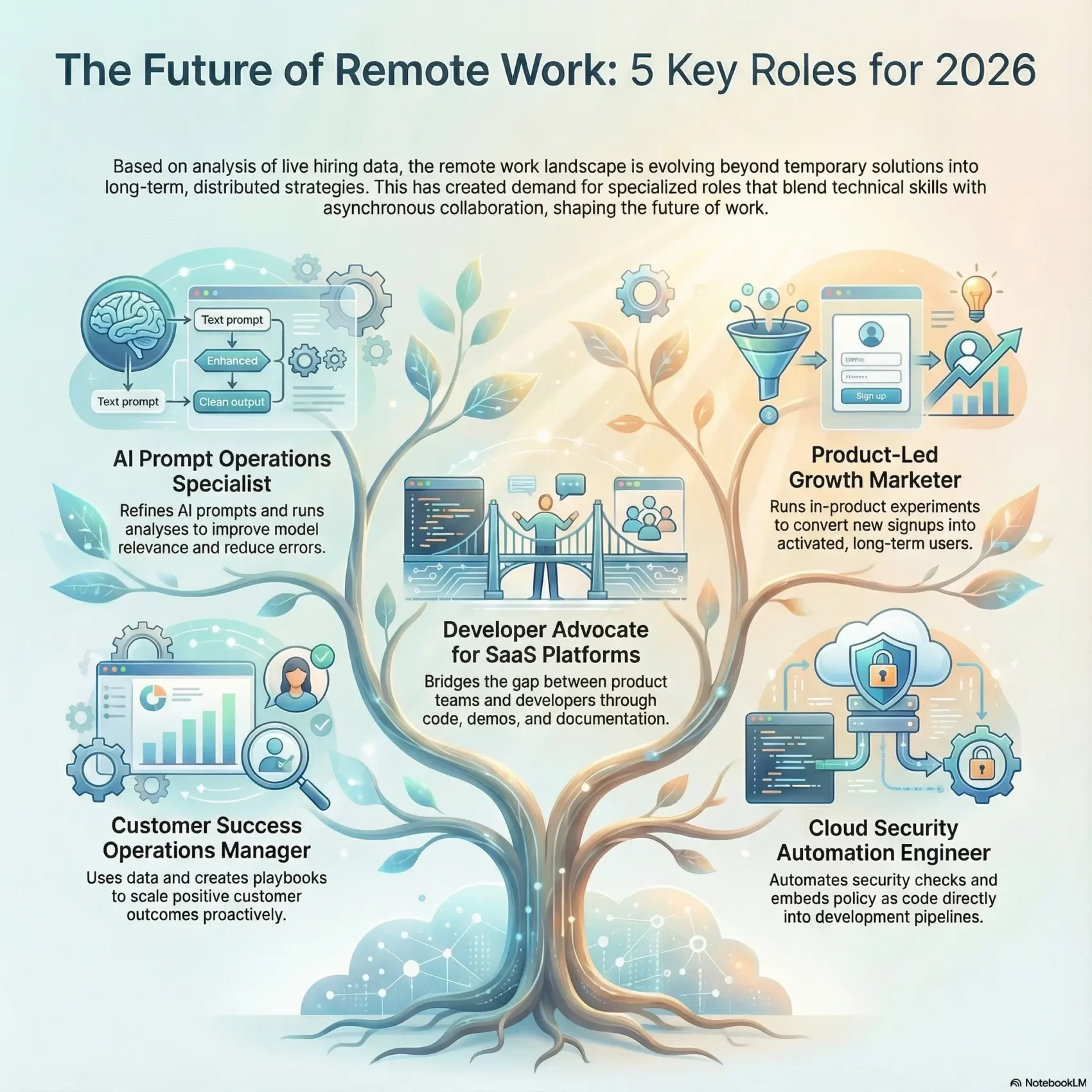
Last Updated on December 15, 2025
You are about to get a clear, friendly snapshot of five standout positions that shape how you work from anywhere in 2026. This intro pulls live hiring signals from job boards and companies you know, like Discord, Stripe, Descript, 1Password, Eight Sleep, and Skillshare.
These listings are not guesses. NoDesk and other platforms track active postings and daily updates from remote-first sites and firms such as Toptal, Zencastr, Proton.ai, and Sticker Mule. That momentum shows where demand is real and which skills hiring managers value now.
In short, this guide helps you see why the roles exist, how they fit your preferred ways to work, and where to look next. You’ll get practical steps to map your experience to new jobs at scalable companies without starting over.
Key Takeaways
- Five specific positions to watch, illustrated with real company examples.
- Why demand is rising and where hiring momentum shows up.
- Exact skills hiring managers want and how to match them.
- Which company types (SaaS, product-led) post these openings most.
- Actionable next steps to find and apply for fitting remote jobs.
Why emerging remote roles matter right now
Daily updates on high-signal job boards make it obvious: companies are building for distributed work. NoDesk reports hundreds of firms using its board, which means fresh openings appear every day and you can watch hiring patterns in real time.
You benefit when teams hire for new capabilities that fit asynchronous collaboration and global coverage. That change creates fairer access to jobs and more flexible time arrangements for people across the United States and beyond.
As companies move from a stopgap mindset to long-term distributed hiring, measurable success shows up in better candidate quality and tighter sourcing pipelines. Tidepool and Very note higher-caliber candidates and smoother hiring for fully remote organizations.
- Spot patterns quickly because roles are posted daily across engineering, marketing, and operations.
- Deliver outcomes from anywhere — strategy and execution now sit side by side.
- Find clearer job descriptions and benefits that reflect true remote work expectations.
“We’ve seen stronger candidate pools and faster hiring cycles when teams commit to distributed practices.”
How we identified the top emerging remote roles
We mined live job feeds and public hiring boards to find positions companies are actively filling today. That lets you trust that the list reflects hiring intent, not passing hype.
Signals from job boards and communities
NoDesk newsletters and high-signal sites showed repeated listings from firms like DataAnnotation.tech, Toptal, Proton.ai, Sticker Mule, Storetasker, and Speechify Inc.
We cross-referenced those posts with active community threads and company announcements to confirm demand. This gave us a clear view of where hiring momentum lives.
Skills and hiring patterns across distributed teams
Our analyst-style review looked at description language, tooling, and repeat openings. We weighed product vs. operations work and noted when listings required cross-functional ownership and async collaboration.
- Live data tracking: only roles with multiple, recent postings were included.
- Pattern reading: outcome metrics and async cues marked real job shifts.
- Career durability: clear growth paths and repeat hiring signaled staying power.
Bottom line: you get vetted jobs based on measurable hiring signals, not buzz. This method helps you target opportunities that match your skills and career goals.
AI prompt operations specialist
AI prompt operations work sits at the intersection of data quality and model behavior. In this position you scope and refine prompts, set quality benchmarks, and run lightweight analyses to reduce hallucinations and improve relevance.
Key skills include a data-driven analyst mindset, basic python familiarity, and sharp quality-control habits. Companies such as DataAnnotation.tech and Speechify Inc list these openings frequently as they scale labeling and model-training workflows.
Common tools and platforms
- You’ll use annotation interfaces, QA dashboards, and issue-tracking platforms to log prompt iterations.
- Lightweight scripts in python help you sample outputs and produce quick metrics for teams.
- Precision/recall dashboards and checklists create an auditable chain from input to model output.
Day in the life
You’ll collaborate across time zones with structured handoffs and clear logs so work continues while you’re offline. Typical hours include overlap windows for syncs and blocks for deep review.
Where to learn more: explore practical pathways and skill checklists for future work by visiting future job skills.
Customer success operations manager
A success operations manager brings discipline to lifecycle data so your team stops firefighting and starts planning. In this job you build the instrumentation and playbooks that let customer-facing teams scale good outcomes across accounts.
From reactive service to proactive success: you’ll shift work from ticket triage to lifecycle management. Wealthbox CRM, Proton.ai, and Sticker Mule often hire for this specialty because lifecycle analytics and adoption metrics matter for retention and expansion.
Toolstack: CRM, product analytics, SaaS adoption metrics
You’ll centralize playbooks in the CRM and tie product-usage signals to renewal plans. Build dashboards that show account health, feature engagement, and risk flags so conversations are based on data, not guesses.
- Design success plans that align adoption, expansion, and retention with clear health metrics.
- Route ticket signals into success motions by partnering with support and service leads.
- Run onboarding and enablement experiments to learn which touches move the needle.
- Document handoffs across time zones so every account conversation has context and next steps.
Why this job shows up on boards: SaaS firms that invest in repeatable processes list these positions when they need reliable reporting and global account coverage. If you like turning signals into systems, this manager position maps well to scalable customer success work.
Developer advocate for SaaS platforms
A strong developer advocate turns product roadmaps into usable code and real-world wins for developers. In this position you represent the platform to builders and bring technical feedback back to engineering and product teams.
Why it matters: companies like Zencastr, Proton.ai, and Toptal list these openings because they need a friendly, credible voice to grow SDK usage and reduce integration friction.
Bridging product, engineering, and community
You’ll translate developer feedback into product improvements and close loops with engineers while keeping the community informed through changelogs and demos.
Content and media: docs, demos, and remote events
You’ll produce practical media — sample apps, livestreams, docs, and tutorials — that help developers ship faster and solve common integration hurdles.
Technical core: APIs, SDKs, Python/JavaScript fluency
Expect to contribute code snippets and reference implementations so a software engineer can drop them into projects. Host virtual office hours to capture real-world issues and grow the community.
- Measure impact: issues filed, time-to-first-success, and doc completion rates.
- Collaborate async: work with product managers to prioritize fixes that unlock developer success.
- Why you’ll find these jobs: product-led platforms need technically credible advocates to champion the developer experience and expand adoption.
Product-led growth marketer
At product-first companies, marketers run experiments that directly change how users engage.
You’ll ship experiments across onboarding, pricing, and packaging to convert curious signups into activated users and long-term customers.
You’ll partner with product and data to find aha moments, remove friction, and shorten time-to-value with in-product guidance and lifecycle messaging.
- You’ll run coordinated campaigns that blend content, lifecycle emails, and in-app nudges to accelerate adoption and expansion.
- You’ll segment cohorts by behavior and personalize experiences instead of blasting one-size-fits-all messages.
- You’ll quantify impact with growth accounting — tracking acquisition, activation, retention, and expansion — to guide what to ship next.
- You’ll work asynchronously with designers, PMs, and engineers to prioritize experiments, document learnings, and scale wins globally.
Where you’ll find these jobs: product-centric, remote-first companies like Publitas.com B.V. and Sticker Mule treat usage data as a growth engine. If you enjoy mixing marketing with product and software data, this path maps directly to business impact.
Cloud security automation engineer
Security in cloud environments scales best when checks are automated and embedded in pipelines. You’ll be the engineer who turns policy into code and keeps builds safe without slowing delivery.
Focus areas: identity, CI/CD, policy as code
What you do: codify guardrails for cloud resources, bake identity controls into pipelines, and write policy as code so safety is part of every deploy.
- You automate preventive checks in CI/CD so risky configs never reach production and alerts go to the right owner.
- You maintain IaC modules and golden patterns so product teams deploy safely without opening tickets.
- You enrich alerts with context—who owns it, what changed, and how to fix—so incidents are actionable.
- You partner with service owners on logging, secrets management, and identity governance and management at scale.
Companies like Toptal and Proton.ai list these openings on high-signal boards because they need engineers who blend security and automation. Expect to use tools and scripts (often including python) and to collaborate with platform and software teams across time zones.
What hiring teams look for in remote jobs
Hiring teams now favor clear evidence of impact over broad job descriptions. NoDesk employer messaging shows that clarity of impact, communication expectations, and culture fit matter more than buzzwords.
Portfolio, outcomes, and async communication
Show a concise portfolio of outcomes: dashboards improved, incidents prevented, or features launched. Emphasize results, not responsibilities.
Communicate async with crisp updates, Loom videos, and short PRDs so your team can keep momentum across time. That behavior signals good time management and self-driven work.
- Management and self-direction: note on-call shifts or handoff protocols you led.
- Company fit: highlight documentation habits and stakeholder alignment.
- Team representative: show empathy and accountability when you partnered with support or adjacent functions.
Practical tip: tailor your resume and profiles to highlight writing, prioritization, and examples that show how your contributions improved customer experience end to end.
Where to find and apply remote roles
Focus on curated sources and active communities so you spot high-quality openings without endless searching. Start with platforms that update daily and use newsletters to flag new fits in the United States and globally.
High-signal boards and communities to watch
NoDesk is a prime example: it publishes updated-daily listings, a weekly newsletter, and company profiles that highlight culture and open roles.
- Use boards that curate remote jobs daily and offer email digests so you can monitor changes without constant refreshing.
- Map Slack groups, forums, and meetups to catch unposted referrals and early openings from community members.
- Filter searches for functions like software engineer, customer support, writer, sales, and operations to save time.
Company profiles and how to read them
Scan profiles for culture, collaboration norms, and benefits. Look for clues about async expectations, documentation standards, and decision-making processes to predict your day-to-day experience.
- Spot examples: Discord, Stripe, Descript, 1Password, Eight Sleep, and Skillshare often show clear role descriptions and values.
- Prioritize companies whose profiles match your style, then tailor applications to their product, audience, and stack.
- Apply remote with tailored materials rather than a generic resume to increase response rates.
“Subscribe to weekly digests so promising jobs never slip by while you’re heads-down on projects.”
United States market snapshot for remote hiring
You can spot steady demand for engineering, operations, and go-to-market work when you filter U.S. postings on curated boards.
What you’ll see: listings across the united states from seed-stage startups to public brands. Companies are explicit about eligibility, time zones, and compensation so you can evaluate a job faster.
Perk clarity matters: many postings include badges and filters that flag benefits, visa support, and fully remote status. That transparency saves you time and helps match priorities.
- You’ll notice steady demand in the united states across engineering, operations, and go-to-market functions.
- A wide range of company sizes hire this way—so remote is a core model, not a temporary exception.
- Clear pay bands, timezone notes, and legal requirements simplify decisions during your search.
Finally, candidates who show strong async habits and crisp portfolio storytelling win more interviews. Build short case studies that show outcomes and you’ll stand out in U.S. hiring cycles.
Your toolkit for thriving on distributed teams
Small routines create big wins when your team spans multiple time zones. NoDesk guides and blog posts reinforce async norms and show how dedicated support across time zones smooths collaboration.
Time management, hours, and collaboration norms
You’ll set a dependable routine that protects deep work while leaving space for async updates and fast feedback loops. Block an hour for focused work each morning and one for context-heavy reviews later.
Document decisions in shared artifacts so context survives handoffs. That lets colleagues in other time zones move forward without delay.
- Overlap smartly: calibrate your hours to match key partners, then use scheduled sends and recorded walkthroughs to cut meetings.
- Adopt rituals: written standups, weekly summaries, and roadmap check-ins keep the team aligned.
- Set expectations: define response times so urgent support and routine updates get the right attention.
- Protect focus: build buffers for context switching and recovery to sustain performance long term.
Tip: agree on naming conventions and templates so distributed work feels calm and predictable for every member of the team.
Company spotlights: who’s building remote-first teams
Spotlighting companies helps you see which organizations hire for strong documentation, async delivery, and customer-first processes.
Roles across engineering, customer support, sales, and operations
Where to look: real firms on high-signal boards regularly post openings that match practical needs and clear workflows.
- You’ll find engineering openings at Proton.ai and Zencastr that value clear docs and async delivery for every release. (engineer)
- Community Phone lists customer support and representative positions where empathy and crisp writing matter. (customer support, representative)
- Toptal and A.Team hire sales and business talent who own outcomes and smooth handoffs. (sales, business)
- Storetasker and Sticker Mule offer creative and writer opportunities with tight briefs and async review loops. (writer)
- Chargeback, Cliniko, and other platforms post services and operations jobs that keep distributed workflows humming. (services, jobs)
Use these spotlights to build a target list of companies that match your stack and style. Tailor each application to the hiring pattern you see so your strengths map clearly to the team’s needs.
“Focus on companies that publish clear workflows and outcomes — it makes interviews and day-to-day work far easier.”
How to apply remote with confidence
A clear, tailored application beats volume when you’re targeting customer service and sales positions. Make small, focused edits so hiring teams see fit fast.
Resume and application tips for customer service and sales
Start strong: put remote-ready strengths in the top third of your resume. Highlight async collaboration, documentation habits, and measurable results so a manager can spot fits quickly.
- Translate outcomes into numbers. Show how you improved response time or closed deals across time zones to prove impact for a job in sales or customer service.
- Share concise writing samples and links to help center articles, playbooks, or sales decks to demonstrate customer support and representative work.
- Mirror the company’s language about tools and culture. That reduces friction and shows you understand their collaboration style.
- Include quick scenarios where you de-escalated issues or created lasting value for a remote customer—these win interviews.
- Use trusted boards that let you apply without extra accounts so your pipeline moves faster and you can track multiple jobs.
Build a small portfolio of playbooks, emails, talk tracks, FAQs, and Loom clips. Those artifacts prove you can write, teach, and support across channels—and they help you apply remote with confidence.
Skills to prioritize in 2026
Prioritizing a few core skills will make your applications and day-to-day work far more persuasive. Focus on abilities that show you can design solutions, measure impact, and keep distributed teams moving without constant meetings.
Management, product, and cross-functional communication
Management now means running clear playbooks, not running more meetings. Learn how to write short handoffs, set clear ownership, and produce checklists that other people can follow.
Sharpen your product intuition so you propose fixes that balance user needs and business goals. Small experiments and documented trade-offs win trust faster than big plans.
- You’ll build development habits that favor small, documented iterations and steady delivery.
- Practice cross-functional writing that clarifies problems, trade-offs, and ownership for your teams.
- Strengthen data literacy so you pick the right metrics and tell a clear story about outcomes.
- Add basic security awareness to design safe defaults for identity, access, and secrets.
- Practice time blocking and estimation so your calendar protects deep work while respecting teammates.
- Grow marketing fluency to explain benefits clearly when you ship features or propose process changes.
These habits help you stand out in job searches and in day-to-day work. They show hiring managers and engineers that you can ship value, reduce noise, and keep momentum.
Salary, benefits, and value in remote roles
Compensation for distributed work mixes base pay with perks that change the long-term value of a job. You should compare offers the same way you compare tools: what helps you stay healthy, learn, and deliver over time.
Compensation anchors: 401(k), health coverage, and learning budgets
Look beyond base salary: many listings on boards in the United States tag benefits like 401(k) matching, equity, and profit sharing. Those elements can matter more than a small raise.
- You’ll weigh long-term upside: equity, profit sharing, and 401(k) matching that grow retirement value.
- Factor in health, dental, vision, and mental wellness budgets so your work stays sustainable.
- Check hardware, home office, and coworking stipends so your setup supports reliable output and fewer interruptions.
- Compare time perks—paid time off, sabbaticals, or a 4 day workweek—to protect focus and recovery.
- Review retreat cadence and travel rules so you know how often the company asks for in-person syncs.
You’ll also weigh hours flexibility against coverage expectations. A manager or service owner might need one overlap hour of shared time each day to keep projects moving. Balance that with on-call needs when you decide which jobs fit your life.
“Total compensation is what you keep, learn from, and use to live better—not just the number on the offer.”
Emerging remote roles: what’s next for your career
Look ahead: distributed hiring keeps surfacing senior IC and manager paths you can target in 2026.
You’ll see openings that span product, engineering, growth, and customer support. Examples like Skillshare’s Paid Search Manager and Eight Sleep’s Senior Front End Engineer show how senior software and manager tracks coexist in distributed companies.
What this means for your growth and development:
- You’ll map a growth path that blends hands-on development with leadership moments, so you can level up without losing flexibility.
- You’ll decide whether to double down on a craft—engineering or analytics—or pivot into cross-functional work that orchestrates outcomes.
- You’ll leverage cloud and security-adjacent skills to future-proof your profile as more companies modernize stacks.
- You’ll pick teams that value clear writing and async collaboration so your best work shows without extra meetings.
- You’ll plan time investments around compounding skills—product sense, data literacy, and systems thinking—so each project adds leverage.
Position yourself for success by targeting jobs that reward clarity, reliability, and curiosity. Keep a steady cadence of applications, networking, and portfolio updates so you stay visible throughout the year.
Conclusion
The job market now rewards people who pair product instincts with measurable delivery. You’ll find companies like DataAnnotation.tech, Toptal, Sticker Mule, and Proton.ai hiring across software and cloud functions. Filter listings for the United States and scan benefit tags—401(k), health, learning budgets, and flexible hours—to match compensation and support with your needs.
Focus your time on roles where you can show customer impact: short case studies, playbooks, or support wins. Keep a light weekly cadence of applications and refine materials from interview feedback.
Track results, protect overlap hours, and pick jobs that value clear writing and async ownership. Do that, and you’ll convert remote jobs into sustainable career progress this year.