Tools
Tools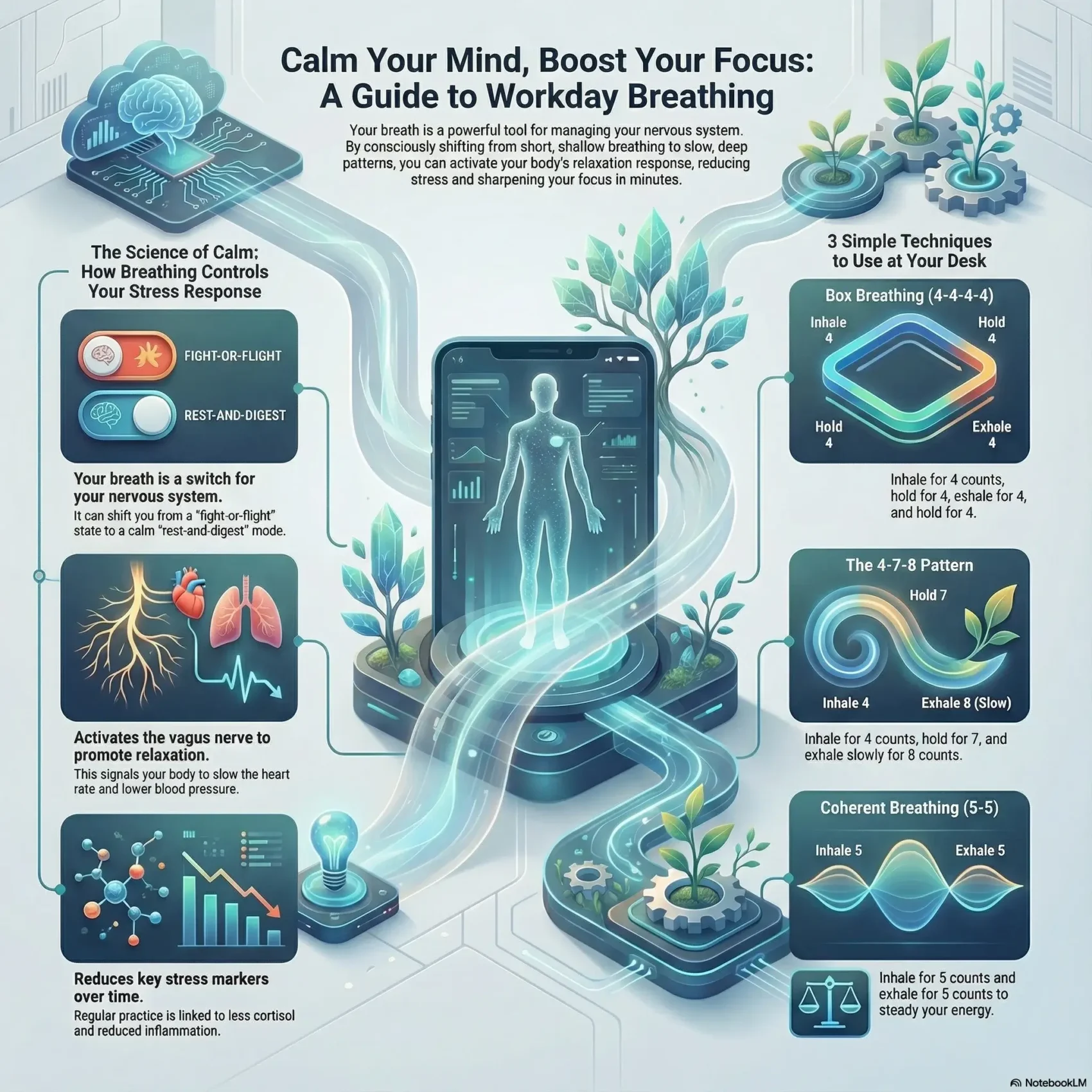
Last Updated on January 24, 2026
You take about 20,000 breaths a day, and your breath is a quick, built-in way to shift your nervous system. Simple practice moves you from a tense, fast pattern in your chest to a calmer rhythm that supports your health and focus.
Many methods activate the vagus nerve to slow heart rate and lower blood pressure. Mary Ella Blair Wood, DO, at Northwestern Medicine notes that regular practice links to less cortisol and reduced inflammation. A few mindful breaths can help you feel calmer and more alert without caffeine.
In this guide, you’ll get short, practical exercises to use at your desk, tips to fix common form issues, and realistic steps to build a habit that fits your day. Expect clear wins in minutes and steady gains over time as your lungs, heart, and brain respond to better patterns.
Key Takeaways
- Short, regular practice can reduce stress fast and boost focus.
- Your breath acts as a switch between fight-or-flight and rest.
- Vagus nerve activation helps lower heart rate and blood pressure.
- Simple desk exercises are easy to learn and personalize.
- Small daily steps lead to lasting relaxation and energy.
Why your breath eases stress and sharpens focus right now
A few slow cycles can switch your body from high-alert to calm in minutes. When work stress spikes, your sympathetic system speeds up: your heart rate climbs, your breathing gets shallow, and your mind races.
From fight-or-flight to rest-and-digest: activating your vagus nerve
Slow, deep respiratory work stimulates the vagus nerve and signals your parasympathetic system to take over. That shift nudges your body toward rest-and-digest, letting tension drop and attention return.
How slow, deep breaths steady heart rate and blood pressure
Longer inhales and especially lengthened exhales lower your heart rate and help blood pressure trend down. Diaphragm-led inhales draw air into the lower lungs so oxygen exchange is more efficient and blood delivers oxygen to the brain.
Research links regular practice with reduced cortisol and inflammation, which supports sustained focus and resilience over time.
“Even a few slow cycles can make you feel more grounded and ready to work.”
- Quick wins: use a longer exhale to calm your rate.
- Long-term: consistent practice improves oxygen delivery and lowers stress markers.
- Safety: if a racing heart causes dizziness or shortness of breath, consult your doctor.
Safety first: when to talk to your doctor before you practice
Before you try any new pattern, check your medical history. If you have heart or lung concerns, a quick call to your clinician can prevent sudden spikes in heart rate or pressure.
Certain rapid or forceful methods — such as Kapalabhati, Bhastrika, and Kumbhaka — are not recommended for people with cardiovascular disease, unmanaged high blood pressure, or respiratory disorders.
Heart and respiratory considerations, high blood pressure, and pregnancy
If you’re pregnant, avoid breath-hold practices and alternate nostril patterns that can change intra-abdominal pressure or reduce oxygen flow to you and your baby.
- Check with your provider if you have cardiovascular disease, uncontrolled blood pressure, or lung disease before trying forceful or prolonged holds.
- Start gently and keep sessions short while you see how your body responds.
- Stop and seek help for chest pain, unusual shortness of breath, dizziness, or a pounding heart that feels out of the ordinary for you.
- Ask your clinician about medication effects on heart rate or blood pressure and whether any postures should be modified.
- When stressed, choose conservative methods like calm nasal breathing with easy exhales; they carry low risk and still ease stress.
“If your heart is pounding with dizziness or shortness of breath, consult your physician promptly.”
Remember: your health history is unique. A brief conversation with a clinician can tailor your approach and keep your practice supportive, not risky. For more on how mindful routines help focus and work, see mindfulness and productivity tips.
Breathing techniques you can use today
Use these simple patterns at your desk or before a meeting to lower tension and sharpen focus.
Box breathing (4-4-4-4)
How: Sit tall or lie back. Inhale through your nose for 4 seconds, hold 4, exhale for 4, hold 4.
Repeat four rounds. If holds feel long, shorten each count evenly to 2–3 seconds so the exercise stays smooth.
4-7-8 pattern
How: Inhale quietly through your nose for 4, hold for 7, then exhale through your mouth for 8 with a soft whoosh.
Do up to four rounds while seated. Beginners may feel lightheaded; stop and rest if that happens.
Alternate nostril breathing
How: Use your right hand to close the right nostril with the thumb, inhale left, then close left with ring finger and exhale right.
Keep your back long, shoulders relaxed, and finish on the left after a few minutes. Keep your hand gentle on the face.
Coherent (5-5) breathing
How: Inhale for a count of 5, exhale for 5 to aim for about five breaths per minute.
This pattern supports heart-rate variability and steady energy during the workday.
Pursed-lips breathing
How: Inhale through your nose for 2, purse your lips, and exhale through your mouth for 4.
Use this during activity—walking or climbing stairs—to lengthen the exhale and ease tightness.
- Tip: Favor nasal inhales to warm incoming air and keep mouth exhales soft to avoid throat strain.
- Practice: Try one exercise for a week, then rotate. Pick a favorite for busy days and another for bedtime.
“A short, regular practice can calm your nerves fast and help you return to the task at hand.”
Master belly breathing: a step-by-step guide to diaphragmatic breathing
Start with a gentle belly rise into your hands to cue the diaphragm and support steadier oxygen flow. This simple diaphragmatic breathing exercise helps your lungs work more fully and eases tension in the chest.
Set-up and posture
Lie on your back with knees bent or sit tall with support. Place one or both hands on belly so you feel each rise and fall.
Inhale slowly through your nose so the belly lifts into your hands. Exhale through pursed lips while gently tightening abdominal muscles. One round equals one inhale and one exhale.
Common mistakes and easy fixes
If your chest lifts first, slow the pace and imagine the diaphragm descending. Drop shoulders, relax the jaw, and keep the lower back neutral.
Adjust hand placement until you clearly feel belly movement. If your mind wanders, count the inhale and exhale to stay steady.
How many minutes and times per day to practice
Start with 3–5 minutes, then build toward 5–10 minutes. Aim for 1–3 times per day as you learn the pattern. Use this exercise before meetings or after tense moments to reset and let your lungs fill more efficiently.
Make breathing a workday habit for stress relief and focus
Tiny, regular pauses at your desk can reset focus and lower daily tension fast. Start small and aim for consistency so the benefit grows over time.
Healthline recommends beginning with 2–5 minutes a day and practicing multiple times. Northwestern Medicine notes that steady daily practice helps you respond to stress more smoothly.
Micro-practices for meetings, emails, and breaks
- Anchor a 2–5 minute break at the same time each day—before your first meeting or after lunch—so the habit becomes automatic.
- Use tiny pauses: three box cycles before you unmute, one minute of coherent breathing after a tough email, or a short 4-7-8 round during the afternoon slump.
- Set calendar reminders for two minutes if you need prompts; short, frequent sessions beat rare long ones when your schedule is full.
Pair your breath with posture and muscle relaxation
Plant your feet, lengthen your spine, and soften your shoulders so each inhale fills the belly more easily. On the exhale, let your jaw drop and unclench your hands to teach the body to release tension.
“If you feel rushed, try five slow breaths instead of skipping—consistency matters more than perfection.”
Track your practice and results for better health
Track small wins: note your resting pulse, sleep quality, and how clear your mind feels after practice.
Research shows coherent breathing at about five breaths per minute can improve heart-rate variability and lower cortisol. Over weeks, regular practice may ease pressure on your cardiovascular system and help blood flow more efficiently.
Pick simple metrics you can keep up. Before and after a short set, score stress and focus on a 1–10 scale. Place your hand lightly at your wrist or neck to feel changes in pulse. If you use a wearable, compare sessions that use coherent breathing to others and watch how your rate and recovery differ.
- Log which technique you used, session length, and mood.
- Track sleep: note how quickly you fall asleep and whether you wake more rested.
- Watch trends: steadier heart rate, lower perceived pressure, and a clearer mind are positive signs.
- Use a 1–10 stress and focus score before and after to see progress.
- If palpitations, dizziness, or unusual spikes occur, pause and consult your clinician.
“Treat tracking as motivation, not pressure—let the data guide a routine that supports your long-term health.”
Conclusion
You can use a few steady cycles to calm your mind and regain clarity in minutes. This guide shows that regular practice supports relaxation, lowers heart rate and blood pressure, and can improve sleep. Keep it simple: pick one technique and try short sets so the habit sticks.
Small routines work best. A handful of slow breaths at your desk is an easy way to ease pressure and return attention to what matters. Favor nasal inhales to warm the incoming air and gentle mouth exhales when a pattern calls for them. Use belly work for a reliable reset or box breathing before high-stakes moments.
You now have practical exercises to use anytime. Make them daily, adjust as needed, and stop if your body signals discomfort. For more on linking calm to work performance, see mindfulness and productivity tips.