Tools
Tools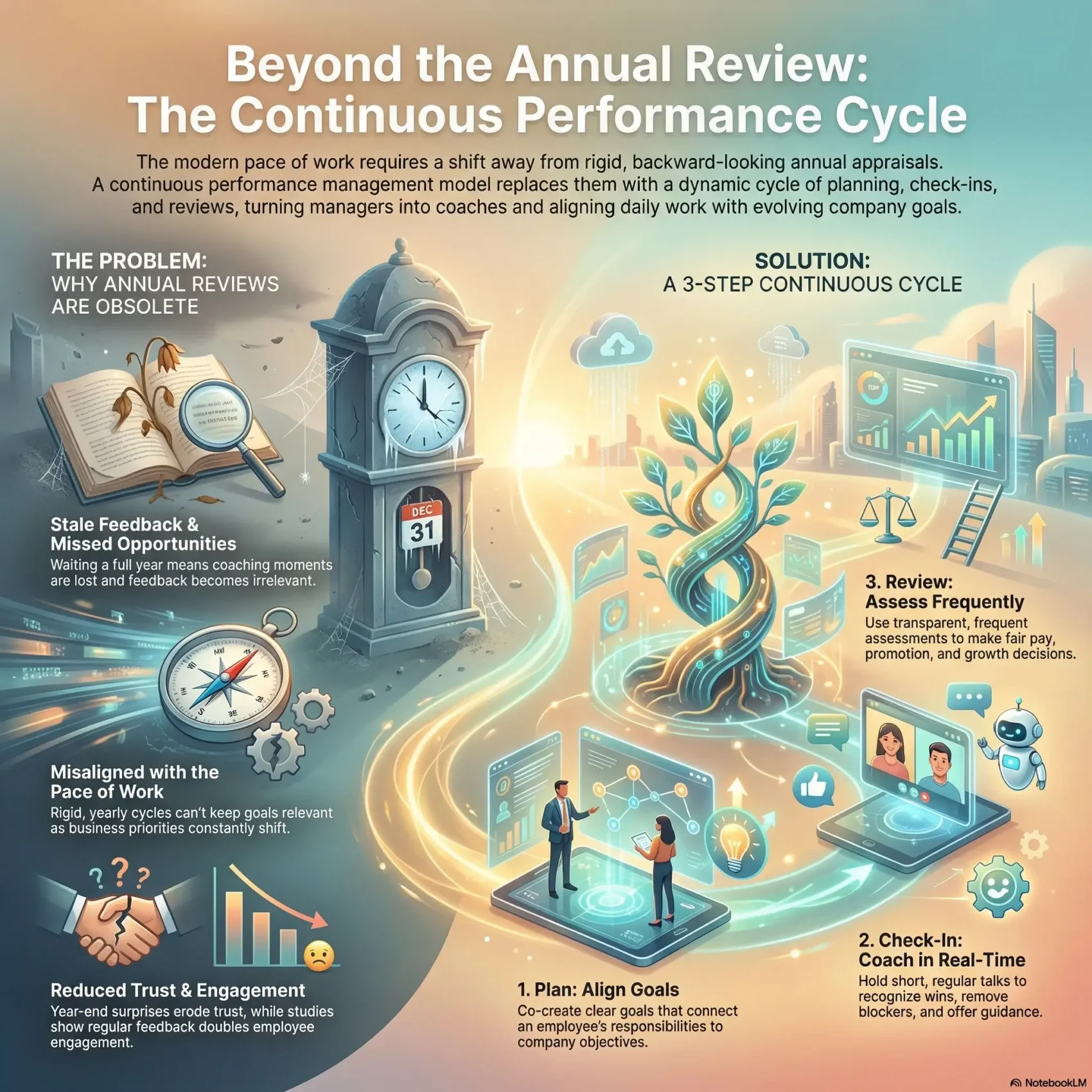
Last Updated on February 27, 2026
You don’t have to wait a year to know how your team is doing. This approach shifts reviews into a simple cycle of planning, check-ins, and review so goals stay aligned and work moves forward.
The model puts regular coaching and transparent assessments at the center of your people process. Shorter goal cycles and frequent feedback reduce surprises, build trust, and make pay and growth choices clearer.
Leading firms use tools to keep managers and employees talking without heavy admin. That real-time visibility gives leaders the insights to guide development and measure results as work happens.
In this article you’ll get a practical roadmap: where to start, which rhythms to set, and how to choose systems that support goals, 1:1s, and fair reviews. The aim is simple—turn talks into better outcomes for your team and business.
Key Takeaways
- Switch from annual reviews to a repeating cycle of planning, check-ins, and review.
- Use shorter goal cycles and frequent feedback to reduce surprises and build trust.
- Enable managers as coaches with simple tools and clear rhythms.
- Choose platforms that support goals, 1:1s, recognition, and analytics.
- Measure engagement and retention to track real results and benefits.
From annual reviews to always-on: why your performance management needs to change
When you wait until year-end to assess work, coaching moments slip away and issues grow larger.
Annual appraisals tend to cram goal setting, feedback, and development into a single meeting. That makes it hard for managers to coach effectively or for employees to act on timely advice.
The pace of work today means rigid cycles can’t keep goals relevant. You need an approach that lets you adjust priorities during active projects and recognize wins as they happen.
Employees want clarity, not surprises. Frequent conversations boost engagement, reduce turnover, and build trust between you and your team.
“Real-time coaching fixes blockers fast and keeps momentum—waiting months makes feedback stale.”
- Move beyond backward-looking review habits so feedback guides real work.
- Align daily tasks to company goals and enable quick course corrections.
- Use technology and AI wisely to reduce admin and raise the quality of conversations.
Modernizing your practices doesn’t remove reviews—it makes them meaningful by creating a record of progress. That shift helps your organization become fairer, more adaptable, and geared toward steady improvement.
What is continuous performance management and how it redefines your process
This approach replaces rare, formal check-ins with short, actionable conversations that move work forward. It centers on an always-on framework of planning, check-ins, and review so goals stay aligned with shifting priorities.
How continuous feedback turns managers into coaches
Frequent, timely feedback helps your managers guide priorities, remove blockers, and recognize wins in the moment. When you treat coaching as routine, 1:1s become about growth and next steps, not just ratings.
Agile, future-focused discussions vs. backward-looking reviews
Shorter goal cycles let you update targets as business needs change. Transparent, periodic assessments reduce recency bias and create a documented view of progress over time.
“When feedback is regular and fair, trust rises—employees know where they stand and how their work ties to goals.”
- The process moves the center of gravity from yearly events to frequent, lightweight conversations.
- AI nudges and analytics help managers lead better talks and free time for coaching.
- The result is a living framework that supports development, alignment, and measurable progress.
The business benefits you can expect right now
When you make feedback and goal updates routine, the business impact appears quickly. Teams become more engaged, leaders spot risks earlier, and your company moves faster toward its goals.
Higher engagement, retention, and trust between managers and employees
Frequent coaching makes employees feel seen. Studies show people are about 2x more engaged with regular feedback and roughly 1.4x more likely to stay.
Trust grows when conversations are fair, consistent, and forward-looking.
Stronger alignment to company goals and measurable progress
Updating goals often keeps daily work tied to strategy. When notes, goals, and check-ins live in one place, measurable progress becomes visible to everyone.
Faster improvement, clearer priorities, and better customer satisfaction
Real-time coaching removes blockers immediately. That leads to quicker improvement and fewer mistakes.
- Higher engagement from timely recognition and feedback.
- Better retention via clear growth paths and fair evaluations.
- Stronger alignment and faster results as teams adapt to changing needs.
Build your continuous performance management cycle
Build a simple rhythm of planning, short check-ins, and frequent reviews so your team stays aligned and momentum doesn’t stall.
Planning: align employee goals with organizational objectives
Start by co-creating goals that map an employee’s core duties to company priorities. Use job descriptions and KPIs to set clear job goals.
Break project goals into near-term milestones so the team can hit targets and show steady progress.
Checking in: light-touch conversations, recognition, and real-time coaching
Keep check-ins short, focused, and regular. Recognize wins, remove blockers, and offer quick coaching to keep work moving.
Document brief notes so feedback is factual, not memory-based, and so future reviews reflect real progress.
Review: transparent, frequent assessments that inform pay and growth
Make reviews more frequent and transparent to guide pay, promotion, and development decisions fairly. Use short cycles so you can adapt when priorities shift.
Goal types to include: job, project, behavior, and development goals
- Job goals: tied to role KPIs and core responsibilities.
- Project goals: split into short milestones and measurable outcomes.
- Behavior goals: reinforce culture, teamwork, and expectations.
- Development goals: focus on skills and career growth.
Tie the cycle together by rolling new objectives from each review. Encourage employees to ask for feedback and surface risks early so you can adjust plans quickly.
Five core pillars of a high-impact performance management system
A high-impact system rests on a few clear pillars that keep feedback timely and goals relevant.
Feedback in the flow of work
Deliver feedback where you work so people can act right away. Short, factual notes after tasks make reviews fairer and coaching easier.
Goals that evolve with the business
Set short, measurable goals that you can update as priorities shift. This keeps daily work tied to company objectives without creating extra admin.
Growth-centered leadership and coaching
Train managers to coach, not just rate. When leaders focus on development, employees get clear next steps and motivation to improve.
Data-driven visibility without bureaucracy
Use lightweight tools to surface trends and progress. Centralize goals, feedback, and 1:1 history so everyone shares a single source of truth.
A culture of trust, accountability, and recognition
Make recognition regular and tied to value. A strong culture doubles employee trust in managers and turns performance work into shared responsibility.
- Keep feedback immediate and action-focused.
- Refresh goals often to match shifting priorities.
- Make data useful, not burdensome.
- Model trust and accountability at the leadership level.
How to implement continuous performance management in your organization
A practical rollout starts with a clear audit of current habits and tools.
Understand what’s already happening across teams
Survey leaders and employees, review calendars, and log tools in use. Capture how often check-ins occur and how clear goals feel.
Co-design your framework with managers and employees
Invite a cross-section of people to shape the process. Ask where check-ins add value and how goals should be set or updated.
Provide structure and training—templates, not scripts
Offer short templates for 1:1s, goal-setting, and feedback requests. Train managers and employees on feedback skills and goal hygiene.
Invest in technology that drives visibility and action
Select a system that combines goal tracking, feedback, and 1:1 history. Integrate with HRIS and collaboration tools to cut duplicate work.
Reinforce accountability with culture, not compliance
Leaders should model the cadence, celebrate progress, and link outcomes to business goals. Use analytics to monitor adoption and iterate from pilot to scale.
“Start small, measure usage, and adjust—processes stick when they help people do better work.”
Enable your managers to coach with confidence
Give managers tools and routines that make coaching a regular, trusted part of work. Practical training and a clear rhythm help you turn brief talks into measurable progress.
Upgrade feedback, coaching, and 1:1 skills with training
Train your manager on feedback techniques, running 1:1s, and tying comments to observable behaviors. Use short workshops, playbooks, and AI prompts so learning sticks.
Two out of three managers report they need more support — make coaching practice regular, not optional.
Set a rhythm: weekly check-ins, monthly 1:1s, quarterly reviews
Establish a simple cadence: weekly check-ins for priorities and blockers, monthly deep 1:1s for growth, and quarterly reviews to align goals and measure performance.
- Use templates to guide conversations while leaving room for context.
- Encourage two-way feedback so employees feel heard and invested in development.
- Offer ongoing support: office hours, playbooks, and AI-assisted prompts to scale quality.
Track adoption and outcomes so coaching converts into real results. Recognize managers who model great coaching and share their practices across teams.
Choosing the right performance management system and tools
Look for a system that turns scattered notes and feedback into clear next steps. The right hub should unify goals, 1:1s, recognition, and reviews so your team spends less time hunting for context and more time improving work.
Core capabilities: goals, 1:1s, feedback, recognition, reviews
Prioritize a performance management system that centralizes goals, short check-ins, and feedback in one accessible place.
Make sure the system links goals into 1:1 agendas and captures recognition tied to outcomes. Ease of use, mobile access, and clear reporting drive adoption and satisfaction.
Advanced features: AI assistance, analytics, and integrations
Look for AI that suggests goal ideas, prompts feedback, and helps managers prepare better conversations.
Also demand dashboards and data that show adoption, hotspots, and progress by team. Seamless integrations with HRIS and your collaboration suites cut manual work.
Talent reviews and succession planning for long-term growth
Include talent reviews to calibrate results, spot risks, and guide pay decisions. Add succession planning to map successors and track readiness for key roles.
Use pilots to validate usability and impact before full rollout.
- Unified hub for goals, feedback, 1:1s, recognition, and reviews
- AI prompts, analytics, and HRIS integrations
- Mobile access, templates, training, and responsive vendor support
Common pitfalls to avoid as you evolve your performance culture
Small shifts in habit, not new tools, make the biggest difference when you change how people are reviewed.
Clinging to annual review mindsets
Don’t treat your new cadence like the old annual model. If you keep year-end thinking, conversations stay backward-looking and coaches miss growth windows.
Make talks future-focused and tie each check-in to updated goals and next steps.
Treating check-ins as checklists without follow-through
Check-ins become useless if they end with no action. Ensure notes record decisions, owners, and deadlines.
Use your process data to spot missed follow-through and intervene early before habits slip.
Underestimating the manager skill gap
Two in three managers report they need more support. A single workshop won’t fix that.
Close the gap with ongoing training, templates, and regular coaching for managers. Secure senior buy-in so leaders model the behaviors you expect.
“Visibility and structure help, but accountability comes from culture and leadership modeling desired behaviors.”
- Prevent communication breakdowns by setting clear expectations for goals and feedback.
- Address rater inconsistency with definitions, calibration, and examples.
- Encourage employees to request feedback and share blockers to keep coaching effective.
- Keep reviews anchored in a year-long record of progress to avoid recency bias.
For more on evolving reviews and systems that support this work, see the future of reviews.
Conclusion
You’ve seen how continuous performance management shifts focus from annual reviews to daily enablement and measurable progress. Make short goal cycles and regular check-ins the core of your approach.
Equip your managers to coach with training, templates, and AI-assisted prompts so feedback is timely and useful. Choose solutions that link goals, 1:1s, recognition, and reviews to give everyone clear context.
Start small: pilot rhythms and tools, learn fast, and scale what works. Leaders must model the cadence and celebrate real progress so accountability becomes cultural.
With the right framework and steady attention, your company will see higher engagement, better retention, and faster improvement. Now is the time to make feedback and visible progress part of everyday work.