Tools
Tools
Last Updated on December 9, 2025
The manufacturing sector is witnessing a significant transformation with the rise of digital twins. These virtual replicas of physical assets and processes are becoming vital for innovation. It’s projected that over the next five years, $30 trillion in corporate revenues will hinge on products yet to be developed. This highlights the importance of new product development across various industries.
As 75 percent of product development executives focus on further digitization, the use of digital twin technologies is increasing. It’s expected to grow at an annual rate of 60%, reaching $73.5 billion by 2027. This growth underscores the critical role of digital twins in the manufacturing landscape.
Nearly 75 percent of advanced industry companies are already using digital twins at medium complexity. The automotive, aerospace, and defense sectors are at the forefront, while logistics and energy are catching up. Adopting digital twin technology not only streamlines product development but also boosts operational efficiency and customer satisfaction.
In conclusion, digital twins are revolutionizing the manufacturing environment. They are making it more innovative and responsive to market demands.
Key Takeaways
- Digital twins are becoming essential for product development in manufacturing.
- Over $30 trillion in corporate revenues will rely on yet-to-be-released products.
- 75% of product executives see digitization as a key priority.
- The global digital twin market is set to reach $73.5 billion by 2027.
- Digital twins can reduce development times and costs significantly.
Understanding Digital Twins in Manufacturing
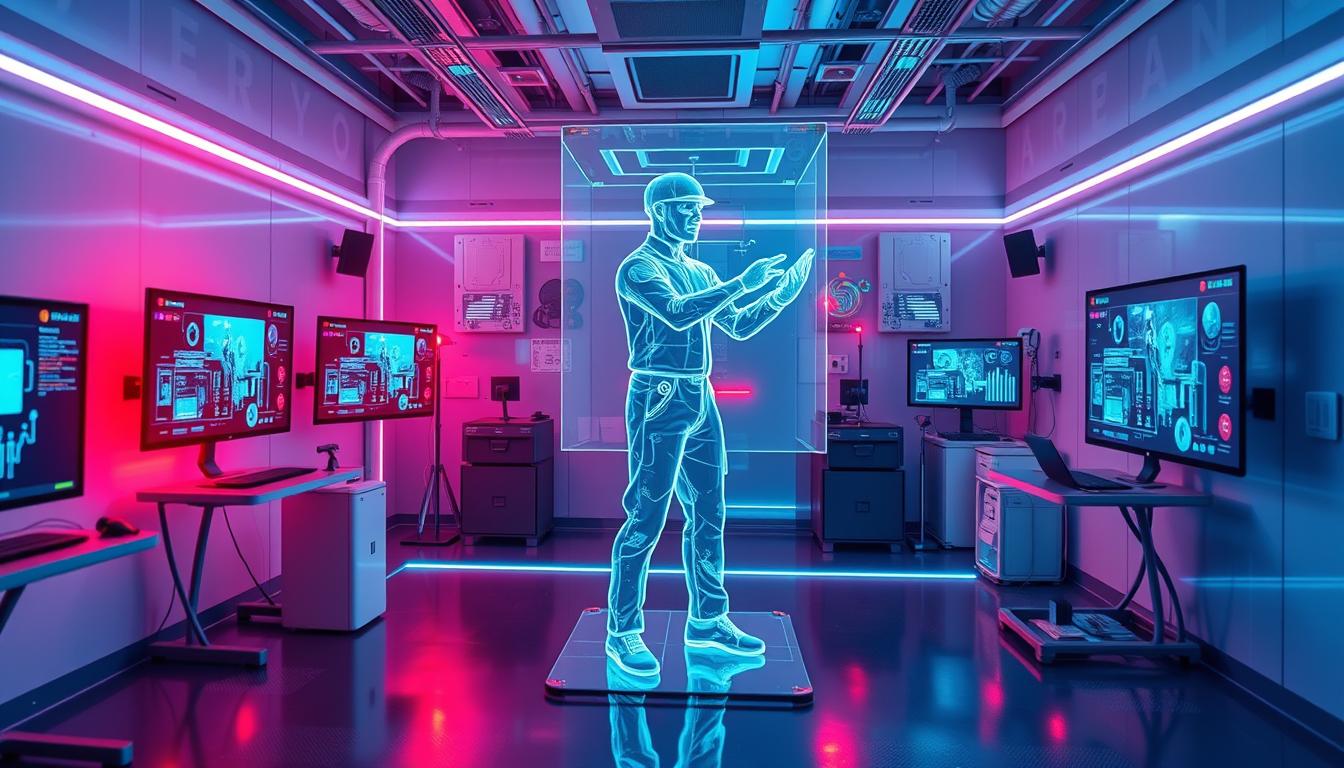
Digital twins are revolutionizing the manufacturing world. For those looking to boost performance and efficiency, grasping the concept of digital twins is crucial. Essentially, a digital twin is a virtual replica of a physical asset or system. It allows for real-time simulations and data analysis, aiming to optimize operations.
Definition and Concept
The idea of digital twins in manufacturing started taking shape in the early 2000s. It was driven by technological progress and the advent of Industry 4.0. These digital twins enable continuous process simulations, reacting to data from sensors and devices in real-time. This technology helps companies create flexible production environments. It enhances training, optimizes operations, and supports predictive maintenance.
Historical Context and Evolution
The evolution of digital twins is marked by significant technological advancements. These include the Internet of Things (IoT), Artificial Intelligence (AI), and Machine Learning (ML). Initially, digital twins were tied to product lifecycle management. However, their journey has sped up, especially with the focus on automation and real-time data in manufacturing. This has led many sectors to embrace digital twins, leveraging data for better efficiency and decision-making. The rapid adoption of this technology is key for manufacturers to achieve their objectives amidst today’s complex market challenges.
The Role of IoT in Digital Twins
The integration of IoT in manufacturing changes how businesses interact with their assets and operations. IoT-enabled digital twins allow manufacturers to create virtual representations of physical objects. This plays a key role in enhancing efficiency and decision-making.
Integration of IoT Devices
Connected devices are central to digital twins, offering remarkable scope for real-time monitoring. These devices collect vital data from equipment and processes. This data forms the basis for smart manufacturing insights.
Companies can continuously track performance metrics, quickly spotting areas for improvement. This data collection in IoT supports ongoing assessments and boosts predictive maintenance strategies.
Real-time Data Collection and Analysis
Real-time data analysis is crucial for maximizing digital twin benefits. Manufacturers can monitor their operational performance continuously with live feedback from the physical environment. This ensures decisions are based on current, accurate information.
By analyzing data in real-time, manufacturers can make swift adjustments and improvements in production flow. This reduces downtime and costs significantly.
Benefits of Digital Twins in Manufacturing
The advent of digital twins in manufacturing heralds a new era of operational efficiency and cost management. By embracing digital twin technology, manufacturers can optimize processes, slash expenses, and elevate product quality.
Enhanced Operational Efficiency
One of the primary advantages of digital twins is their ability to boost operational efficiency. They enable real-time monitoring of systems, allowing for the early detection of potential issues. This proactive approach leads to:
- Increased productivity through optimized resource allocation.
- Reduction in waste, contributing to more sustainable operations.
- Improved decision-making facilitated by accurate data analytics.
Cost Reduction in Product Development
Digital twins play a crucial role in reducing costs, especially in product development. They enable a significant reduction in the need for physical prototypes. This results in:
- Shorter development cycles, reducing R&D costs.
- Enhanced flexibility as adjustments can be made quickly within the digital environment.
- A reported decrease in development timelines by up to 50% while maintaining quality assurance.
Improved Testing and Validation Processes
Digital twins facilitate more efficient testing processes and rigorous validation in product development. They allow for the simulation of various scenarios, leading to:
- A safer testing environment devoid of physical risks and associated costs.
- Higher quality assurance, with fewer than 25% of products experiencing quality issues post-production.
- Faster product development timelines, enabling quicker market entry and increased customer satisfaction.
Digital Twins Manufacturing: Current Adoption Rates
The digital twins landscape is rapidly changing across various manufacturing sectors. Recent surveys show that about 71% of respondents say their companies use digital twin technology. This trend is especially strong in industries where digital twins are transforming operations.
Industry-Specific Adoption Data
Digital twins adoption rates vary widely by sector. For example, 97% of those in manufacturing see digital twins as crucial, with 58% saying it’s very important. The last two years have seen a big jump, with 89% of users adopting during this time. This is a stark contrast to sectors like logistics and energy, which are just starting to adopt.
Key Industries Utilizing Digital Twins
Leading industries fully embracing digital twin technology include:
- Aerospace
- Automotive
- Healthcare
These sectors use digital twins for many reasons, like improving equipment performance and simulating processes. An impressive 94% of respondents say digital twins have helped them create new products. Moreover, 86% of manufacturing respondents aim to use digital twins to meet sustainability goals.
The digital twin market is set to grow rapidly, with a predicted CAGR of 38% by 2026. As more companies learn about digital twins, we can expect to see more adoption. This will help them improve efficiency and drive innovation.
Predictive Maintenance Solutions with Digital Twins
In today’s fast-paced manufacturing world, predictive maintenance solutions with digital twins are a game-changer. They allow you to predict potential machine issues, boosting maintenance efficiency and operational strength.
Proactive Maintenance Strategies
Digital twins empower proactive maintenance strategies, focusing on real-time analytics. They analyze sensor data and past failures to pinpoint issues. This way, manufacturers can set up maintenance plans, track KPIs, and test different scenarios. It leads to better maintenance, longer machine life, and higher productivity.
Reducing Downtime and Costs
Predictive maintenance solutions are great at cutting downtime. They let manufacturers schedule maintenance when it won’t disrupt production. Gartner reports 24% of IoT users have adopted digital twins, aiming to reduce unplanned downtime. This not only saves costs but also keeps production flowing smoothly and resources in check.
Virtual Twin Technology in Manufacturing
Virtual twin technology is revolutionizing the manufacturing sector, enabling simulations that enhance various processes. This innovation allows for the exploration of different production methods without physical limitations. It fosters a culture of innovation, enabling designers and engineers to visualize every aspect of the manufacturing process.
Simulation of Manufacturing Processes
The core of virtual twin technology is its ability to provide accurate manufacturing simulations. These simulations offer insights into the entire workflow, improving process optimization and resource management. Continuous monitoring of performance metrics and real-time adjustments ensure optimal efficiency levels.
Companies like Arch Systems and Dassault Systèmes are leading this technological advancement. They are driving significant progress in virtual twin technology.
Impact on R&D and Product Lifecycle Management
The integration of virtual twins greatly enhances R&D efficiency. By creating dynamic models updated with real-time data, manufacturers can make informed decisions throughout the product lifecycle. This approach ensures better communication and collaboration among stakeholders, breaking down traditional silos.
With less time for new product introductions, businesses enjoy improved operational efficiency and cost savings.
Challenges in Implementing Digital Twins
The benefits of digital twin technologies in manufacturing are undeniable. However, organizations encounter several hurdles during implementation. It’s vital to grasp these challenges for a smooth transition to a more connected and efficient operational model.
Integration with Existing Systems
Integrating digital twin technologies with existing systems is a significant integration challenge. Many businesses rely on legacy systems not compatible with modern digital solutions. This often requires upgrading software or investing in new technology. Overcoming these complex architectures demands meticulous planning and specialized expertise.
Ensuring that legacy systems can seamlessly interact with digital twins is crucial. This step is necessary to fully exploit the potential of this technology.
Data Management and Security Issues
Effective data management challenges emerge as organizations strive to manage vast amounts of data from various sources. The accuracy and timeliness of data are critical for digital twin success. You may encounter data quality and complexity issues when integrating information from different sources.
Moreover, security concerns are heightened due to the increased connectivity required for digital twin operations. Safeguarding sensitive information and adhering to regulatory standards necessitates strong governance frameworks. Organizations must invest in training for skilled personnel to manage these digital transformation processes effectively.
In summary, overcoming the integration of digital twin technologies with existing systems and ensuring secure, efficient data management are key steps in digital transformation. By addressing these challenges, you can harness this innovative technology to enhance operational excellence.
The Future of Smart Manufacturing
The landscape of smart manufacturing is rapidly evolving, driven by Industry 4.0. Advanced technologies are merging, creating a new era of efficiency and adaptability. Digital twins play a crucial role, connecting physical assets with virtual representations. They are essential for data-driven decision-making, helping businesses stay competitive.
The Connection Between Digital Twins and Industry 4.0
Digital twins and Industry 4.0 are closely intertwined, with digital twins being key to achieving operational excellence. Companies adopting third-generation digital twin technology gain deep learning capabilities. This integration leads to enhanced predictive insights, supporting deeper analysis of manufacturing processes.
The world’s leading 3D printing manufacturers are embracing digital twins to ensure accuracy and avoid errors. This shows the scalability of digital twins, from monitoring individual components to overseeing entire plants.
Emerging Trends and Technologies
Several trends are shaping the future of smart manufacturing. Companies are increasingly adopting IIoT, a key enabler for smart factories, as Gartner’s 2023 research shows. This technology reduces unplanned downtime and enhances data processing efficiency through edge computing, facilitating quicker decision-making.
Innovations like 5G are redefining manufacturing environments, allowing for granular control of production processes and minimizing latency. Augmented reality is also being integrated, providing real-time instructions to workers and enhancing productivity.
Sustainability is becoming a priority in smart factories. IIoT solutions are promoting waste reduction, smart energy management, and closed-loop systems. Collaborative robots, or cobots, are working alongside humans, taking on repetitive tasks and optimizing workflows through real-time data updates.
As these advancements continue, companies will face challenges related to data management and security. Ensuring the workforce is equipped to leverage these technologies will be crucial.
Real-time Production Monitoring with Digital Twins
Real-time production monitoring is key to efficiency in manufacturing. Digital twins help collect accurate metrics, evaluating production performance continuously. This ensures operations meet expected outputs and highlights areas for improvement.
The Importance of Accurate Metrics
Accurate metrics from real-time monitoring are vital for ongoing improvement. Sensors on equipment track data like vibration, temperature, and RPM. This data, from digital twins, offers crucial insights. Historical analysis helps technicians detect issues before they cause failures.
Enhancing Decision-Making Processes
Digital twin technology enhances decision-making. It provides insights for optimizing operations and improving product quality. Digital twins enable better resource use and support long-term strategies to reduce downtime. With manufacturers losing $50 billion annually to downtime, timely insights are crucial.
Conclusion
digital twins are transforming the manufacturing world, not just as a fleeting trend but as a fundamental shift. They enable the simulation of entire production processes and leverage real-time data. This makes them essential for achieving operational excellence. The surge in Manufacturing Execution Systems (MES) adoption, with a doubling since 2019, highlights the vast potential for growth and integration with digital twins.
The future of digital twins in manufacturing appears bright, driven by advancements in IoT, cloud computing, and networked sensors. These technologies create an environment conducive to innovation and productivity. They help manufacturers tackle supply chain complexities and refine their processes. The expected market growth, from USD 10.1 billion in 2023 to USD 110.1 billion by 2028, underscores the increasing importance of these systems.
In conclusion, the outlook for digital twin technology is optimistic. As more manufacturers embrace these systems, they will enhance efficiency and gain the agility to meet evolving market needs. Adopting digital twins is now imperative for success in the evolving manufacturing landscape.