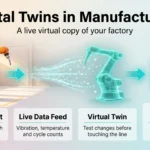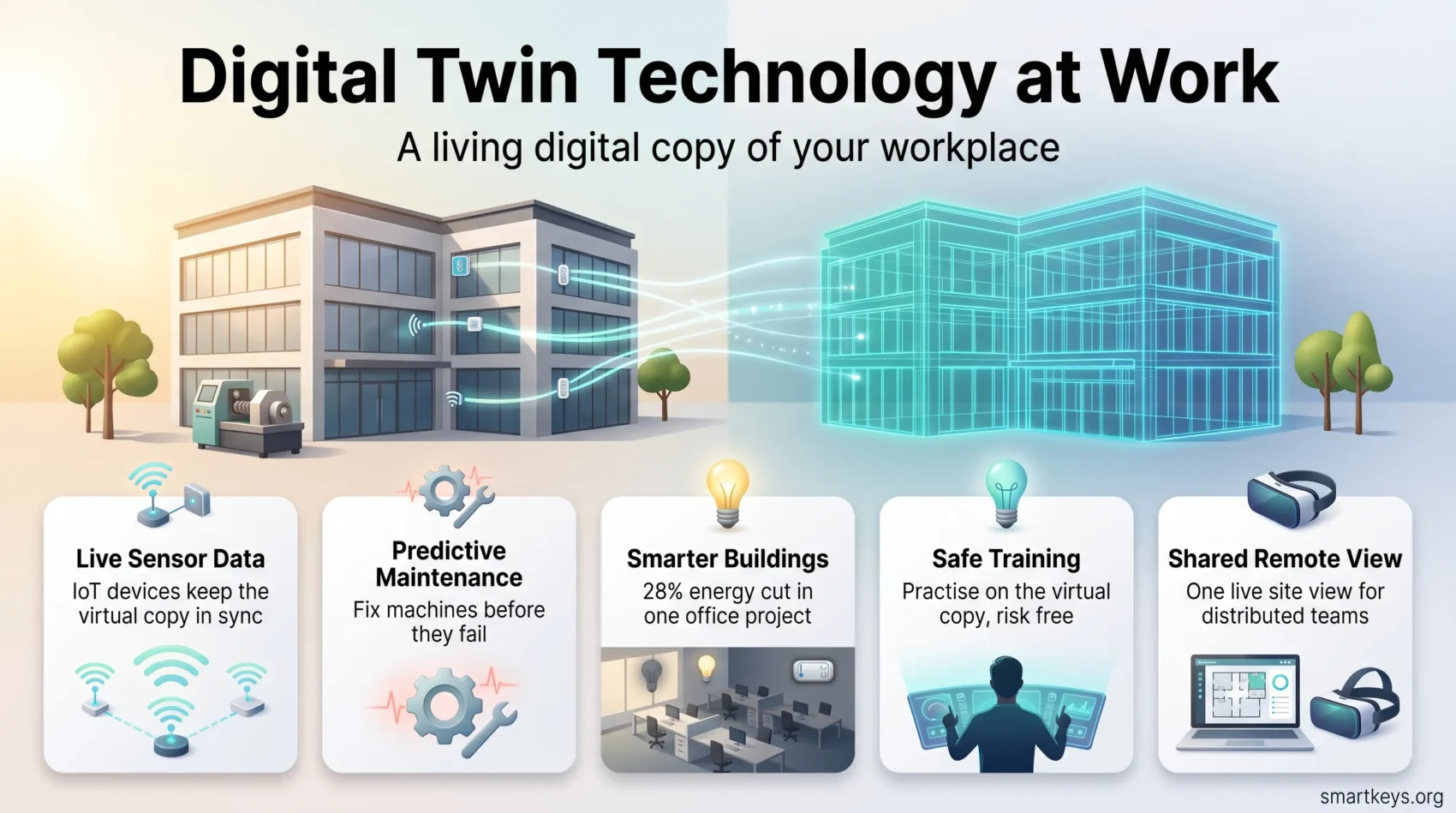
Digital twin technology gives a workplace a living digital copy of itself. A digital twin is a virtual model of a physical thing: a machine, a building, a production line or a whole office. Live sensor data keeps the model in step with reality, so managers can test changes on the copy before touching the original.
This is no longer a niche engineering tool. Market researcher MarketsandMarkets puts the global digital twin market at USD 21.14 billion in 2025 and expects USD 149.81 billion by 2030. The two main drivers it names are predictive maintenance and the growing number of connected sensors.
For most workplaces, the value shows up as fewer breakdowns, better use of space and energy, and safer working conditions. This guide explains how the technology works, where it pays off, and what it costs.
Key Takeaways
- A digital twin is a virtual replica of a physical asset or space that updates itself with real-time data.
- Predictive maintenance is the most common business case: a twin flags a failing machine before it stops production.
- Office building twins cut energy use by matching heating, cooling and lighting to real occupancy. One documented project reported a 28% reduction.
- Twins also help people directly: as a safe place to train on realistic equipment and as a shared live view of a site for remote and hybrid teams.
- The biggest hurdles are upfront cost, unclear return on investment, and privacy rules around employee data.
Understanding Digital Twin Technology
The term gets used loosely, and not every 3D model deserves the name.
Definition of Digital Twin Technology
A digital twin is an interactive digital model that mirrors the current state of its physical counterpart, fed by live data from IoT sensors. IoT means the Internet of Things: everyday devices such as thermometers, motors or badge readers that are connected to a network and report what they measure.
That continuous connection separates a twin from a normal simulation, which is a one-off experiment with assumed inputs. A twin runs on real inputs, all the time. A facilities manager can see today’s occupancy per floor, a plant manager the vibration level of one pump, and both can ask “what happens if” without interrupting anything.
Historical Development of Digital Twin Technology
In the 1960s, NASA built physical duplicates of Apollo spacecraft on the ground to test fixes for problems in orbit. That approach proved its worth during the Apollo 13 crisis. In 1991, computer scientist David Gelernter described “mirror worlds”: software models of reality constantly updated with live data.
The modern concept took shape in 2002, when Michael Grieves presented it at a Society of Manufacturing Engineers conference, and NASA engineer John Vickers gave it its current name around 2010. Cheaper sensors, faster networks and cloud computing then made it practical for ordinary businesses. Today, 5G networks and edge computing, which processes data close to where it is collected, let twins update within seconds.

Benefits of Digital Twin Technology in Workplaces
The clearest wins are keeping equipment running and making better decisions with live data.
Enhanced Predictive Maintenance
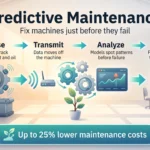
Predictive maintenance means repairing a machine because the data says it is about to fail, not because a calendar says it is due. A digital twin compares live readings (temperature, vibration, power draw) with the pattern a healthy machine should show. When the two drift apart, it raises an alert while there is still time to order parts and plan the repair.
The payoff is fewer unplanned stops: the office lift gets fixed on a Tuesday afternoon instead of failing on a Monday morning. At industrial scale the effect is larger. Rolls-Royce says twins of its aircraft engines let it plan maintenance around actual operating conditions, and CIO reported that this helped extend the time between maintenance for some engines by up to 50%.
Real-time Data Insights for Decision-Making
A twin also turns raw sensor data into something a manager can act on: how an asset behaves under load, where a process loses time, where the bottleneck sits. This kind of real-time data replaces monthly reports that describe problems weeks later.
In an office, the same principle applies to space. A twin fed with badge and occupancy data shows which floors sit empty on Fridays and which meeting rooms are always booked. That is what you need to know before deciding whether to shrink, redesign or keep the office.
Digital Twin Technology and IoT Connected Devices
A twin is only as good as the data it receives, and that data comes almost entirely from IoT connected devices.
Integration of IoT Connected Devices
Sensors placed through a workplace measure environmental conditions (temperature, humidity, air quality), equipment status (running, idle, overheating) and how people use the space (desk occupancy, room bookings, foot traffic). Fed into the twin, this gives facilities teams a floor-by-floor view:
- Space utilization: matching desks and rooms to how many people actually come in.
- Resource management: running heating, cooling and lighting only where and when they are needed.
- Operational efficiency: spotting idle or overloaded equipment before it becomes a problem.
A documented example is a five-storey, 47,000 square metre office building in Cairo built for 2,000 employees. After a digital twin platform was connected to its building systems, occupancy-based controls cut energy consumption by 28%. Predictive maintenance improved operational efficiency by about 20%, according to a case study presented through the UK Digital Twin Hub. The wider story of how IoT is changing business operations follows the same pattern.
How IoT Enhances Digital Twin Functionality
Continuous data makes three things possible that a static model cannot do. Real-time adjustments, such as lowering ventilation in an empty wing. Scenario simulation, such as testing a new seating plan against real attendance data. And proactive maintenance instead of reactive repair. This is also why IoT matters for remote and hybrid teams: a twin of the office lets distributed staff book space and check conditions without anyone walking the floor.
Virtual Replicas: The Heart of Digital Twin Technology
At the core of every digital twin is a virtual replica that mirrors its real-world counterpart.
Creation of Virtual Models
Building the model usually starts with existing design data: CAD drawings for machines, or Building Information Modeling (BIM) files for buildings. BIM is the structured 3D data architects and contractors already produce during construction. Sensors are then mapped onto the model, so each virtual pump or meeting room is tied to a real data feed.
Brisbane’s Cross River Rail project shows this at scale. Its twin combines BIM models of the new stations with geographic data, lidar scans and underground utility records. Engineers walk through stations in virtual reality before they are built, and the twin is meant to help run the railway once it opens, according to Esri, whose mapping software underpins it.
Importance of Accurate Simulations
Accurate simulations are what make a replica worth having. A model that is 80% right can be worse than none, because people will trust results the data cannot support. Calibrate the twin against measured reality, and again after every major change.
Real-time Simulation Capabilities of Digital Twins
Real-time simulation is where the twin stops being a dashboard and becomes a decision tool.
How Real-time Data Improves Operational Efficiency
The best-known industrial figure comes from Boeing. In 2018, then-CEO Dennis Muilenburg said the company was seeing “40 to 50% improvements in first time quality” on parts developed with digital twin models, as reported by Aviation Today. First time quality means a part passes inspection without rework.
Beyond quality, predictive analytics on twin data helps prevent failures that could injure staff and gives managers evidence instead of guesswork when they allocate a maintenance budget.
Use Cases in Manufacturing and Facilities Management
In manufacturing, twins plan production lines, balance workloads and schedule maintenance; our guide to digital twins in manufacturing covers that side in depth. Where a factory runs a private 5G network, the twin receives data from hundreds of machines with very little delay.
In facilities management, the focus is on people and energy. Building twins adjust heating, cooling and lighting to real occupancy, flag rooms that are booked but never used, and model a floor with a different layout. Those results feed into the debate about how office design is changing.
Digital Twins for Training, Workforce Planning and Remote Teams
Most twins model things. The same idea increasingly helps the people who work with them.
Safer, More Realistic Training
A twin of a production line or a control room makes a realistic practice environment. New staff can rehearse a machine changeover, an emergency shutdown or a fault diagnosis on the virtual copy. Mistakes cost nothing, and no live equipment is put at risk.
This matters most where practice on real equipment is expensive or dangerous, such as energy plants or aircraft maintenance. Because the twin runs on real operating data, trainees see the alarms and readings they will meet on the job. Our guide to VR employee training covers what that costs and when a short video does the job just as well.
Modelling Staffing and Workflows
Some organisations go a step further and model processes and teams, not just assets. Gartner calls this a digital twin of an organization: a model of how work actually flows through a company. A planner can test how a new shift pattern, a hiring freeze or a second production line would change workloads before anything is decided.
Two limits apply. The model is only as good as its process data, and it can easily become a tool for watching individuals. Keep the focus on teams and processes, not named employees.
Shared Twins for Remote and Hybrid Teams
A twin also gives distributed teams one shared view of a physical site. An engineer working from home can check a pump’s live readings and plan the repair before anyone travels. A facilities team spread across several cities can review the same floor plan and occupancy data together, in a browser or a VR headset.
The result is fewer site visits and faster decisions. A twin does not replace the chat and video tools of hybrid work; it adds a shared picture of the physical workplace.
Driving Data Analytics with Digital Twin Technology
A digital twin is also a very large source of data analytics. Every sensor reading is stored, so the twin becomes a history of how the workplace has behaved.
Collecting and Analyzing Operational Data
If energy costs spike, the twin shows which zones consume the most and which could be shut down outside core hours. The same operational data supports root cause analysis: teams compare readings across systems and trace a problem to its source. In practice, this data usually lands in the company’s existing business intelligence tools or a data lake, a central store for raw data from many sources.
Utilization for Strategic Insights and Improvements
Twin data also supports long-term decisions about assets. Vodafone has built a digital twin of its entire UK mobile network, mapping more than 40 million environmental features such as buildings and trees together with about 500,000 network components. Engineers use it to decide where to add or upgrade sites and to inspect equipment remotely before sending someone out. It is location data analysis at national scale.
Machine Learning Integration in Digital Twin Technology
Machine learning, the branch of AI that finds patterns in data and improves as it sees more, turns a twin from a mirror into a forecaster. Without it, a twin shows what is happening. With it, the twin says what is likely to happen next.
Enhancing Predictive Capabilities
Models trained on a twin’s historical and live data learn what “normal” looks like for each asset and flag deviations early. Maintenance becomes a plan instead of a reaction, and forecasts replace assumptions in budget decisions.
Automating Processes through Machine Learning
Once forecasts are reliable, some responses can be automated. A twin can reorder a spare part when wear crosses a threshold, or adjust ventilation as occupancy rises. That means less routine monitoring work, quicker responses and lower costs. Automation should still leave a person in charge of important decisions; how managers use AI for decisions well applies here as much as anywhere else.

Regulatory and Compliance Benefits of Digital Twins
The same sensors that improve efficiency can document that a workplace stayed within required limits.
Ensuring Workplace Safety Standards
Twins with environmental sensors continuously track conditions such as air quality, temperature and noise. When a reading crosses a limit, the twin alerts the facilities team immediately rather than waiting for a complaint or an inspection. In industrial settings, condition monitoring on machinery reduces the chance of a failure that injures someone. This does not replace a safety programme; it gives it better evidence and faster warnings.
Automating Compliance Monitoring
Because a twin records readings over time, it can generate the documentation regulators ask for without manual data collection. Reports on energy use, indoor air quality or equipment inspections can be pulled from its history. That also matters for sustainability reporting, where companies must show measured emissions rather than estimates.
This only works with a reliable data pipeline. Faulty sensors or gaps in the data produce wrong reports, and a wrong compliance report is worse than none.

Challenges to Implementing Digital Twin Technology
Twin projects usually fail for one of two reasons: the money ran out before the model was accurate, or employees objected to being measured.
Cost and Resource Allocation
A twin requires sensors, software, integration work and people who can maintain the model. Vendors rarely publish prices, because costs depend on the number of assets and the age of existing systems, so the return on investment is hard to predict.
The practical answer is to start small. Pick one building, one line or one class of equipment with a known problem, measure the baseline, then run the twin against it for a defined period. A twin that provably reduces downtime on one line is a much easier case to make than a company-wide platform. The lessons from AI projects that struggled to show a return apply directly.
Data Privacy Concerns in Workplace Applications
Data privacy becomes an issue as soon as a twin tracks people rather than machines. Desk sensors, badge data and room bookings reveal where individual employees are and how they work. In the EU, this is personal data under the GDPR, and in many countries it requires consulting employee representatives. Some uses, such as inferring emotions from workplace data, are now restricted outright; our guide to emotion recognition AI at work explains those rules.
Twins that use AI to monitor or evaluate workers face a further rule. The EU AI Act classes such systems as high-risk. The AI Omnibus, in force since 27 July 2026, moved the date those obligations apply to 2 December 2027. That gives employers time to prepare, not a reason to ignore it; our overview of EU AI Act compliance sets out what high-risk status requires.
The safest design collects occupancy by zone or floor rather than by named individual, and is open with staff about what is measured and why. It keeps the twin’s purpose on space and safety rather than monitoring individual performance. Our overview of data privacy rules for employee data covers what employers must do in 2026.
Conclusion
Digital twin technology gives workplaces a live, testable model of how the building or the production line actually behaves, and it turns sensor data into decisions about maintenance, space, energy and safety. It also gives trainees a safe place to practise and remote teams a shared view of their sites.
Adoption comes with costs and with a duty of care around employee data. The companies getting value from twins start with one measurable problem, prove the model is accurate, and expand from there. Handled that way, a digital twin is a practical step towards a workplace that runs on evidence rather than assumptions.
Found this useful?
Make SmartKeys a preferred source on Google, and our articles will surface more often in your Top Stories, AI Overviews, and AI Mode.
Add as Preferred SourceFAQ
What is digital twin technology?
Digital twin technology creates a virtual replica of a physical asset, building or process and keeps it updated with live sensor data, so the twin changes as the real thing changes. Organisations use it to monitor performance, test changes safely and improve decision-making. In a workplace, that can mean a twin of an office showing occupancy and energy use per floor, or a twin of a production line predicting when a machine needs maintenance.
How can digital twin technology improve predictive maintenance?
A digital twin compares live readings from a machine, such as vibration, temperature and power draw, with the pattern a healthy machine should show. When the readings drift, the twin raises an alert before the machine fails. Maintenance teams can then order parts and schedule the repair at a convenient time, which reduces unplanned downtime and emergency repair costs. MarketsandMarkets names predictive maintenance as one of the two main drivers of market growth through 2030.
What are the benefits of digital twins in the workplace?
The main benefits are fewer equipment failures, better use of space and energy, and safer working conditions. A twin of an office building can match heating, cooling and lighting to actual occupancy; one documented office project in Cairo reported a 28% cut in energy consumption after occupancy-based controls were introduced. Twins also show which desks and rooms are really used, which helps a company decide how much office space a hybrid workforce needs. In industry, the benefit is mostly in maintenance and quality.
Can digital twins help with compliance monitoring?
Yes. Because a twin records sensor readings over time, it can document that air quality, temperature, noise or equipment conditions stayed within required limits, and alert the facilities team the moment a reading crosses a threshold. Reports for safety inspections, energy audits or sustainability disclosures can be generated from that history instead of collected by hand. The data must be reliable, though: a broken sensor or a gap in the record produces a wrong report.
What challenges do organizations face when implementing digital twins?
The two biggest challenges are cost and employee data. Sensors, software, integration and skilled staff all cost money, and vendors rarely publish prices, so the return is hard to forecast. The usual answer is to start with one building or one line and prove the benefit before expanding. The second challenge is privacy. A twin that tracks where people sit collects personal data, which in the EU falls under the GDPR and often requires consulting employee representatives. Collecting occupancy by zone rather than by named person, and being open about it, avoids most of the conflict. AI that evaluates individual workers counts as high-risk under the EU AI Act from December 2027.
Which industries benefit most from digital twin technology?
Manufacturing, aerospace and automotive were the first adopters and still account for the largest share of spending, according to MarketsandMarkets. Infrastructure and telecoms follow. Brisbane’s Cross River Rail uses a twin to plan and later operate a new railway, and Vodafone runs a twin of its UK mobile network to decide where to add or upgrade sites. Commercial real estate uses building twins to cut energy use and manage space, and healthcare is the fastest-growing segment in current forecasts.
Can digital twins be used to train employees?
Yes. A twin of a machine, production line or control room gives trainees a realistic place to practise without risk. They can rehearse routine tasks, fault diagnosis or emergency procedures on the virtual copy. Because the twin runs on real operating data, the alarms and readings look like the ones they will meet on the job. The approach pays off most where practising on live equipment is dangerous or expensive, as in energy, heavy industry and aircraft maintenance. For simple tasks, a short video is often enough.
How do digital twins help remote and hybrid teams?
A digital twin gives people in different locations the same live view of a physical site. A remote engineer can check a machine’s readings and plan a repair before anyone travels. A facilities team can review occupancy and floor layouts together in a browser or VR headset. This cuts site visits and speeds up decisions. It does not replace the video, chat and project tools remote teams already use; it adds a shared picture of the physical workplace.