Tools
Tools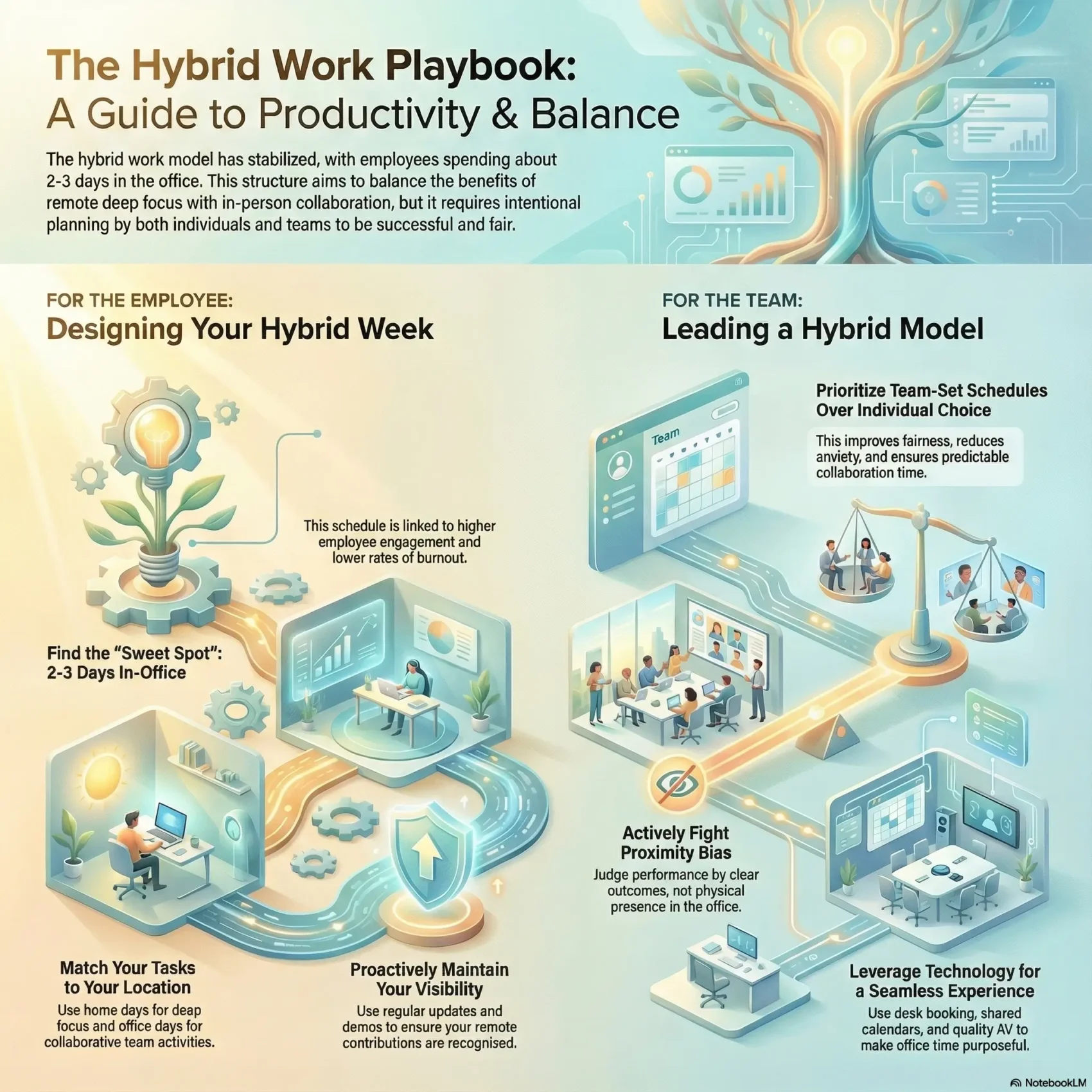
Last Updated on December 19, 2025
Hybrid work now shapes how people and organizations schedule time, mix meetings, and protect focus. A 2023 Gallup finding shows two to three in-office days boost engagement and cut burnout. That insight matters as companies plan the future of their workplace.
In this short guide you’ll learn how to plan your week so team meetings happen when they matter and heads-down tasks happen at home. You’ll also see which parts of your role benefit most from in-person collaboration and which thrive in a flexible setup.
Key Takeaways
- Create a weekly plan that groups collaboration in-office and deep focus at home.
- Use simple tools and norms to reduce context switching and keep communication clear.
- Protect visibility with regular updates so your contributions are seen across locations.
- Match tasks to the right environment to boost productivity and balance.
- Adopt small habits that build trust with your manager and team.
Hybrid work today in the U.S.: What it is and where it’s headed
Across the U.S., schedules have mostly settled into a predictable mix of in-office and at-home days. Since 2022 the pattern among remote-capable employees has stayed stable: people now spend about 46% of their week in the office—roughly 2.3 days.
Why stability matters for your team
This consistency means you can set routines that last. When schedules are steady, teams coordinate faster and managers can set fair norms. Schedule control is split: about 34% of employees choose their days, 35% follow a team or manager plan, and 31% follow employer policies.
How many days drive results
Gallup finds that two to three in-office days link to higher engagement and lower burnout. Aim for two firm days for shared tasks and a flexible third for key meetings or milestones.
- Plan predictable days so the office avoids peaks and empty seats.
- Use data and employee feedback to refine schedules.
- Propose clear norms to your manager that balance collaboration and solo time at home.
The benefits and trade-offs you should expect in a hybrid work model
Expect tangible benefits — and some common pitfalls — when your team adopts a blended schedule. Flexibility lets you match tasks to the best setting, so deep focus happens at home and collaboration happens in the office.
Productivity, engagement, and work-life balance gains
Flexible days often boost productivity and protect evenings and weekends. Gallup shows two to three in-office days deliver higher engagement and lower burnout.
Fewer commutes free time for high-impact tasks and family. A simple example: reserve mornings at home for deep work, then use afternoons in the office for workshops.
Collaboration friction, burnout patterns, and equity risks
Trade-offs matter. Small video meetings work well, but large gatherings suffer when many people join remotely. That can stall decisions.
Also watch equity risks: employees who are mostly at home may lose visibility and promotion chances. Use regular updates, demos, and cross-team presentations to stay seen.
- Plan shared norms for meetings and status reporting.
- Protect your environment at home with a dedicated space and clear start/stop rituals.
- Coordinate days with your team or explore flexible schedules that balance fairness and effectiveness.
Choosing schedules and policies that fit: from at‑will to team‑determined
Choosing the right schedule starts with the tasks your team must complete and the meetings that move projects forward.
Common models include at‑will (employees pick days), structured split‑week, manager‑scheduled teams, or a mixed approach. Pick one and align your team so everyone knows the pattern.
Examples of schedules that work for different teams
Sales might anchor Tue–Thu for pipeline reviews and client briefings. Engineering can set two anchor days for design sessions and pair programming.
Why team‑set norms beat individual pick‑your‑days
Team-set norms improve fairness and reduce anxiety. Nicholas Bloom warns that individual pick‑your‑days can hurt coordination and diversity.
Coordinating in‑office days to avoid space crunches and ghost Fridays
- Coordinate centrally: prevent midweek overcrowding and near-empty Fridays.
- Write light policies that define core days, core hours, and meeting standards.
- Use desk and room booking tied to team anchor days and review schedules quarterly.
Give managers clear roles: set team days, protect focus time, and enforce meeting hygiene so the model delivers in practice.
For more on arranging fair calendars, explore flexible schedules.
Day-to-day productivity: how you structure time, meetings, and focus
Structure your days so you get long stretches of focused effort at home and high-energy collaboration in the office.
Designing your week
Block deep-focus time on your calendar for mornings at home. Turn off nonessential notifications and batch messages so you can finish complex tasks without interruption.
Anchor in-office days around team activities. Use those days for workshops, onboarding, and customer sessions so people can make real-time progress together.
Meeting hygiene
Keep small meetings (2–4 people) on video with tight agendas and clear outcomes. Reserve large gatherings and kickoffs for in-person sessions where energy and clarity matter most.
- Schedule buffers between video calls and document decisions in a shared space.
- Create a weekly checklist: quiet space, headset, stable internet, and at least one meeting-light day.
- Shift routine updates to async channels to cut meeting load and free time for decisions.
Share your weekly plan with your manager and peers so everyone knows when you’re focused or available. Track which days and settings boost your productivity and adjust the model as needed.
Managing hybrid teams with trust, accountability, and inclusion
Managers set the tone: clear expectations and inclusive habits make mixed-location teams perform better.
Four manager basics that boost trust across locations
Gallup highlights four practices that build trust for employees: consistent communication across locations, a strong team community, clear accountability for outcomes, and equal access to feedback and development.
Lead with simple routines. Share timely updates, keep community rituals, and measure outcomes so every employee knows what success looks like whether they are in the office or at home.
Reducing proximity bias and protecting career growth for remote days
Research from Nicholas Bloom warns of proximity bias: workers who are less visible can face slower promotion paths.
“A 2015 study showed a 50% lower promotion rate for remote employees in one company.”
To counter that, rotate meeting facilitation, alternate presenters, and document decisions so remote contributors get credit.
- Set clear objectives and metrics so employees know how performance is judged.
- Schedule regular 1:1s, coaching, and stretch assignments across locations.
- Choose team-determined days for fairness and predictability to reduce burnout.
- Train managers to run inclusive meetings and share wins across channels.
Partner with HR to make promotion criteria outcome-focused and visible. Close the loop each week with a short recap so trust, momentum, and productivity stay high across your organization.
Tools and workspace tactics that make hybrid work
Smart tools help you and your team use the office more effectively. Use booking, wayfinding, and analytics so onsite time is purposeful and predictable.
Desk and room booking, wayfinding, and workplace analytics
Reserve seats and rooms before you arrive to avoid hunting for space on busy days. Desk and room booking systems keep anchors from overcrowding.
Turn on office wayfinding so you can find coworkers and open rooms quickly. That saves minutes and keeps meetings on schedule.
Measure utilization and foot traffic with workplace analytics to right-size your space. Use that data to plan peak days and optimize the environment.
Team visibility: schedules, status norms, and async communication
Share a single calendar that shows who’s onsite and when. Standardize status norms for response times, focus blocks, and end-of-day notes.
- Integrate tools: link booking, calendars, and chat so schedules auto-update.
- Provide high-quality room AV and shared whiteboards so remote and onsite employees join equally.
- Create a simple playbook with examples: sprints in workshop rooms, quiet zones for deep focus, lounges for cross-team time.
“Make office visits predictable — the right space plus clear signals makes each day more productive.”
Partner with your IT and facilities teams to keep technology secure and user-friendly so the organization gets full value.
Conclusion
Use a few steady habits to lock in results. Build a simple weekly plan that sets 2–3 intentional in-office days for collaboration and keeps mornings at home for deep focus.
Favor team-determined schedules for fairness and predictability. Keep large gatherings in person and run small, tactical sessions on video to save time and preserve energy.
Use booking and scheduling tools so you show up when it counts. Make your work visible with clear updates and regular development conversations so employees and people on your team stay seen.
Expect this model to keep evolving. Track what helps, survey your team, and prioritize outcomes and clarity so workers do their best — wherever they are.