Tools
Tools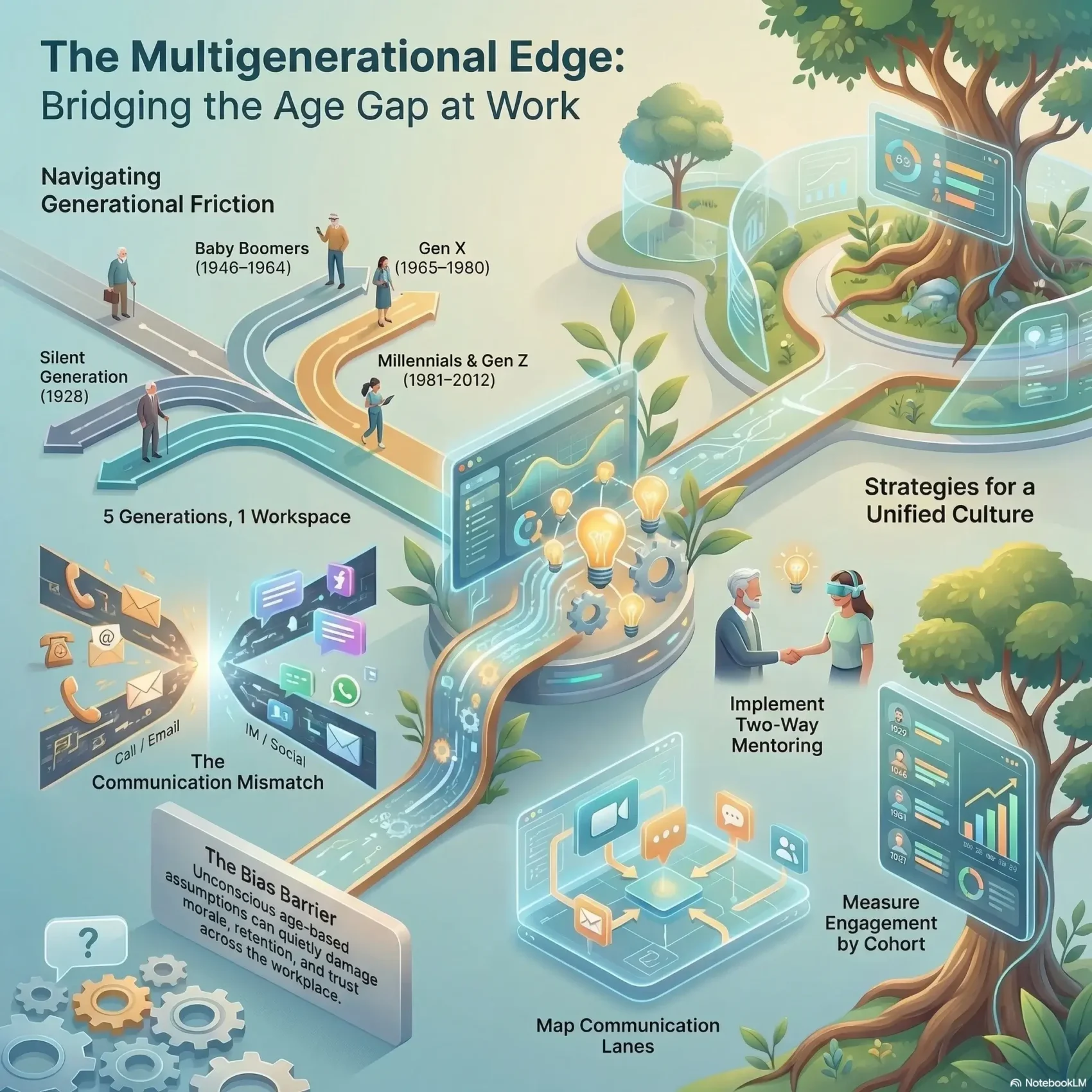
You’re leading a workforce where up to five generations often share the same space. That mix brings fresh ideas, different habits, and occasional friction. You can turn those differences into strength by building trust and clear norms.
Start small: use icebreakers, virtual coffees, and quick knowledge-share rituals to connect people. Clear expectations, consistent feedback, and blended learning help align leaders and staff around one culture.
Design remote-friendly rhythms like regular synchronous meetings and digital communities so distance doesn’t erode relationships. When leaders invest in mentoring, manager enablement, and communication hygiene, work runs smoother and engagement rises.
In short: practical steps—from meeting rituals to feedback loops—let your organization reduce friction and harness strengths across generations.
Key Takeaways
- Build trust with simple rituals: icebreakers, Slack threads, and virtual coffees.
- Set clear norms and expectations so people know how to collaborate.
- Enable leaders with tools for feedback, mentoring, and blended learning.
- Keep remote staff connected through regular synchronous meetings and digital communities.
- Measure culture and performance to reinforce new behaviors and show progress.
Today’s landscape: Why multigenerational teams matter right now
Longer careers mean you may work with colleagues from the Silent Generation through Gen Z. That mix changes hiring, retention, and how daily work gets done.
What a multigenerational workforce looks like in the present U.S. workplace
Your organization likely includes four or five generations at once. This expands talent options but brings clear differences in communication, expectations, and style. HR leaders now build multiyear succession plans that keep Baby Boomers and older generations in mind while preparing Gen X, Millennials, and Gen Z for key roles.
Defining generations at work: Silent Generation to Gen Z
- Silent Generation (1928–1945)
- Baby Boomers (1946–1964)
- Gen X (1965–1980)
- Millennials / Gen Y (1981–1996)
- Gen Z (1997–2012)
Understanding these birth-year definitions gives your team common language and clearer insights. Map where people sit on the age spectrum so you can design hiring, upskilling, and cross-generational projects that turn diversity into advantage.
The upside: Benefits you can unlock with age-diverse teams
When people of varied ages work together, you get faster problem-solving and deeper insight. This blend brings fresh perspectives alongside hard-won experience. That mix improves decision quality and helps your team move faster on complex work.
Two-way mentoring keeps knowledge moving. Pair seasoned employees with early-career colleagues so tacit know-how transfers while new skills and digital habits flow back. That kind of learning strengthens internal pipelines and reduces reliance on external hires.
Mixed-age collaboration also spreads risk. Documenting critical processes and rotating responsibilities cuts single points of failure. Over time, this supports steady growth and fair promotion paths that keep institutional memory intact.
- Multiple perspectives unlock creative solutions faster and improve decision speed across teams.
- You’ll build pipelines by pairing seasoned employees with newer staff in two-way mentoring that sharpens skills.
- Encourage learning in the flow of work so people co-create solutions and increase collaboration and ownership.
The friction points: Common challenges you’ll need to navigate
Small clashes over style and tone can slow work and erode trust if you don’t address them early.
Communication mismatches are the top challenge. Boomers and Gen X often prefer calls or email. Younger colleagues lean on instant messaging and social platforms. Those differences produce missed context and tense threads.
Bias and age-based stereotypes quietly harm morale. Unconscious assumptions can shape hiring, promotion, and who gets visible work. That weakens retention and trust across the workplace.
Expectations about loyalty, rewards, and growth also vary. Some value long tenure and steady raises. Others measure impact and seek rapid progression. You must align your policies so fairness is visible.
- Set norms: agree on channels and tone that meet-in-the-middle.
- Call out stereotypes: replace labels with observable behaviors and standards.
- Recalibrate rewards: make recognition and flexibility equitable across generations.
- Train leaders: help them spot and stop age-based assumptions early.
Communication that works: Practical ways to align styles and expectations
Consistent habits for when to message, call, or meet reduce confusion across generations. Start by agreeing on which channels serve which purpose so everyone knows where to look.
Meet-in-the-middle channels: Email, IM, video, and face-to-face
Define message lanes: urgent via IM, formal decisions via email, and complex topics via video or face-to-face. That clarity cuts misreads and speeds decisions.
Set clear norms: When to use which channel and why
Agree on response times by channel to reduce anxiety. Add simple rules like “one topic per thread” and “use subject lines for decisions.”
Protect deep work with calendar hygiene: focus blocks, no-meeting windows, and agenda-first invites.
Build feedback loops: Surveys, 1:1s, and team rituals that include every voice
Run short pulse surveys and regular 1:1s so feedback flows upward. Use icebreakers, round-robins, and rotating facilitators to help different generations speak up.
- Give leaders scripts to clarify tone and summarize agreements.
- Record meetings, add captions, and post written recaps for inclusive access.
- Pressure-test norms quarterly and adjust as your workplace evolves.
Learning that sticks: Mentorship, blended training, and continuous development
Practical learning systems help people pick up new skills quickly and keep knowledge moving across roles. Make development part of the workflow so growth happens without extra admin or friction.
Reverse and cross-generational mentoring
Pairing is reciprocal: you’ll set up reverse and cross-generational mentoring so each person both teaches and learns. A junior may share tool shortcuts while a senior offers client nuance as one example.
Blended learning for different styles
Offer videos, written SOPs, and live practice so training lands for varied communication preferences. Centralize paths on a platform like WorkRamp to track progress and tie learning to career goals.
Onboarding playbooks that ramp faster
Codify shadowing checklists, tutorials, and personalized guides tailored to role and experience. Encourage team members to document tips in shared spaces so individual know-how becomes reusable assets.
- Track learning paths against development goals so employees see progress.
- Carve microlearning slots into calendars for steady growth.
- Model leadership by joining mentoring circles to signal shared priority.
Policies that bridge age gaps: From EVP to inclusive hiring and flexible work
When policies match life stages, employees feel seen and leaders gain trust. Start by shaping an Employee Value Proposition that balances wellness, PTO, career growth, and financial programs.
Design an EVP for different life stages
Create clear signals: highlight work/life balance, learning stipends, and advancement paths. Make community service and financial planning visible so every employee sees benefits that matter to them.
Inclusive hiring and objective selection
Use neutral language in job ads and widen sourcing to reflect your organizations and customers. Form mixed-age interview panels and set objective criteria so hiring and promotion decisions are fair and defensible.
Flexible schedules and phased pathways
Offer remote options, compressed weeks, part-time roles, and phased retirement so people can adapt work to life without stalling careers.
Combat bias with training and modeling
Train managers to spot age stereotypes and model equitable stretch assignments. Keep expectations transparent about availability and outcomes to balance flexibility with accountability.
- Spot-check policies for unintended age impacts.
- Promote cross-functional opportunities so the team learns faster.
- Measure results and refine the EVP over time.
Applying best practices across environments: Remote teams and healthcare settings
Remote and clinical settings demand clear rituals so people stay connected, safe, and productive.
Start with steady, predictable touchpoints. Schedule short synchronous meetings, set office hours, and host digital communities so distant staff feel included. These rhythms keep work visible and create space for quick problem-solving.
Maintaining connection at a distance: Synchronous touchpoints and digital communities
Use a mix of weekly check-ins, async updates, and shared channels. Make participation easy and optional roles rotate so every voice has a chance to lead.
Healthcare insights: Balancing clinical experience with technological agility
In clinical environments, older generations often prefer 1:1 updates while younger staff favor IM and quick digital tools. Blend clinical experience with tech agility by pairing clinicians for pilots that test EHR or virtual care changes.
Leader visibility and accessibility to strengthen trust and culture
Leaders should round, hold informal check-ins, and publish simple playbooks. Create buddy systems, standardize objective hiring criteria, and document an example handoff for high-pressure roles.
- Predictable touchpoints keep the organization aligned.
- Cross-role pilots mix experience and fresh skills to scale improvements.
- Visible leadership reinforces culture and reveals issues early.
Multigenerational teams: How you’ll measure progress and sustain momentum
Turn anecdote into evidence by tracking a focused KPI set that shows whether your work actually helps employees and the business. Use engagement scores, retention by cohort, promotion equity, and learning completion as your core measures.
KPIs to track
Start simple: segment workforce data by age groups to surface gaps in access to development and opportunities. Track learning uptake and mentoring participation to spot early frictions.
- Engagement surveys and pulse feedback to catch trends fast.
- Retention rates by cohort and promotion equity to monitor fairness.
- Learning completion and mentoring uptake as leading indicators.
Continuous improvement
Run short-cycle experiments and iterate on feedback from surveys, 1:1s, and team rituals. Equip leaders to read uptake signals and suggestion volume so they can act early.
Publish insights and actions so employees see that input drives change. Link development metrics to business outcomes and showcase wins across teams to keep momentum and trust.
For more tactical guidance on fairness and inclusion, consult a practical diversity and inclusion playbook to align expectations and measurement.
Conclusion
Close the loop by turning daily habits into repeatable practices that help every generation contribute.
Start with clear communication norms, blended learning, and objective hiring so leaders can model fair decisions. These small steps make managing multigenerational dynamics practical and measurable.
Scale collaboration by embedding mentoring, feedback loops, and simple rituals into the flow of work. That keeps your team adaptive and preserves institutional knowledge.
Keep measuring what matters with targeted KPIs and celebrate visible wins. When leadership stays visible and consistent, generational diversity becomes a sustained advantage for culture and performance.