Tools
Tools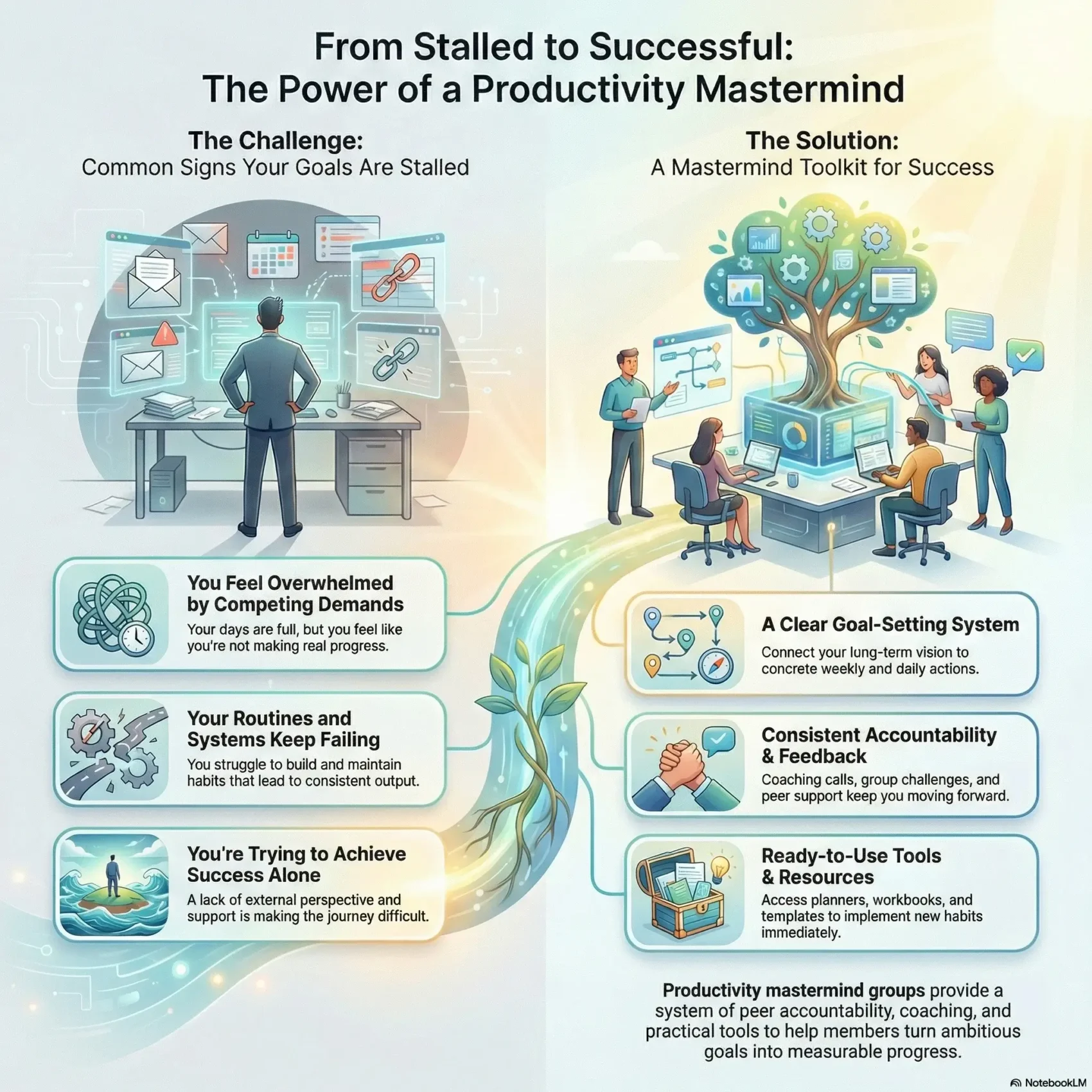
Last Updated on March 6, 2026
You don’t have to chase success alone. Peer-run groups pair coaching, tools, and shared accountability so you can turn ambition into clear, measurable goals. These systems help you save time and bring balance to your business and personal life.
Practical options range from an ultra-affordable $7/month beta with lessons, monthly coaching calls, templates, workbooks, missions, and 24-hour support on Facebook, to premium small-group offerings for writers and creators. The author-focused plan pairs you with peers, hosts Zoom co-writing blocks, and offers pricing tiers: $200/month for a mastermind, $200/month for co-writing, or $300/month for both, plus a $50 intake interview applied to month one.
Podcasts and interviews with experts add outside insight, while live check-ins and co-working sessions create real momentum. Expect clearer priorities, steady progress, and better use of your time as you gain consistent access to support and practical next steps.
Key Takeaways
- Peer groups combine coaching, community, and templates to make progress repeatable.
- Low-cost and premium options give flexible access based on budget and goals.
- Author-focused sessions offer structured co-writing and matching for creatives.
- Monthly calls, missions, and support speed up habit formation and clarity.
- Expect momentum, confidence, and better alignment between daily work and long-term success.
What a Productivity Mastermind Is and Why It Works
A small group can change how you show up to your work by turning shared goals into short, focused sessions. These groups pair peer accountability with simple routines so you spend less time deciding and more time producing.
Peer accountability, shared wisdom, and focused execution
In author-focused groups, members meet on Zoom, state goals, then write on mute in three to four one-hour sprints. Some aim for 3,000 words per day. Over weeks, interruptions drop, start times move earlier, and output becomes steady.
Pacing and consistency: borrowing momentum from the group
The coach helps pace sessions, match peers, and run quick check-ins. That structure reduces decision fatigue and keeps progress visible without pressure.
- Actionable accountability: peers expect updates and celebrate wins, which keeps you on task.
- Shared wisdom: copy useful routines and avoid reinventing the wheel.
- Work sprints: short focus blocks plus brief breaks drive steady progress.
“After two months of co-working I had fewer interruptions and rediscovered the joy of writing.”
If you want a tested way to sharpen your focus and build reliable routines, explore how mindfulness and focus support consistent results.
Is a productivity mastermind right for you today?
You might be ripe for group support when your days feel full but your goals feel stalled. A short, friendly structure can simplify choices and restore steady progress.

Signs you’ll benefit: overwhelm, stalled goals, scattered routines
You may be a great fit if competing demands on your time leave you exhausted and you want a simple framework that clarifies each day.
If routines keep failing, a group that offers reminders, encouragement, and just-in-time guidance helps you rebuild habits that last.
Who thrives: busy parents, business owners, creatives, and teams
- Busy parents and caregivers — especially moms — often gain practical tactics from peers in similar seasons of life.
- Business owners and creatives get fresh perspectives and specific feedback to decide what to stop, start, or streamline to unlock potential.
- The Time Management Mastermind suits people who want answers fast: a Facebook group replies within 48 hours on weekdays, plus monthly coaching calls and challenges for accountability.
Look for groups that respect your schedule, offer flexible participation and drop-out options, and give quick answers to your questions when they matter most.
Core outcomes you can expect: progress, focus, and time freedom
When you link big-picture plans to simple weekly actions, progress becomes predictable and less stressful. Programs like Time Management Mastermind align a life plan with quarterly goals, monthly resets, and a printable daily planner so you know what to do each day.
From long-term vision to weekly and daily wins
You’ll connect life priorities to concrete goals. Quarterly planning turns distant aims into focused weekly tasks. Then daily pages make those tasks easy to act on.
Reducing decision fatigue with planning and routines
Simple rhythms—monthly resets and weekly pages—help you decide less and do more. Use a printable daily planner and distraction-elimination guides to keep your schedule clean and your time useful.
Motivation through feedback, missions, and quick wins
Monthly missions and coaching calls give regular feedback. Quick wins build momentum so your weeks feel more predictable and your energy lasts longer.
- Connect vision to action: turn big goals into weekly and daily steps that show clear progress.
- Cut choices: routines reduce decision fatigue so you begin each day with a next step.
- Stay focused: feedback and missions help you cut low-value work and protect time for what matters.
- Grow steadily: small, consistent actions compound into real growth and long-term success.
- Work with tools: printable planners and distraction guides keep you on track when the environment is noisy.
Must-have components of a high-value mastermind
The right structure gives you concrete tools and short checkpoints that keep progress steady.
Clear goals, quarterly planning, and monthly resets
Start with simple steps: a Vision & Goals Spreadsheet and a Goal Planning workbook help you pick priorities and set measurable targets.
Use a Quarterly plan plus a Monthly Reset Checklist so you can recalibrate when life changes.
Weekly and daily planning systems with time blocking made easy
Weekly Planning Pages and a Printable Daily planner turn goals into calendar blocks. Time Blocking Made Easy gives a printable guide so setup is fast.
Accountability: coaching calls, challenges, and timely feedback
Accountability matters: monthly coaching calls, group challenges, and regular feedback keep you moving between milestones.
Resources: templates, planners, workbooks, and digital access
You’ll get habit & routine workbooks, distraction-elimination guides, and digital templates that cut startup time.
- Clear goal-setting steps with a Monthly Reset Checklist.
- Weekly pages and a Printable Daily planner to make time blocking made easy.
- Coaching calls, challenges, and timely feedback for steady accountability.
- Templates, a Goal Planning workbook, and routine guides so you act the same day you join.
“Simple, repeatable steps keep systems running when motivation dips.”
Buyer’s Guide: how to evaluate programs and offers
A quick buyer’s checklist can save you hours and money when choosing the right program. Start by confirming what you get, how it’s delivered, and how quickly you’ll get help.
Access and support
Verify response times and support windows. For example, the Time Management group answers in 48 hours M–F and runs monthly coaching calls.
Ask questions about office hours, community platform, and whether the format fits your schedule.
Content and delivery
Check lesson types: are there video lessons, slides, or workbooks you can use right away? Short podcast episodes (10–18 minutes) are useful for on-demand learning.
Accountability structure
Look for clear missions, optional co-working sessions, and simple progress tracking. Effective accountability means measurable checkpoints you’ll actually use.
Fit and flexibility
Confirm cancellation policies and time-zone alignment. Compare deliverables—planners, checklists, coaching calls—against price so you can judge value.
“Ask about pacing, expectations, and typical results so you know exactly what success looks like.”
- Verify access details first, then review content formats and support hours.
- Weigh money vs. value: what tools and response times are included?
- Ask direct questions about pacing and proof of practice before you join.
Comparing popular options: pricing, value, and use cases
Choosing the right group comes down to price, access, and the kind of support you actually need.
Time Management Mastermind (low-risk entry)
$7/month beta — cancel anytime. You get lessons 1–9 (life plan, vision, quarterly goals, monthly reset, weekly planning, daily planner, habits, time blocking, consistency), monthly coaching, templates, missions, and 24-hour Facebook support.
Author-focused small-group option
$200–$300/month for targeted matching and co-writing. Sessions run as three to four one-hour Zoom sprints. A $50 intake interview applies to month one if you proceed. Drop-out and re-matching keep the offer flexible for writers and creators.
Learning supplement: the Timeular podcast
Free 10–18 minute interviews with experts like Dane Sanders and Yotam Cohen. Use the podcast as a quick product-like tool to test tactics between sessions.
- Consider the $7 plan as low-risk entry for steady planning support.
- Choose the paid author track if you need matched peers and live pacing.
- Value matters more than sticker price: look for active community replies, coaching, and deep templates.
productivity mastermind features to look for
The best groups pair clear planning systems with fast, work-ready resources that cut setup time in half.
Vision and goals systems
Start with a Life Plan and a Vision & Goals Spreadsheet. These map long-term aims to quarterly goals and a goal retreat at mid-year so your big picture becomes actionable.
Planning toolkits
Look for practical content: a Monthly Reset Checklist, Weekly Planning Page, and a Printable Daily planner you can use the same day.
Habit and routine builders
Guides that cut distractions make it easier to protect deep work. Habit & Routine workbooks and distraction-elimination guides help you follow through.
Community elements
Responsive support matters. Monthly coaching calls, a Facebook group with 48-hour weekday replies, monthly challenges, and 24-hour touchpoints keep momentum between sessions.
- You’ll get a Goal Planning workbook and ready-made templates to reduce setup time.
- Time Blocking Made Easy resources help place priorities on your calendar without overcommitment.
- Short video walkthroughs teach tools fast so you spend more time doing, not learning.
- Repeatable processes and checklists ensure weekly progress, not resets.
Real-world formats: co-working, coaching, and self-paced lessons
When you mix short live blocks and self-paced content, you create a rhythm that protects deep focus and sparks real growth. That blend fits busy calendars and gives you choices about how to use your time.
Live co-writing/co-working sessions to increase daily output
Author-focused co-working usually runs on Zoom with three to four one-hour sessions. Each session starts with a brief goal chat, then you write on mute with short breaks.
One model aims for 3,000 words per day. Participants report fewer interruptions, earlier starts, and higher output.
- Structure: clear start times, focused hours, and short breaks make deep work repeatable over days and weeks.
- Focus: goal check-ins at the top of each session sharpen attention so you spend your hours on high-impact work.
- Flexibility: use co-writing to jumpstart heavy days, then lean on self-paced lessons when you need a lighter day.
- Coaching: monthly calls help with strategy while live blocks keep you accountable to the plan.
- Group effect: the social rhythm reduces interruptions and protects your day from low-value tasks.
You can blend formats—self-paced lessons for skills and live sessions for execution—so your growth continues even between meetings. Align session frequency and length with your calendar to make the system support your life, not compete with it.
Your first 30 days: a simple plan to maximize results
Use a tight 30-day plan to turn habit experiments into visible progress you can measure. This short roadmap shows clear steps and keeps planning simple so you start strong.
Week one: set vision, choose quarterly goals, and block your time
Clarify one clear vision and pick 1–3 quarterly goals using the Vision & Goals Spreadsheet.
Place priority blocks on your calendar with the Time Blocking Made Easy guides and start using your printable daily planner right away.
Weeks two–three: implement routines, track hours, and get feedback
Use Habit & Routine Workbooks and distraction-elimination guides to protect your biggest blocks.
Track hours to see where time leaks occur, post updates, and request feedback during coaching calls and monthly missions so early progress compounds.
Week four: review progress, refine focus, and plan next steps
Run the Monthly Reset Checklist, use the Weekly Planning Page, and note what to keep or drop.
You have immediate access to lessons 1–9; revisit one key lesson and capture a short list of next steps. If the timing fits, join the end-of-June goal setting retreat date to lock in next-quarter targets with community support.
- Small, repeatable steps make planning and action feel made easy.
- Keep your planner visible and update it daily to maintain momentum and clear progress.
Conclusion
A clear entry path—instant lessons, templates, and simple coaching—helps you turn stalled goals into steady progress. Choose the low-friction $7/month plan for immediate access to nine lessons, planners, and a workbook. Or step into the $200–$300 author track for matched peers and Zoom co-writing hours with a credited $50 intake.
Protect your best hours each day with a printable planner and short co-working blocks. Use feedback and short podcast episodes to refine your approach one lesson at a time.
You can match the product to your business and life needs, invite moms or colleagues, then schedule your first planning block. Pick a program, start today, and watch small actions compound into real progress.