Tools
Tools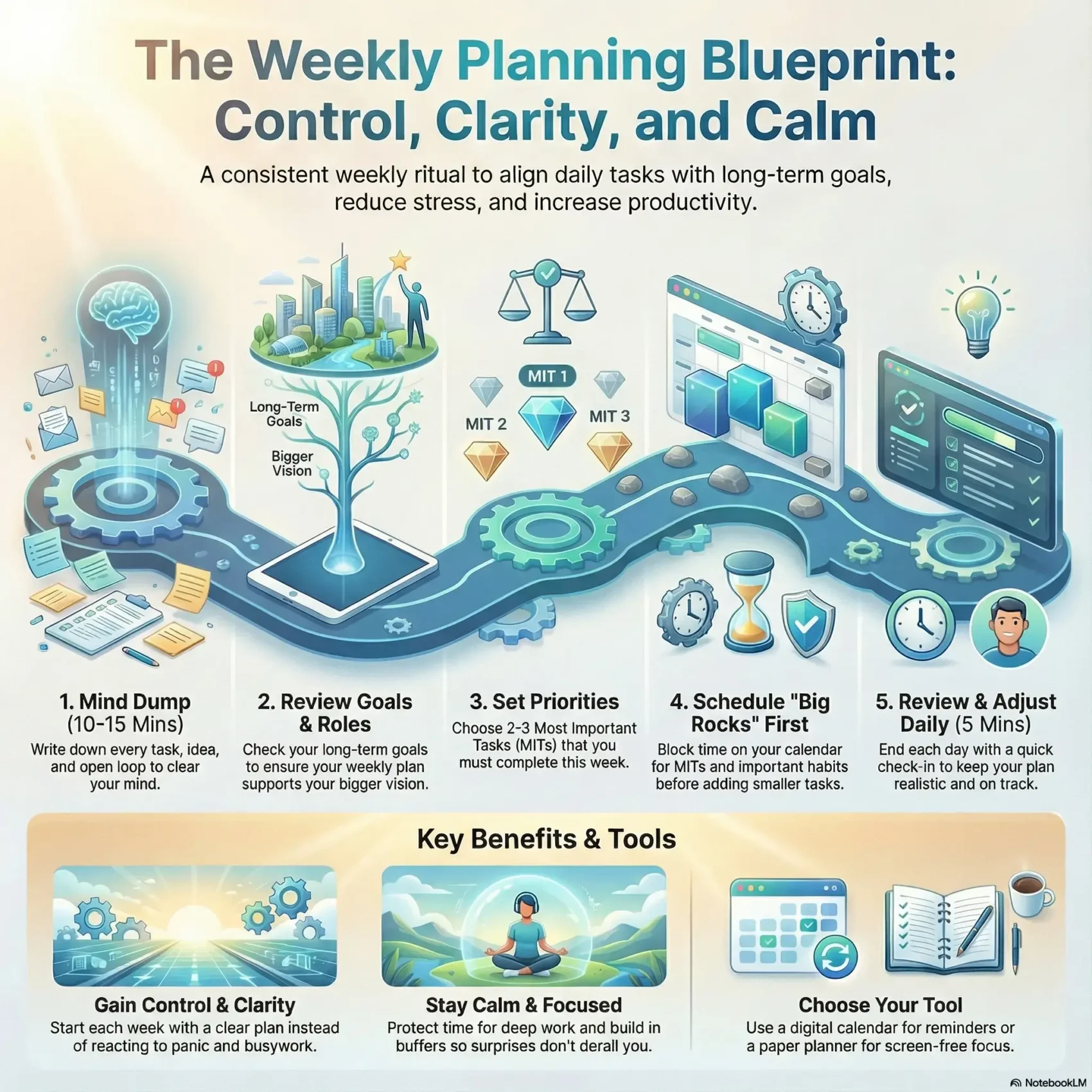
Last Updated on December 24, 2025
Put big rocks on the calendar before small urgencies steal your time. Set aside 45–60 minutes one day to do a mind dump, align with long-term goals, and decide which actions earn your minutes.
This simple habit ties daily work to real goals. Use a paper planner or digital tool that fits your life and work. When you plan your week, you protect focus, reduce stress, and actually get things done without overfilling your day.
Key Takeaways
- Zoom out on the week to choose true priorities and save time.
- Block time for big tasks first to keep important goals moving.
- Use a 45–60 minute weekly session to clear your mind and plan.
- Connect daily tasks to your long-term goals to avoid busywork.
- Pick tools that match your life so the plan is easy to use.
Why weekly planning gives you control, clarity, and a calmer week
A thirty-minute Sunday review sets the tone so you start the week with purpose, not panic. Spend that time checking goals, priorities, and your calendar. You avoid dumping too many tasks into Monday.
A bird’s-eye view helps you see both daily work and long-term projects. That view prevents overlap and makes it easy to block focus time for what matters most.
When you make this a habit, life feels less chaotic. You balance workload across the week and protect personal energy. Decisions become faster because you already chose what moves the needle.
- Gain control: start each week with a clear plan that puts time on the right work.
- Keep clarity: translate goals into next-step tasks you can track.
- Stay calm: build focus blocks and buffers so surprises don’t derail the plan.
- Improve over time: a simple review of projects and results helps you refine the system.
Build your toolkit: calendars, to‑do lists, and focus helpers
Match your planner to your habits so tools aid focus instead of adding friction. Pick digital or paper based on how you work. Digital calendar apps like Google Calendar, Outlook, or iCal make recurring events simple, send reminders, and sync shared calendars across devices. Paper planners give you fast jot-down speed and a tactile feel when you prefer offline control.
Digital vs. paper planners: choose what fits your life
Digital tools save time with auto events, cross-device sync, and shared views. Paper wins for low friction and focus when you want no screens.
Leverage reminders, shared calendars, and time blocking
Use your calendar to block time for deep work, meetings, and personal tasks. Set reminders and buffer slots so small things don’t derail the day.
Use proven methods: Eisenhower Matrix, Pomodoro, and Focus timers
- Keep a to-do list that captures all tasks and links back to your goals.
- Sort urgent vs. important with the Eisenhower Matrix.
- Use Pomodoro or Focus timers to protect short bursts of focused time.
- Consider an app that puts roles, High Impact Tasks, and time blocking in one place for a clear weekly view.
Your weekly planning session, step by step
Begin with a fast mind dump to capture every open loop and free mental space for decisions. Write everything—calls, errands, project steps—into one trusted list or app so you stop juggling items in your head.
Do a mind dump to clear mental RAM
Spend 10–15 minutes capturing tasks, ideas, and events. Break items into short, actionable lines so they are easy to schedule.
Review your life plan, long‑term goals, and roles
Check your life direction and long-term goals so this plan week supports bigger aims. Define one role-based goal for each major role you hold.
Set weekly priorities and MITs that align with your goals
Pick 2–3 MITs—most important tasks—you must get done. Block focused time for them first to ensure progress.
Sharpen the saw: block recurring time for health, learning, and reflection
Schedule workout, study, and short reflection sessions as repeating events. Protect these blocks with reminders so they happen every day.
Schedule your Big Rocks first using Covey’s “first things first”
Place top priorities and important tasks on the calendar before smaller ones. Then fill gaps with quick items and realistic reminders.
Students and complex projects: block class, study, and project sessions
For class-heavy weeks, block class and lab times, add a post-class hour for review, and plan at least one hour of study for every hour in class.
Place smaller tasks in the gaps and add realistic reminders
- Estimate minutes for each block and add buffers.
- Break big projects into steps and place them in calendar gaps.
- End the session with a quick review to confirm your day-by-day flow supports your plan goals and role commitments.
Weekly planning on Sunday: set the tone for the week ahead
A focused half‑hour on Sunday clears calendar clashes and protects time for big work. Use that session to scan your commitments, set clear priorities, and slot the biggest tasks into your best hours.
Scan your calendar for conflicts and create focus blocks
Open your calendar and look for overlaps or tight turnarounds. Move or shorten meetings so you keep uninterrupted blocks for deep work.
Calendar Tetris means reserving 60–90 minute focus slots where you do your hardest work. Add reminders a day or minutes before to prep for meetings and deadlines.
Balance your to‑do list across the week (skip the Monday pileup)
Distribute tasks so Monday isn’t overloaded. Put small, quick items into lighter days and stretch big projects across multiple focus blocks.
- Spend 30 minutes to review goals and projects and set your top priorities.
- Block prime time for MITs and add realistic buffers of minutes between items.
- Include personal goals and class or study slots so your plan reflects life and work.
- Finish with a quick review to confirm the week’s flow supports your main outcomes.
Review and adjust daily to keep plans realistic
A five-minute end‑of‑day review makes tomorrow easier and keeps projects moving. Do a short scan of your calendar and to-do list so you start each day with clarity.
Protect your Big Rocks. If a deep-work block is at risk, move lower-priority tasks around it instead of cutting that time. That keeps meaningful progress steady through the week.
Evening check‑ins: move tasks, protect Big Rocks
End each day with a quick review of tomorrow’s events and the time you reserved. Reschedule or add reminders for items that shifted so nothing important disappears from view.
“A five-minute nightly check saves you half an hour of scrambling tomorrow.”
Use a simple “today view” to stay focused every day
Keep a compact today view that shows only what you can realistically handle. Pull tasks from your master list and limit the day to one or two MITs.
- End each day with a quick review to align tomorrow with new realities.
- Re-block time when meetings or class run long; move small tasks later in the week.
- Reschedule rather than drop commitments to protect progress on key projects.
- Keep check-ins short—five minutes tonight saves you extra time tomorrow.
Over time, these small daily adjustments make your plan more accurate and your days calmer. Respect your capacity so you get the right things done, not everything.
Track progress and protect work‑life balance
Map progress each week so your calendar reflects results, not just activity. Keeping goals visible with clear milestones and simple OKRs helps you see what actually moves the needle.
Keep goals visible with milestones and OKRs. Break big goals into weekly milestones you can track. Put milestones in your planner or calendar so your priorities stay front and center.
Keep goals visible with milestones and OKRs
Make progress measurable by listing outcomes and dates. Use a single view that links roles, goals, tasks, and time blocks in one place.
Avoid burnout with reasonable workloads and short focus sessions
Protect energy by capping total commitments and using short Focus or Pomodoro sessions every day. These bursts help you complete tasks without draining your life or work balance.
- Review projects weekly and adjust scope or timing as needed.
- Schedule Big Rocks first—apply stephen covey’s first things first so important tasks get protected time.
- Keep a simple check‑in: what moved, what’s stuck, what needs support.
- Celebrate completed tasks that move big outcomes; it trains your mind to value things done over busywork.
“Small, measurable wins stack into real progress.”
For a practical time check, try a short audit to see where minutes go. Learn more about time audits with this quick guide: time audits for productivity.
Conclusion
A small weekly ritual builds rhythm, so your days flow toward what matters most.
Set a short session to tie your to-do list to clear goals, then protect the time that helps you get the right tasks done. Keep your plan simple: one list of priorities, a few MITs, and a quick end-of-day check to adjust.
When you use weekly planning consistently, your week starts with clarity and ends with measurable progress. Track small wins, revisit larger goals, and make the plan realistic for each day so momentum grows. Start this week — your future self will thank you.