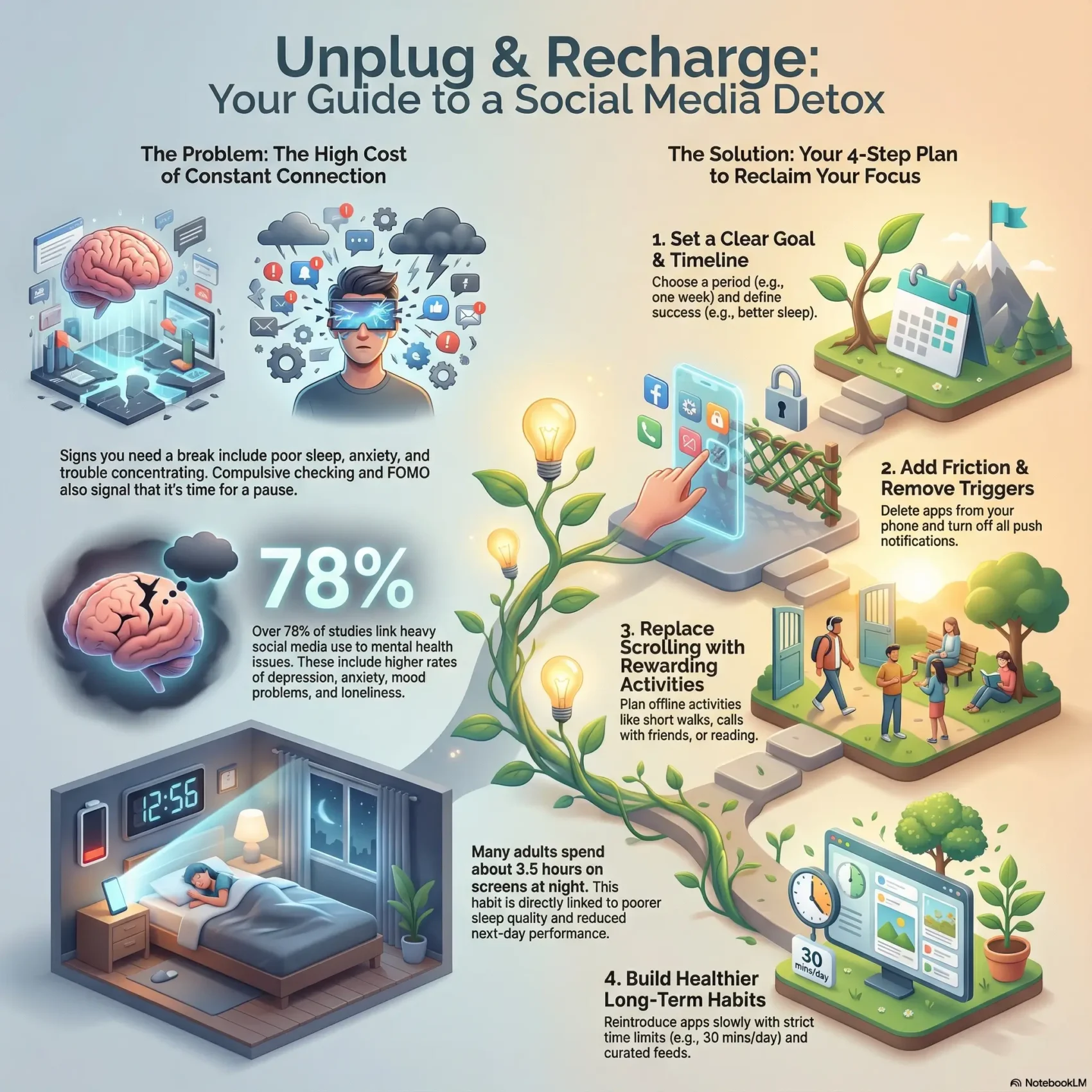
You can take back your time by planning a short, practical break from feeds and apps. A focused pause helps you stop reacting to every ping and start choosing where your attention goes.
Research shows breaks can cut depressive symptoms. One meta-analysis found a modest drop in depression scores after digital breaks, though life satisfaction and overall well-being did not change much. Real habits matter: many adults spend about 3.5 hours on screens at night, and 35% already take breaks for their mental health.
This guide sets a clear intention so you can free up hours each week. You’ll learn simple steps to limit distractions at key times, improve sleep, and redirect that time to work, hobbies, or rest. The goal is not to quit tech forever but to choose a way of using it that supports your values and your day.
Key Takeaways
- You can reclaim hours by planning short breaks and setting simple rules for use.
- Breaks have shown reductions in depressive symptoms in pooled studies.
- Cutting late-night checks may improve sleep and daytime energy.
- Focus gains let you do deeper work and enjoy real‑world interactions more.
- This approach is practical: it’s about choice, not permanent quitting.
Why a Social Media Detox Matters Right Now
Today’s nonstop updates quietly steal your attention and add stress to your day. Notifications pull you into tiny decisions, and each quick check often becomes a long break from work or rest.
The attention drain shows up as constant pings, doomscrolling through headlines, and decision fatigue. Over 78% of studies link heavy or passive use with higher rates of depression, anxiety, mood problems, and loneliness.
The attention drain: notifications, doomscrolling, and decision fatigue
Every alert fragments focus and creates micro‑tasks. You carry that scattered attention into meetings, chores, and relationships. Simple steps—like silencing notifications during work blocks—cut these interruptions fast.
Present-day context: how constant news cycles shape your mood and focus
Fast news and hot takes spike worry and drain cognitive energy you could use on meaningful tasks. A 2024 survey found 35% of American adults took breaks for mental health. Late-night scrolling adds about 3.5 hours of screen time before bed and harms sleep and next‑day performance.
- Quick benefit: short breaks lower anxiety and depression in experimental trials.
- Simple control: mute alerts, set windows for checking feeds, and reclaim focused hours.
- Why it matters: stepping back reduces unnecessary stress and restores steady attention.
The Evidence: What Research Says About Digital Detox and Mental Health
Evidence from trials between 2013 and 2023 points to modest reductions in depressive symptoms after unplugging.
A pooled meta-analysis of 10 studies found a statistically significant drop in depression scores (SMD: -0.29; 95% CI: -0.51, -0.07; p=0.01). These interventions varied: some used a one‑week or two‑week full break, others cut daily use by 15–20 minutes.
What improved: depression scores showed the most consistent change across trials. That means if your aim is to reduce low mood, short, structured breaks often help.
What did not shift much: life satisfaction, perceived stress, and overall wellbeing showed no clear, statistically significant changes in the pooled results. That’s normal—broader life measures can take longer or need different supports.
- Short periods (week to two weeks) and modest daily limits can deliver real benefits.
- Trials covered major platforms like Facebook, Instagram, YouTube, Twitter, Snapchat, and TikTok.
- Quality of the period—clear rules, tracking, and boundaries—matters as much as length.
In practice, set realistic goals: target depressive symptoms first, track your time and mood, and treat wider changes in life quality as a longer-term outcome.
Spot the Signs You Need a Break from Social Media
Noticeable drops in energy, focus, or mood after scrolling can signal it’s time to step back. These clues help you decide whether a short social media detox or a gentler limit will be useful.
Sleep quality issues, anxiety spikes, and trouble concentrating
You may take longer to fall asleep or wake up wired after late-night phone use. Poor sleep quality often ties directly to evening feed habits.
Anxiety or surges of stress after reading news or comments can make it hard to focus at work or school.
Compulsive checking, FOMO, and strained relationships
If you reach for your phone every few minutes, your brain is chasing quick hits instead of steady attention. That habit steals small bits of your time and energy.
- You feel pressure to reply immediately and lose control of your time.
- FOMO or comparing your lives to highlight reels leaves you low or restless.
- Conversations and close relationships feel strained because you’re distracted.
“Noticing these signs isn’t failure — it’s data that helps you choose a break that fits your life.”
Watch your patterns: sleep, mood shifts, compulsive checking, and lost focus. These signals point to when a pause could reduce stress and depression risk and help protect your mental health.
Set Your Goal: Choose the Right Type and Period of Detox
Start by choosing a type of break and a realistic window you can stick with. Decide whether you want a full break or daily time limits. Pick a weekend, one week, two weeks, or a month based on what fits your work and home life.
Target the platforms that drain you most. Pause every platform or focus on the one that harms your mood or productivity. Keep rules simple—no feeds after 9 p.m., or 15–20 minutes of checked use per session.
Account for job needs. If a platform supports your role, separate personal and professional use with clear windows. Start small if you’re unsure; even short periods improve wellbeing and focus in trials.
- Set a clear period and a reset date.
- Define success (better sleep, steadier mood, fewer interruptions).
- Plan how you’ll handle DMs or mentions so you don’t feel pressured.
Treat this as a habits experiment: track your time and mood, review results, and refine the plan so it fits your life and long-term health.
How to Do a social media detox
A few disciplined moves will cut cue-driven checking and protect your work rhythm. Start with actions you can keep doing.
Remove friction: delete apps, sign out, and turn off notifications
Delete apps from your phone and sign out on other devices so opening feeds takes a deliberate step.
Turn off push notifications to stop reflex checks that fragment focus and add stress.
Schedule screen time windows and set time limits
Pick two short windows a day (for example, 12:30–1 p.m. and 7–7:30 p.m.) and use app timers or system controls to enforce limits.
Tell others you’re taking a break to reduce social pressure
Message friends or colleagues that you’ll respond later. That lowers expectations and makes it easier to stay away.
Track screen time and mood to see progress
Note minutes and a short mood rating each day. You’ll spot stress fall and energy rise as habits change.
- Keep your phone out of reach during work blocks or use Do Not Disturb.
- Have quick replacements ready: a five-minute walk, a call, or journaling.
- Create an urge protocol: pause, name it, breathe, then redirect.
For a step-by-step routine, check this digital detox routine to build a plan that fits your day and sleep needs.
“Remove friction, set windows, tell people, and track progress — small rules create big gains.”
Tools and Settings That Help You Stick With It
Device controls can do the heavy lifting so your willpower doesn’t have to. Turn on built-in reports, set limits, and use focus modes to protect the blocks of time that matter most.
Screen time dashboards and app limiters
Open iOS Screen Time or Android Digital Wellbeing and get a baseline of minutes per app. Then set caps that match your break goals.
Use app limiters to enforce those caps automatically. That way you don’t negotiate with yourself each time a platform tempts you.
Focus modes, Do Not Disturb, and notification batching
Activate Focus or Do Not Disturb during work blocks and meals to silence pings.
Batch notifications so alerts arrive at set times instead of constantly. This reduces interruptions and keeps you in flow.
- Place tempting apps off your home screen to add friction.
- Try grayscale when feeds feel irresistible.
- Use website blockers on desktop to match phone rules.
“Small tech tweaks make healthy habits repeatable.”
Replace Scrolling with Activities That Boost Wellbeing
Replace reflexive feed checks with intentional activities that refresh your mind and lift your mood. Short swaps make the break feel useful and rewarding.
Movement and nature: walks, hikes, classes
Schedule short walks, a quick hike, or a class to reset your attention. Movement lifts energy, improves sleep, and often beats scrolling for mood benefits.
Connection: calls, coffee, volunteering
Call a friend, grab coffee, or volunteer. These activities strengthen relationships and give you real connection without the feed.
Calming habits: reading, journaling, meditation
Try reading, journaling, or a brief meditation session before bed. These calm the mind and reduce urges to check your phone late at night.
- Keep an “instead-of-scrolling” list on your desk or phone for easy choices.
- Plan micro-activities (2–5 minutes) for busy moments—stretch, breathe, step outside.
- Set low-friction cues: book on the nightstand, shoes by the door, invite people to join you.
“Swap small habits that reward you more reliably than a quick scroll.”
Protect Your Sleep and Energy During the Detox
Even small evening changes can boost how fast you fall asleep and how rested you feel. Adults often spend roughly 3.5 hours on feeds before bed, and that habit links to poorer sleep quality, anxiety, and shorter weeknight sleep.
Cut screens 30–60 minutes before bed and after waking
Set a nightly cut-off at least 30–60 minutes before bed to protect sleep pressure and reduce stimulation. If you must use a device, enable night mode or blue-light filters and stick to low-stimulation apps like reading apps, not feeds.
Create tech-free zones and evening wind-down routines
Keep your phone out of the bedroom or across the room so reflex checks are harder. Charge devices outside the bedroom and make the sleeping area a calm, tech-free space.
- Design a wind-down: dim lights, light stretching, reading, or journaling.
- Avoid checking feeds first thing in the morning to give your mind a calm start.
- Track bedtime, wake time, and screen time to see how habits affect how rested you feel.
“No phone in bed often shortens time to sleep and improves next-day energy.”
Align late caffeine and meals with your sleep goals and keep routines consistent across weekdays and weekends. These simple steps support better sleep and steady daytime energy as your detox progresses.
Manage Mood and Anxiety While You Unplug
When you unplug, your brain’s reward system shifts. That change can raise anxiety or make moods feel unstable for a short time.
Mindful check-ins: name the feeling, redirect the urge
Pause and label your feelings — “anxious,” “bored,” or “restless.” Naming the feeling lowers its power and gives you space to choose.
Try an urge‑surf: pause, breathe for 30 seconds, name the urge, then switch to a planned two‑minute activity.
Dopamine-aware strategies: design rewarding offline cues
Create small, reliable rewards that tap the same pull as feeds. Step into sunlight, make tea, or do a quick stretch.
Use friction at high-trigger times: put your phone in another room, enable Do Not Disturb, and set short check windows so your brain learns you won’t miss important updates.
- Body resets: box breathing, shoulder rolls, brisk walks to reduce stress.
- Note triggers (news, certain accounts) and remove them to protect your mood.
- Tell a friend for accountability and track how urges and levels change over time.
“A one‑week break often cuts anxiety and even lowers depression scores — simple habits help the brain recalibrate.”
Life After the Detox: Build Healthier Social Media Habits
After a break, the smart move is to design rules that protect focus and real connections. Use the pause to decide which accounts add value and which cause stress.
Curate your feeds, unfollow triggers, and prioritize real connections
Unfollow or mute accounts that spark comparison or anxiety. Keep people and topics that inform, teach, or brighten your day.
Schedule in-person time: calls, coffee, and walks. That rebuilds your relationships so feeds don’t become the default way you connect.
Keep time limits, batch usage, and reintroduce platforms intentionally
Set clear time limits and two short windows a day for checking apps. Limiting use to about 30 minutes daily has been linked to better well‑being.
- Create rules for work vs. personal use so notifications don’t interrupt your job.
- Reintroduce one platform at a time and note how each affects your energy and mood.
- Keep device settings like Focus, Do Not Disturb, and notification batching as guardrails.
Track weekly time so small changes don’t slip back in. Revisit your rules monthly and tweak them to match your life and work demands.
“View the detox as the start of durable habits, not a one‑off challenge.”
Conclusion
Conclusion
Make a compact plan: pick a start date this week, set a one‑week period or short daily windows, and choose one replacement activity for urges to check your phone or apps.
Remember the strongest research signal: a brief, structured social media detox often lowers depression. Protect sleep by cutting screen time before bed and use device tools (limits, Do Not Disturb, notification batching) to keep friction low.
Track a few minutes and a quick mood rating each day. Invite one or two people to support you and reintroduce platforms slowly. Over time, these small changes add hours back to your day, better attention, calmer mood, and healthier relationships in the world you live in.