Tools
Tools
Last Updated on December 9, 2025
The emergence of circular economies is revolutionizing business operations, potentially reshaping workplace dynamics. Companies embracing circular economy models aim to reduce waste and enhance resource efficiency through reuse and recycling. This shift highlights the importance of sustainable practices, boosting workplace sustainability and benefiting local economies. In fact, studies suggest that adopting these principles could create 7-8 million new jobs, promoting environmental stewardship and sustainable growth.
Every year, over 100 billion tons of resources enter the economy, with a staggering 91.4% being wasted. Moving towards a circular economy could be a game-changer, potentially reducing global greenhouse gas emissions by 39%. This approach offers a pathway to job creation while promoting sustainable business practices vital for the future.
Key Takeaways
- Circular economies aim to minimize waste and maximize resource usage.
- Significant job creation opportunities exist within circular economy sectors.
- Environmental stewardship is crucial for sustainable business practices.
- The transition can effectively reduce greenhouse gas emissions globally.
- Adopting circular principles enhances local economic development.
The Fundamentals of Circular Economies
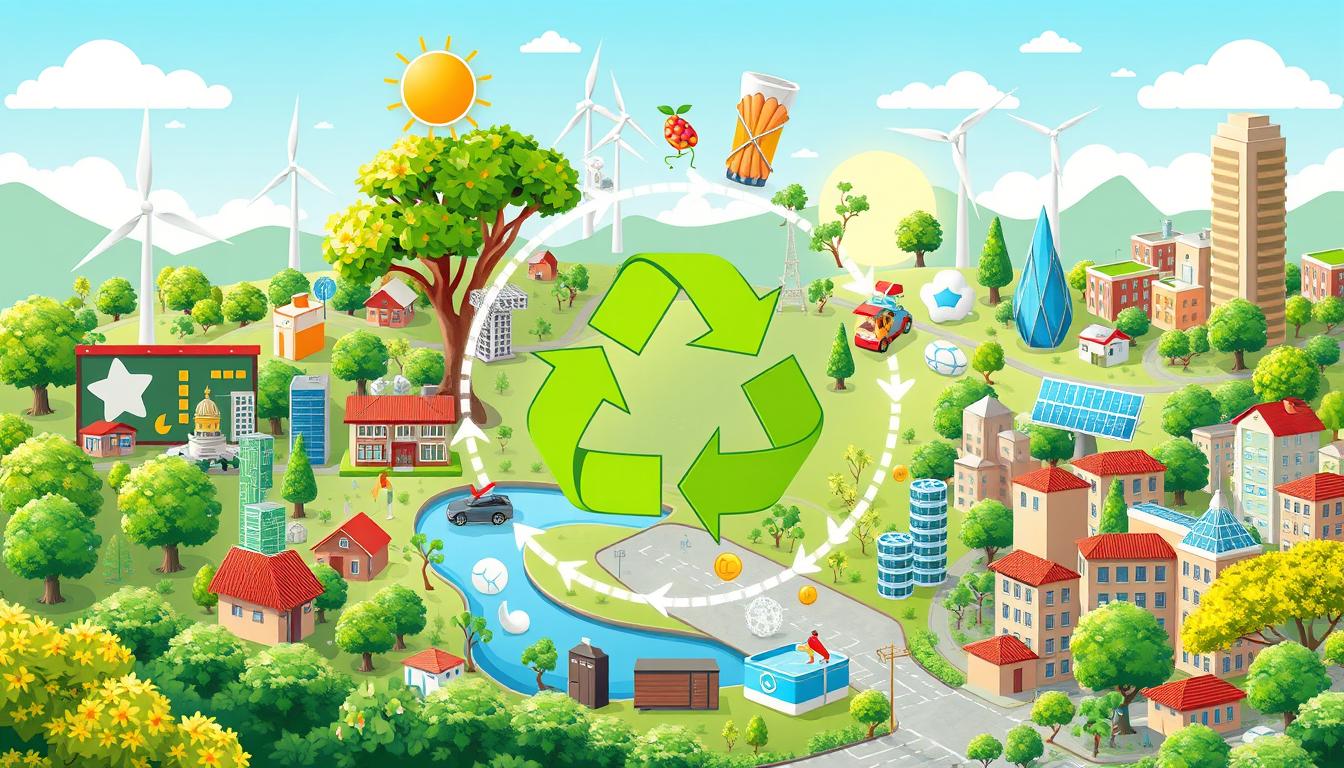
The circular economy is a groundbreaking approach to managing resources. It keeps products and materials in use through maintenance, reuse, and recycling. This shift away from the ‘take-make-dispose’ model aims to eliminate waste and address global issues like climate change and pollution.
Companies adopting circular economy principles focus on managing waste and regenerating resources. This includes recycling and ensuring materials are used at their highest value. For example, Apeel is leading the way in reducing food waste with innovative packaging, demonstrating the practicality of these principles.
Switching to renewable energy and materials is key to a sustainable circular economy. This transition reduces emissions and pollution, promoting economic growth and job creation. The design phase is critical, as it determines over 80% of a product’s environmental impact. By focusing on sustainability and efficiency early on, businesses can help secure a sustainable future.
This evolving economic model fosters sustainability and tackles the growing waste crisis. European countries alone generate over 2.1 billion tonnes of waste each year. Embracing circular economy practices could drive innovation and boost competitiveness across various sectors.
The Connection Between Circular Economies and Workplace Sustainability
Integrating circular economies into your organization boosts workplace sustainability. As businesses move towards sustainable models, green initiatives become crucial. This shift not only promotes environmental responsibility but also efficient resource use.
For example, over 90% of raw materials extracted globally since 1970 have not been reused. This underscores the need for sustainable practices in workplaces. By reducing waste and focusing on recycling and reusing, companies can support a circular economy. Regularly embracing green initiatives leads to operational changes that align with eco-friendly goals.
Adopting a circular economic framework attracts environmentally conscious consumers and employees. This fosters a vibrant culture of sustainability. Stakeholders are key, ensuring sustainability and circularity principles are integrated into your company’s operations. This strengthens your commitment to sustainable business models and boosts brand credibility.
Aligning circular economy goals with workplace strategies deepens your sustainability commitment. It reflects corporate accountability. Explore more about sustainable business models to transform your workplace sustainability approach.
Why Circular Economy Work Matters for Businesses
Adopting circular economy practices is crucial for your business’s future success. This approach meets the growing demand for sustainable practices and boosts operational efficiency. It allows you to transform resource use, leading to financial savings and environmental benefits.
Understanding Resource Efficiency
Resource efficiency aims to minimize waste and maximize material and energy value. By enhancing resource efficiency, your business can reduce costs and its ecological footprint. This proactive approach prepares you for future regulations on waste reduction in supply chains. Gartner predicts that by 2029, production waste will no longer be acceptable.
Waste Reduction Strategies in the Workplace
Implementing effective waste reduction strategies is essential for a sustainable workplace culture. Consider these initiatives:
- Recycling programs to ensure materials are reused and repurposed.
- Composting organic waste to reduce landfill contributions and enrich soil health.
- Responsible sourcing of materials that support environmental responsibility.
These strategies not only reduce environmental impacts but also enhance your brand reputation. About 30% of consumers choose sustainable products for environmental reasons. This shows the growing market demand for responsible business practices.
How Circular Economies Foster Job Creation
Circular economies are transforming the job market, offering new opportunities and tackling financial gaps. They promote resource-efficient models, creating new revenue streams and tapping into emerging markets. This significantly boosts job creation in various sectors.
Potential for 7-8 Million New Jobs
The Ellen MacArthur Foundation predicts up to 18 million new jobs globally by 2030 in the circular economy. This growth is expected in sectors like renewable energy, recycling, and sustainable construction. For example, the Netherlands has become a leader in waste management, creating thousands of jobs in green industries.
Companies like Interface have seen financial gains while championing sustainability. Their adoption of circular economy practices is a testament to the model’s success.
Leveraging Informal Economies in Low-Income Countries
Informal economies are crucial in low-income countries, where many work outside formal sectors. Circular practices can boost employment in these areas, creating sustainable workforce paths. By addressing informal workers’ needs, we not only create jobs but also support broader social goals like poverty reduction and unemployment.
Adopting circular economy principles brings numerous benefits, including innovation and better resource use. It fosters a sustainable workforce, leading to high-quality jobs that benefit the environment and society. As we strive for sustainability, the role of both formal and informal sectors is vital in achieving these objectives.
Balancing Job Quality and Environmental Stewardship
Transitioning to circular economies presents a unique opportunity to boost job quality and environmental sustainability. This shift enables businesses to adopt practices like refuse, reduce, repair, refurbish, remanufacture, repurpose, and recycling. These practices not only retain value but also highlight the significance of decent work conditions.
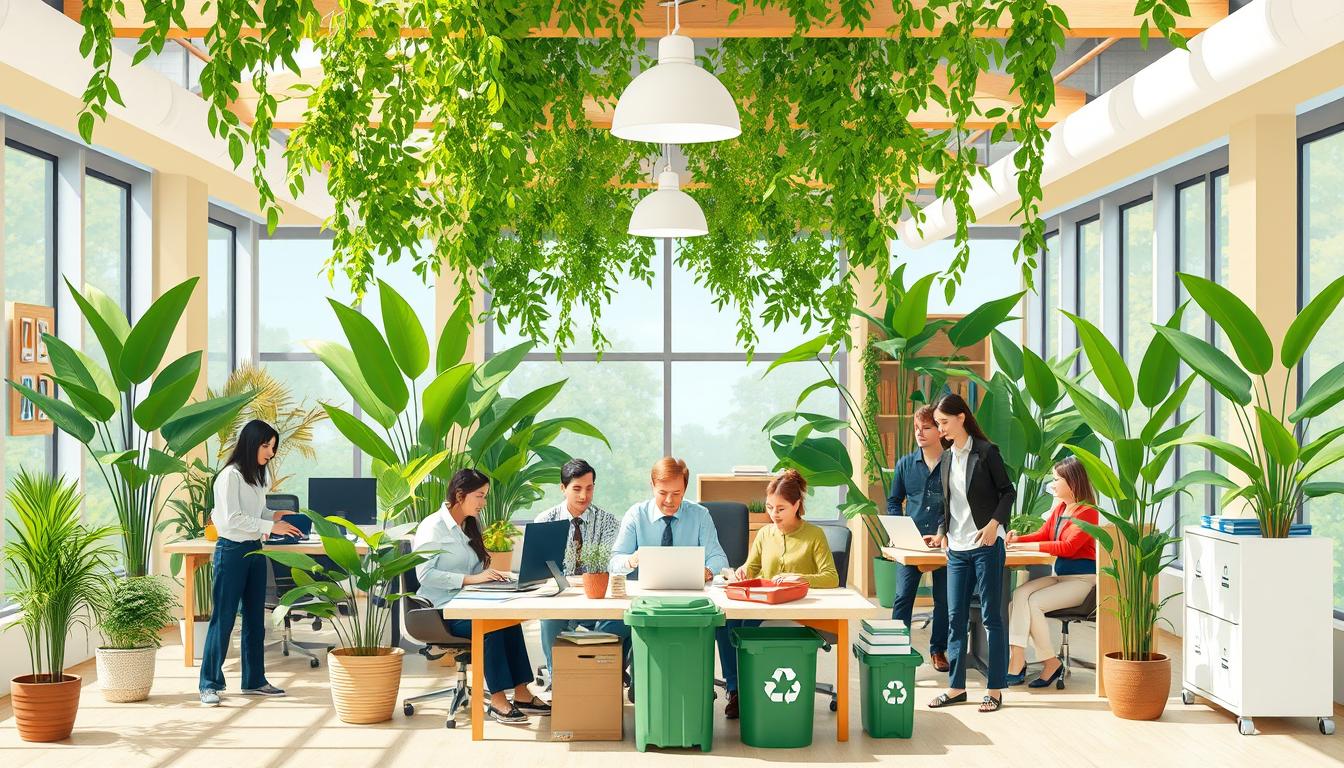
The trend towards solo self-employment is growing, especially in skilled trades. These jobs offer flexibility but ensuring they meet job quality standards is crucial. In places like Hull, moving towards an eco-friendly economic base shows the potential for decent work in a circular framework.
- Quality of Working Life (QWL) encompasses various aspects, including psychological well-being and job satisfaction.
- The influence of governmental organizations and policies plays a critical role in shaping employment conditions.
- Different geographic contexts can impact the labor market, affecting the transition to sustainable jobs.
Improving job conditions is key to environmental sustainability. Circular principles are gaining ground, leading to labor-intensive jobs in recycling and repair. This opens up better job opportunities for many, especially those in the informal sector. It contributes to both enhanced job quality and a healthier planet.
Circular Economy Work: A Shift in Skills and Training Requirements
The shift to a circular economy changes the skills and training landscape. As jobs evolve, organizations must focus on sustainability. Sustainable training programs are key to preparing your workforce for roles that prioritize resource efficiency and environmental care.
Training for Resource Efficiency and Green Initiatives
Creating specialized training for resource efficiency is crucial. Such training prepares employees for recycling, waste reduction, and sustainable product design. It equips them with the knowledge and skills for a greener workplace.
Upskilling Workers for New Roles in Sustainability
Upskilling is vital as the need for circular economy talent grows. Circular jobs span core, enabling, and indirectly circular roles. Core jobs might include waste management or renewable energy, while enabling roles focus on design and education. To adapt to a circular economy, offer upskilling programs that meet these new demands. This empowers employees to excel in their evolving roles.
The Impact on Vulnerable Populations
The shift to circular economies brings both opportunities and challenges for vulnerable groups. This change can lead to better job equity, especially for youth and marginalized communities. It creates entry-level positions that require fewer skills, offering a sustainable employment path.
Equity in Job Opportunities
Studies suggest that circular models could generate 6 to 20 million jobs worldwide. By 2025, millennials will make up 75% of the workforce, potentially boosting job equity. However, these jobs are mainly in Europe and Latin America, leaving Asia, Africa, and the Middle East with limited access.
Research also shows a focus on the Global North, neglecting the needs of vulnerable populations in developing countries. This highlights the need for more inclusive job opportunities.
Gender Discrimination in Circular Economic Roles
Gender inclusivity is a major concern in circular economies. Women, a significant part of informal economy workers, face barriers to better job opportunities. They often work in hazardous conditions, especially in recycling and waste management.
Addressing gender discrimination in these roles is crucial. It ensures fair representation and enhances job equity in circular economies.
How Companies Can Implement Circular Economy Principles
Integrating circular economy principles into your business strategy boosts sustainability and efficiency. The first step is setting a clear vision for circular economy implementation. Define goals that aim to reduce waste and enhance resource use. For example, Schneider Electric has successfully avoided 157,000 metric tons of primary resource consumption.
Forming partnerships with stakeholders in your supply chain is essential. Collaborative efforts, like IKEA’s furniture buyback program, show the power of working together. This approach allows for the resale, recycling, or donation of unwanted products. Engaging your team in these practices builds a culture of responsibility.
Investing in innovative technologies can also streamline your operations. Companies like Philips Lighting, now Signify, have transitioned to service-oriented models. This shift promotes ongoing customer relationships and supports sustainability. Developing a suitable revenue model is key, as the Harvard Business Review emphasizes, ensuring profitability alongside circular initiatives.
Adopting a modular approach, as seen with Fairphone, enables easy repairs and component reuse. This supports the sustainable practices you aim to adopt. Patagonia leads by example, promoting product repair and resale. This encourages customer involvement in the circular economy.
Using resources creatively, like Toast Ale’s partnership with bakeries to use unsold bread, showcases efficient waste reduction. This forward-thinking strategy enhances your brand image and aims for a net-zero carbon footprint by 2030.
Setting Sustainable Business Models for the Future
Creating sustainable business models is crucial for future-proofing your organization in today’s dynamic economic environment. The shift towards circular economy frameworks prompts businesses to rethink their operational processes. This shift focuses on long-lasting sustainability, moving away from short-term profits towards lasting success.
Statistics show that 35% of executives consider circularity a top priority for their companies. They expect 30% revenue growth from circular practices by 2030. With new entrants disrupting traditional markets with circular business models, adapting is essential. In fact, 55% of large global companies have outlined specific commitments to increase circularity.
Adopting a circular economy can also mitigate challenges from material scarcity. Industries dependent on materials like lithium face profit pressures, leading them to innovate in recycling. For example, chemical companies are developing strategies for recycling plastics to access a limited supply of postconsumer packaging. This aligns with global ambitions, such as the Dutch government’s goal of achieving a 100% circular economy by 2050.
Corporate sustainability is now a mainstream expectation, especially in the financial sector, which recognizes the need for eco-friendly investments. The energy sector, in particular, has significant potential for driving circular economies. By integrating recycled materials into energy production, businesses enhance resource efficiency and resilience against market fluctuations.
In summary, integrating sustainable business models within a circular economy framework provides a roadmap for organizations to thrive under increasing environmental and economic pressures.
Adapting Workplace Practices to Support Circular Economies
To support circular economies, organizations must adapt their workplace practices. This involves promoting environmental responsibility and integrating green practices into daily operations. Engaging employees in sustainability discussions fosters a sense of accountability and purpose.
Creating a Culture of Environmental Responsibility
Creating an environmentally responsible culture starts with education and awareness. Programs that emphasize sustainability motivate employees to adopt eco-friendly behaviors. Effective measures include:
- Regular workshops on recycling and waste reduction.
- Collaborative projects that involve employees in sustainability initiatives.
- Employee incentive schemes for adopting green workplace practices.
Encouraging sustainable behavior empowers every team member to contribute to the circular economy.
Integrating Green Initiatives into Business Operations
Integrating green initiatives into business operations boosts productivity and sustainability. Consider these strategies:
- Invest in energy-efficient technologies to minimize utility costs.
- Implement sustainable sourcing practices by selecting eco-friendly suppliers.
- Encourage resource-sharing practices within and between departments.
These practices show a commitment to environmental responsibility and drive growth. Aligning your workplace with circular economy principles benefits both the environment and your business.
Circular Economies and the Achievement of Sustainable Development Goals
Circular economies are crucial for achieving sustainable development goals (SDGs). They promote resource efficiency and innovative waste reduction. This approach fosters sustainable consumption and production patterns, connecting social, environmental, and economic dimensions. It encourages holistic solutions to various challenges.
The circular textile industry in the Netherlands is a prime example. It has a turnover of over €1 billion annually and employs about 15,000 people. Such initiatives boost local economies and create jobs, aligning with global sustainability goals.
In cities like San Francisco, programs like “Zero Waste” show success in waste diversion. By 2019, they achieved an 82% diversion rate. Similar efforts, like Malmö’s “Malmö Miljöbyrån,” aim to reduce environmental impact. They emphasize community engagement in sustainability practices.
The Cradle to Cradle design by MBDC sets new standards in resource management. It proves circular economies can minimize reliance on non-renewable resources. This aligns with SDGs focused on environmental integrity and economic growth.
Education and professional development are also key. Training programs equip workers with skills for circular economies. This enhances job prospects and organizations’ ability to achieve sustainable development goals. It fosters a workforce ready for the green economy.
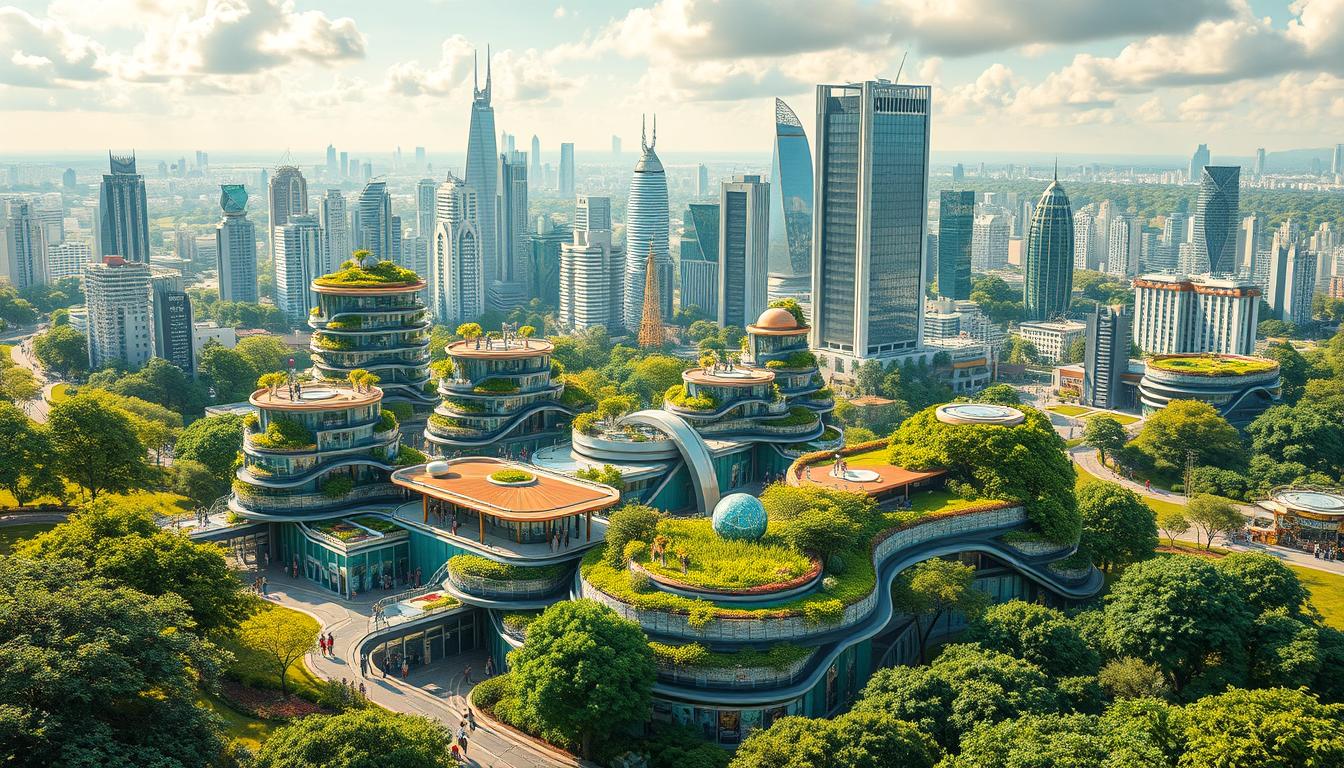
As we move towards ambitious targets, like the European Union’s Green Deal, circular economy principles are essential. These initiatives drive innovation, enhance competitiveness, and benefit people and the planet. Studies highlight the need for continuous collaboration among stakeholders to overcome challenges and meet sustainable development goals.
Conclusion
Adopting circular economy work is crucial for transforming workplaces and securing a sustainable future. As companies embrace circular principles, they boost environmental stewardship and unlock economic growth through innovation and job creation. This shift not only gives them a competitive edge but also contributes to a more equitable and thriving global community.
However, many challenges stand in the way of a fully circular economy. Limited business adoption of circular design and consumer preferences for convenience over sustainability are major hurdles. To overcome these, investments in advanced recycling technologies and effective policies like extended producer responsibility (EPR) schemes are essential. These measures are vital for creating a circular economy that benefits both the environment and society.
Success in this endeavor relies on collaboration across sectors. Businesses, governments, and consumers must work together to drive innovation and share knowledge. By using metrics to track progress and focusing on waste elimination and resource regeneration, we can achieve a sustainable future. Your participation in these efforts is crucial for a smooth transition, ensuring a cleaner world for future generations.