A circular economy keeps products, parts and materials in use instead of turning them into waste. A linear business buys raw material, sells a product and loses track of it. A circular business designs that product so it can be repaired, resold, refurbished or recycled, and earns something each time it returns.
For most companies this stopped being a values question some time ago. It is now a cost question and, in the European Union, a compliance question. Materials are one of the largest line items in any manufacturing budget, and packaging, ecodesign and repair rules that took effect during 2026 now govern product design itself.
This guide covers what the circular economy means in practice, which business models work, and where the real obstacles sit.
Key Takeaways
- Only 6.9% of the materials the world economy uses are cycled back into it, according to the Circularity Gap Report 2026.
- Three models carry most circular revenue: selling access instead of ownership, sharing assets, and taking products back for resale or recycling.
- Resale can grow without eating into new sales. IKEA’s owner Ingka Group sourced close to 690,000 used products for resale in 2024.
- EU packaging, ecodesign and repair rules moved from proposal to application in 2026, so design decisions now carry legal deadlines.
- Circular projects fail on data and capital, not on ambition. You cannot recover what you cannot trace.
Understanding the Circular Economy
The traditional industrial model is summed up as “take, make, waste”: extract material, turn it into a product, sell it once, and it ends in a landfill or an incinerator. The circular model closes that loop, so the same material earns money several times. The gap between the two is enormous. The Circularity Gap Report 2026 puts the global circularity rate at 6.9%, a new low, and values the economic loss from linear material use at about €25.4 trillion a year, roughly a third of global GDP. Europe does better but is still far from circular: Eurostat measured the EU circular material use rate at 12.2% in 2024, the highest on record. About one eighth of the material the EU economy consumes comes from recycling.
For a single company, circularity comes down to three strategies: keep ownership and rent out the use, extend the product’s life through repair and resale, or design it so materials can be recovered cleanly at the end. Which one fits depends on unglamorous details. Do used units come back at all? Can the product be taken apart without destroying it? Is the recovered material worth more than collecting it costs? A wider sustainability strategy gives direction, but those three questions decide whether it pays.
Key Principles of Circular Economy
Most circular frameworks rest on three principles, simple to state and demanding to apply.
- Design out waste and pollution: decisions at the drawing board fix most of a product’s footprint. A laptop held together with screws can be repaired; the same laptop glued shut cannot. Using fewer material types per component makes recycling far cheaper later.
- Keep products and materials in use: repair, reuse, refurbishment and remanufacturing buy extra cycles from material you have already paid for. A refurbished machine sold a second time carries no new extraction cost.
- Regenerate natural systems: return biological materials safely to the environment rather than burning or burying them. This mostly affects food, packaging, textiles and agriculture.
Together they change what you buy, how you design and how you sell.

Circular Economy Business Models
Circular economy business models change what you sell. Instead of handing over a product and walking away, you keep a relationship with the item, the customer, or both.
Product-as-a-Service (PaaS)
In a Product-as-a-Service model, the customer pays for use rather than ownership: a printer contract billed per page, a lighting contract billed per lit square metre, or machinery leased with maintenance included.
The incentive flips. When you still own the asset, a product that lasts longer and breaks less makes you more money, so PaaS providers design for durability and easy servicing. The trade-off is cash flow: revenue arrives monthly instead of upfront, and you carry the maintenance risk. Many vendors already work this way, which is why subscription business trends and circular thinking overlap so often.
Sharing Platforms
Sharing models raise the utilisation of assets that would otherwise sit idle: a van parked six days a week, a meeting room empty every afternoon, a specialist machine used twice a month. Matching that idle capacity with demand reduces how much needs to be built at all. The economics only work where the asset is expensive, demand is intermittent, and handover is cheap. Where those conditions hold, the sharing economy genuinely replaces production rather than adding to it.
Recovery and Recycling Initiatives
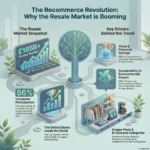
Take-back schemes, deposit systems and resale channels bring products back so their parts or materials can be used again. Retail has built a whole segment on this: the recommerce trend now runs through fashion, electronics and furniture.
Recovery lives or dies on collection. If used units never come back, the best recycling process sits idle, so deposit schemes, trade-in credit and prepaid returns matter more than the recycling technology.
Benefits of Adopting Circular Economy Practices
Adopting circular economy practices pays off in two ways. Cost effects are measurable and quick. Brand effects are slower and easier to overstate.
Cost Savings and Efficiency
The savings come from ordinary operational changes:
- Buying less new raw material, because recovered material replaces part of it.
- Earning revenue from resale and refurbishment instead of paying to dispose of returns.
- Lower disposal and landfill costs, which rise with almost every waste regulation.
- Fewer supply shocks, because part of your input comes from your own returns rather than a volatile commodity market.
That last point is often the strongest argument in a board meeting. Recovered material is a hedge, and companies working on supply chain resilience treat take-back volumes as a second, more predictable source of input. The savings are real but not automatic, because collection, sorting and refurbishment all cost money. The programmes that work are the ones where someone modelled those costs honestly before launch.
Enhanced Brand Reputation
Customers do reward credible circular offers, though less than survey headlines suggest. IKEA is a useful case because it publishes numbers. Its Buy Back and Resell service takes used furniture in exchange for store credit, and Ingka Group, which runs most IKEA stores, sourced close to 690,000 used IKEA products for resale in 2024. Executives report that customers who bring items in usually spend more than the voucher is worth, so resale has not eaten into new sales.
A circular offer works best when it is a service people want anyway, not a message. Claims without a mechanism behind them are now legally risky in the EU too, which fits the wider shift in what consumers reward and how corporate responsibility reporting moved from pledges to evidence.

The Role of Entrepreneurs in the Circular Economy
Smaller companies often move first, because they have no legacy production line to defend. A startup can design a product for disassembly from day one, while an incumbent has to justify rebuilding a factory that still works.
Founders usually attack one link in the chain: reverse logistics, sorting used material, refurbishment, or the tracking software that tells a manufacturer where its material went. Money is the bottleneck, because you buy back inventory before you resell it. That profile is one reason green finance instruments have grown around the sector.
The shift also changes the work itself. Repair, refurbishment and reverse logistics need different skills than a linear production line, and our guide to circular economy jobs and skills covers which roles are emerging and what employers hire for.
Challenges Facing Circular Economy Initiatives
Two obstacles come up in almost every circular project.
Investment and Capital Mobilization
Circular models change the shape of a cash flow. Selling access delays revenue, buying back used goods ties up capital in stock that has not sold, and collection and refurbishment mean real capital expenditure before the first unit is resold.
Lenders are not always comfortable with that profile, especially when the resale price of used stock is hard to forecast. The answer is to start with one product line, measure the return rate and resale margin for a year, then use that data to fund the next step.
Regulation and Policy
Regulation used to be a barrier, because rules were written for linear production. In the EU it is now a driver, with several requirements landing in 2026:
- Packaging: the Packaging and Packaging Waste Regulation applies from 12 August 2026, starting with a ban on food-contact packaging containing PFAS above strict limits. Harmonised recycling labels follow in 2028, and rules on recyclability, recycled content, reuse and empty space in 2030.
- Product design: the Ecodesign for Sustainable Products Regulation sets rules by product group. Its first working plan named textiles and tyres for 2027, furniture for 2028 and mattresses for 2029.
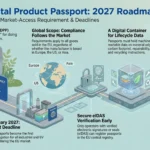
- Digital Product Passport: the same regulation introduces a digital record of a product’s materials, origin and end-of-life handling. The Commission’s registry went live on 20 July 2026, ahead of the product-specific rules.
- Repair: member states had to transpose the Right to Repair Directive by 31 July 2026. It gives consumers an extra year of legal guarantee when they choose repair over replacement, and obliges makers of listed products, such as washing machines, fridges and phones, to offer repair and spare parts at reasonable prices.
Details differ by country, since a directive becomes 27 national laws, but the direction does not. Reporting duties are tightening in parallel, which is why carbon accounting software and a workable ESG framework sit close to circular projects on compliance roadmaps.
Transformative Impact of the Circular Economy on Industries
Circular practice looks different in each sector, and the differences matter more than the shared vocabulary. In manufacturing, the shift is to remanufacturing and modular design, so a worn component can be replaced instead of a whole machine. Our guide to the circular economy in manufacturing covers that, and 3D printing has made small-batch spare parts viable where tooling costs once ruled them out.
In fashion, resale and rental are mainstream channels rather than experiments, though durability and material choice still decide whether a garment survives a second owner. In electronics, the constraint is repairability: design decides whether a device can be refurbished at a sensible cost, which is exactly what the new EU repair rules target.
One requirement is constant. You need to know what your products are made of and where they went. That is a data problem before an engineering one, which is why digital twins and traceability in logistics keep appearing in circular programmes.

Sustainable Supply Chain Management and Circularity
A circular supply chain runs in both directions. Goods flow out to customers, and used goods, parts and materials flow back. That reverse leg is the part most companies have never built.
It needs three things: collection points customers will actually use, information about what is inside a product, which is what a Digital Product Passport carries, and suppliers willing to accept recovered material against agreed quality specifications.
Because all three depend on partners, circularity is inseparable from greener supply chains and broader supply chain trends. Your recovery rate depends on your suppliers, your logistics partners and your customers.
Where to Start Without Redesigning Everything
You do not need a company-wide transformation. Pick one product line where returns already happen, such as warranty returns, and measure how many come back, in what condition, and what you do with them today. That is your baseline.
Then test one recovery route: refurbish and resell, harvest parts, or take back for material recovery. Compare the revenue and avoided disposal cost against the handling cost, and check when the EU requirements reach that product group. Companies that treat this as ordinary sustainable business innovation get further than those running a separate green project.
Found this useful?
Make SmartKeys a preferred source on Google, and our articles will surface more often in your Top Stories, AI Overviews, and AI Mode.
Add as Preferred Source