This guide helps you weigh the real tradeoffs of a flexible PTO policy so you can pick the best way forward for your team.
You’ll get clear comparisons between accrual-based leave and unlimited pto, including how paid time is handled when someone leaves. Big names like HubSpot, Microsoft, Salesforce, and Netflix use open vacation approaches, and the data shows benefits for employee wellbeing and culture.
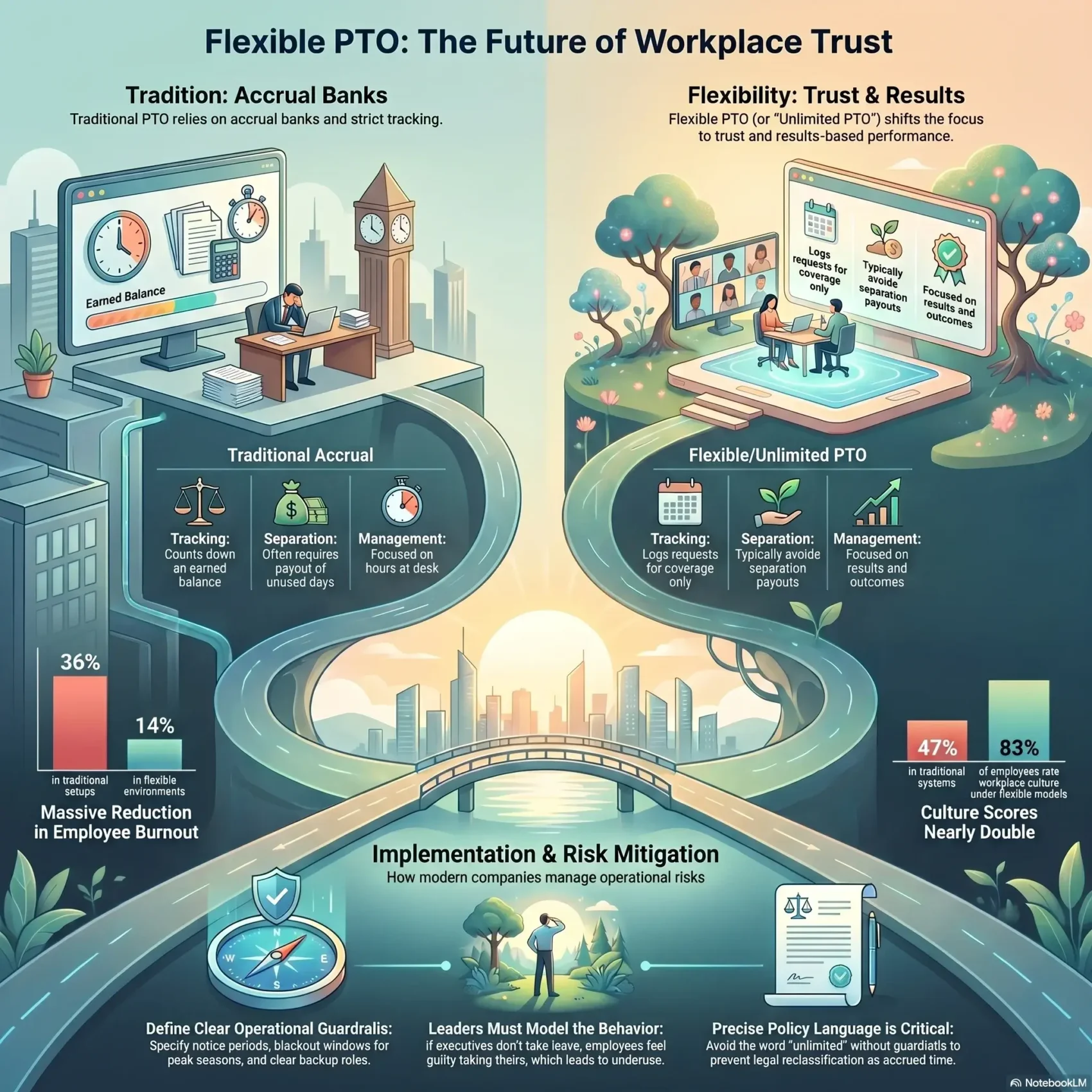
With flexible time off, only 14% of employees report burnout versus 36% in traditional setups. That difference helps explain why many employers adopt more open schedules now.
We’ll cover practical issues you’ll face: how to track days, how to keep coverage, and why “unlimited” can be misleading without rules. By the end, you’ll have a short, actionable way to test a new pto approach that matches how your people actually work.
Key Takeaways
- Learn how unlimited pto differs from accrual-based paid time.
- Understand payout and leave handling at separation.
- See real benefits for employees and measurable business gains.
- Expect coverage and fairness challenges you can plan for.
- Use clear language so “unlimited” doesn’t create confusion.
What a flexible PTO policy really means in today’s workplace
Before you change how your team takes leave, understand the practical differences between accrual-based systems and open-time models. This helps you avoid surprises on payouts, tracking, and manager approvals.
PTO vs FTO vs “Unlimited PTO”: key differences you should understand
Traditional options give each employee a set number of days or hours that accrue each pay period. Those balances are tracked and, in many states, paid out at separation.
By contrast, flexible time and unlimited pto remove the accrual bank. Employees still submit requests, and managers approve based on coverage and results.
How flexible time off changes accrual, tracking, and payout
- Accrual: No earned-hours bank under unlimited models; traditional plans credit hours per pay period.
- Tracking: Flexible systems log requests and approvals rather than counting down a balance.
- Payout: Because there’s no accrued balance, most unlimited plans avoid separation payouts — but wording matters.
Word choice is critical. If you imply a set number days or guarantee specific hours, you can unintentionally create an accrual benefit that triggers payout rules. Also watch wage-statement requirements: some states expect a balance, and you may need to display “unlimited” instead of a number.
For a quick guide on operational setups, see this primer on flexible work schedules.
Why you should consider flexible time off now
Offering a clear, trust-based approach to time off can help you win candidates in a tight U.S. market.
Recruiting and retention advantages in a competitive U.S. market
If you compete for top talent, a transparent leave framework signals autonomy and trust.
When pay is similar, how you handle time and vacation often becomes the tiebreaker for knowledge workers.
Burnout reduction and culture lift: what recent stats suggest
Data shows only 14% of employees report burnout in open time environments versus 36% in traditional setups.
Culture scores rise too: 83% rate workplace culture positively with open time, compared with 47% without it.
Real-world momentum: HubSpot, Microsoft, Salesforce, Netflix
Companies like HubSpot, Microsoft, Salesforce, and Netflix publicly link open vacation to higher satisfaction and lower turnover.
- Hiring edge: Mentions of unlimited offerings in reviews jumped 75% after the pandemic.
- Retention lift: Paid time options help employees stay and grow within your company.
- Practical gap: Many employees report burnout yet still leave earned pto unused under older systems.
Pros that matter to your employees and business
Good leave design delivers real wins for employees and measurable gains for your business. You give people more control over their time, which supports balance and lifts morale.
When employees rest, they return with better focus and higher productivity. Companies that shift away from accrual tracking often see satisfaction rise and turnover fall. HubSpot and similar companies report those trends.
- More control and better balance: Employees can plan paid time off without the stigma of “using days,” so they actually take needed breaks.
- Stronger employer brand: Clear, trust-based leave is a standout recruiting message that helps your company attract top talent.
- Administrative relief and cost clarity: Less accrual tracking can reduce HR overhead and may lower end-of-employment payout exposure in some states.
- Culture and continuity: Documented norms and simple request steps make it easier for teams to cover work and for employees to book time off.
“Easy-to-use leave systems turn intent into actual time off, which reduces burnout and improves retention.”
Practical tip: Pair the change with a short FAQ so your team knows how to request leave and what to expect. For an operational primer, see flexible work schedules.
Risks and pitfalls you need to plan for
Open time approaches often look great on paper but can cause fairness and coverage issues in practice. You need clear rules and training so the program helps employees instead of creating new problems.
Policy abuse, uneven use, and workload coverage gaps
Without clear norms, some employees take fewer vacation days while others take a lot, which strains the team and creates resentment.
Stacked requests can leave your work exposed. Define backup roles and scarce blackout windows to keep projects moving.
Counterproductive cultures where employees take less time
If leaders don’t model taking leave, employees take your plan less seriously. Underuse can raise stress and lead to burnout.
Unequal application by managers and perceived unfairness
Approvals that vary by manager erode trust and prompt complaints. Document qualitative criteria so managers judge requests consistently.
- Track patterns: Spot teams that struggle and add cross‑training.
- Train managers: Teach them to balance business needs and fair access.
- Review quarterly: Use data and complaints to refine how time is approved.
“Communicate that taking time is encouraged, not a weakness.”
Is a flexible PTO policy the right fit for your company?
Not every role or season of the year suits open-time arrangements. Start with a brief assessment of who needs strict schedules and who can manage project-based time.
Assessing roles, operational coverage, and team maturity
Map jobs by coverage needs: customer support, field ops, and clinical roles often need set windows. Knowledge work and product teams usually handle self-scheduled time better.
Look at seasonality and peak weeks. If you have predictable busy periods in a year, mark blackout windows and plan backups.
Choosing one approach or a tiered model
A tiered approach often works best. For example, keep accrual for hourly staff while offering open time to exempt or senior employees. Apply differences lawfully and explain the reasons clearly to your workforce.
- Pilot the change with a stable department to learn fast.
- Show an example of timing requests around launches or peak support weeks.
- Decide how you’ll treat existing accrued balances before rollout.
“Gain leadership alignment on the reasons for change so managers apply rules consistently.”
Set baseline metrics—usage, coverage gaps, and employee satisfaction—so you can prove the approach helps employees and employers before wider rollout.
How to implement a flexible PTO policy step by step
Define the boundaries up front so managers and employees can approve and take time without guessing.
Define what this means for your company. Spell out how employees submit requests, how many days’ notice is expected, and any blackout windows during peak work. Make clear who approves and how conflicts are resolved.
Create a simple request and approval workflow
Use a basic form or software that logs requests and shows team calendars. Automate notifications so managers see pending time requests and can confirm coverage quickly.
Communicate and normalize taking time
Talk about it often. Ask leaders to announce planned vacations and to model taking breaks. When employees see managers take time, they’re more likely to take time too.
Monitor, measure, and revise
Track hours and days taken to spot uneven use. Review requests, coverage gaps, and manager decisions monthly. Run a 90-day pilot, collect feedback, and adjust notice periods or blackout rules if needed.
- Train managers to balance approvals with business needs and coach employees on scheduling.
- Document paid time interactions with required leave so employees know which process applies.
- Use reports to ensure fair access and identify cross‑training needs.
“Start small, measure often, and iterate so the approach fits your teams and the work.”
Legal and compliance considerations for U.S. employers
How you write and enforce leave rules matters. A vague plan can be reclassified as accrued time and create payout obligations you did not expect.
Why “unlimited” is a misnomer: avoiding misleading promises
Don’t call the benefit boundless. Describe approval standards and business needs instead of implying a number of days. That reduces the risk a court will treat the plan like accrual.
Accrual, payout, wage statements, and overtime implications
Traditional accruals often require payout at separation in many states. If you convert from accrual to open leave, map how you’ll handle existing balances.
Some states require wage statements to show a PTO balance; list “unlimited” only after legal review. For hourly staff, track time off separately so overtime and sick‑leave calculations stay accurate.
Lessons from McPherson v. EF Intercultural Foundation
The McPherson case shows what can go wrong: a poorly drafted, inconsistently applied plan was treated as accruing vacation and triggered payouts.
- Use precise language: avoid the word “unlimited” in benefits marketing without guardrails.
- Document administration: train HR and managers to approve consistently.
- Review annually: update your documents for state law and new case law; consult counsel when unsure.
“A vague benefit can become a liability when practice and paperwork diverge.”
Manager enablement: make flexibility work on your team
Managers set the tone: how leaders approve time shapes whether people actually take breaks. Train your leaders so decisions feel fair, consistent, and tied to clear goals.
Train managers to approve requests fairly and consistently
Give managers a short rubric for approvals. Use plain criteria like coverage, notice, and impact on deliverables.
Provide templates for overlapping requests and for handling urgent conflicts. Coach managers to spot when employees never ask to take time and to ask why.
Shift to results-based performance management
Move reviews toward outcomes, not hours at the desk. When leaders focus on goals, employees feel safe to use flexible time and vacation without guilt.
Encourage cross‑training so coverage exists and approvals are easier. Track days taken with lightweight reports to check equity without micromanaging.
- Model taking breaks: ask leaders to announce planned days and celebrate return.
- Align reviews to results so employee performance and productivity stay clear.
- Hold quarterly refreshers so the policy and pto details stay top of mind.
“Consistent manager choices turn well‑written rules into fair practice.”
Measuring success and iterating your flexible time policies
Start small: monitor a handful of indicators so you can tell if changes help employees and the work.
KPIs to track
Usage: Track days taken by team and role to spot clustering around holidays or long stretches of unused vacation.
Burnout signals and eNPS: Watch comments, overtime hours, and eNPS trends to see if stress falls as people take more paid time.
Retention and productivity: Compare exits and output year over year to link the program to business outcomes.
Simple tracking that preserves trust
- Log requests and coverage incidents so you can fix gaps with cross‑training, not micromanagement.
- Publish aggregated dashboards for managers so they can nudge employees who rarely take time without naming names.
- Survey employees about clarity and fairness and revise the time policy language where confusion appears.
- Review key metrics at least annually and adjust notice periods, blackout windows, or staffing based on what the data shows.
“Use data to protect coverage and culture, not to punish people for taking needed rest.”
Conclusion
Conclusion
Clear, consistent rules are what actually let employees take time, not lofty promises. Set plain expectations so your team knows how to request days and how managers will approve them.
Draft language carefully and learn from big companies that publicize open vacation while avoiding legal missteps. Train leaders to model taking breaks so people feel safe to take time they need.
Start with a pilot group, measure use and coverage, and adjust. When your company aligns a simple approach with results, you support morale, attract top talent, and create a workforce that returns rested and focused.
Found this useful?
Make SmartKeys a preferred source on Google, and our articles will surface more often in your Top Stories, AI Overviews, and AI Mode.
Add as Preferred Source