Tools
Tools
Last Updated on January 20, 2026
You can shape your day so it fuels focus, energy, and steady progress toward success. Small habits cut decision fatigue and lower stress, letting you get more work done with less strain.
High achievers follow simple morning steps. For example, Shonda Rhimes blocks writing time and pairs it with music. Adm. William H. McRaven says making your bed builds momentum. The habit loop—cue, habit, reward—shows how tiny actions stack into bigger wins.
In this guide you’ll get a friendly framework to start day strong and end with less mental clutter. You’ll learn to map a schedule to your real life, plan both morning and evening sequences, and use checklists to keep your plan visible. Follow these steps to turn small cues into lasting habits that lift your productivity and energy.
Key Takeaways
- Small actions reduce willpower needs and cut decision fatigue.
- Morning and evening sequences create clear edges for your day.
- The habit loop helps tiny steps lead to big results.
- Real-life schedules beat one-size-fits-all plans.
- Visible checklists make it easier to follow through every day.
- Consistent structure boosts focus, lowers stress, and fuels success.
Why Structuring Your Day Works Right Now
Structure gives your hours a clear shape so you spend less energy deciding what to do next. Observational studies show that predictable patterns support healthier behaviors, like steady meals and regular exercise. When life is unstructured, people — including kids in summer — tend to drift toward habits that harm weight and health.
When you organize the day, you cut decision fatigue and free mental space for high-value work and meaningful activities. Simple morning and evening anchors act as checkpoints that help your mind stay on task even when interruptions arrive.
A basic plan lowers cognitive load so your energy lasts longer. That stability also improves mood and can make happier outcomes more likely by supporting steady eating, movement, and sleep.
- Fewer on-the-spot choices: reduce stress and protect your mind.
- Clear sequence of tasks: move through time with intention, not reaction.
- Flexible constraints: set a start and shutdown to keep work visible and create spare time for recovery or connection.
Habits, Routines, and Rituals: What You Need to Know
Knowing how small behaviors differ makes it easier to shape a day that sustains energy and focus. This short section gives clear definitions and a fast, usable tweak you can try right away.
Habit vs. routine vs. ritual: simple definitions you can apply
Habit — an automatic action triggered by a cue (for example, turning on coffee after waking). It happens with little thought.
Routine — a repeated sequence you perform regularly; it needs some attention but becomes steady over time.
Ritual — a routine lifted with intention and meaning so it energizes your mind and supports bigger aims.
Turning routines into rituals for meaning and motivation
Map your current activities to see which are habits and which qualify as routines. Pick one easy routine you already do and add a tiny meaning change. For example, take three slow breaths and name one win before opening email.
- You’ll spot how cues stabilize behavior and reduce friction.
- Consistency, not perfection, predicts long-term success.
- One micro-upgrade can turn a neutral sequence into a small daily ritual that lifts your life.
The Science Behind Productive Routines
Tiny loops of cue, action, and reward quietly steer how your day unfolds and how much you accomplish. Neuroscience shows the habit loop—cue → routine → reward—makes behavior automatic over time. That means you can engineer your hours so good choices happen without constant willpower.
The habit loop: cue, routine, reward in everyday life
Think of waking up (cue), making coffee (routine), and enjoying flavor and caffeine (reward). That cycle reinforces itself, so the next morning you do it with less thought.
Practical points:
- You’ll see how cues trigger behavior, the routine executes, and the reward locks it in—so loops run even when energy is low.
- Map an existing loop, like coffee after waking, and use it to anchor one small, productive task in the morning.
- Track rewards that matter to you—calm, clarity, or momentum—so your mind wants to repeat the action.
Autopilot to reduce decision fatigue and stress
When actions move to autopilot, your mind saves willpower for hard choices. That reduces decision fatigue and lowers stress so you can reserve peak time for deep work.
Keep it simple: pair a daily cue with one tiny task, remove friction (set out gear the night before), and allow forgiveness for missed days. Consistency over weeks, not perfection, wires new habits.
Benefits You’ll Feel: Less Stress, More Energy, Better Health
When you give your hours shape, your body and mind start syncing to better sleep, steadier energy, and less stress. A simple daily routine can remove guesswork and free mental space for what matters.
Structured habits support consistent sleep and mealtimes, which science ties to improved mood and long-term health markers. Eating breakfast, for example, links to clearer thinking and lower diabetes risk.
Regular exercise and steady rest improve mental health and boost energy levels through the day. Better sleep helps you wake clearer and lift your productivity without extra effort.
“Small, repeatable actions compound into calmer days and stronger resilience.”
- Fewer decisions: you reduce stress by removing guesswork and free your mind for creative work.
- Steady energy: consistent sleep and meals stabilize rhythms so you feel more even across the day.
- Compounding health: better food, movement, and rest add up to long-term gains in life and work.
Create Your Daily Routine
Build a simple plan you can keep: pick one small change and make it stick before adding more.
Start tiny by adding one or two habits to your schedule so you avoid overwhelm and protect momentum.
Use cues, timing, and environment
Make starting easy: attach a new action to an existing cue (for example, right after coffee), do it at the same time each day, and place gear where you’ll see it.
Plan for barriers and relapses
Expect a runway: simple changes average about 66 days to feel automatic. Complex stacks take longer, so give yourself time.
- Prep decisions: plan meals, choose workouts, and block time so you reduce friction.
- Keep a short list: write must-do tasks and one “could-do” to stay focused without overload.
- Define your minimum: for travel or sick nights, name the pared-back version that counts as success.
When you miss a day, restart at the next chance—lapses don’t erase progress. Review weekly: celebrate what stuck and add only when current steps feel almost effortless.
Morning Routine Ideas to Start Your Day Strong
A short, intentional opening hour can set the tone for clearer focus and steadier energy all day. Protect that time by silencing notifications and giving yourself a calm runway before work and messages arrive.
Waking early and protecting your first hour
Many high achievers wake early—Richard Branson, Indra Nooyi, and Jack Dorsey all rise well before most people.
Whether you wake early or simply wake on time, make the first hour predictable. Make your bed to score an immediate win and build momentum.
Affirmations, meditation, and a focused to-do list
Try one mindset primer: a short affirmation, a two-minute meditation, or writing a focused to-do list.
This small step lets you direct attention before the world pulls you in and can help reduce stress as you plan the day.
Exercise, hydration, coffee, and a nutritious breakfast
Move your body with a brief burst of exercise or a walk, then drink a glass of water to aid cognition.
Enjoy coffee intentionally, not on autopilot, and eat breakfast with lean protein, healthy fats, and complex carbs to stabilize energy and support long-term health.
Optional boosts: cold showers and light exposure
Optional add-ons like a short cold shower (under ~70°F) or bright light exposure can increase alertness on groggy mornings.
- Protect your first hour: silence notifications and create a calm start.
- Pick one mindset primer: affirmations, meditation, or a short list.
- Move, hydrate, then savor coffee and a smart breakfast.
- Start simple and stack one element at a time so the plan sticks.
Evening Routine Ideas That Set Up Tomorrow
End your night with a few low-effort habits that cut morning friction and calm your mind. Choose top tasks the evening before so your subconscious primes the solution and you avoid morning dithering.
Goal setting and “eat the frog” prioritization
Before bed, pick one clear goal for tomorrow and mark it as your frog. Writing a short to-do list with that single hard task first helps you start the day with momentum.
Digital wind-down, light stretching, and sleep hygiene
Power down screens at least 30 minutes before bed and dim lights to reduce blue light exposure. Do a few light stretches or a brief meditation to lower stress and cue rest.
Sleep hygiene matters: aim for a cooler room (about 60–65°F), a dark environment, and steady timing to improve sleep quality.
Tidy-up, prep for morning, and post-dinner walk
Tidy countertops, set out clothes, and prep breakfast or the coffeemaker so you save decisions at wake-up. A short post-dinner walk aids digestion and gently lowers arousal before bed.
- Close your day by choosing tomorrow’s most important task so you can hit the ground running.
- Write a short to-do list with a single “frog” to protect your focus.
- Power down screens, dim lights, and stretch to tell your body it’s night.
- Prep clothes, lunches, and coffee to reduce morning decisions.
- Try a brief reflection to capture wins and release lingering thoughts.
Anytime Rituals to Sustain Energy Levels Throughout the Day
Small, repeatable pauses spread across your hours keep energy steady and attention sharp. These moments are simple to build and fit into work without derailing tasks.
Make 2–3 micro-rituals you can use every day: a water break, a two-minute stretch, or a quick walk between meetings. These actions support your body and help digestion after meals.
Micro-breaks, movement snacks, and hydration reminders
Set end-of-meeting or post-lunch cues to trigger a short walk or gentle mobility set. Even 3–5 minutes improves circulation and boosts alertness.
Journaling, gratitude, and mindful moments at work
Keep a small notebook to jot one win or a gratitude each afternoon. Journaling reduces stress and increases self-awareness.
- Build 2–3 go-to rituals: water, stretch, quick walk.
- Use mindful minutes: breathing, meditation, or a brief body scan to reset focus.
- Rotate options: keep them fresh while using the same anchor times.
Treat these as restorative pauses, not extra tasks. For a deeper guide to energy management and productivity, see energy management strategies.
Daily Schedule Example You Can Copy
Here’s a plug-and-play example you can adapt to fit work, family, and sleep needs. Use it as a scaffold — not a script — to shape purposeful hours without overscheduling.
Sample workday timeline from wake to night
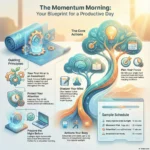
5:30 a.m. wake; 5:45 water/snack; 6:00 jog; 6:30 shower; 7:15 make bed; 7:30 affirmations + breakfast; 8:00 commute/podcast; 10:00 water + meditation break; 12:00 lunch; 3:00 walk break; 6:00 groceries; 7:00 dinner; 8:00 read; 9:00 stretch + wind-down; 10:00 bed.
Adjusting times for your life, work, and family needs
Keep the same anchors but shift the clock. If you can’t wake early, move every block later. Consistency matters more than the exact time.
- Use this example to start day on purpose, protect deep work, and still make room for recovery in the evening.
- Notice built-in breaks throughout day that sustain energy without blowing up your calendar.
- Keep your to-do list short and tie tasks to time blocks so you know when and where to act.
- Customize hours and anchors to match commute, kids, and personal goals; color-code blocks to see balance.
“A simple schedule helps you do more of what matters and less of what drains you.”
Try these examples for one week, then tweak. For more morning ideas to shape how you start day, see morning routines.
From Adherence to Automatic: Make Routines Stick
You’ll find that patience plus a simple plan beats willpower when building new behaviors. Small, steady changes are what move actions from effortful to automatic. Expect a curve and build for the long haul.
The 66-day average—and why complex habits take longer
A UK study found a mean of about 66 days for habit automaticity, with a wide range (18–254 days). Simple eating changes often form faster than physical activity, which can take roughly 1.5× longer.
Missing a single day rarely erases progress. Add one or two changes at a time to avoid relapse and keep momentum.
Personalization beats perfection: tailor to your goals
Make plans that fit your life and goals, not an idealized schedule. Use “minimum viable” versions for high-friction steps so you still win when time is tight.
- Expect the curve: simple habits may click in ~66 days; stacked actions take longer.
- Keep it visible: calendar blocks or a checklist make it easier to start than skip.
- Plan re-entry: prepare a short comeback plan for travel or sickness.
- Track signals: energy, focus, and mood reveal whether changes reduce stress and support success.
- Review monthly: remove what fails and double down on what reliably moves you forward.
Tools and Templates to Keep You on Track
Practical checklists and small automations make follow-through much easier. Use tools that reduce friction so you can protect focus and get more done in a busy day.
Printable checklists and habit-tracking methods
Start with a simple, printable list for your morning and evening steps. A visible sheet helps you complete key actions without thinking, even on packed days.
Habit trackers visualize streaks and lapses so you celebrate wins instead of chasing perfection. Automation triggers—like an alarm that starts music—can cue a wake-up sequence and lower start friction.
Calendar blocks, alarms, and accountability rituals
Block your schedule for focused work, errands, and family time so important items have a protected home. Use alarms to cue hydration, movement, or shut-down rituals.
Pair up with a friend to add social accountability for workouts or deep-work blocks. Planning shared sessions increases follow-through and makes the system stick.
- Start with printable checklists for morning and evening so you follow steps on busy days.
- Use a habit tracker to see streaks and lapses at a glance.
- Block your schedule for focus work, admin, workouts, and family time.
- Set alarms or phone reminders to cue hydration, movement, or shut-down rituals.
- Keep one master to-do list and move only today’s tasks into your plan to avoid overload.
Troubleshooting Busy Seasons, Travel, and Life Changes
When schedules change, choose a few anchors that protect sleep and focus. Structure helps keep healthy habits during hectic stretches and makes it easier to reduce stress when choices pile up.
Structured strategies when your schedule shifts
Shrink what you do to essentials you can keep even on your longest day. Pre-decide meals, pick menus before you go out, and book workouts with a friend so you avoid last-minute choices that raise stress.
Anchor your end day to a fixed shutdown time to protect sleep and preserve energy for tomorrow.
Re-entry plans to restart after disruptions
After travel or a hard season, restart slowly. Focus on one stabilizing habit first, then add one or two changes over time. Too many swaps at once invite relapse.
- Define a minimum on travel days: a 10-minute walk and a 2-minute stretch to stay connected to your routine.
- Use hotel or on-the-go alternatives for key activities and keep momentum.
- Create a simple night checklist for your first evening back: unpack, start laundry, make a grocery list, and set tomorrow’s top task.
Celebrate partial wins: consistency beats intensity when time and activities are scarce.
Conclusion
Finish strong with a few simple commitments that make good choices automatic. Your daily plan should reduce decisions, help you reduce stress, and boost productivity so you protect focus and feel more steady through the day.
Keep your morning routine short and your evening wind-down calm. A clear end day shutdown plus basic sleep hygiene makes waking easier, aids waking early when needed, and supports better sleep.
Favor one or two small changes at a time. Personalize those steps to fit your life so the habit sticks and serves your goals for success and health.
Have a short re-entry plan for setbacks, use checklists and time blocks, and start tomorrow with one tiny, repeatable win.