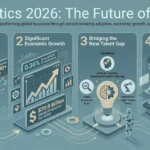
In today’s fast-paced digital world, edge computing is transforming business operations. It allows for real-time data processing near the data source, boosting efficiency and opening up new growth opportunities. The move towards this technology is significant, with 75% of business data expected to be processed at the edge by 2025. This shift leads to quicker responses and better decision-making, enabling companies to act on data insights immediately.
Adopting edge computing solutions can give businesses a competitive advantage, reshaping traditional operational models for long-term success.
Many companies are now focusing on edge computing, especially in areas like autonomous vehicles and industrial automation. Here, they can see significant performance improvements. The integration of edge computing is more than a trend; it’s a crucial step that’s improving business operations across various sectors.
For more on digital transformation and its benefits, visit the Digital Transformation Hub.
Key Takeaways
- Edge computing enables real-time data analysis, enhancing decision-making speed.
- Companies adopting edge computing solutions can reduce latency by up to 60%.
- It significantly lowers bandwidth usage, leading to cost savings of up to 40%.
- By 2023, 90% of industrial enterprises are expected to utilize edge computing technologies.
- Enhancing security and compliance is a primary driver for adopting edge computing solutions.
Understanding Edge Computing
Edge computing is revolutionizing data management by processing data closer to its source. This approach to Edge Computing Technology enables quicker data analysis and instant decision-making. With data generation expected to surge to 75% of enterprise data by 2025, efficient handling of this data is vital.
Currently, only 27% of organizations have fully adopted edge computing technologies, while another 54% show interest. This shift presents a significant opportunity in the Edge Computing Market. By moving storage and computing resources closer to data creation, it enhances performance and reduces latency.
Various sectors benefit from these advancements:
- In manufacturing, productivity increases as edge computing helps reduce costs and optimize quality control.
- Power and utility companies utilize IoT sensors and edge technology to enhance grid automation and maintenance.
- The oil and gas industry employs edge computing for real-time alerts, improving safety measurements.
- In agriculture, farmers increase yields by optimizing resources with data insights from their fields.
- Retailers can make data-driven decisions swiftly, enhancing customer experiences.
- Healthcare providers track patient vitals and streamline inventory management through improved data access.
- Autonomous vehicles use edge computing to react to road conditions in real-time, elevating safety standards.

How Edge Computing Transforms Business Operations
Integrating edge computing into your business processes offers remarkable opportunities. By utilizing Edge Computing Services, organizations can facilitate seamless workflows and responsive operations. This technology supports a variety of applications, from enhancing customer experiences to automating internal processes. Businesses leveraging these innovations can significantly minimize operational silos and promote interconnectedness, improving overall agility in the workplace.
Edge devices are crucial in this transformation, deploying computing and storage resources right at the network’s edge, close to data sources. This decentralization enables faster, real-time data processing and eases network challenges like latency and bandwidth limitations. The role of routers and gateways is essential in routing data efficiently, further enhancing operational efficiency.
As a business leader, you should consider the profound impact that Edge Computing Innovations can have across all industries. From advanced manufacturing, where real-time monitoring transforms production efficiency, to retail solutions that leverage IoT sensors for inventory management, the potential applications are extensive. By implementing edge technology, you can achieve not only improved productivity but also significant cost reductions through smarter resource management.
Through enhanced security, lower latency, and optimized bandwidth, edge computing is becoming a pivotal part of modern business strategies. By prioritizing infrastructure modernization, organizations can better utilize real-time data, driving growth, efficiency, and competitiveness in today’s fast-paced marketplace.
Enhanced Performance and Reduced Latency
Edge Computing offers significant performance boosts through reduced latency. It processes data near its source, leading to almost instant responses. This is vital in areas like autonomous driving and smart manufacturing, where time is of the essence.
Several factors contribute to the improved performance associated with edge computing:
- Small-scale data centers, or Points of Presence (PoP), enhance speed and efficiency.
- Edge analytics provide real-time insights crucial for decision-making, especially in IoT-heavy industries.
- Faster access to information in travel sectors boosts customer satisfaction, ensuring timely updates and bookings.
- In banking, edge computing speeds up data analysis and account access, enhancing the customer experience.
- The gaming industry also benefits, with edge computing enabling real-time game data processing for smoother experiences.
Reducing latency is key to improving user experience across various sectors. Swift data processing keeps businesses competitive and responsive. This ensures their services meet customer needs effectively.
Edge Computing Business: Why Companies Are Adopting It
The Edge Computing Business is rapidly evolving. Organizations are facing a surge in data, leading them to adopt edge computing solutions. This move is driven by the need for faster data processing and real-time analytics. By 2026, the edge computing solution market size is expected to hit $87.3 billion, up from $36.5 billion in 2021.
The growth of Edge Computing Trends is clear, with 50% of enterprise data expected to be generated outside the cloud by 2022. This shift towards localized data handling reduces bottlenecks and boosts efficiency. Companies are using edge computing to deliver quicker responses and better services, leading to increased customer satisfaction.
Industries like oil and gas are seeing the benefits of edge computing for predictive maintenance, enabling faster reporting. This technology also reduces latency and improves bandwidth efficiency by placing computational processes near edge devices. For instance, retail businesses can analyze data in real-time, making decisions faster and more effectively at the store level.
Moreover, as IoT spending increases, edge computing offers a cost-effective integration solution without the need for extensive infrastructure. It optimizes IT expenses through decentralized data management, leading to significant savings and enhanced data security. The distribution of data across various devices adds an extra layer of security compared to centralized systems.
As edge computing becomes more prevalent, businesses are well-positioned to embrace technological advancements. This ensures better operation management and customer responsiveness. Investing in this technology supports broader digital transformation efforts, opening the door to innovative solutions in the future.
Improved Data Security and Compliance
Edge computing marks a significant leap in bolstering your data security. It enables local data processing, reducing the need for data to travel far. This localized method is key to adhering to regulations like GDPR, ensuring data is handled securely and ethically.
Adopting edge computing strategies lessens the risk of third-party breaches. It protects sensitive data and maintains customer trust, a critical asset for any enterprise. With enhanced security in edge devices, your organization can effectively block unauthorized access and breaches.
Edge computing also simplifies data compliance. By keeping data local, you streamline privacy regulations, allowing you to concentrate on your main activities while upholding legal standards. This can lead to lower compliance costs, saving you financially.
Real-time data processing at the edge offers significant operational advantages. It enables swift, informed decisions, crucial in applications like smart grids and industrial IoT. This quick response boosts performance, benefiting both your team and customers.
Optimizing data management through edge computing also supports a sustainable future. It reduces energy consumption by cutting down on long-distance data transfers, lowering carbon emissions. This efficient use of resources not only decreases cloud resource needs but also fosters an eco-conscious business approach.
Cost Efficiency and Bandwidth Optimization
Edge computing solutions bring significant cost efficiency to businesses by optimizing bandwidth. Traditional data transmission methods are costly, especially with increasing data volumes. By processing data locally, companies reduce unnecessary data transfers to central data centers, cutting operational costs.
Every millisecond of delay can lead to financial losses. Edge computing reduces data travel time, enhancing performance in sectors like online gaming, streaming, and healthcare. This decrease in latency improves user experiences and enables businesses to innovate more quickly.
Moreover, savings from reduced data transmission can be reinvested in areas like research, marketing, or customer service. Although initial costs for multiple edge devices are involved, the long-term benefits of improved efficiency and security justify the investment.
- Processing data locally reduces the need for high bandwidth, leading to lower transmission costs.
- Edge computing facilitates economies of scale, thereby saving expenses while strengthening security measures.
- With projections indicating a significant rise in IoT devices, optimizing bandwidth will become increasingly essential for competitive advantage.
In conclusion, integrating edge computing solutions can revolutionize data management for your organization. It enables agility and efficiency in a rapidly changing digital world. The emphasis on cost efficiency and bandwidth optimization will be crucial for future success.
Enabling IoT and AI-driven Innovations
Edge computing technology boosts IoT innovations by enabling real-time data analytics at the device level. This approach enhances smart device efficiency, supporting predictive maintenance and intelligent decision-making. It’s a game-changer for how devices operate.
The advent of 5G and Wi-Fi 6 is revolutionizing industries with new applications. In manufacturing, edge computing cuts down response times for critical operations. AI integration takes it further, creating autonomous industrial systems that boost efficiency and cut downtime.
- Localized data processing enhances responsiveness for smart home technologies.
- Real-time data analysis improves predictive maintenance in manufacturing, increasing productivity.
- Decentralized AI architecture allows for efficient data processing across multiple devices, boosting both security and scalability.
- AI inferencing at the edge shortens data transmission times, enabling quicker decision-making.
As industries adopt real-time AI, the power of edge computing transforms operations in healthcare, transportation, and agriculture. It unlocks new capabilities and drives innovation, creating an environment where user experiences and operational efficiencies flourish.
Edge Computing Trends Shaping the Market
The Edge Computing Market is rapidly evolving, driven by key trends that boost business operations and customer experiences. Understanding these trends is crucial for staying competitive and making informed decisions.
Research indicates that real-time decision-making is becoming essential for businesses. Edge computing enables robots and sensors to make instant decisions, enhancing productivity and safety in sectors like industrial and retail. The hardware segment, accounting for over 43% of the market share in 2023, highlights the growing need for robust hardware solutions.
Cost efficiency is a top priority in the Edge Computing Market. Companies aim to optimize total system costs, especially in cost-sensitive operations. With hardware and software segments expected to grow, organizations are aligning their IT strategies to incorporate these trends into their business approach.
- Critical Industries: Retail and healthcare sectors are leveraging edge technologies to enhance customer experiences.
- Data Volume Handling: Edge computing excels in managing large data volumes, mitigating transmission costs and addressing network limitations.
- Privacy Concerns: Some users prefer localized data management, reflecting growing privacy considerations.
The U.S. edge computing market is projected to expand at a CAGR of 31.2% from 2024 to 2030, reaching an estimated USD 43.05 billion in revenue. This growth signifies an upward trend in the adoption of edge computing technologies, underscoring their potential to drive efficiency and innovation in various sectors.
As you explore these emerging trends, consider how they impact your organization. Adapt your strategies to thrive in the shifting landscape of the Edge Computing Market.
Choosing the Right Edge Computing Solutions
Selecting edge computing solutions demands a thorough evaluation of your organization’s specific needs and goals. Start by understanding how the solution aligns with your data processing objectives. Key factors include scalability, integration capabilities, and security features, all of which are crucial in finding the right fit.
When selecting edge solutions, consider these critical aspects:
- Scalability: The solution must be able to expand with your business, handling an increasing amount of data at the edge.
- Integration: It should integrate smoothly with your current systems to boost operational efficiency.
- Security: Strong security measures are essential to safeguard sensitive data processed in edge environments.
When evaluating options, focus on how edge computing solutions can improve your operational performance. For instance, the 5G wireless edge reduces latency to mere seconds, making it perfect for environments needing constant data collection. Advanced edge solutions can even lower latency to milliseconds, which is highly beneficial for applications like video surveillance or patient monitoring.
Seek insights from technology partners to find solutions that meet your current needs and adapt as the industry evolves. With forecasts suggesting that by 2025, about 75% of enterprise-generated data will be processed outside traditional data centers, choosing the right edge computing solutions today will set your company up for success in the future.
Conclusion
Edge computing is a game-changer for your business, boosting efficiency and driving innovation. The market is expected to hit nearly $22.5 billion by 2024. Understanding its benefits, like faster data processing and better security, is key. With IoT data set to reach $1.3 trillion by 2026, embracing edge tech is crucial for success.
Edge computing also cuts costs, as companies waste up to 35 percent of cloud spend. It enables real-time analytics and data processing near the source. This improves response times and reduces network bandwidth usage. Aligning with Microsoft Azure and Amazon Web Services’ edge solutions is vital for tapping into their benefits.
Looking to the future, edge computing’s potential for innovation is vast, spanning healthcare to retail. Overcoming scalability and interoperability challenges will unlock its full potential. This ensures your business not only survives but thrives in the fast-evolving digital landscape.
Found this useful?
Make SmartKeys a preferred source on Google, and our articles will surface more often in your Top Stories, AI Overviews, and AI Mode.
Add as Preferred Source