Freemium means you give away a working version of your product and charge for the parts that solve bigger problems. Spotify, Slack, Dropbox, Zoom and Canva all grew this way: a small paying minority funds a very large free audience.
It removes the price objection at the moment someone first tries your product, and it is risky for the same reason: every free account costs you hosting and support, and only a fraction of them will ever pay.
This guide covers what the 2026 data shows about conversion, how to design a free tier that creates upgrade moments instead of frustration, when a free trial is the better choice, and how to turn sign-ups into paying customers.
Key Takeaways
- Give away enough to prove value, and reserve the features that justify paying.
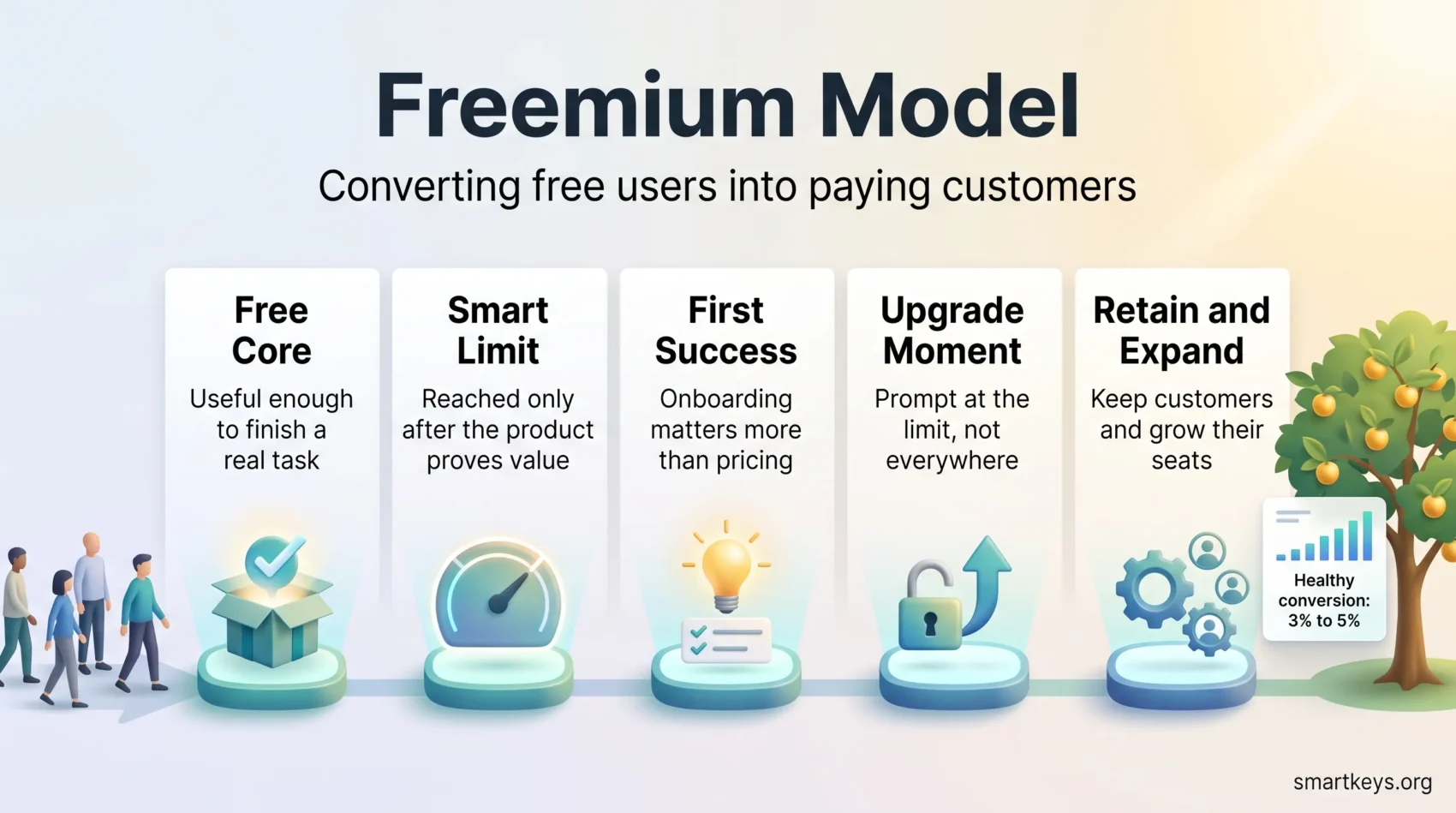
- Expect single-digit conversion. Recent benchmark data puts a healthy freemium rate at roughly 3% to 5%.
- Free tier limits work best when they interrupt at a moment of real value, not at the start.
- Onboarding decides conversion more than pricing does, because people upgrade only after they succeed once.
- Model your infrastructure and support costs before you scale the free base, not after.
What the Freemium Business Model Really Is
Freemium is a pricing structure, not a marketing tactic. You split the product into a permanently free tier and one or more paid tiers that remove limits or add capability.
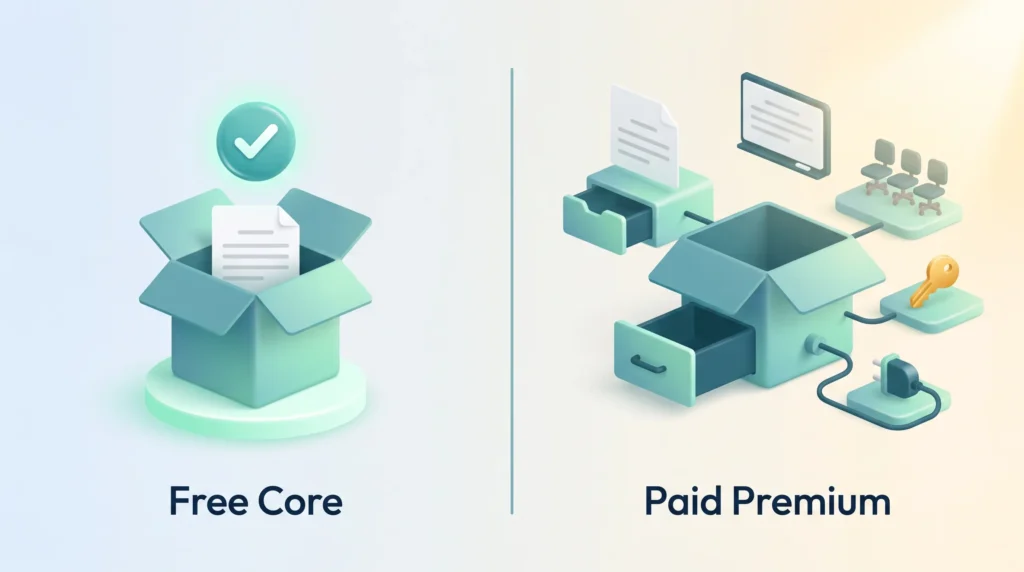
The word blends “free” and “premium”, but what matters is the split: the free side has to be useful on its own, or nobody stays long enough to upgrade.
Free core, paid premium
A good free tier lets someone finish a real task. A designer should be able to make and download a poster. A team should be able to hold a conversation. The paid tier then targets what happens once that task becomes routine: more storage, more seats, admin controls, integrations, analytics or the removal of ads.
Compare that with a usage-based pricing model, where everyone pays but the bill scales with consumption. Freemium sets a hard line between free and paid; usage-based pricing moves that line continuously.
Fit check: does your product suit it?
Freemium fits when three things are true. People can understand the product without a salesperson. Serving one extra free user costs very little. And the market is large enough that a low conversion rate still produces a real business.
If any of those fails, the model punishes you. A product that needs configuration, training or a security review before it shows value loses most free sign-ups before they reach the point of paying. Those products do better with a guided trial, covered further down.
- Scale requirement: if 4% of free users convert, 100,000 sign-ups produce 4,000 customers. Plan the top of the funnel accordingly.
- Marginal cost: storage, compute and human support are the three costs that turn a large free base into a problem.
- Perceived value: if the free tier already solves the whole job, the paid tier has nothing left to sell.
For a wider view of how pricing choices shape a business, see this guide to business model innovation.
What the 2026 Conversion Data Actually Shows
Conversion rate here means the share of free users who become paying customers. It is the single number that decides whether freemium works for you.
ChartMogul’s SaaS Conversion Report, based on a January 2026 survey of 200 B2B software products, put the median free-to-paid conversion across all products at 8%. Split by model, it described 3% to 5% as a good result for freemium and 8% to 12% as a strong one. Free trial products scored slightly higher, at 4% to 6% for a good result and 10% to 15% for a strong one.
The more useful comparison accounts for how many visitors sign up at all. On that measure the report found freemium produced about 5 paying customers per 1,000 website visitors, against 3.6 for free trials. A lower conversion rate on a bigger funnel still wins.
Freemium at consumer scale
Spotify shows what the model looks like at the top end. In its second quarter of 2026, reported on 4 August 2026, the company had 777 million monthly active users and 300 million Premium subscribers. That is an unusually high conversion rate for freemium, and it comes from a product people use daily for years.
The revenue split is the more useful lesson. Premium brought in 4.331 billion euros that quarter against 446 million euros from the ad-supported free tier. Advertising covered part of the cost of the free audience, but subscriptions carried the business. Treat ads as a way to reduce the drag of free users, not as a second business model.
Freemium at software scale
Dropbox reports paying users rather than conversion rates. In the quarter ended 30 June 2026 it had 18.19 million paying users and average revenue per paying user of $139.68. Its free tier still offers 2 GB of storage, and its entry paid plan, Plus, costs $9.99 a month for 2 TB.
That gap between 2 GB and 2 TB is the whole design. The free tier is enough to try the product and share a few files, not enough to hold a photo library or a work archive. That is the moment the upgrade makes sense.
Designing the Free Tier: Where to Put the Limit
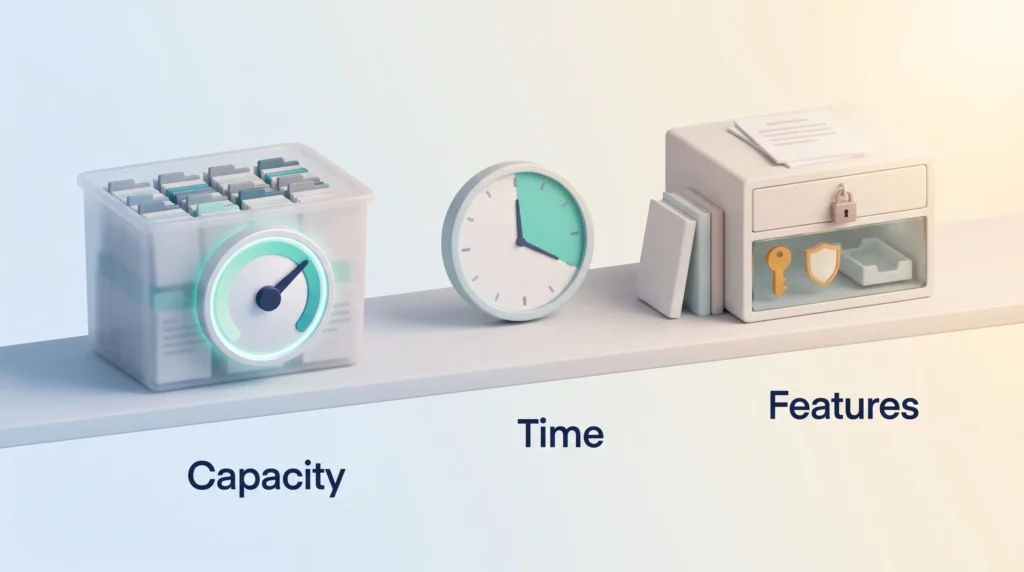
The limit you choose is the most important product decision in a freemium business. Too early and people leave before they see value. Too late and nobody ever needs to pay. Three types are common, and they suit different products.
Capacity limits
Storage, records, projects or seats. Dropbox’s 2 GB is the classic example. These work when your costs rise with usage, because the limit protects your margin and creates the upgrade trigger at the same time.
Time limits inside the free product
Slack’s free plan keeps the most recent 90 days of message and file history, deletes workspace data older than a year, and allows 10 third-party app installations. Nothing stops a team using Slack for free forever. What stops them is losing the search history that made the tool valuable.
Zoom uses duration rather than history: its free plan hosts 40-minute meetings for up to 100 participants. The meeting works, it just ends where a real working session would carry on.
Feature gates
The paid tier unlocks capability rather than volume: admin controls, single sign-on, audit logs, export, priority support, advanced analytics. Feature gates suit business products, because the features an IT department cares about are rarely the ones an individual user misses.
Whichever you choose, apply one rule: a free user should be able to complete the core job, and should hit the limit only once they do that job regularly.
Real-World Freemium Examples
The same model produces very different designs depending on who is being asked to pay.
Slack: bottom-up adoption
Slack spreads through a company one team at a time. Individual employees adopt it without a purchase order, the habit forms, and the upgrade conversation happens later with an administrator who wants history, compliance and app integrations. This pattern is often called land-and-expand: land in one team, then expand across the organisation.
Dropbox: referrals as distribution
Dropbox paired a small free tier with a referral programme that rewarded both sides with extra storage. Sharing a file was itself an invitation, so the product carried its own marketing. Referral loops work best when the product gets better as more people join, which is also the logic behind a platform business model.
Spotify: ads as the free tier’s rent
Spotify’s free listeners generate advertising revenue, feed the recommendation data that makes the product better, and form the pool subscribers come from. The upgrade removes ads and adds offline listening.
Zoom and Canva: one clear moment of friction
Zoom’s 40-minute cap and Canva’s gated premium templates and assets do the same job in different products. Both let you finish something. Both stop you at a point where the paid version is visibly the answer.
Grammarly, now Superhuman
Grammarly built a large base on free writing corrections and charged for tone, clarity and rewriting tools. In October 2025 the parent company rebranded as Superhuman, with Grammarly continuing as a product inside a broader AI assistant suite. It is a useful reminder that a freemium product is rarely the final shape of the business. For more on how this plays out across the industry, see our coverage of SaaS consolidation and mergers and how AI is reshaping SaaS products.
LinkedIn: monetise the few, keep the many
LinkedIn keeps the core network free because the network is the product, then sells premium tiers to recruiters and job seekers. Charging everyone would shrink the asset it is selling.
Advantages and Disadvantages You Need to Weigh
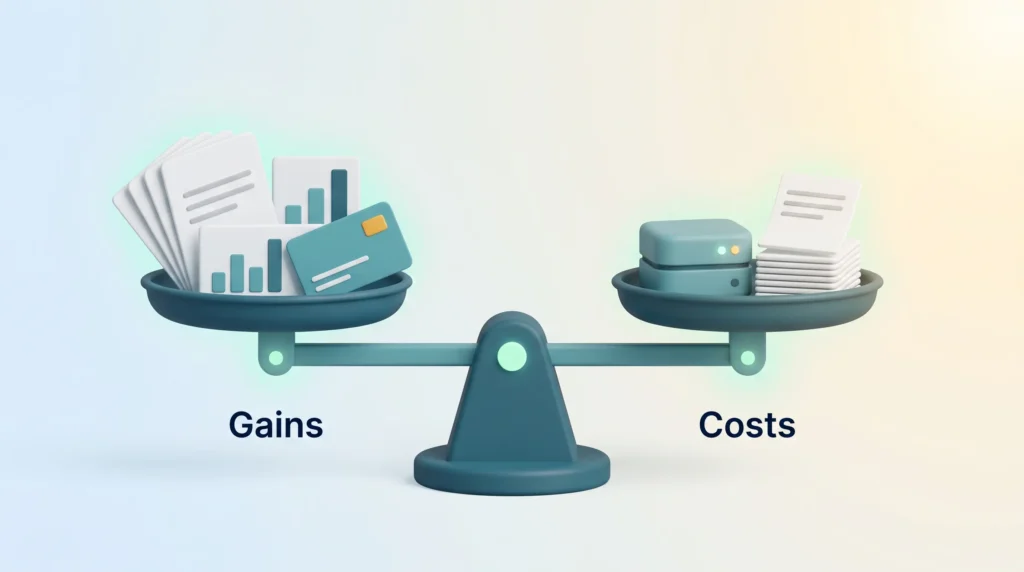
What freemium gives you
- Cheaper acquisition: no price objection at sign-up, so more people try the product and word of mouth does part of the selling.
- Behavioural data at scale: you learn which features drive activation from real usage rather than from surveys. This is the foundation of behavioural analytics and of any serious product-led growth programme.
- A qualified pipeline: an active free user is a far better sales lead than a cold contact, because they have already used the product.
- Predictable revenue once converted: upgrades usually become subscriptions, with the retention economics described in our guide to subscription business models.
What it costs you
- You fund the free base: hosting, support, abuse prevention and moderation all scale with free users who may never pay.
- Value can leak: if the free version does the whole job, you have trained the market to expect your product for nothing.
- Slow feedback: at a 4% conversion rate you need a lot of traffic before a pricing experiment produces a result you can trust.
- Support strain: free users file tickets too, and unlike paying customers they do not offset the cost. A customer success tool stack and good self-service documentation matter more here than in a paid-only business.
Pricing Strategies That Drive Conversion
Pricing is where most freemium businesses lose money quietly: the free tier gets generous by accident, one feature at a time, until there is no reason left to upgrade.
Pick a value metric first
A value metric is the thing you charge more for as a customer gets more out of the product: seats, contacts, projects, gigabytes, messages sent. Choose one that grows naturally with the customer’s success, then set your free limit as a point on that same scale. Our pricing strategy framework walks through how to choose one.
Close the penny gap
The penny gap is the observation that moving someone from free to any price at all is far harder than moving them from one price to a higher one. The fix is not a smaller price. It is clearer proof: show the specific outcome the paid tier delivers, at the moment the user needs it.
Price for expansion, not just acquisition
In business products, most revenue growth comes from existing accounts adding seats or usage, so design tiers that make growing inside your product easy and cheap to approve. Where demand shifts quickly, some companies layer in dynamic pricing, though that suits marketplaces and retail far better than software subscriptions.
Freemium or Free Trial: Which One Fits
Both give access before payment. They solve different problems.
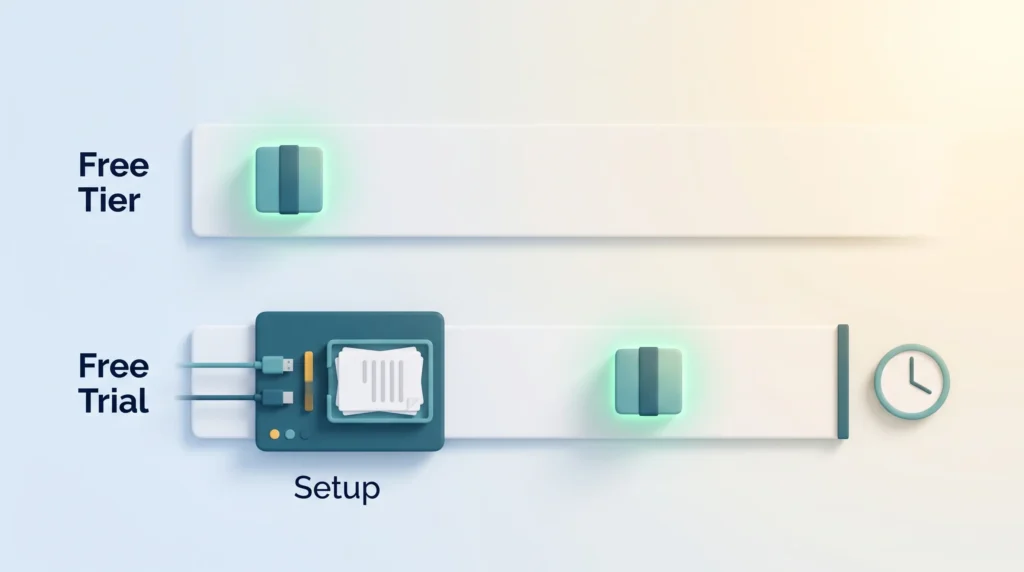
A permanent free tier suits products where value is obvious within minutes, where more users make the product better, and where the sales cycle is self-service. A time-limited free trial suits products where value only appears after setup, integration or a few weeks of data.
The ChartMogul figures above show trials converting a bit better on a per-signup basis while freemium wins on total customers per visitor. In other words, trials are more efficient and freemium is more productive.
The reverse trial
A reverse trial gives every new user the full paid product for a fixed period, then drops them to a limited free tier unless they upgrade. It combines both models: people experience the premium version while their motivation is highest, and those who do not buy still stay in your funnel as free users instead of disappearing.
How to decide
- Time to value under an hour: a free tier is usually right.
- Time to value measured in weeks: a trial, with onboarding support, is usually right.
- Complex buying process: combine a free tier for individual users with a sales-assisted path for the organisation, as set out in our comparison of product-led and sales-led growth.
From Free Users to Paid Plans: The Conversion Playbook
Measure the right thing
Conversion rate = paying customers gained in a period divided by the free users eligible to convert in that period.
Two details keep this honest. Count active free users, not total sign-ups, or abandoned accounts will hide your real performance. And measure by cohort, so you can see whether the people who joined in March converted faster than those who joined in January.
Get people to first success
Nobody upgrades a product they have not used successfully. Cut your onboarding down to the single action that delivers the first real result, then measure how many new users reach it and how long it takes. Checklists, guided tours and role-based setup flows all help, and gamified onboarding can lift completion rates when the steps are genuinely useful rather than decorative.
Put the upgrade prompt at the limit, not everywhere
The best upgrade prompt appears when someone hits the wall you designed: the storage cap, the seat limit, the missing export. At that moment the offer answers a problem the user already has. Prompts scattered through the interface do the opposite, because they read as advertising inside a product the user has not yet decided to trust.
Keep one record of the customer
Usage data, billing data and support history need to sit together before any of this analysis works. That is the job of a customer data platform. Product analytics and in-app guidance sit on top of it; our Pendo review covers what that tooling does in practice.
Do not stop at the upgrade
A conversion you lose in three months was a cost, not a win. Retention is what turns a freemium funnel into a business, which is why retention strategy and customer loyalty work belong in the same plan as acquisition. Some companies extend this further by building a user community around the product, an approach covered in our piece on community-led growth.
Conclusion
Freemium works when a small paying group can comfortably fund a large free one, and when the free product is good enough to be worth funding.
The numbers set realistic expectations. A healthy freemium conversion rate sits in the low single digits, and even Spotify, with an exceptionally strong ratio, still earns roughly ten times more from subscriptions than from advertising to its free listeners.
So the decisions that matter are narrow ones. Choose a value metric. Set the free limit at a point people reach only after the product has proved itself. Build onboarding that gets someone to a first success quickly. Then measure conversion by cohort and adjust the limit rather than the price.
Get those right and the free tier stops being a cost centre and becomes your most reliable source of customers, at any size: see our look at micro-SaaS businesses and white-label SaaS reselling.
Found this useful?
Make SmartKeys a preferred source on Google, and our articles will surface more often in your Top Stories, AI Overviews, and AI Mode.
Add as Preferred Source