Tools
Tools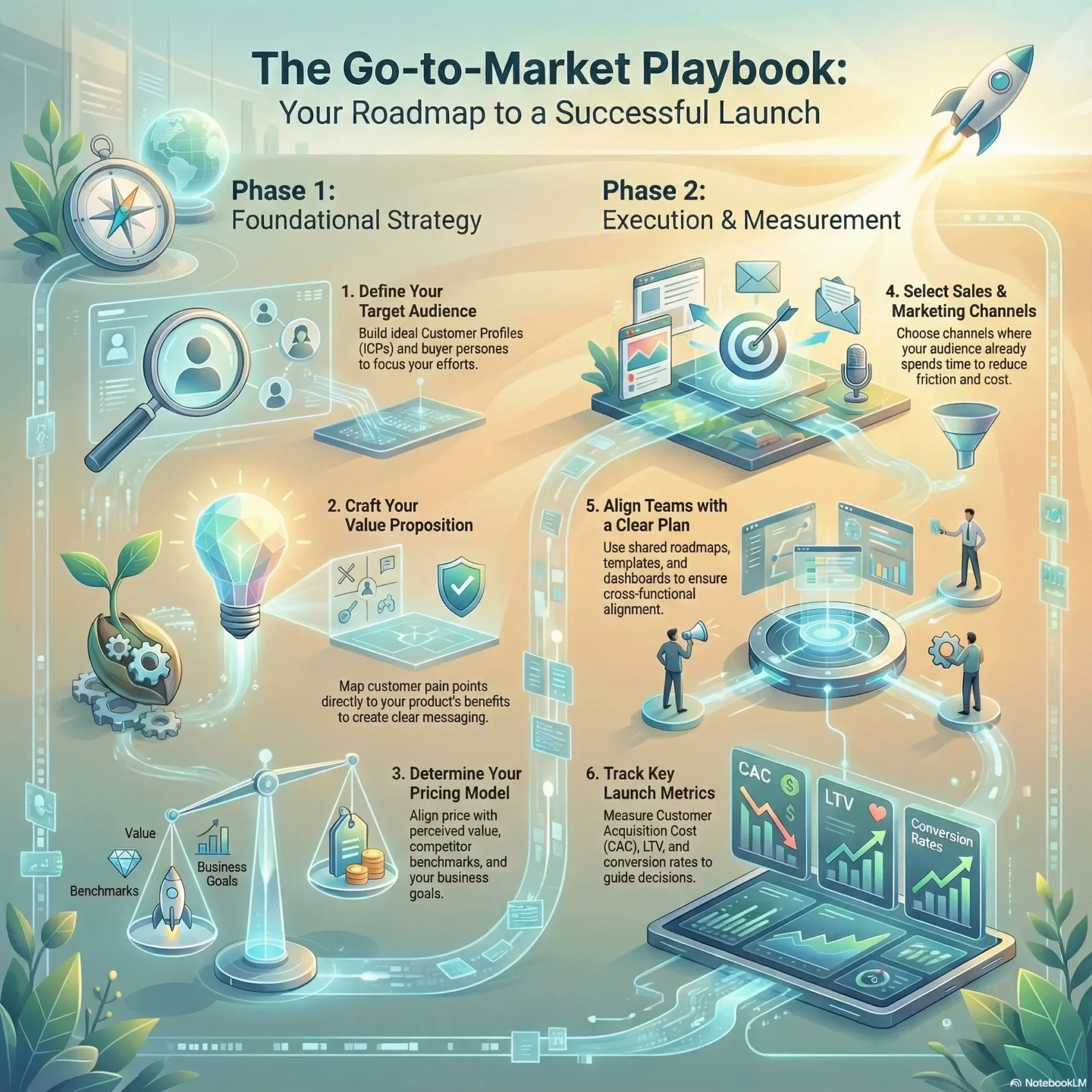
Last Updated on December 14, 2025
Your launch plan should make bringing a new product feel clear and calm, not chaotic. This playbook gives you a compact roadmap to align product, marketing, sales, and customer teams so everyone moves toward the same goals.
You’ll learn how to define target customers, state your value, and pick channels that cut waste and speed time to revenue. We use real examples like Apple’s iMac G3 and Oatly’s U.S. entry to show how bold positioning and smart distribution create growth.
Along the way, you’ll find templates, dashboards, and simple SOPs that keep your company accountable after launch. If you want deeper omni-channel tactics, check this guide on omnichannel strategies to tie channels and timing into your plan.
Key Takeaways
- Align team roles and goals before you launch to cut costly delays.
- Clarify your value and target audience to convert early customers.
- Prioritize high-ROI channels and clear distribution paths.
- Use examples and templates to shorten time to revenue.
- Set measurable goals and dashboards from day one.
What Is a Go-to-Market Strategy?
A clear launch plan outlines who you sell to, what you sell, and how you’ll reach paying customers. It’s a step-by-step playbook that ties product fit to buyer needs and a path to revenue.
Definition and purpose in today’s environment:
Definition and purpose in today’s market
A gtm strategy defines competitors, the target market, your value proposition, a marketing plan, sales model, and distribution. Companies use this plan to minimize risk and align the product, brand, and team around measurable goals.
How it reduces risk and accelerates growth
The approach stress-tests assumptions about demand and competition before you scale spend. You confirm which messages and channels reach potential customers and which do not.
Applies to products, services, and new markets
This process isn’t limited to a new product. It works for a product service, new business line, or expansion into another market. By building a clear customer profile, you focus on buyers with real pain points today.
“Aligning pricing, sales, and distribution with audience and messaging turns planning into predictable outcomes.”
- Define the target audience and create a customer profile.
- Link positioning to channels and sales plays for fast time to revenue.
- Deliverables include positioning, messaging, channel plans, and a sales playbook.
Go-to-market strategy vs. marketing plan
A launch blueprint separates the big-picture launch choices from the day-to-day marketing work.
A GTM is the comprehensive blueprint you use to launch a product. It covers pricing, distribution, positioning, and sales alignment across your company. This document sets ownership, timelines, and the value you will sell into a new market.
A marketing plan is operational. It maps channels, budgets, content, and campaigns you will run continuously to build demand. The marketing plan often lives inside the GTM but keeps working long after launch.
- Timing: Create a GTM before you enter a market or launch a product. Build a marketing plan to manage ongoing campaigns and optimization.
- Scope: GTM addresses sales, distribution, and overall positioning. A marketing plan details budgets, channels, and timelines.
- Ownership: GTM is company-wide; the marketing plan is primarily owned by marketing with input from sales and product.
When the two interlock, your GTM sets the high-level strategy and the marketing plan turns it into weekly and monthly execution. Document handoffs so messaging, content, and campaigns roll out smoothly as you move from plan to launch.
Key benefits of a strong GTM strategy
Clarity at the start prevents last-minute scrambles and speeds your product to customers. A focused plan helps you define roles, timelines, and the value you will deliver.
Clarity, alignment, and faster time to market
You’ll gain clarity on goals and roles so your team moves faster and avoids rework. Clear ownership cuts handoffs and speeds launch readiness.
You’ll reduce time to market by testing positioning and logistics early. Sequence launch tasks so blockers are resolved before they stall progress.
Cost control, brand awareness, and growth potential
You’ll control costs by prioritizing channels with the best ROI and trimming low-impact marketing spend. That keeps your budget focused on outcomes.
You’ll expand brand awareness by using launch momentum to reach new audiences and tell a sharper value story. Better messaging improves customer conversion across channels.
- You’ll unlock growth by systematizing launches and applying lessons to future product and service rollouts.
- You’ll improve sales effectiveness with assets mapped to each customer stage.
- You’ll build internal alignment across the company, making decisions faster in time-sensitive moments.
“When teams align around a single plan, execution becomes repeatable and results scale.”
When you need a GTM strategy
You need a clear plan whenever you introduce something new. Whether you are launching new offers in current segments or rolling a new product into a different market, a concise playbook helps your teams act fast and stay aligned.
Use a GTM when:
- You’re launching new products, expanding into new regions, or piloting innovations with uncertain demand.
- Competition heats up, brand positioning blurs, or sales cycles lengthen and objections rise.
- You are rebranding, changing pricing, or repackaging services and need cohesive messaging and channel shifts.
Prioritize it for big bets: enterprise moves, category entries, or major product pivots need structured thinking because risk and visibility are high.
Even established companies benefit from revisiting their approach. Markets evolve; yesterday’s wins may underperform today. A focused plan helps you match product, marketing, and sales to your audience at the right time.
“A short, repeatable launch plan reduces risk and speeds revenue.”
Core components of your GTM framework
Begin with the pieces that prove your product solves an urgent problem and that buyers will pay for it. Validation is the fastest way to avoid wasted spend and to design a repeatable launch process.
Product-market fit and the problem you solve
Confirm demand by collecting usage signals, pilot revenue, and qualitative feedback. If the problem isn’t urgent, pause and iterate.
Target audience: ICPs and buyer personas
Define who exactly benefits by building an ideal customer profile and layered buyer personas. This narrows your audience and focuses content and marketing on high-intent segments.
Competition and demand analysis
Map competitors, pricing, and saturation to spot gaps you can own. Use that insight to set positioning and to decide whether the market needs a differentiated product or a faster execution plan.
Distribution and sales model choices
Pick distribution channels that match where your audience buys—direct, partner, wholesale, or retail. Match sales motions to product complexity to reduce friction in the buyer journey.
- Validate fit by confirming a real problem and demand before scaling.
- Build ICPs and personas to guide content, marketing, and sales.
- Analyze competitors and demand to find differentiated angles.
- Select channels and sales models that reduce buyer friction.
- Estimate acquisition cost and set early CAC benchmarks for the plan.
“Track CAC and sales cycle early so your company can optimize spend and scale confidently.”
Define your ideal customer profile and buyer personas
Map the types of customers and the buyer roles who influence a purchase to shape focused messaging.
Start by segmenting the market by industry, company size, budget band, and geography. This creates a clear customer profile you can act on.
Segmenting by industry, size, budget, and geography
Group prospects into 3–5 buckets that matter for your product: verticals, revenue or headcount tiers, budget signals, and location. Use these to set targeting and channel priorities.
Building buyer personas across the buying center
Map roles—initiators, users, influencers, decision makers, buyers, approvers, and gatekeepers.
- Profile each role’s key pain points and goals.
- Document decision factors and required proof for a yes.
- Note media and content preferences so your marketing and sales show up where they spend time.
Turn insights into a plan: align messaging, content, and outreach by persona to lift conversion quality and lower acquisition cost.
“Ground your customer profile in interviews, support tickets, and win/loss notes—not assumptions.”
Nail your value proposition and messaging
Begin with a simple grid that shows who you help, what frustrates them, and the exact benefit your product delivers. This quick mapping becomes your playbook for clear, testable messages.
Creating a value matrix that maps pains to benefits
Build a value matrix that lists personas, their top pain points, the product value you deliver, and one tight message per persona.
Lean into urgency: agitate the pain and position your offer as a painkiller, not a vitamin. Back each claim with proof—demos, screenshots, or short case snippets.
Positioning and tone for differentiated impact
Choose a positioning stance that shows how you differ from alternatives. Keep tone consistent so your brand voice feels familiar across content and social media.
Use bold, simple language for headlines and calming, helpful copy in body text. Equip your sales team with objection-handling lines tied to those messages.
Testing and iterating messages across channels
Run A/B tests by persona and channel. Measure engagement and conversion, not opinions, and double down on winning variants.
- Translate the matrix into headlines, CTAs, and visuals for each audience.
- Test on platforms your customers use and scale the best-performing content.
- Document winning messages so the team stays aligned as you scale campaigns.
“A focused value matrix turns assumptions into repeatable messaging that converts.”
Pricing strategy that matches value and market
A thoughtful price anchors buyer expectations and powers predictable revenue for a new product.
Price must fit your business goals, customer willingness to pay, and unit economics. You should measure costs to deliver the product service and set margin targets before picking a price.
Competitive benchmarks and willingness to pay
Start by benchmarking competitor prices and testing willingness to pay with small cohorts. Use surveys, A/B tests, and pilot deals to see what customers accept.
Align price with perceived value so the company can meet profit goals while staying competitive in the market.
Models to consider: transactional vs. subscription
Choose a model based on buyer behavior, usage patterns, and sales cycle length.
- Transactional: one-time fees for simple purchases and short sales cycles.
- Subscription: recurring revenue, better for ongoing product adoption and retention.
- Use tiers, price fences, and packaging to simplify decisions and guide customers to the right option.
- Pilot prices, document discount and renewal policies, then iterate before full rollout.
“Price is not just a number; it signals value and shapes long-term customer relationships.”
Marketing channels that move your audience
Pick channels where your audience already spends time; that choice shapes every campaign and metric you track.
Balance inbound and outbound to guide potential customers from awareness to purchase. Use SEO and blog content to build visibility. Pair those with targeted ads and outreach to accelerate interest.
Inbound vs. outbound: SEO, content, social media, and ads
SEO and content drive long-term awareness for your product and brand. Webinars, case studies, and email nurture move prospects through consideration.
Paid ads and outbound help you reach intent-based audiences fast and support customer acquisition during a launch.
Channel-persona fit across the funnel
- Map marketing channels to funnel stages: SEO/blogs for top-funnel awareness, demos and case studies for consideration, free trials or offers for conversion.
- Match messages to persona pain points so sales can follow up with qualified leads.
- Integrate social media and paid ads to amplify high-performing content and refine targeting over time.
- Coordinate channels with product milestones and your company calendar to maximize impact and timing.
“Measure by channel—quality traffic, conversions, and time-to-first-value—and shift budget to what consistently performs.”
Sales and distribution channels that convert
Picking sales and delivery channels early shapes the experience customers remember after a launch. Choose paths that match how your target shops and how your product ships. That alignment cuts friction and protects the value you promise.
Direct, partner, wholesale, and retail considerations
Direct sales work when you control pricing, demos, and onboarding. Use direct for complex product sales or when you need customer feedback fast.
Partners and wholesale extend reach but require co-marketing and clear enablement. Test partner pilots before wide rollout.
Retail fits physical goods that customers prefer to touch. Factor inventory, lead times, and SLAs into your plan so your company keeps promises.
Reducing friction in the buyer’s journey
- Map the purchase steps and remove needless clicks or approvals.
- Equip your sales team with channel-specific plays and one-page scripts.
- Standardize handoffs between marketing, sales, and fulfillment for a consistent experience.
- Run small pilots, track conversion and cycle time, then scale channels that prove repeatable value.
Track results and tune the process so your sales and distribution choices become a measurable part of the overall market strategy and gtm strategy.
Map the buyer’s journey from attract to delight
Map how buyers move from first awareness to active advocates so your team can craft content that actually nudges decisions. The buyer’s path has three core stages: awareness, consideration, and decision. Modern teams fold this into a flywheel—attract, engage, delight—keeping customers at the center.
Funnel and flywheel: aligning content to stages
Attract: use educational content and brand stories to surface your product to potential customers. Blog posts, SEO, and primers build trust and awareness.
Engage: provide comparison guides, case examples, and demos that show value. These pieces move prospects into evaluation with clear proof.
Delight: deliver onboarding checklists, support, and referral prompts to create loyal customers who expand and recommend your product.
From free trial to close: B2B motions that win
Offer a focused free trial or proof-of-concept to validate value quickly. Pair trials with a sales process that tracks contact, qualification, business case, evaluation, negotiation, and close.
- Equip the team with stage-specific assets: ROI calculators, implementation checklists, and comparison guides.
- Design delight moments post-purchase to strengthen customer relationships and spark referrals.
- Measure time in stage, conversion by stage, and channel influence to find bottlenecks.
“Keep customers at the center; satisfied users become promoters and fuel compounding growth.”
Set goals, KPIs, and metrics for launch and beyond
Start by naming the metrics that matter so your product and sales teams measure the same outcomes. Clear targets make trade-offs obvious and speed decisions during launch and scale.
Track the core unit economics: monitor customer acquisition cost, LTV, conversion rates, and sales cycle length. These numbers show whether your acquisition cost is sustainable and which channels need work.
Customer acquisition cost, LTV, conversion, and sales cycle
Measure CAC, cost per dollar of sales expense, closing rate, and days to close. Tie each metric to the product stage—alpha, beta, GA, and scaling—so your team knows what to optimize now.
SMART goals and OKRs that align teams
Set SMART goals and OKRs that link to those KPIs. Make goals time-bound and owner-assigned so your team can act without second-guessing priorities.
- Weekly and monthly reviews: report marketing efforts and conversion trends and course-correct fast.
- Channel targets: define conversion and CAC targets by funnel stage to attribute wins.
- Feedback loop: use data to refine messaging, channel mix, and pricing over time.
“Align metrics with milestones so measurement drives the next move.”
Choose a sales strategy that fits your product
Pick a sales model that fits product complexity, buyer effort, and your cost to win customers. That choice determines how your company spends on marketing, hires a sales team, and supports customers through the buying process.
Self-service, inside sales, field sales, and channel sales
Self-service works when the product is simple and price is low. Invest in UX, copy, and acquisition to grow trials and purchases without reps.
Inside sales fits mid-size deals where buyers want guidance. Your sales team can qualify leads and close over calls without heavy travel.
Field sales is best for enterprise offers with long cycles. Use it when pilots, executive alignment, and consensus drive the purchase.
Channel sales extends reach through partners. Partners resell and help you scale while lowering CAC when they already serve your customers.
How complexity, ACV, and CAC influence the model
- Match sales to complexity and ACV so your economics work as you scale.
- Use a free trial or proof-of-concept to cut risk for higher-consideration purchases.
- Document roles, targets, and enablement so every rep and partner communicates value consistently.
- Measure CAC by channel and tune hires or partner deals to protect margin.
“You’ll match your sales approach to what buyers need and what your business can sustain.”
go-to-market strategy examples that inspire
You learn fastest by watching how iconic launches aligned product, design, and channels for quick adoption. These two examples show different paths to the same goal: fast awareness and clear customer value.
Apple iMac G3: bold positioning and integrated launch
Apple targeted first-time buyers, loyal users, and curious PC owners. The iMac combined faster chips, a 15-inch display, built-in internet, and a memorable Bondi blue shell.
A focused $100M campaign ran on TV, billboards, and in-store demos with a simple line — chic, not geek — that made the product feel modern and approachable.
Oatly in the U.S.: winning with smart distribution
Oatly met potential customers where they already spent time. By backing artisanal coffee shops and letting baristas demo oat milk in lattes, the company created trial moments that advertising alone couldn’t buy.
The channel-led move built rapid awareness, turned sampling into habit, and fed PR and social media buzz.
- You’ll see how bold positioning and clear product benefits convert wide audiences at launch.
- Physical design and real-life demos can be your strongest marketing asset.
- Pick one or two concentrated moves that let customers experience value in real time.
“Timing and a focused spend create momentum that customers and media amplify.”
Plan, templates, and tools to operationalize GTM
Operational work turns a plan into outcomes. Replace scattered documents with a compact playbook: launch plans, product roadmaps, SOPs, sales plans, and a SWOT. Use these templates to assign owners, set deadlines, and track dependencies.
Roadmaps, SOPs, and cross-functional alignment
Create a single-row roadmap that highlights milestones, owners, and blockers. Pair that with SOPs for launch tasks so repeatable work is clear and fast.
Document approvals, change controls, and risk logs. That way your team avoids slow email threads and unclear handoffs.
Project management and analytics to track performance
Centralize collaboration in a project tool so everyone sees status and dependencies in real time. Link tasks to assets and briefs so content and marketing channels move with product timing.
Connect analytics to your goals. Dashboards should surface CAC, conversion, and pipeline metrics so marketing efforts and sales moves are driven by data, not opinions.
- Operationalize your plan with launch templates, roadmaps, SOPs, SWOTs, and sales enablement assets.
- Build a shared workspace where teams see status, owners, and dependencies instantly.
- Define approval flows, change processes, and risk tracking to keep momentum steady.
- Hook analytics to goals so campaign and pipeline metrics inform daily decisions.
- Document rituals—standups, reviews, and retrospectives—so alignment is part of team cadence.
- Standardize briefs and asset templates so content ships faster and stays on-brand across channels.
“Standard templates and live dashboards turn a plan into predictable progress.”
Common GTM pitfalls and how you avoid them
You can stop costly missteps by building simple tests that validate demand and messaging fast. Skipping validation leaves a product stuck despite effort and spend. A tight gtm strategy catches poor fit early so you fix assumptions, not customers.
Start with practical checks: confirm product-market fit, document a clear ICP, and test pricing and messaging before broad rollout. Keep marketing and sales aligned with short feedback loops so the team reacts quickly.
- Validate demand early so you don’t launch without proof of uptake.
- Document ICPs and the buying center to focus outreach and save time.
- Align pricing to perceived value and competitive reality to remove avoidable objections.
- Eliminate bottlenecks with SOPs, clear owners, and set timelines for each process.
- Smooth sales and distribution steps so interest converts to onboarding with minimal friction.
- Maintain customer relationships after launch with proactive support and feedback loops.
- Track conversion, CAC, and sales cycle early so you adjust before small issues grow.
“Small bets and fast feedback protect your business and keep the company moving toward real value.”
Conclusion
Close your launch work by turning tests and feedback into a compact playbook your team actually uses.
A well-crafted gtm strategy unites research, positioning, pricing, channels, sales, and metrics into one actionable plan. When you align teams and test messages, you shorten time to value and reduce costly guesswork.
Use clear goals and dashboards to track CAC, conversion, and the sales cycle. Apply bold positioning and smart distribution to accelerate traction. Keep iterating with customer data so the plan adapts as the product and competitors change.
Next steps: prioritize validation, assign owners, set a short review rhythm, and launch with confidence. This checklist helps your company turn a plan into durable growth.