Tools
Tools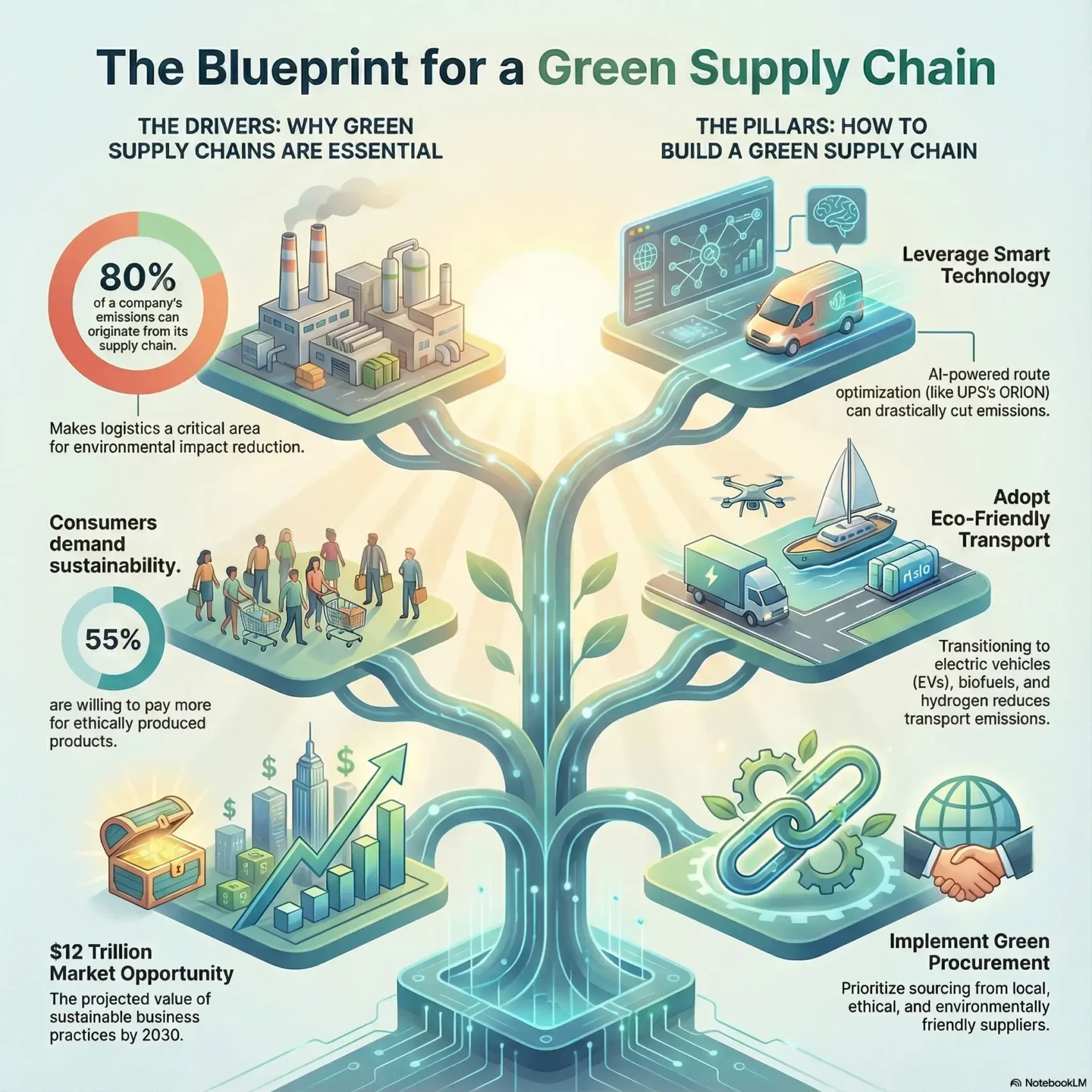
Last Updated on December 13, 2025
In today’s world, where environmental concerns are at the forefront, green supply chains are transforming the logistics sector. These sustainable logistics efforts are no longer just a choice; they are essential. As regulations tighten and consumers seek eco-friendly options, companies must embrace strategies aimed at reducing carbon footprints to stay ahead.
Studies show that up to 80% of a company’s emissions come from its supply chain. This fact is prompting businesses to rethink their operations. By 2030, the value of sustainable business practices is expected to reach a staggering $12 trillion. This highlights the importance of integrating environmental awareness into your logistics strategy.
The demand for ethically sourced products is on the rise. A significant 83% of consumers are willing to support brands that use local suppliers. Additionally, 55% are willing to pay more for products that are ethically produced. These figures clearly show the trend towards sustainability in logistics.
To learn more about incorporating sustainability into your business, visit our post here.
Key Takeaways
- Green supply chains are crucial for reducing overall emissions in logistics.
- Implementing sustainable practices can enhance brand reputation.
- Consumer preference increasingly favors companies committed to eco-friendly solutions.
- Financial opportunities from sustainable business efforts are significant by 2030.
- Regulatory frameworks are evolving, enforcing compliance among logistics providers.
The Sustainability Imperative in Logistics
The logistics sector is under growing pressure to adopt sustainable practices. With the global population at 8 billion, the demand for goods and services is increasing. This intensifies the need for logistics companies to find solutions that reduce emissions. By embracing sustainable logistics, companies can address environmental concerns and meet consumer demands for eco-friendly products.
The Growing Pressure for Emissions Reduction
Transportation is responsible for about 25% of all emissions, making optimization crucial. Any inefficiency in logistics can greatly increase a product’s carbon footprint. To reduce operational emissions, sustainable practices in logistics are essential. Companies are discovering cost savings through initiatives like reducing energy use, minimizing waste, and improving transport routes.
Regulations Impacting the Logistics Sector
Global regulations are tightening, pushing businesses to focus on emissions reduction. These rules cover aspects like using alternative fuels for vehicles. The move towards sustainable logistics is no longer just a trend but a key business strategy. A significant 9% of industry leaders name environmental sustainability as a top priority. This shift is critical for companies aiming to comply with regulations and meet consumer expectations for greener practices.
Understanding Green Supply Chains
Green Supply Chains are vital in the push for sustainability in logistics and supply chain sectors. They aim to lessen environmental harm from start to finish, from raw material sourcing to disposal. By embracing green practices, companies can help the environment and gain economic advantages.
Definition and Importance of Green Supply Chains
A Green Supply Chain’s main goal is to reduce carbon emissions and boost sustainability. It’s more than a fleeting trend; it’s a serious commitment to environmental issues. A significant 70 percent of consumers are ready to pay more for eco-friendly products, showing demand for sustainable goods.
Adopting Green Supply Chains helps companies save money, streamline operations, and enhance their image. It also meets the ethical standards of today’s consumers.
Scope of Green Supply Chains in Modern Business Practices
Green Supply Chains go beyond just following rules. They involve creative strategies like:
- Reducing waste and improving resource use.
- Switching to renewable energy.
- Ensuring ethical material sourcing.
Studies show supply chain emissions can be 11.4 times higher than direct emissions. This highlights a huge chance for businesses to be more sustainable. Companies that focus on green supply chains meet their goals and stand out in a competitive market.
They also attract eco-aware consumers, boosting loyalty and reputation. This makes them more appealing in a crowded market.
Technological Innovations Driving Sustainable Logistics
Technological advancements are crucial for the shift towards sustainable logistics. Innovative digital tools and software solutions boost operational efficiency and cut environmental harm. This marks a major step towards greener supply chains.
The Role of Digital Tools and Software Solutions
Advanced software solutions enhance tracking and logistics management. Components like smart sensors, telematics, and predictive analytics are key to lowering greenhouse gas emissions. For example, a median warehouse can cut GHG emissions by 30% with LED lighting and smart HVAC systems.
Accenture notes that public cloud-exclusive supply chains could reduce emissions like removing 22 million cars from the road.
How AI and Blockchain Contribute to Transparency
AI in logistics improves decision-making with high accuracy and risk identification. It streamlines routing, as seen with UPS’ ORION model, which cuts carbon impact like removing 20 million cars. AI also slashes transportation costs.
Blockchain technology adds to these gains by creating an unalterable chain of custody. This ensures visibility and accountability in supply chains. Renault has cut non-compliance costs by 50% with blockchain, improving supply quality and sustainability.
Eco-Friendly Transportation Solutions
Adopting eco-friendly transportation solutions marks a significant shift in logistics, driven by consumer demand and regulatory pressures. Transport is the largest source of greenhouse gas emissions in the U.S., accounting for 28% of total emissions. Therefore, logistics providers must innovate to enhance sustainability while maintaining value.
The Shift to Electric Vehicles (EVs)
The integration of electric vehicles (EVs) into logistics is transformative. Organizations are transitioning their fleets to electric hybrid trucks, aiming for full electrification soon. For example, A. Duie Pyle has introduced 10 electric hybrid straight trucks and plans to switch to 100% electric forklifts by 2028. This move not only cuts emissions but also boosts fuel efficiency, contributing to a greener logistics network.
Utilizing Alternative Fuels in Logistics
Electric vehicles are not the only solution; alternative fuels like biofuels and hydrogen are also crucial. Companies like C.H. Robinson have launched Alternative Fuel Programs, showing that innovative fuels can support sustainable supply chains. Moreover, using bikes for local, urban delivery is an eco-friendly option with minimal emissions, fitting well with the growing demand for green logistics.
Effective Strategies for Sustainable Supply Chain Management
In today’s business world, prioritizing sustainable supply chain management is essential. By integrating eco-friendly practices into your core operations, you can enhance your company’s reputation. This also positions you competitively in the market.
Integrating Sustainability into Business Models
Adopting innovative business models that embrace sustainability can greatly benefit your company. Emphasizing eco-friendly operations as a fundamental value can lead to long-term growth. Consider implementing sustainability measures such as:
- Reducing energy consumption across all operations
- Optimizing shipping units to enhance efficiency
- Integrating reverse logistics to minimize waste
With over 90% of greenhouse gas emissions coming from the supply chain, it’s crucial to measure and mitigate environmental impact. This includes logistics, manufacturing, and end-use processes.
Implementing Green Procurement Practices
Adopting green procurement practices is key to a sustainable supply chain. This means sourcing products that are environmentally friendly and ethically produced. About 20% of chief procurement officers at large European companies focus on sustainability metrics in sourcing decisions. You can improve your procurement strategy by focusing on:
- Evaluating the environmental impacts of suppliers
- Prioritizing local suppliers to reduce transportation emissions
- Choosing products made from recycled or sustainably sourced materials
These practices not only promote sustainability but also enhance your brand image. This enables you to lead in the ecological transition while reducing costs. Companies like Toyota and UPS have successfully integrated sustainable practices into their operations, setting a benchmark for others.
Environmental and Economic Benefits of Green Practices
Adopting green practices in logistics offers numerous advantages, both for the environment and the economy. As companies focus more on sustainability, they positively impact the planet and boost their financial health. This shift can significantly enhance your operations and brand image.
Cost Savings through Fuel Efficiency
Introducing fuel-efficient strategies can greatly benefit your business financially. Using energy-efficient equipment, renewable energy, and reducing waste can lead to significant cost reductions. Businesses that prioritize these efforts often see a decrease in operational costs. This, in turn, encourages innovation in production and logistics, driving success in competitive markets.
Improving Brand Reputation and Customer Loyalty
Today’s consumers favor brands that are committed to sustainability. Developing green supply chains can enhance your brand reputation among eco-aware customers. Companies that focus on sustainability often engage in community projects, fostering goodwill and stronger local ties. This approach not only strengthens customer loyalty but also attracts customers who value environmental responsibility. For more on using technology for sustainability, explore this resource.
Challenges to Building Green Supply Chains
Exploring green supply chains reveals several obstacles that can slow progress. It’s crucial to understand these challenges to develop effective strategies. These strategies aim to lessen their impact on sustainability.
Financial Barriers and Upfront Costs
Financial hurdles are a major obstacle. Adopting sustainable technologies demands significant initial investments. Companies often face difficulties in allocating funds for these initiatives, especially when budgets are constrained. This can discourage organizations from adopting necessary changes, despite the long-term benefits.
Regulatory Compliance and Reporting Requirements
Dealing with regulatory compliance is another significant challenge. Changing regulations require companies to adhere to strict sustainability standards. This demands extra resources and expertise for accurate reporting. Companies must develop internal systems to monitor compliance, which can be overwhelming without the right personnel or experience. Thus, meeting legal standards becomes a delicate balance between operational efficiency and sustainability goals.
Case Studies: Successful Sustainable Logistics Practices
Real-world examples highlight the success of innovative sustainable logistics approaches. Companies like Unilever and IKEA show how adopting eco-friendly practices can boost operational efficiency. This integration of sustainability into business models is crucial for a greener future.
Unilever’s Approach to Green Logistics
Unilever focuses on cutting carbon emissions through electric vehicles and biofuels. The company aims to make its supply chain carbon-neutral by 2039. This ambitious goal showcases Unilever’s commitment to environmental responsibility and its leadership in green logistics.
IKEA’s Innovations in Transport and Shipping
IKEA is committed to reducing fossil fuel use in transport and shipping. It uses intermodal shipping solutions to cut down on traditional fuel reliance. This move supports IKEA’s broader goal of lowering its carbon footprint in logistics.
These examples offer insights into how large corporations can drive change in sustainable supply chains. They show that embracing green logistics can also improve operational efficiency.
Collaboration and Partnerships for Sustainability
Creating effective green supply chains heavily relies on collaboration among stakeholders. This includes suppliers, consumers, and logistics partners. Such partnerships ensure all entities operate ethically, aligning with sustainable practices and goals.
Importance of Ethical Supplier Partnerships
Building ethical supplier partnerships is crucial for promoting sustainable practices. Organizations can boost transparency and resource efficiency through strong collaboration. For example, Walmart has set a goal to cut one billion metric tons of greenhouse gas emissions from its supply chain by 2030. This shows the impact of working together.
Initiatives like the Responsible Minerals Initiative involve over 400 companies from different sectors. They work with governments, NGOs, and international bodies to strengthen responsible sourcing. The SAI Platform, which includes big names like PepsiCo, aims to improve sustainable agricultural supply chains, especially in Pakistan.
By joining collective actions, businesses gain from shared knowledge and best practices. Collaborative efforts focused on sustainability can transform individual companies and entire industries. This creates a positive impact that can change market dynamics. Aligning your goals with ethical supplier partnerships is key to a sustainable future.
Conclusion
The future of logistics is deeply connected to green supply chains, marking a significant shift towards sustainability. By embracing these practices, businesses can cut down on resource use, waste, and emissions. This move not only benefits the environment but also opens up economic opportunities for growth.
As consumers seek out sustainable products, companies that adopt green supply chain management will stand out. Committing to sustainable logistics boosts brand reputation and customer loyalty. It shows that environmental responsibility is a key strategy for success, not just a fleeting trend.
In today’s dynamic market, collaboration through partnerships is crucial for innovation and sustainable solutions. Setting clear environmental goals and evaluating supplier practices are essential steps. This leads to a resilient, sustainable supply chain that reduces risks and thrives economically. Adopting green supply chains is not just a choice; it’s a necessity for a greener, more sustainable future.