Tools
Tools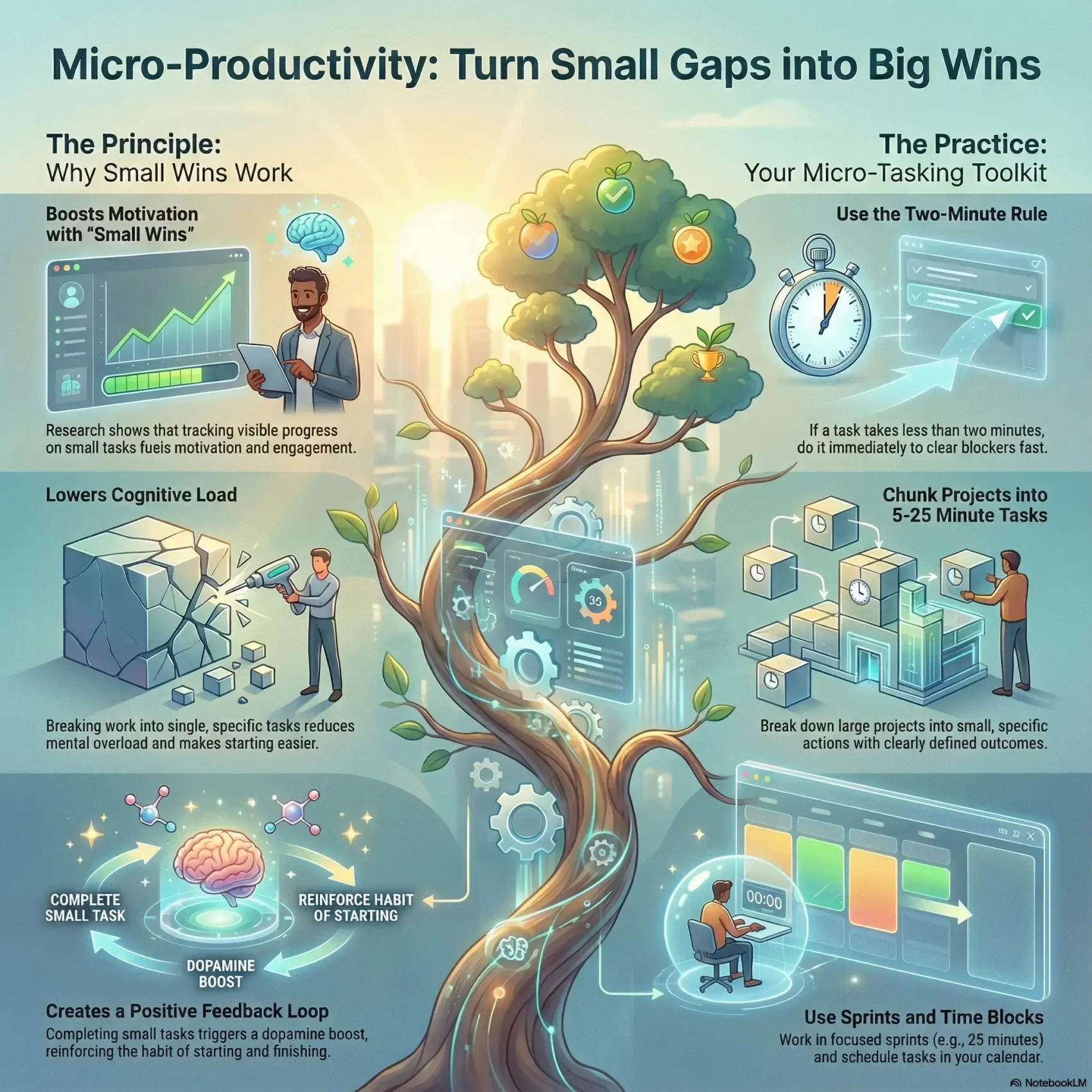
Last Updated on January 9, 2026
Micro-productivity helps you turn tiny windows of time into steady forward motion on real work. You do not need huge blocks to make progress; even ten-minute gaps can move a project, a report, or a to-do list item ahead.
Research shows that tracking small wins boosts motivation and overall productivity. By breaking a big goal into clear, bite-sized tasks, you lower mental load and avoid the freeze that stops you from starting.
The method pairs simple systems like time blocking and the Two-Minute Rule with a short list of concrete actions. This way, you capture quick wins—draft headings, clear a few emails, or list three talking points—so your day feels calmer and more efficient.
Key Takeaways
- Use short windows to chip away at big work instead of waiting for perfect time.
- Turn vague goals into specific actions you can finish in minutes.
- Track small achievements to build momentum and boost motivation.
- Simple rules like Two-Minute Rule help you act without overthinking.
- Micro moves reduce cognitive effort and make starting easier today.
What micro productivity is and why it matters today
Think of your workday as a string of brief windows where a single clear action can move a project forward. This approach reframes big goals into short, finishable actions you can do in five to fifteen minutes.
From massive projects to small steps: instead of planning to “finish the report,” you pick the next useful action. That might be drafting three headings, writing one paragraph, or listing sources. These tiny wins add up and help you mark things done.
From massive projects to small steps: redefining “things done”
Large efforts feel overwhelming because your brain holds too many possibilities at once. Breaking work into tasks smaller than usual reduces that load. You start faster and keep momentum by completing clear, limited actions.
The research-backed “small wins” effect on motivation and progress
“Recognizing small daily achievements increases feelings of motivation and perceived productivity.”
Research and cognitive science show that visible progress fuels motivation. When you capture quick wins, you boost motivation and sustain real progress across the day.
- Spot short windows and choose one concrete task.
- Make steps clear enough to finish in minutes.
- Track each win so progress is visible to you.
The science behind small tasks: how your brain builds momentum
Small, well-defined steps change how your brain treats work and make starting feel natural. This section explains why fewer, clearer actions help you keep momentum and avoid burnout.
Cognitive load and working memory limits
Your working memory handles roughly three to five items at once. When a task list has too many loose parts, your focus breaks and starting gets harder.
By choosing a single, specific task you lower cognitive load. That protects energy and reduces decision fatigue so you can move faster.
Goal-Setting Theory: clear steps beat vague ambitions
Locke’s research shows specific goals improve performance. Turning “finish the report” into “draft the intro by 10 a.m.” gives you a real cue to act.
Clear goals guide behavior, reduce anxiety, and make it easier to see measurable progress.
Dopamine, feedback loops, and a tangible sense of progress
Completing small tasks triggers a dopamine boost that reinforces the habit of starting and finishing. Frequent, brief feedback keeps that loop active.
“Recognizing small daily achievements increases feelings of motivation and perceived productivity.”
- Reduce simultaneous items to sharpen focus.
- Set short, specific goals that cue action.
- Add quick feedback points to sustain momentum and limit fatigue.
Who benefits from micro productivity
You can use short, deliberate actions to make steady gains across different roles and schedules.
Students and individuals find it easy to fit tasks into class breaks, commutes, or quick free moments. You finish a paragraph, sort sources, or review flashcards in minutes. That builds momentum and confidence early in the day.
Knowledge workers gain clarity by slicing research and analysis into narrow, finishable steps. These mini wins reduce decision fatigue and make deep sessions more productive.
Remote workers, freelancers, and multifaceted roles
Remote workers and freelancers can batch short client tasks into focused bursts to cut context switching. You trade heavy meetings for lightweight check-ins and clear handoffs.
- You map small actions to your schedule, whether for studying, coding, or client work.
- You spot friction like tool overload and fix it with tiny process shifts.
- You simplify management so brief actions tie to real outcomes, not just busy work.
Micro productivity vs. traditional productivity approaches
Traditional models push long, uninterrupted blocks; a different tactic makes the most of real-world interruptions. You can still get deep results, but you also need tools that match a busy calendar.
Long sessions prioritize focus and craftsmanship. They shine when you need sustained concentration and complex synthesis.
By contrast, the micro- approach breaks work into clear, finishable actions that fit between meetings or errands. Frequent, visible progress keeps motivation high and prevents stalled momentum.
“Frequent, visible progress supports motivation and sustained engagement.”
Use a hybrid model to get the best of both worlds. Start a day with short wins to prime attention, then protect a longer block for deep work when you can.
- Tie tiny steps to real outcomes so you avoid busywork.
- Balance throughput and quality by making next actions obvious.
- Measure what matters so completions become meaningful results.
- Pick the approach that matches your energy, calendar, and goals.
Building your micro-tasking toolkit
Build a toolkit that removes friction and makes each short session count for real work. Use a few clear rules and one-home for notes so you waste less time switching apps.
The Two-Minute Rule and frictionless starts
Do quick wins now. If a task takes under two minutes, finish it immediately. For larger items, commit two minutes to start and you often keep going.
Task chunking and slicing complex work
Break a project into steps of 5–25 minutes. Name each task with a verb and an outcome so starting costs minimal thinking.
Pomodoro sprints to protect focus
Run 25-minute sprints with 5-minute breaks to pace effort and lower fatigue. Learn more about using Pomodoro sprints here.
Time blocking windows to turn lists into action
Assign short calendar windows for specific actions. Group similar items to streamline workflows and reduce the toggle tax.
- Clear tiny blockers fast with the Two-Minute Rule.
- Chunk work into clear, finishable steps.
- Use sprints to protect focus and manage fatigue.
- Block short windows so your to-do list becomes a plan.
Time management strategies that align small tasks with big goals
When every small task maps to a milestone, your daily work becomes purposeful and measurable. Use a simple roadmap to connect short steps to strategic goals. That way a five- or ten-minute window pushes a real project forward, not just busywork.

Milestones, roadmaps, and weekly reviews
Break goals into clear milestones, then list the next actionable step for each milestone. Keep a short today list tied to those milestones so your energy feeds long-term results.
Run a weekly review to check progress against the roadmap. Update priorities, remove blockers, and schedule the next task for each project so you never waste a small window wondering what to do.
Prioritization to avoid easy-win traps
People often default to easy wins, which feels good but can bury high-impact work. Make prioritization visible with flags, labels, or swimlanes so your calendar reflects what matters most.
“Schedule the next step for each project so you always know exactly what to do when a window opens.”
- Translate goals into milestones and then into small tasks.
- Track progress against outcomes, not just activity.
- Separate urgent from important and right-size steps to finish in one sitting.
- Refine your approach during reviews to lock in what produces the best results.
For a practical guide on turning goals into tiny, effective actions, see micro goals.
Applying micro productivity to email, reports, and your workspace
Turn routine interruptions into purposeful work by assigning each short gap a single, useful outcome. Set two brief windows each day for email: reply to quick notes, flag longer messages as scheduled tasks, and archive the rest.
Break a report into micro- tasks so you keep steady progress. Gather sources, write headings, draft the introduction, and then refine one section at a time. This way each short session advances the project without overwhelm.
Tidy your desk in five-minute bursts. Focus on one drawer or the surface. Small cleanups reduce friction and make it easier to dive into the next task.
- Process email in planned windows—clear quick replies and convert complex threads into scheduled tasks.
- Outline reports as tiny steps—collect sources, write headings, draft the intro to keep momentum.
- Batch similar actions to limit context switching and speed up throughput.
Centralize tools, docs, and chats so you cut toggling and keep visible progress. Close each window by queuing the next step, and you’ll find a simple, repeatable way to boost daily efficiency for individuals and teams.
Designing your daily system: lists, workflows, and progress tracking
A reliable day comes from a living to-do list, simple workflows, and quick feedback loops. Build a system that makes each short session count. Keep steps small so you can finish them in minutes and feel momentum.
Creating a living to-do list and micro-steps that show clear progress
Keep one living to-do list that maps projects to tiny, named steps. Give each task a clear definition of done so finishing is obvious and satisfying.
Tip: Write the next action, not the project. That way you always know the immediate step to take.
Batching similar tasks to limit context switching
Group emails, calls, and research into short blocks. Batching keeps your brain in one mode and reduces wasted setup time.
This approach lowers friction, so you complete more tasks in less time while protecting deeper work later in the day.
Using feedback to course-correct in real time
Add lightweight checkpoints: quick reviews, a one-line outcome note, or a timed check after 10 minutes. Frequent feedback sharpens planning and speeds learning.
“Frequent feedback improves learning and efficiency.”
- You’ll build a living to-do list that turns projects into visible micro-steps and clear finishes.
- You’ll organize days into batches so your brain stays in one mode longer and the process is smoother.
- You’ll add quick feedback loops to steer work and keep a steady sense of progress.
- You’ll review weekly to refine estimates, remove friction, and keep things done aligned with goals.
Measuring what matters at the micro and team level
To see real gains, measure the parts of work that directly link input hours to specific outputs.
Partial productivity is where you start: compare one output to one input, for example units per labor hour. That gives clear signals and keeps your management choices actionable.
Track waste separately. Use Availability %, Utilization %, and Efficiency % so you know if time is lost to downtime, wrong assignments, or slow execution.
Order Cycle Time and customer effectiveness
Measure Order Cycle Time from the customer’s view, not just internal stages. A ten-day internal OCT can look fine while customers experience a 100-day delay.
“Pair speed measures with customer ratings of price, quality, and service.”
- You’ll measure partial productivity where one output maps to one input so signals are clear.
- You’ll separate availability, utilization, and efficiency to find real time loss.
- You’ll pair OCT with customer effectiveness so results reflect true service.
- You’ll keep a small set of metrics per process and share snapshots with the team to guide daily decisions.
Using AI and tools to automate busywork and boost efficiency
AI and integrated platforms can turn repetitive admin work into near‑instant actions that free you to focus on outcomes. Centralizing tasks, documents, and chats in one system lowers the mental cost of switching and keeps context where you need it.
Reducing toggle tax by centralizing tasks, docs, and chats
Too many apps create lost minutes and mental friction. Keep your task list, project notes, and team chat together so conversations and files stay linked to specific actions.
This simple consolidation preserves context and reduces duplicate work across the team.
Automations, summaries, and instant progress insights
Automations update statuses, send reminders, and trigger recurring work so progress moves without manual effort.
AI summaries give fast visibility into what moved, what’s blocked, and the next task. Use lightweight dashboards and templates to generate briefs and next actions on demand.
- You’ll cut toggle tax by consolidating work into one system.
- You’ll automate routine updates so progress continues without extra effort.
- You’ll get instant summaries and dashboards that surface the next best move.
Micro productivity for teams: collaboration without chaos
Aligning small tasks across a team turns scattered effort into visible momentum. When everyone knows the priority, short windows of focus add up to real outcomes.
Shared priorities, threaded feedback, and fewer handoffs
Threaded comments and @mentions keep feedback tied to the exact task. That cuts long email threads and removes noisy recaps.
Centralized platforms align priorities, reduce handoffs, and keep documents, discussions, and actions in one place. Pack each task with an owner, a clear definition of done, and a due date.
- You’ll create shared priorities so individuals know which small actions matter most.
- You’ll design workflows that move work from draft to review to publish with minimal waiting.
- You’ll set light rituals—short daily syncs or async updates—that unblock progress without derailing the day.
- You’ll standardize micro- task formats and equip teams with simple tools and templates.
Measure throughput and blockers so management can focus improvements where they matter. Celebrate quick wins to keep morale high and boost overall productivity.
Overcoming common pitfalls: fragmentation, overload, and distraction
Fragmentation and endless context switching quietly erode your focus and results. Short windows lose value when they turn into a string of unfinished items.
Right-sizing tasks to maintain momentum
Size tasks so they finish a meaningful step. Keep each task short but outcome-driven. That prevents a pile of fragments that feel busy but add little to real work.
Tip: If a step won’t move a project forward in five to fifteen minutes, split or reschedule it.
Boundaries, focus modes, and notification hygiene
Protect short sprints with clear boundaries. Use a focus mode or Do Not Disturb for defined windows. Mute non-essential alerts so your brain avoids constant interruptions.
Pair Pomodoro-style bursts with planned breaks. Frequent feedback loops help you course-correct, and brief check-ins stop fragmentation before it spreads.
- You’ll size micro-tasks so they’re quick yet meaningful, avoiding fragments that don’t advance the work.
- You’ll set boundaries—focus modes and notification rules—to keep attention on what matters during short sprints.
- You’ll prevent overload by capping active items and finishing before starting new ones.
- You’ll avoid easy-win traps by tagging priorities and batching shallow work for the team when possible.
- You’ll monitor your brain for fatigue and adjust step size in real time to protect motivation.
Micro productivity in sprints: when deep work meets small steps
Use 25-minute sprints to lock in focus, then feed each session with a single, finishable step.
The Pomodoro 25/5 rhythm balances sustained attention with short resets. Time-blocked sprints let you sequence research, drafting, and review so working memory never overloads.
Start each sprint by naming one clear task you can finish or advance in the window. Right-size the work so a 25-minute run produces a tangible result.
Use a simple sequence: prep, produce, polish. That keeps attention anchored and reduces switching costs.
- You’ll combine deep work with small steps so each sprint produces tangible progress.
- You’ll define one task per sprint to increase completion rates and reduce friction.
- You’ll document the next step before the timer ends to make restarting easy.
- You’ll review outputs after a block of sprints to lock in learning and adjust plans.
Protect your window: clear distractions, keep tools in one workspace, and capture overflow for the next sprint. Over time, refine this approach to find the sprint patterns that fit your day and goals.
Micro productivity
When you name a single next step for a goal, short gaps become reliable progress windows.
In practice, this means you break work into clear actions that fit five to twenty minutes. Pick one task, give it a finish condition, and start. That reduces the friction that stops you from beginning.
Use simple rules: finish anything under two minutes now, and run single-task sprints for slightly longer work. Keep your toolkit light—a list, a timer, and one workspace—and you’ll waste less time switching context.
Align each small action with an outcome so minutes add up to real results. Consistency matters more than intensity: steady short wins beat occasional marathon sessions when your schedule is fragmented.
- Name the next step and make it finishable.
- Use two-minute starts and focused short sprints.
- Keep visibility—capture wins so stakeholders and you can see progress.
- Apply this playbook across roles with minimal customization.
Keep the cadence that fits your day, and let small actions compound into measurable outcomes.
From planning to results: turning today’s windows into wins
Turn spare minutes into reliable progress by treating each gap as a planned chance to move work forward.
Finding and filling five-minute windows throughout your day
Scan your calendar for five- to ten-minute openings and keep a short to-do list ready. Prep quick items that map directly to your goals so a single window produces a real result.

- Scan the day for five-minute windows and match a tiny to-do list to those gaps.
- Fill each window with one clear step—reply, outline, or rename files—so you finish before time runs out.
- Batch similar tasks to avoid context switching and boost efficiency across short bursts.
- Use a simple timer and let automations or AI surface the next best action instantly.
- Coordinate with your team to claim quiet minutes for quick unblockers and track progress so small efforts add up to visible results.
Make today count: capture the next step before the window ends so restarting is simple and steady steps become measurable results.
Conclusion
Close each day by queuing one small action so the next window never starts with uncertainty. This habit turns spare time into steady, science-backed gains using small wins, specific goals, and fast feedback.
Use simple tools, shared priorities, and basic measures so you can move important work forward. Small automations and clear next steps help people and teams cut the toggle tax. These shifts also help individuals refine what truly matters.
Start today: pick one tiny next step, protect a short window, and repeat. Over weeks, these micro moves add up to lasting productivity gains that change your day for the better.