Tools
Tools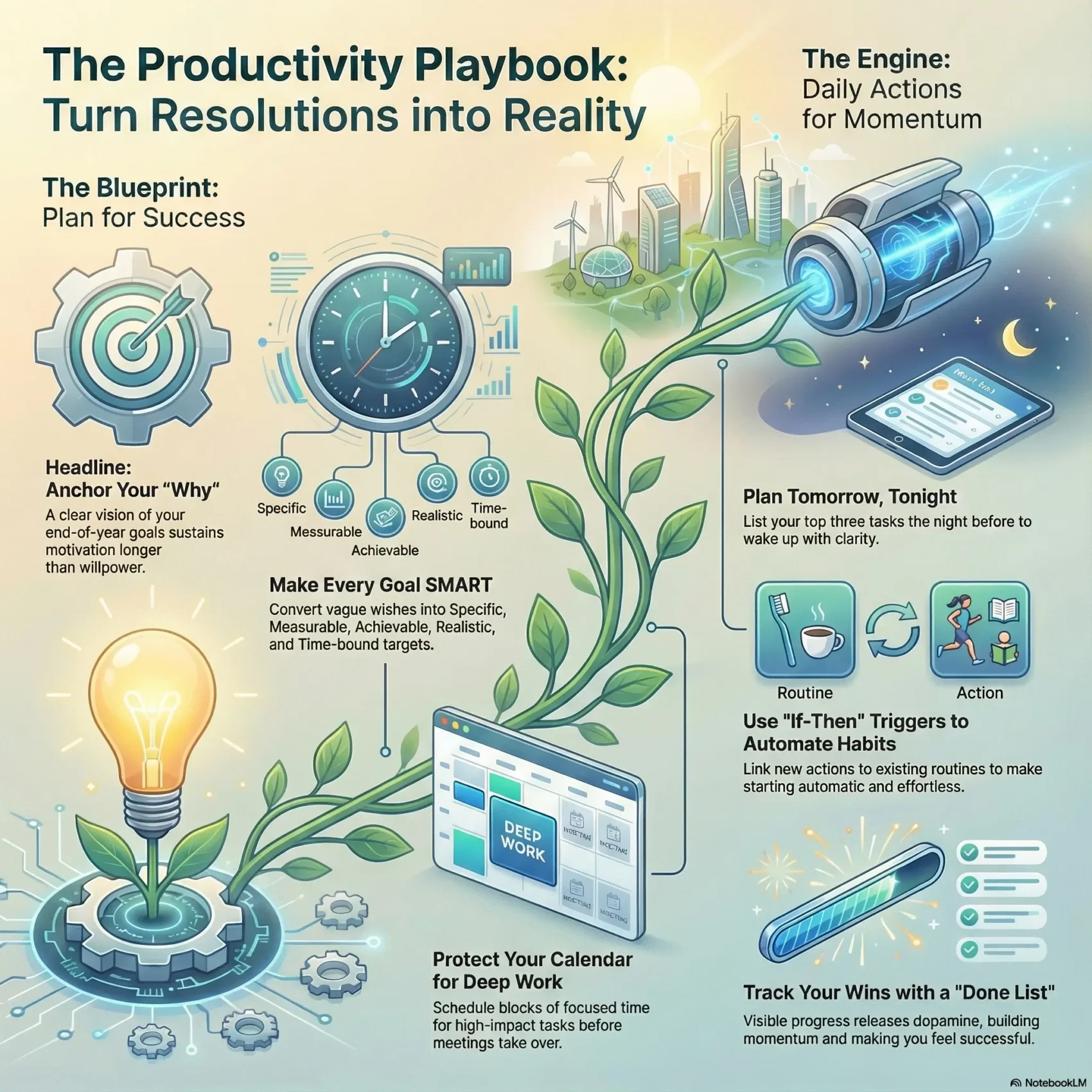
Last Updated on December 14, 2025
Many set resolutions, but most stopped by January 12. That gap between plan and follow-through was avoidable.
This short playbook offered a clear path. It used SMART goals, time blocking, and simple tracking to turn big ambitions into daily wins.
The advice blended science-backed steps and friendly, real-world tips so you could align goals and tasks with your calendar. You protected priority time and reduced friction when motivation dipped.
Expect practical examples you could copy, action prompts that fit a busy schedule, and ways to automate routines. Small wins built momentum and kept progress steady.
By the end, you had a working plan. You learned how to track outcomes, adjust fast when life got messy, and make more days intentional instead of reactive.
Key Takeaways
- Structure beats hope: SMART goals and scheduled time improved follow-through.
- Translate goals into weekly and daily tasks to avoid overwhelm.
- Protect calendar space for top priorities to make steady progress.
- Use small wins to build momentum and sustain motivation.
- Track outcomes and adjust quickly when plans encounter real life.
Why the New Year 2026 Is Your Best Time to Reset Your Work and Life
A fresh calendar is a chance to turn lessons into action. Many people treat this moment as symbolic, but the real benefit comes from clear choices about what to keep and what to stop.

Past lessons: Why most resolutions fade by mid-January
Research shows 41% of U.S. adults set new year resolutions, yet 91% don’t follow through. Many quit by January 12—often called “Quitter’s Day.”
“Most resolutions fail because they are vague and lack a plan.”
Your “why” and vision statement to carry momentum through the year 2026
Write a short, vivid vision that describes what you want to have achieved by December and how a strong day looks when you live those goals.
- Prompt: What will you have achieved by December? Make it concrete.
- Prompt: What does a focused, healthy day look like from start to finish?
- Anchor your why to family, health, autonomy, or career so motivation lasts beyond quick bursts of willpower.
- Limit your goals so your limited time targets what truly moves you forward.
- Use this vision to filter work requests and set boundaries around tasks.
Result: With a clear why and simple planning, your new year resolutions become workable goals that sustain steady progress.
Make Your Goals SMART so They Actually Stick
Turn broad intentions into clear targets so you know exactly what to do each week. SMART goals give you five simple filters: Specific, Measurable, Achievable, Realistic, and Time-Bound. Use them to turn a wish into a plan you can follow.
From vague intentions to specific action
From vague intentions to Specific, Measurable action
Start by writing one clear statement that you can measure. For example, instead of “reduce stress,” commit to a 30-minute morning routine with meditation on workdays. Track adherence weekly and review monthly to adjust.
Write goals in the present tense: “I complete three deep-focus blocks per week.” That small change helps your identity match your actions and makes tracking simple.
Goal ladders: breaking big year resolutions into steps
Use goal ladders to break a big yearly objective into milestones. Move from quarterly targets, to monthly outcomes, to weekly tasks. Each step must be realistic given your workload so you sustain progress.
- Convert broad wishes into SMART goals so you always know what tasks to do next and how to measure results.
- Tie every goal to a daily or weekly action to reduce decision friction during busy work weeks.
- Keep a short list of high-impact goals; defer less important aims until you lock in consistent progress.
One work example: “I ship two feature drafts per month” with weekly tasks for design, review, and testing. One personal example: “I walk 20 minutes, five days a week” tracked on a simple checklist. Review monthly and adjust scope so your planning matches real life.
Protect Your Calendar: Time Blocking, Deep Work, and Fewer Meetings
Block the hours that matter before meetings and emails claim your day.
Schedule real work by placing repeatable focus blocks on your calendar the same way you add calls. Cal Newport recommends you schedule deep work to ensure skilled effort gets first dibs on your best hours.
Create a short ritual to cue attention: clear your desk, close apps, pour coffee, and silence alerts. This routine signals your brain to enter concentration and makes each focus block more reliable.
- Pre-commit blocks: Reserve focus time early in the week and day so shallow tasks and meetings cannot push them aside.
- Batch shallow work: Group emails and quick tasks into two short windows to protect continuous focus.
- Automate scheduling: Use tools to place habits and recurring tasks around existing meetings to avoid last-minute overload.
- Weekly time audit: Track how many focus blocks you completed, how many meetings you attended, and which tasks actually shipped.
Hold firm boundaries: if a meeting clashes with a protected block, propose alternatives. Over weeks, your calendar will map your priorities and boost long-term productivity.
Plan Your Day and Week Before They Plan You
Deciding tomorrow’s top tasks tonight makes your morning calm and clear. A short sketch of the week gives structure and leaves room for real life. Use a quick night ritual so you wake up with one clear plan.
Night-before planning: wake up knowing your important tasks
Spend five minutes each night writing a short list of the three most important tasks for the next day. Estimate how much time each task needs and slot them on your calendar.
Keep your list short and realistic. Three real wins beat ten scattered items that never get done.
Anchor your morning with one toughest task to set the tone
Put your toughest task first in the morning. Doing it early reduces stress and creates momentum for the rest of the day.
- Sketch a flexible weekly plan to place key deliverables and meetings.
- Keep your phone out of reach for the first focus block.
- Review your week on Friday and pre-plan Monday for an easier start.
“A short nightly plan shrinks decision fatigue and makes a focused day your default.”
Beat Procrastination with Science-Backed Tactics
Procrastination often hides useful work; the trick is to turn delay into progress. Use a few simple, tested moves and you’ll trade stalling for steady wins.
Structured procrastination is an idea that reframes avoidance. Reorder your list so the scariest item sits at the top and you instead complete other meaningful tasks. John Perry popularized this approach and many people find it reduces friction when deep work feels hard.
Forcing functions create built-in constraints to make action inevitable. Try a timed café session without a charger or set a public deadline. These limits push you to finish because options narrow.
- Apply the Two-Minute Rule: if it takes under two minutes, do it now to clear small tasks and restart momentum.
- Keep a small-task queue for quick emails, file fixes, and calendar edits to use idle minutes well.
- Park your phone during focus sprints and pair constraints with short time boxes (15–25 minutes) so action beats overthinking.
Notice your peak hours and schedule hard work then. If a task feels huge, define the first two minutes—open the doc, write a title, list three bullets—and begin. Over time these ways shrink delay, reclaim your time, and boost lasting productivity.
Track Progress to Boost Motivation and Results
Visible wins change how you feel and act. When progress is clear, you get a steady lift of motivation and a practical record of what actually moves the needle.
Done lists and dopamine
Keep a simple done list each day. Checking items off releases dopamine, so small wins build momentum for tougher goals.
Paper clip strategy and visual counters
Try the paper clip strategy: set a target for calls or emails and move a clip after each completed unit. The visual shift makes output obvious and keeps you engaged.
Journaling routines and calendar tracking
Write one short note at the end of the day and a quick review each week. Capture wins, lessons, and one improvement to try next week.
- Weekly metrics: deep work blocks, tasks shipped, habits completed.
- Calendar audit: compare time in meetings versus focused work to spot blockers.
- Concrete example: 25 emails, 3 hours of focus, 4 workouts—track consistency.
Tip: When motivation dips, scan your done list, pick an easy win, and share a short highlight reel with an accountability partner. Clear progress keeps you going through the busy weeks and helps the new year plan stick.
Prioritize What Moves the Needle
C. Not all tasks are equal—learn to protect the handful that actually move the needle.
The 80/20 lens shows that roughly 80% of results come from 20% of effort. Identify your vital few important tasks and give them protected space on your calendar first.
80/20 thinking: focus on the vital few
Each week, ask which clients, projects, or actions produce most of your outcomes. Double down there and cut low-yield work that eats your time.
Eisenhower Matrix in reverse: elevate important, non‑urgent work
Flip the matrix: schedule important but not urgent items before reactive fires fill your day. Define clear success inputs—focus blocks, outreach, and prototypes—that reliably move your goals forward.
- Batch similar tasks and streamline handoffs to keep deep focus for longer.
- Create a quick filter for new requests: does this align with quarter goals and what will it displace?
- Tell the people you work with what you’ll protect so expectations support your way of working.
- Review priorities each Friday and lock your top three for next week so your focus compounds into success.
Design Your Environment, Routines, and Breaks
Designing short pauses and a calm finish to your day gives you more usable hours and less stress. Small, consistent changes to your space and routine protect energy and keep you focused on the right work.
Micro-breaks that restore energy and sharpen focus
Brief breaks can add roughly 2.85 productive hours per week. Use 5–10 minute pauses between deep blocks to stretch, breathe, or take a short walk.
Keep breaks restorative: avoid doomscrolling. A quick walk or breathing reset returns you to tasks with fresher attention.
Shutdown ritual: create a healthy boundary to reduce stress
End your work day with a simple routine: review tomorrow’s top three, tidy your desk, and close your laptop. This ritual helps you disconnect.
In one study, 68% of people were able to disconnect after applying shutdown techniques versus 40% before.
Experiment with spaces, sounds, and playlists to match the task
Try quiet rooms for deep work and lively spaces for collaboration. Use ambient or lo‑fi playlists as cues to enter focus mode.
- Align your routine to your natural rhythms and schedule high‑demand tasks when your energy is highest.
- Add ergonomic tweaks and natural light to boost comfort and reduce stress.
- Share focus norms with people you work with and respect theirs.
Treat the environment as a lever: fine‑tune light, sound, and timing so doing the right tasks feels easier. For more practical energy management tips, try short experiments and keep what works.
Implementation Intentions to Supercharge new year productivity
A clear trigger makes starting work almost automatic and keeps you from wasting decision energy. Use if-then scripts and tiny habit links to turn intention into action without thinking.
If-then planning: remove decision fatigue and kickstart action
If-then plans set exact time and place. For example: “If it’s 8:30 a.m., then I start my first 50-minute focus block.” This reduces friction and raises the odds you begin the task.
Habit stacking: attach small actions to your existing routine
Stack a tiny habit onto an existing anchor. After you pour coffee, review your top three. After lunch, take a five-minute walk. Keep each habit small so you actually do it.
- Write simple if-then plans so starting becomes automatic: “If it’s 9:00, then I open my brief and tackle the first task.”
- Pair plans with calendar reminders and clear terms for time and place to remove doubt.
- Share a keystone habit with people who support you and track short streaks to celebrate progress.
- When you miss a trigger, restart at the next one—consistency beats intensity over the long run.
Conclusion
Use focused systems—simple goals, protected time, and weekly checks—to make real change stick.
Many plans fade early, but pairing SMART goals with scheduled deep work, if‑then triggers, and quick audits changes that. You’ll trade one-off willpower for steady action that creates measurable results.
At the end of the year, small daily wins add up. Protect your calendar, track progress, and return to night‑before planning when weeks get messy.
Share your plan with people who support you, keep a short shutdown ritual to recover, and adjust what you measure so your goals stay aligned with real work and real life.