Tools
Tools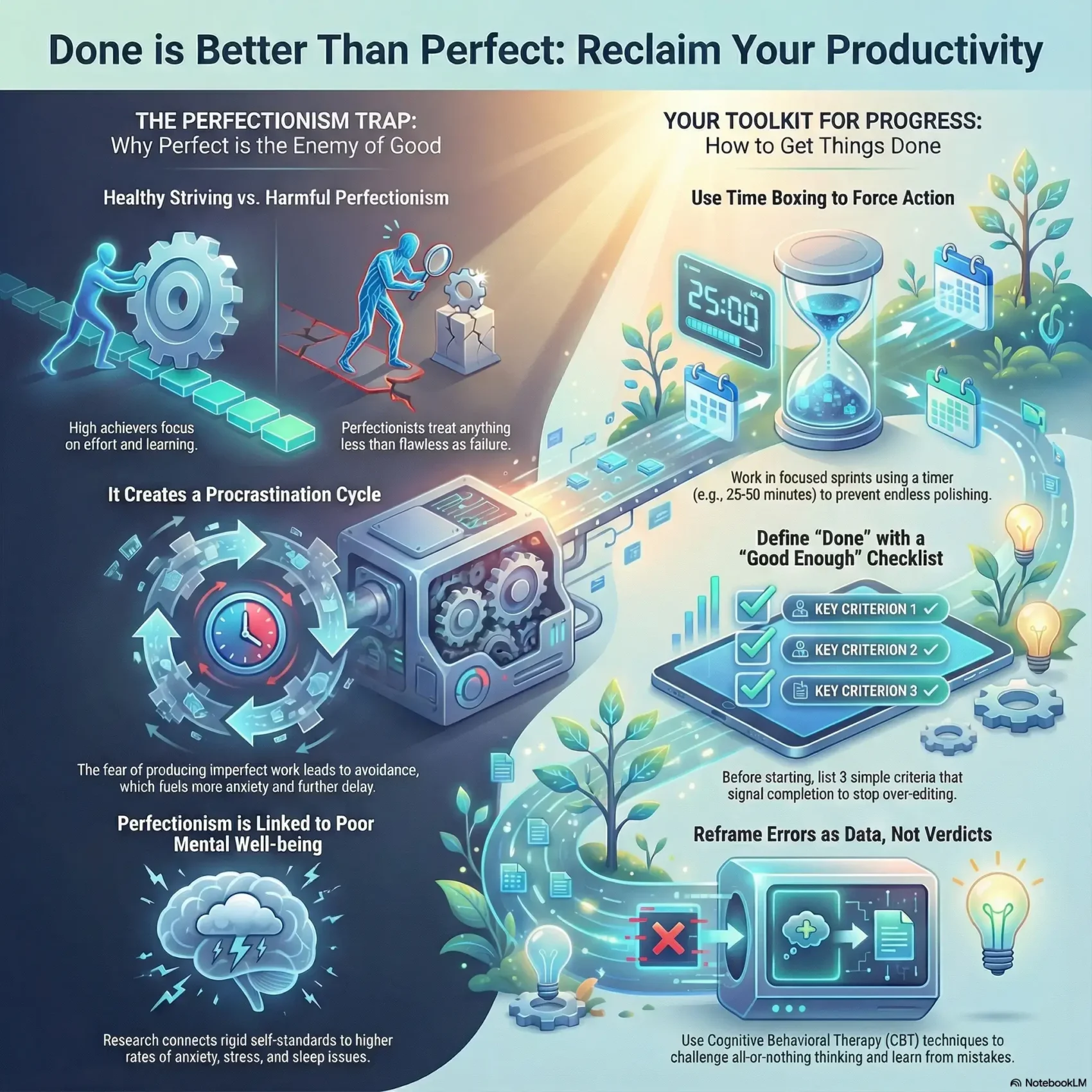
Last Updated on December 22, 2025
Perfectionist habits often tie your worth to flawless output, so you delay, over-edit, or avoid sharing work that is “good enough.”
Research links this pattern to increased stress, anxiety, and lower well-being. That means your fear of failure can slow down real success and cloud your feelings about progress.
This section will help you spot the difference between healthy striving and the rigid chase for perfection. You’ll see that this is a learned pattern in your mind, not your whole personality, and that small experiments with “good enough” can change how you work.
Key Takeaways
- Perfectionism often equals excessive standards and self-criticism that hurt productivity.
- Chasing perfection fuels fear and stress, even when you achieve success.
- You can reframe these habits as changeable learned patterns in your mind.
- Research ties maladaptive perfection to anxiety, sleep issues, and lower well‑being.
- Try low-risk “good enough” experiments to move faster and reduce overwork.
Why letting go of perfection can make you more productive right now
When you chase flawless results, you often trade hours for tiny gains that don’t move the project forward. This mindset creates a loop: fear of failure leads to delay, delay fuels doubt, and the cycle steals your time and focus.
High achievers enjoy the process and accept steady progress. Perfectionists fixate on perfect outcomes and rarely savor wins. You can break that pattern by aiming for a “good enough” draft on your next task.
Try small changes that deliver immediate wins:
- Define “done” with three simple criteria before you start.
- Use a 25–50 minute timer to keep tasks contained.
- Limit revisions to two passes to protect energy.
“Shipping a usable version early invites feedback and prevents hours of polishing in the wrong direction.”
As your thoughts settle and pressure drops, you’ll move faster at work, feel momentum across life, and train your brain to link completion with success rather than relief.
Perfectionism versus healthy striving: What you need to know
You can learn to spot when high standards help you grow and when they trap you in constant self-critique. This section shows clear differences so you can choose habits that speed progress.
Progress over perfection: The difference between high achievers and perfectionists
High achievers measure progress by effort, learning, and small wins. They accept “almost perfect” as meaningful progress and move on.
Perfectionists treat near-misses as failure. They focus on flaws and tie worth to pristine outcomes, which makes achievements feel hollow.
Fear, judgment, and the “never good enough” loop
Rigid standards become a self-reinforcing loop: fear of judgment spikes, you over-control, and even wins don’t satisfy. That “never good” feeling fuels more checking and delay.
- Defensiveness to feedback
- Fixation on minor flaws
- Difficulty enjoying success
What research says about anxiety, depression, and stalled success
Clinical research links this pattern to higher anxiety and lower well‑being. Meta-analyses show rates have risen over time and that the trait can stall long-term success.
Because this aspect of personality overweights results and underweights process, your resilience drops under pressure. Re-anchor your self in effort and set clear markers like “draft done” or “feedback gathered” to make progress visible.
How perfectionism quietly sabotages productivity
Hidden habits can turn careful work into wasted effort. When you fixate on flawless output, a small worry often becomes a pattern that costs real time and energy.
The procrastination cycle: Avoiding “imperfect” work wastes time
Your fear of being imperfect starts the cycle: you delay, avoid, then feel worse. Avoidance grows into more anxiety and more delay, so the cycle feeds itself.
Try this: set a 10-minute “start anyway” timer. A short burst breaks the loop and proves that action beats waiting. Also identify the one thing you over-edit—like a sentence or slide—and impose a firm cutoff.
“Start small. Progress checkpoints beat endless polishing.”
Unrealistic standards, all-or-nothing thinking, and lost creative flow
Unrealistic standards and all-or-nothing thinking steal creative momentum. You wait for the perfect moment that never comes, while one small step would unlock ideas.
- Translate vague standards into measurable criteria to stop second-guessing.
- Schedule a first-pass review and a final review to cut the endless tweak loop.
- Use neutral language for errors—say, “This needs one adjustment.”—to lower defensive thoughts.
As an example, the “one wrong pixel” case shows how fixating on a tiny mistake starves bigger ideas of attention. Replace perfection checkpoints with progress checkpoints and you’ll regain hours each week.
Where perfectionism comes from and how it shapes your mind
Early messages from caregivers often teach you to link success with love and approval. That message can make a lasting sense in your mind, so effort becomes a test of being a good person.
Conditional approval and early messages from caregivers
As a child, praise for only perfect results trains you to chase rigid standards. Overcontrolling adults may offer safety through control, but that safety turns into pressure later.
Common cognitive distortions that fuel this pattern
Your thoughts learn shortcuts: all-or-nothing thinking, mental filters, labeling, and “should” statements. These distortions turn neutral feedback into harsh judgment from others.
All-or-nothing thinking: When “almost perfect” feels like failure
All-or-nothing thinking makes near-misses read as failure. That drives you to over-edit and delays progress.
Fear of criticism and tying self-worth to achievements
When achievement defines worth, small critiques feel like threats. You’ll learn to spot the first perfectionist thought, rename it as a distortion, and choose a kinder alternative.
- See how a caregiver’s approval shaped your sense of value.
- Map the common thinking traps that keep you stuck.
- Practice a quick mind check: What am I feeling? What thought is driving this? What’s a kinder option?
“Recognizing that these patterns began as survival tools makes them easier to change.”
How to overcome perfectionism step by step
Small, repeatable steps help you swap endless polishing for steady progress. Start with a clear, tiny goal and a fixed time box so you protect your time and attention.
Challenge “never good enough” thoughts with CBT techniques
Use a quick CBT check: What’s the thought? What evidence supports or contradicts it? What’s a balanced alternative?
Make a short pros/cons list about chasing perfection and reframe errors as feedback, not verdicts.
Practice mindfulness to reduce intrusive thoughts
Notice a harsh thought, label it, then return to your breath for one minute. This calms the mind and reduces reactivity.
Build an environment of acceptance and self-compassion
Share a realistic request with a trusted colleague and invite one specific suggestion. Empathy and small dialogue lower pressure.
Go process-oriented and dare to be average
Set a two-pass limit and run a 30-day “Dare to be average” test on low-stakes tasks. Treat mistakes as data to improve the next round.
- Keep a one-page playbook from trusted books or courses with three go-to tools.
- Create a “good enough” checklist focused on clarity, completeness, and readability.
- Plan a short recovery ritual after each deliverable and track time saved per task.
Learn practical ways to shift from perfection to productive and watch how small experiments change what success feels like.
Practical tools to boost your productivity at work and in life
Clear limits and shared criteria free you to focus on impact over endless detail. Use a few simple practices to turn stuck energy into steady progress.
From paralysis to progress: Time boxing, “good enough” checklists, and feedback loops
Time boxing keeps you honest. Pick a fixed block, protect it, and treat that slot as your only chance to move the thing forward.
Use a short “good enough” checklist to decide when to stop editing. Pair that with a two-pass edit rule: structure first, clarity second.
- Time boxing: cap effort and run focused sprints.
- Good enough checklist: three criteria to share work without over-polishing.
- Feedback loops: send drafts early with one clear question to speed alignment.
Navigating relationships: Loosening other-oriented standards and reducing judgment
Holding rigid standards for others strains relationships and slows teams. Agree on “done” criteria together to avoid friction.
- Replace global judgments with specific requests that help people improve.
- Keep a “park it” list for bright ideas so they don’t derail your sprint.
- Schedule small buffer time after deep work to handle follow-ups calmly.
“Set one small goal per sprint and measure impact, not perfection.”
Example: set a single goal, post it visibly, and track iteration speed. This shifts a perfectionist focus to real results and preserves your time.
Perfectionism, anxiety, and eating disorders: When to consider therapy
If relentless self-critique is shrinking your life, therapy can give you tools to rebuild balance. You may notice rising anxiety, low mood, or intrusive thoughts that block work and relationships.
Red flags that suggest professional help include persistent stress, impaired functioning, and avoidance of tasks because nothing feels good enough.
- You’ll spot escalating anxiety, depressed mood, or repeated intrusive standards.
- You’ll note risky shifts in eating or growing signs of eating disorders or other disorders.
- You’ll see how avoidance harms work, relationships, and your sense of success.
Evidence-based options include CBT to reframe rigid beliefs and mindfulness to notice thoughts without acting on them. These approaches reduce stress and improve daily functioning for many individuals.
“Preparing a short list of situations where your standards block you can make your first session more productive.”
Bring specific examples of thoughts and behaviors, invite supportive people when helpful, and make a coping plan with your clinician for high-pressure times. If risky behaviors around eating escalate, prioritize prompt professional care.
Conclusion
Make a short plan so you move forward now. A simple goal, a time box, and an early draft can break cycles that keep you stuck.
Perfectionism and the never-good voice push you toward delay, anxiety, and strained relationships. You can change that by treating mistakes as tuition and by measuring achievements by impact, not polish.
Keep one line handy: done is better than perfect, and choose a 25-minute timer as your next step. That small action proves momentum beats fear and helps you build steady success in work and life.