Tools
Tools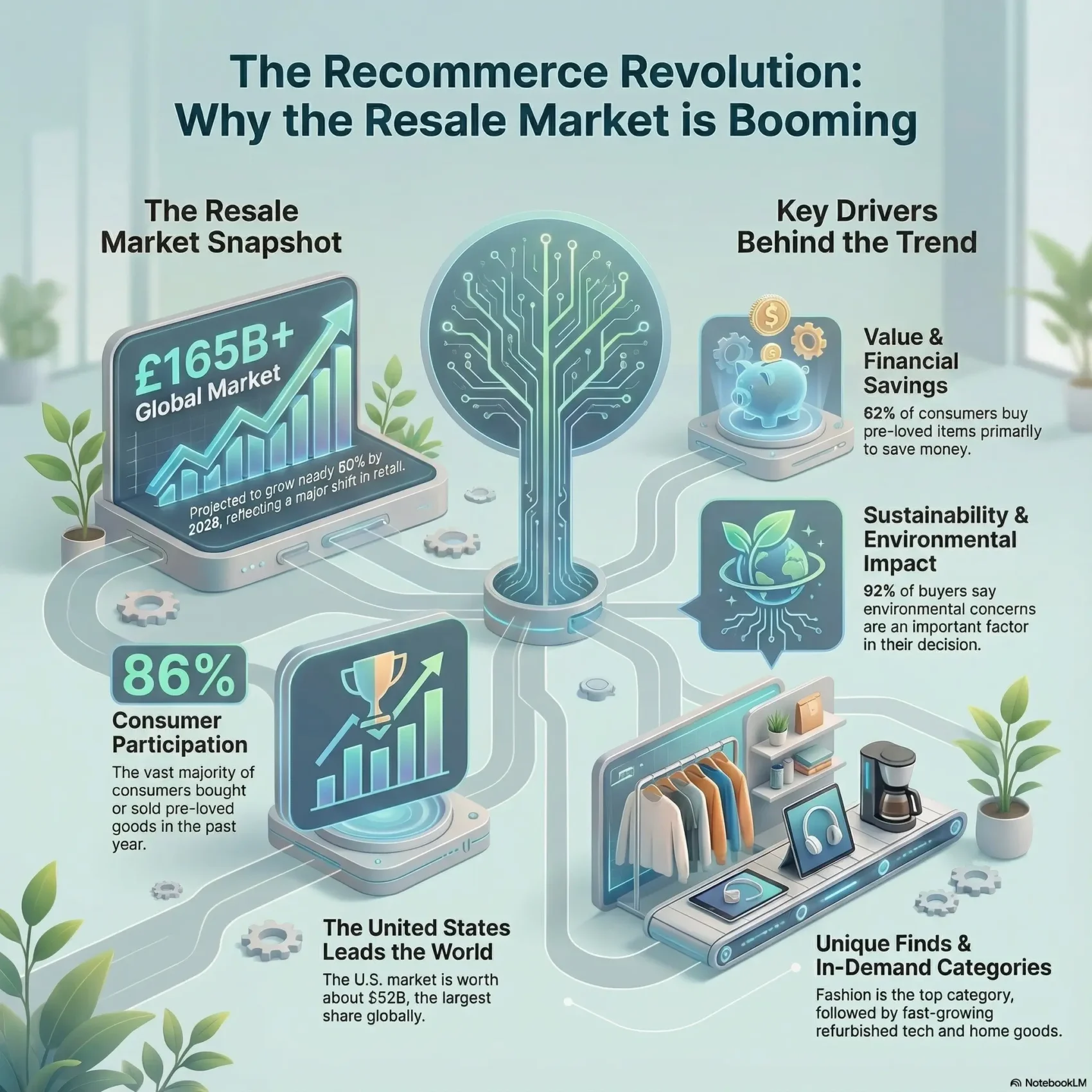
Last Updated on December 13, 2025
This report opens with a clear view of how resale is reshaping your shopping habits and the wider retail market.
More than 86% of consumers bought or sold pre-loved goods in the last year. That shift is real, and it shows up in big numbers: pre-loved and refurbished items make up 40% of eBay’s GMV, and 77% of eBay customers say buying used has become more common.
Why it matters: the global market now tops £165B and should grow nearly 80% by 2028 across major markets. In the U.S. alone, used goods sales are worth about £52B, the largest slice worldwide.
In this report you’ll get data-backed insights on why customers choose resale. You’ll learn how better prices, unique finds, and sustainability change the way people buy and sell used items. By the end, you’ll have a practical view of what this means for your wallet, your work, and the future of retail.
Key Takeaways
- Widespread participation: 86% of consumers engaged in buying or selling pre-loved goods in the past year.
- Environmental impact: 64% agree that shopping pre-loved benefits the planet’s health.
- Market scale: Global resale market exceeds £165B and is expanding fast through 2028.
- Mainstream shift: Platforms have turned resale into common shopping behavior for many customers.
- Practical benefits: Better prices, unique items, and sustainability drive consumer choices now.
Why the recommerce trend matters now
Today, buying used items is no longer niche — it’s a normal part of how many of us shop. The data in this report shows that behaviors and values are changing fast, and those changes shape the retail market and your daily choices.
Your move toward a circular economy
You’re part of a wider shift to a circular economy where reuse stretches product life and cuts waste. Eighty-two percent of people say they’re reassessing priorities, and 64% agree that shopping pre-loved supports the planet’s health.
How used items went mainstream
Digital platforms have lowered barriers to buying and selling, turning casual reselling into a routine activity for many consumers. This report shows 86% bought or sold pre-loved in the past year, and 53% cite fast fashion’s harms as a reason to choose alternatives.
- Value and sustainability: Stretch your budget while reducing environmental impact.
- Convenience: Platforms make discovery, payment, and shipping seamless.
- Future signals: Traditional retailers are adding circular programs, expanding the market.
This section translates the numbers in the report into what matters for you: better choices, less waste, and more access to great items as circular shopping becomes a regular part of life.
Methodology and sources behind this report
We combined independent surveys and marketplace data to map how consumers and sellers behave now. This gives you a clear line of sight into who bought or sold goods, when, and where.
Global consumer and seller research cited
Censuswide polled 16,052 adults (18+) across the U.S., U.K., Canada, Germany, France, Italy, Spain, Australia, and Japan, fielded March 6–11, 2024.
eBay ran two internal surveys: 12,515 C2C sellers (Mar 18–Apr 9, 2024) and 5,815 active buyers covering the prior 12 months. Big Village added a refurbished sample of 9,051 adults (Dec 6–13, 2023).
Timeframe and scope you should keep in mind
The market sizing that anchors the report comes from Retail Economics and MPB, which estimate a £165B global recommerce market with growth to 2028.
“Combining marketplace behavior with independent polling lets you see both action and attitude.”
- Scope: nine major markets and multi-source sampling for balance.
- Limits: automotive is excluded from global totals; C2C behavior is central.
- Comparability: methods align across years so you can track momentum.
Bottom line: the research in this report triangulates consumer sentiment, seller activity, and market size so you can interpret goods past year metrics and selling used signals with confidence.
Market snapshot: Resale marketplaces reshaping retail economics
A clear shift in dollars and behavior shows resale marketplaces reshaping retail economics today.
The global recommerce market (ex-auto) tops £165B and is set to climb almost 80% by 2028, at roughly a 12.1% CAGR.
Across key markets the U.S. leads at about £52B, while the U.K. moves from £6.5B today to an estimated £12.4B by 2028.
Size and growth: From £165B globally to rapid expansion by 2028
Per-capita spend highlights where markets are more mature: U.S. £196, U.K. £122, France £103, Germany £75.
U.S. leadership and per-capita spend dynamics
Higher per-person spending in the U.S. reflects both scale and cultural adoption. That gap shows where buyers concentrate purchases and where inventory depth grows faster.
How platforms lowered barriers to buying and selling used goods
Digital marketplaces cut friction with simple listings, integrated payments, trusted logistics, and easy discovery.
- Faster listings: anyone can turn items into supply quickly.
- Trust and scale: larger networks improve matching for buyers.
- Social media: visibility drives traffic and repeat purchases.
This section of the report gives you a compact, data-rich picture of where growth is concentrated and what it means for inventory, pricing, and strategy in the years ahead.
What’s driving consumers: Value, sustainability, and the search for unique items
You’re choosing pre-loved items for clear reasons: price, purpose, and personality. This section breaks down why buyers opt for used goods and what that means for your shopping habits and the wider economy.
Financial pressures and the appeal of affordable brands
Value leads. About 62% of people buy pre-loved to save money, and 51% do it so they can splurge elsewhere.
Affordable brands make it easy to wear labels you like at a lower cost. Many consumers use savings to fund experiences or other purchases.
Sustainability as a decisive factor for buyers
Price matters, but sustainability is more than a bonus. In this report, 92% say environmental concerns are important when choosing pre-loved.
Sustainability and cost work together: 26% cite sustainability as a reason to buy, while others see an environmental benefit alongside savings.
Collectibles, passions, and items unavailable new
Unique pieces drive passionate purchases. About 25% buy because an item is no longer sold new, and 18% chase collectibles.
Authentication tools and strong seller ratings lower risk so your search for rare finds feels confident.
“Value, meaning, and choice keep buyers coming back.”
- Benefits: You get lower prices and more choice.
- Environmental impact: Buying pre-loved can cut waste and extend product life.
- Practical tips: Look for ratings and photos to spot quality pieces that hold value.
This report shows these motivations overlap, which helps demand stay strong even as prices and preferences shift. Next, we’ll explore how sellers respond to these same forces.
Sellers’ perspective: Extra income, accidental entrepreneurs, and platform loyalty
Selling pre-loved items often starts as a quick declutter and ends up as a steady source of cash. In the U.S., 68% say extra income is their top reason to sell. That makes selling a practical way to boost your budget while clearing space.
Making extra cash and decluttering priorities in the U.S.
Many sellers begin by listing a few goods and discover repeat sales follow. Across markets, 79% of global sellers first listed pre-loved items on eBay.
Onboarding paths: From casual selling to sustained side income
Accidental entrepreneurs are common: 43% in the U.S., with higher shares in places like Japan (57%). About 22% of eBay sellers joined in the last year, while 23% have been active 15+ years.
- Why sellers stay: buyer demand, time-saving tools, and dispute protections.
- What helps you earn: sharp photos, clear descriptions, and fair shipping options.
- Where to learn more: practical tips on social commerce and e-commerce for improving listings and repeat sales.
“With low barriers and steady buyer interest, selling can fit a weekend project or grow into real work.”
Category leaders: Fashion, tech, and home take center stage
These days a few categories capture most resale momentum across U.S. markets. Apparel and fashion lead by spend, while refurbished devices and home goods round out steady demand.
Pre-loved fashion’s surge among Gen Z and Millennials
Clothing tops purchases: about 48% of buyers choose clothes first. In key markets roughly £4 in every £10 spent on used goes to apparel.
Why it sells: deep selection, fast-moving styles, and strong brand recognition keep shoppers coming back.
Refurbished tech’s value-for-money and environmental impact
Electronics make up about 22% of top purchases. Refurbished technology shows double-digit year-over-year growth, offering clear value and lower environmental impact.
Buyers trust graded devices and repair records when choosing higher-priced listings.
Home and garden, books, and shoes: Where you see steady demand
Books (34%), shoes (24%), and home & garden (23%) fill out the steady tail of sales. These goods sell year-round and help maintain repeat customers.
- Best bets: classic denim, premium sneakers, vintage jackets, and pro cameras.
- Listing wins: accurate sizing, clear condition grades, and fast shipping build trust on marketplaces.
- Market signals: seasonality and drop culture affect pricing and sell-through—adjust listings accordingly.
“Category focus plus clear listings turns casual browsing into repeat buying.”
Who’s buying and selling: Generational patterns you can act on
Generations shop resale for very different reasons, and those differences shape how you market and list items.
Gen Z and Millennials: Social, sustainable, and monthly active
Young shoppers engage often: Gen Z reports 21% monthly buying, while Millennials show 9% buying weekly and 24% monthly. Social discovery and sustainability drive their interest.
Why it matters: younger consumers favor style, eco-impact, and platforms with active communities. Messaging that highlights planet benefits and fresh drops performs well.
Gen X and Boomers: Financial prudence and practical motivations
Older buyers focus on value and clearing space. Gen X and Boomers weigh savings and practicality higher than social signals.
They respond to clear condition notes, easy returns, and precise photos. That builds trust and repeat purchases among this cohort.
- Merchandising: use eco-impact and trend-forward language for younger audiences; emphasize durability and savings for older ones.
- Timing: align promotions with monthly buying cycles and goods past year behavior to lift conversions.
- Listing tips: optimize photos, concise descriptions, and straightforward return policies to win across generations.
“Match tone and channel to each audience and you’ll see higher conversion and loyalty.”
The platform effect: Marketplaces, network growth, and trust signals
Marketplaces now act like high-speed engines, turning listings into active demand almost overnight. As more people list bags, shirts, and other goods, you benefit from wider choice and faster sell-through.
Listing growth, authentication, and quality controls
On eBay, pre-owned listings for bags and shirts rose double digits YoY and items labeled “thrifted” jumped 400% (Mar 2024 vs. Mar 2023). That scale lets platforms invest in authentication and quality checks.
Authentication tools, condition grading, and returns lower risk and make buying feel safe. Those controls help both buyers and sellers trust the system.
Buyer-seller experience upgrades that keep you engaged
Platform features like saved searches, price guidance, and dispute resolution smooth the way for confident transactions.
- Flywheel: more listings attract more buyers, which brings more sellers and greater liquidity.
- Trust signals: clear grades, verified checks, and fair return options boost conversions.
- Discovery: social media funnels niche interest into marketplaces, improving sell-through.
Practical way forward: use platform tools to showcase condition, set competitive prices, and enable buyer protections. That approach raises average selling prices and shortens time to sale.
“Better controls and smarter features make selling easier and buying safer.”
Technology accelerators: AI, mobile, and blockchain transparency
Behind the scenes, machine learning is matching buyers and sellers with fresh accuracy. AI powers personalized recommendations and flags suspicious listings before they reach your feed. That reduces fraud and improves the experience for everyone.
Personalization and fraud detection improving your experience
Platforms use models to suggest items you’ll actually want. Pricing tools also help sellers set competitive rates quickly.
Result: less time scrolling and fewer risky purchases.
Mobile-first journeys for seamless shopping and selling
Mobile-native apps compress listing, messaging, and checkout into a few taps. Apps like Depop make discovery social and immediate for younger buyers.
That flow cuts friction and boosts conversions on every platform you use.
Provenance and authenticity for high-value items
Blockchain provenance and specialist authentication (for luxury goods and collectibles) add a verifiable record of ownership. Tools from firms like Everledger back up claims and protect buyers.
Benefits: more trust, higher resale value, and clearer lifecycle data that supports sustainability goals.
“Smarter tech makes buying safer and selling faster.”
- You’ll learn how AI curates inventory and flags fraud early.
- Mobile-first design makes listing and buying near-instant.
- Provenance tools protect high-value purchases and support sustainability.
Social commerce and the rise of community-driven shopping
Community posts and short-form clips are steering what shoppers click to buy next. Platforms now layer commerce into feeds so you can discover, ask questions, and buy without leaving the app.
How influencers and social platforms shape your purchasing path
Influencer content drives discovery for pre-loved fashion and collectibles. Try-ons, repair tips, and authentic storytelling nudge curiosity into action.
Apps like Depop blend feed-style browsing with marketplace tools to make listing and buying feel social. That integration shortens the path from interest to checkout and improves your overall experience.
- You’ll see how social commerce turns your feed into a discovery engine for pre-loved finds.
- Learn how influencers accelerate demand and shape what buyers want now—especially in fashion and collectibles.
- Find practical ways to participate in community-driven shopping while avoiding extra waste.
Transparency and creator credibility matter. Shoppers use comments and DMs as live reviews, and that social proof often beats a static listing when you vet sellers or trust recommendations.
“Community-driven shopping makes discovery social and purchases faster.”
For a deeper look at how social platforms and marketplaces connect, see this guide on social commerce in the report context.
Refurbished momentum: Economic, environmental, and brand benefits
Refurbished inventory is proving its value — for buyers, brands, and the planet. You’ll find more options that cut cost without cutting quality. Over half of U.K. shoppers (52%) and 45% of U.S. buyers now own a refurbished product, and platforms report steady growth year over year.
Why more U.S. consumers recognize the benefits
About 80% of global shoppers know refurbished costs less, and 68% say it reduces environmental impact. That combination boosts confidence and broadens appeal.
- Lower price, verified quality: certification, grading, and warranties reduce risk for you.
- Economic environmental upside: extending product life helps the economy and supports sustainability goals.
- Brand gains: retained customers, fewer returns, and better asset recovery improve margins for sellers and manufacturers.
This report shows eBay’s refurbished business kept double-digit growth, proving demand. Before you buy, check condition grade, warranty length, and stated environmental claims to make an informed choice.
“Refurbished choices expand selection without sacrificing performance.”
U.S. outlook for 2025: Trends to watch and how your strategy should evolve
The U.S. market is poised for a shift in 2025 as buying patterns and retailer strategies start to realign. You’ll see category demand move fastest in fashion and tech, while circular programs scale across stores and platforms.
Where demand grows next: Fashion, tech, and circular programs
Fashion and clothing remain the biggest draws. Younger buyers keep seeking unique pieces and value, so curated drops and authenticated vintage sell well.
Refurbished tech keeps gaining share because consumers want reliable devices at lower price points. Certified pre-owned lines and warranties make higher-ticket used goods easier to buy.
Economic environmental factors also matter: shoppers reward brands that show lifecycle impact and repairability.
Integrating resale into retail: Partnerships, take-back, and trade-in
Retailers will deepen partnerships with marketplaces and service providers. Look for trade-in flows that convert returns into resale inventory and store credit that keeps customers engaged.
Take-back and repair at scale will be a clear competitive move. Certified refurbishment and in-store authentication make resale feel like a natural option beside new stock.
- Platform integrations: trade-in funnels, instant store credit, authenticated listings.
- Marketing moves: social commerce pilots and pricing ladders to test demand.
- Operational tips: source used goods via buyback events and split inventory signals between new and used to steady revenue.
“Your best play in 2025 is to make buying and selling used as easy and trusted as new purchases.”
Use this view from the report to prioritize pilots that fit your capacity. Test sourcing, set clear grading, and link offers to loyalty to capture U.S. market leadership and the future opportunity.
Conclusion
This report gives you a clear view of how resale fits into everyday shopping and selling. Use these findings to plan simple next steps that match your goals.
Across the global market, recommerce shows real scale and steady growth. That shift makes it easier to find value, unique goods, and ways to reduce waste.
Focus on the trends that matter: authentication, refurbished programs, and social discovery. They remove friction and speed outcomes for both buying and selling.
You now have a practical view and a usable framework for your work: pick categories, source smartly, set fair prices, and build community. This report helps you act with confidence and measure results.
Thanks for reading—put these insights to work, and shape your own circular success story.