Tools
Tools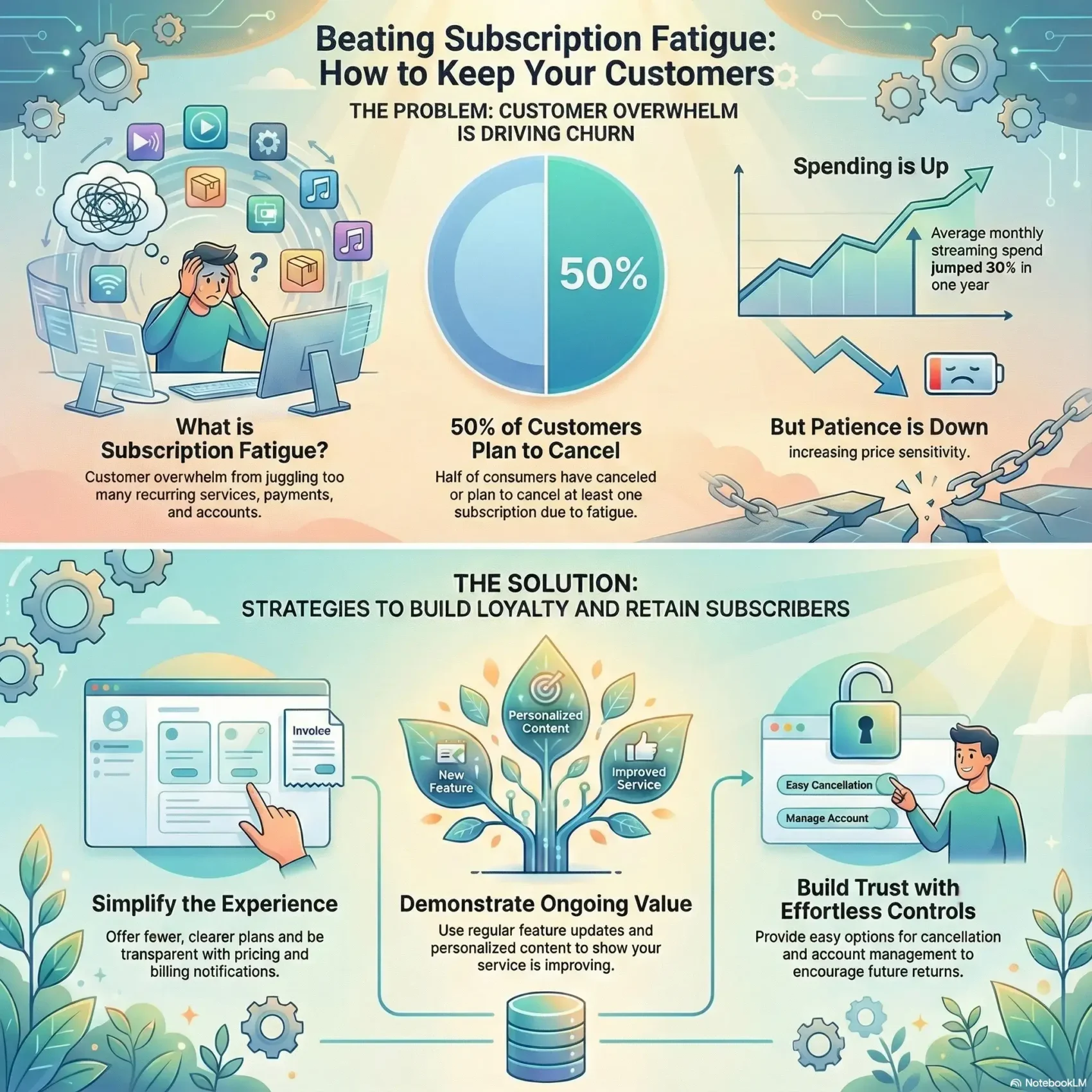
Last Updated on January 7, 2026
You face a crowded market where new plans and recurring charges arrive daily. This growth has created subscription fatigue for many people, who feel overwhelmed by too many options and stacked monthly fees.
That mental load makes customers question the value they get from services and from your brand. When management is fragmented across apps and pricing is unclear, people cancel more often.
In this article, you’ll learn a practical way to reframe your offering so it respects attention and simplifies decisions. We’ll show core reasons why cancellations rise and how clear experience design and honest pricing can become your advantage.
Start by treating trust, transparency, and easy controls as product features. Do that, and you’ll reduce churn and earn loyalty over the full lifecycle.
Key Takeaways
- Subscription fatigue makes customers selective; clarity wins.
- Stacked fees and confusing management drive cancellations.
- Emphasize clear value and reliable experience to retain users.
- Offer simple controls so customers can manage plans without hassle.
- Use data to spot churn risks and intervene early.
- Align your brand promise with real, ongoing improvements.
- Learn more about the broader subscription economy at subscription economy insights.
What subscription fatigue is and why it matters to your business
People now face a web of recurring services that quietly reshape their monthly budgets and attention. This pattern—where many small charges and logins add up—changes how your customers decide what to keep and what to cancel.
From streaming to software: how the model expanded
The model moved from media into software, ecommerce, and even FMCG as companies launched new ways to sell ongoing access to products and features.
As the number of offerings grew, so did the number of billing cycles and account logins your customers must track.
The burden of multiple services, payments, and account management
Administrative load matters. Multiple subscriptions create extra tasks: tracking renewal dates, managing passwords, and reconciling payments across platforms.
Small monthly fees can accumulate into real financial strain when customers don’t see clear value. Dark patterns that make cancellation hard only heighten frustration and erode trust.
- Define the problem: many products equal many commitments.
- Fix the friction: centralize account management and clarify billing.
- Protect trust: remove coercive flows so customers feel in control.
The state of the market right now: data that shows the scale of fatigue
The numbers show a rapid rise in recurring spend even as people grow less patient with their monthly bills.
Rising spend and shrinking patience: key U.S. stats and trends
Global projections put the market near $996B in 2025, up sharply from 2022. At the same time, Civic Science found half of respondents had canceled or planned to cancel at least one plan because of subscription fatigue.
Average monthly streaming spend jumped 30% from $48 in 2023 to $61 in 2024. Millennials spend about $67 and nearly half canceled a plan in the past six months to manage costs.
Streaming as a bellwether for churn and cancellations
Streaming services concentrate many pain points: rising fees, overlapping catalogs, and frequent plan changes. Over 60% of streaming consumers report weariness tied to higher churn, making media a reliable signal for broader services.
Household counts and more selective consumer behavior
Motley Fool reports U.S. households hold 4.1 video streaming accounts on average; 83% have at least one. Retail subscription counts fell from 4.1 to 2.9 per subscriber in 2023, showing people cut extras and keep only what matters.
- What this means for you: more spend doesn’t guarantee loyalty.
- Act now: justify fees with visible improvements and make switching tiers easy rather than forcing cancellations.
The psychology behind subscription fatigue
Your customers often feel overwhelmed when choices pile up, and that stress shapes how they decide what to keep.
Decision fatigue and the paradox of choice
Too many options raises anxiety and stalls action. The paradox of choice means people pick less often and regret more when they must compare many similar plans.
Cognitive overload from fragmented platforms and content
Managing logins, updates, and different UIs fragments attention. Juggling content across services reduces enjoyment and makes the whole experience feel heavier.
Perceived value erosion and price sensitivity over time
When updates feel minor or content repeats, perceived value drops. Consumers become more price sensitive and may cancel at the first sign of disappointment.
- What you can do: reduce tiers, clear plan names, and set helpful defaults to guide choices.
- At renewal: remind people of specific benefits they used and highlight new improvements.
- Measure: track satisfaction by feature and content to prioritize fixes that matter most.
Want deeper reading on decision patterns? See research on decision fatigue research for practical ideas you can apply today.
How subscription fatigue shows up across industries
Across sectors, the signs of overloaded customers appear in distinct patterns you can act on.
Media and streaming: abundance, exclusives, and volatility
Media and streaming concentrate the problem. Multiple streaming services like Netflix, Hulu, Disney+, Peacock, and Prime Video fragment catalogs.
Exclusive shows and shifting libraries push consumers to rotate plans or cancel. Illicit streaming also reduces perceived value and raises churn.
Ecommerce and retail subscriptions: convenience versus cost creep
Retail subscriptions show mixed growth. sticky.io and PYMNTS data say consumers are more selective now.
Convenience sells, but cost creep forces tough choices. Offer flexible pause options and clear value to keep customers.
Software: fulfilling a need in B2B and B2C contexts
Software often faces less volatility because it fulfills a clear need and integrates into workflows.
B2B subscription businesses retain better when ROI, onboarding, and expansion paths are strong. B2C software keeps users who rely on daily value.
- Example: curate content, bundle smartly, and use usage cues to show value fast.
- Takeaway: tailor retention plays by industry to reduce churn and protect your brand.
Retention strategies that counter fatigue and boost perceived value
Retention begins when people can quickly see what they get and why it matters next month. Make clear, predictable interactions the norm so your offering feels simple and fair.
Radical transparency and proactive notifications
Show pricing and billing up front. Send sign-up confirmations, a 30-day notice for price changes, pre-renewal reminders, and a post-charge invoice. These steps remove surprises and lower churn.
Simplify plans and reduce decision load
Offer fewer tiers with clearer inclusions. Use plain labels and defaults that match common use cases so customers pick faster and feel confident.
Make cancellation effortless to build trust
Let people leave without obstacles. An easy exit often increases return visits and referrals. Track why they leave and follow up with tailored offers.
Live your value proposition and differentiate
Deliver continuous improvements—feature updates, faster performance, or curated content. Pair product wins with honest messaging about benefits.
Loyalty, support, and reliability
- Design loyalty formats: points, tiers, referrals, or early access.
- Prioritize fast, consistent support; one strong fix preserves months of goodwill.
- Handle payments and disputes with empathy and clear next steps.
Personalization, content freshness, and experience design
Keeping your platform lively with new items and features signals that you’re investing in real customer value. Freshness and clear design stop your offering from feeling static.
Keep content and features dynamic to prevent value stagnation
Publish a steady drumbeat of updates so people see ongoing improvements. Small, meaningful releases matter more than rare, big launches.
What to track: update cadence, engagement, and which releases reduce cancellations over time.
Use preferences and behavior to tailor recommendations
Leverage usage data to personalize home screens and discovery paths. When recommendations match intent, customers find value faster.
- New-release calendars: make launches visible and build anticipation.
- “What’s changed” nudges: highlight benefits in short recap emails.
- Micro-personalization: use recency and frequency to rank items in large catalogs, including streaming libraries.
- Feedback loops: let people rate relevance so you refine models and prioritize updates.
Balance novelty with stable navigation. That way updates feel helpful, not disruptive, and your services stay easy to use across platforms and time.
Operational levers: data, payments, and subscription management
How you run day-to-day operations directly affects churn and loyalty. Use clear operational routines to turn usage signals into customer outcomes. Real-time data and simple account tools lower friction and make value easier to see.
Leverage usage data to inform pricing, packaging, and roadmap
Put product data to work. Real-time usage helps you right-size pricing and packaging so customers pay for what they actually use.
Action: map feature use to tiers and run quick experiments to test pricing elasticity.
Monitor churn signals, cancellations, and feedback loops
Track cancellation intents, support tickets, and social feedback as early warning signs. Flag at-risk cohorts and route them to success teams for proactive outreach.
Streamline billing, payment options, and account dashboards
Simplify the money side. Clear billing, smart dunning, and card-updater tools stop accidental churn.
- You’ll align management and pricing so value feels fair across tiers.
- We’ll set up alerts for cancellation patterns and support sentiment.
- Simplify dashboards so upgrades, pauses, and cancellations are obvious options.
- Assess payments coverage and billing flows to reduce friction for every customer.
Run monthly retention reviews, connect KPIs to market outcomes, and let data guide roadmap choices. When your operations are tight, subscription businesses and products services feel easier to manage and customers stay longer.
Conclusion
Today’s market rewards businesses that make choices simple and value obvious.
You’ve seen how subscription fatigue grows from too many options, stacked fees, and tedious account work. The market still spends more even as cancellations rise, so your move is to reduce friction at every touchpoint.
Do three things this month: align pricing with clear value, simplify tiers so multiple subscriptions feel manageable, and improve support so customers see benefits quickly. Use streaming as an example: clarity beats fragmentation every time.
Treat retention as ongoing work. Pick one pricing or billing fix and one experience upgrade to ship now. Over time, steady improvements will turn weariness into trust and help your subscription business outperform peers.