You do not run out of decisions because you are weak. You run out because a modern workday hands you far more of them than any schedule was designed to absorb. Microsoft’s 2025 Work Trend Index found that employees are interrupted roughly every two minutes during core hours — about 275 times a day — and that 80% of the global workforce says it lacks the time or energy to do the job properly.
That steady drip is what people mean by decision fatigue: the drop in judgment quality that shows up after a long stretch of choosing. It costs you twice. It erodes work performance on the decisions that matter, and it quietly drains the productivity you were counting on for the rest of the day. This guide covers what the research actually supports in 2026, how to spot the warning signs early, and the routines that cut the number of choices you face in the first place.
Key Takeaways
- Decision fatigue is the decline in decision quality that follows a long run of choices, not a character flaw.
- The popular claim that we make 35,000 decisions a day has no solid research behind it — the mechanism is real, the number is not.
- Procrastination, impulsive calls, and irritability are the earliest signals that your judgment is degrading.
- Stress, poor sleep, and tool sprawl all raise the cognitive load each remaining decision has to carry.
- The most reliable fix is structural: make fewer decisions by turning recurring ones into defaults.
- Delegation, clear decision criteria, and protected focus time move the load off one overloaded brain.
Understanding Decision Fatigue and Its Impact on Your Daily Life
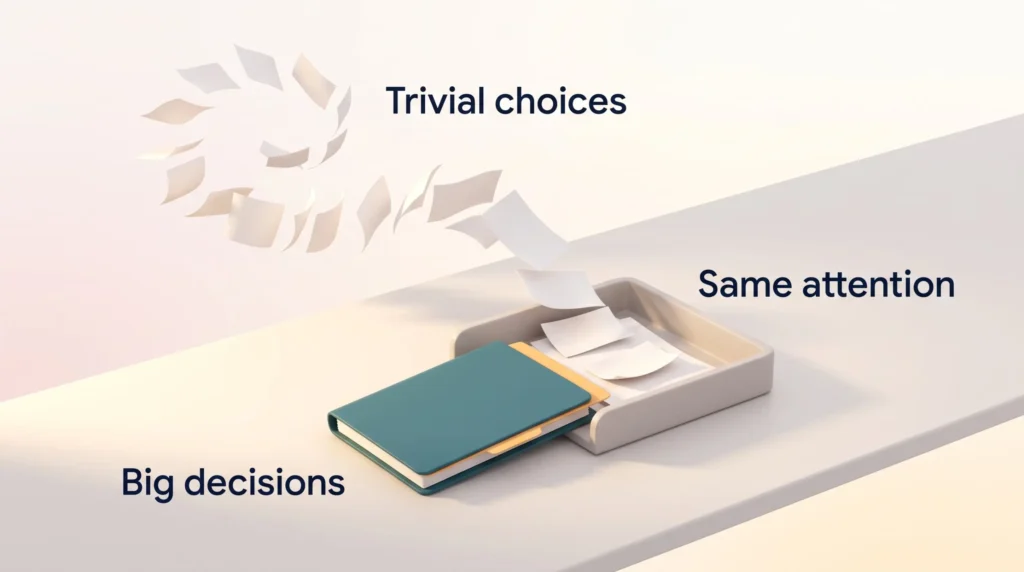
Every day you face a maze of choices, and they are not evenly weighted. A handful genuinely shape your week. Most are trivial, reversible, and still cost you something to resolve. The problem is that your brain does not price them differently in the moment — picking a Slack channel and approving a budget both draw on the same pool of attention.
What Is Decision Fatigue?
Decision fatigue is the deteriorating quality of your choices after a sustained period of deciding. Instead of feeling tired, you start defaulting: you take the first workable option, postpone the call entirely, or say yes to whatever removes the question fastest. The decision still gets made. It just gets made worse, and usually by the version of you with the least capacity left.
Why Decision Fatigue Happens
Volume is only part of it. Complexity matters more — a choice with unclear criteria and no obvious right answer costs far more than one with a rule attached. Emotional weight compounds it, because decisions that carry consequences for other people invite second-guessing. And personal tendencies play a real role: if you lean toward perfectionism, every option gets re-examined until certainty arrives, which it rarely does. That habit turns a two-minute decision into a twenty-minute one, and loosening it removes more decision load than most productivity tactics.
The Cognitive Load of Choices
Every open question adds weight, and unresolved ones are the heaviest. Unfinished decisions behave like open loops — your mind keeps returning to them, which is why a day with six pending calls feels harder than a day with twelve settled ones. The same mechanism runs through ordinary knowledge work, where Microsoft’s telemetry puts the average inbox at 117 emails and 153 chat messages a workday, each carrying an implicit “deal with this now or not.”
What the Evidence Actually Says in 2026
Decision fatigue is one of the most confidently repeated ideas in productivity writing, and some of what gets repeated does not hold up. Knowing which parts are solid tells you which fixes to trust.
The 35,000 decisions figure is not real. Trace the citation chain and it ends at a university blog post referring to unnamed internet sources, plus an extrapolation from a Cornell study that counted roughly 227 food-related decisions a day (Wansink and Sobal, 2007) — and Wansink later had multiple papers retracted. Nobody has counted 35,000 anything.
The “willpower as fuel tank” model is on shaky ground. Classic ego-depletion theory held that self-control drew on a reserve that ran down with use. A 23-lab preregistered replication with 2,141 participants found the effect close to zero (Hagger et al., 2016), and a later multi-lab attempt reported similarly weak results. Something real still happens as the day wears on, but it looks more like shifting motivation and attention than an emptying tank.
The “hungry judges” study is a useful story, not proof. Danziger and colleagues (2011) reported that Israeli parole approvals fell across a session and recovered after breaks. A reply in the same journal showed case ordering was not random: unrepresented prisoners, far less likely to be granted parole, were typically heard last (Weinshall-Margel and Shapard, 2011). Later simulation work concluded the effect had been substantially overstated.
Choice overload is real but conditional. The largest meta-analysis on the topic pooled 99 observations from 7,202 participants and found more options only hurt under specific conditions: complex choice sets, genuinely difficult tasks, unclear personal preferences, and a goal of minimizing effort (Chernev, Böckenholt and Goodman, 2015). That is the actionable part. You do not need fewer options across the board — you need clearer criteria, which is far easier to build.
Recognizing the Signs of Decision Fatigue
The signals arrive before the bad decisions do. Catching them is the difference between adjusting your afternoon and regretting it.
Procrastination as a Warning Sign
Putting things off is the most reliable early indicator. You are not avoiding the work; you are avoiding the decision the work requires. A task stalls because you have not settled what “done” looks like, or which of three approaches to take. The fix is usually to name the very next physical step rather than the whole project — a next-action mindset converts a decision back into an instruction. If avoidance has become your default mode, our guide to overcoming procrastination goes deeper.
Impulsive Decisions and Mental Exhaustion
The opposite failure is just as telling. When judgment thins out, you stop weighing options and start grabbing them — approving something without reading it, buying the first result, committing to a meeting you will resent. Irritability in the late afternoon is frequently a decision-load symptom rather than a mood. If your capacity to stay with anything has been shrinking generally, that is worth addressing on its own terms — see how to rebuild your attention span.
Factors Contributing to Cognitive Overload
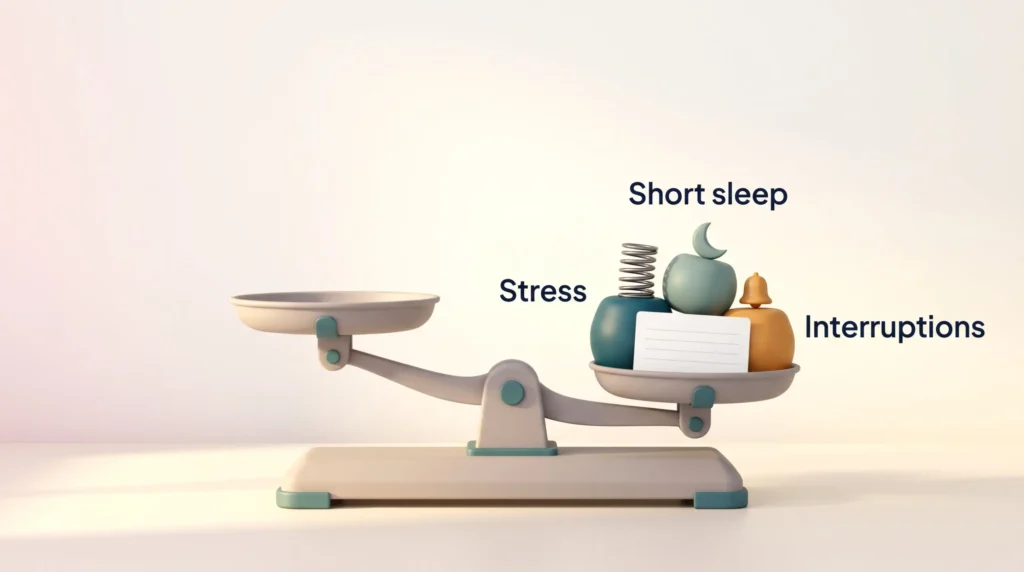
Decision fatigue rarely arrives alone. Three conditions reliably make it worse, and all three are more tractable than they look.
Stress and Its Role in Decision-Making Exhaustion
Under pressure your working memory narrows, which means fewer options get properly considered before you commit. Most work stress traces to a short list of sources — heavy workloads with compressed deadlines, missing information or authority, and constant interruption. Naming which one is actually driving your week is the first useful move; our guide to managing stress for better productivity covers the rest. Cutting interruption volume helps immediately, and managing work notifications is the fastest lever most people have.
The Effect of Sleep Deprivation on Choices
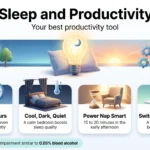
Short sleep degrades exactly the functions decisions depend on: sustained attention, holding several options in mind at once, and inhibiting the impulsive answer. The uncomfortable part is that it also degrades your ability to notice the impairment, so under-slept judgment feels normal from the inside. A consistent evening routine does more for tomorrow’s decisions than any morning technique.
Practical Strategies to Overcome Decision Fatigue
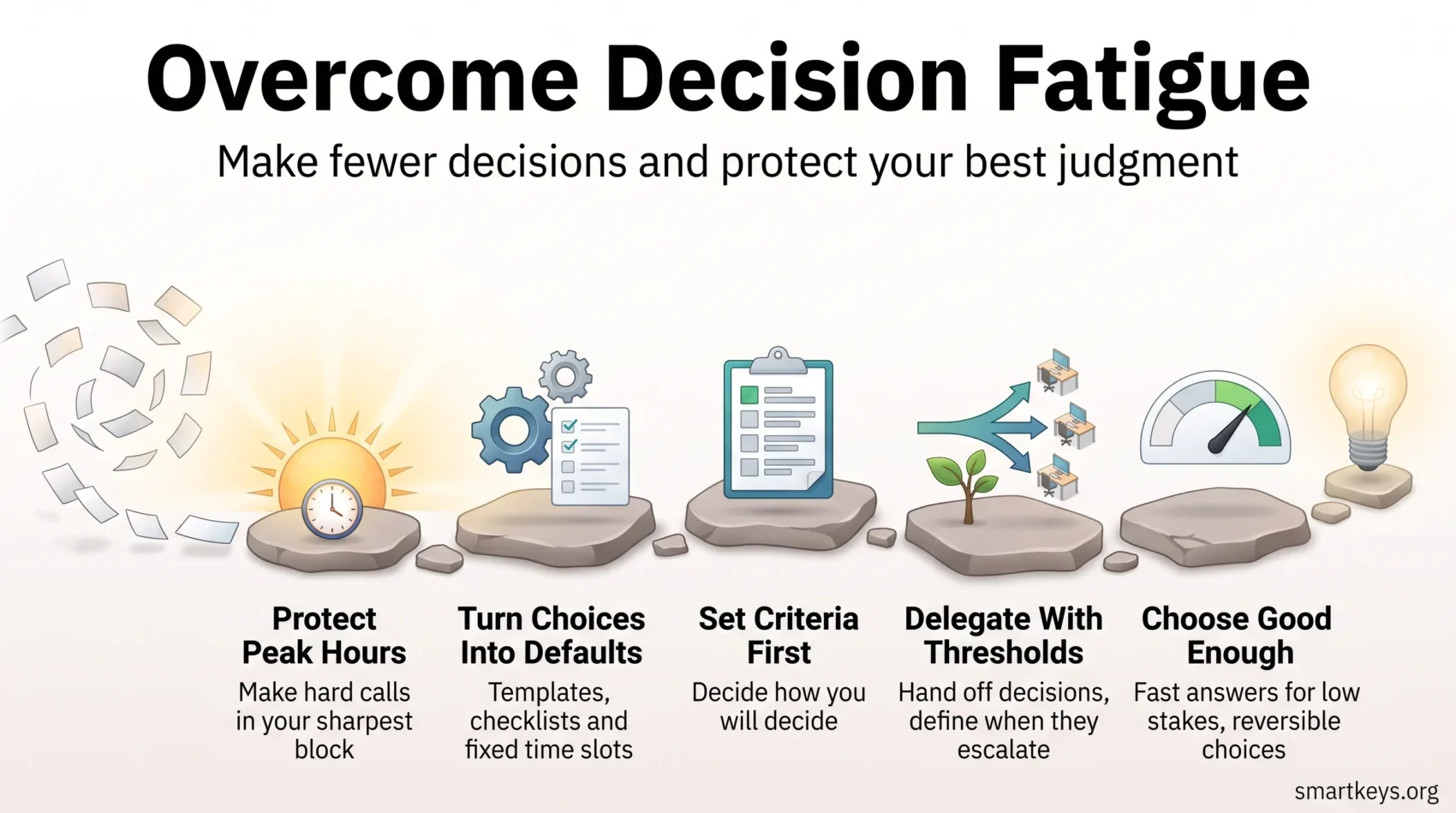
The strategies below are ordered deliberately: protect your best hours first, then reduce the total number of decisions, then improve how you make the ones that remain.
Identify Your Peak Decision-Making Times
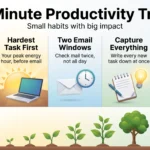
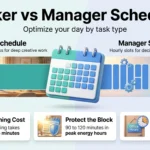
Track when your thinking is sharpest for a week and you will find a clear pattern, usually one strong block and one weaker one. Move consequential decisions into the strong block and defend that window — the classic version of this is to eat the frog and take the hardest call first, before the day has a chance to spend your capacity elsewhere. Build the rest of your schedule around that anchor with a repeatable daily routine.
Take Real Breaks to Recharge Your Mind
A break only works if it is actually a break. Step away from screens, move if you can, and let the queue wait. If your breaks have quietly become feed-checking, a deliberate social media detox will reclaim more recovery time than adding more breaks would.
How to Streamline Your Decisions
This is where the real gains are.

Establish Routine Choices to Save Mental Energy
The goal is to remove choices from circulation entirely. Practical candidates:
- Fixed slots for recurring work — invoices on Tuesday, admin on Friday afternoon.
- Templates for messages, reports, and briefs you write more than twice a month.
- Checklists for anything multi-step you run regularly, so the sequence is decided once.
- Default answers for common requests, so “should I take this meeting?” already has a rule.
A rule made once, calmly, beats the same decision made forty times under pressure. A not-to-do list is the same principle applied in reverse, and a running task management system keeps the remaining choices in one place instead of scattered across your memory.
Make Fewer Decisions Outside Work
Decision load does not respect the boundary between work and home, and the cheapest reductions are usually on the personal side.
Plan meals ahead. Deciding once a week what you will eat removes a daily negotiation that reliably lands at the worst possible hour.
Simplify what you wear. A capsule wardrobe, a fixed rotation, or simply laying out clothes the night before takes a recurring morning decision off the table. The often-cited example is Steve Jobs and his uniform — a memorable anecdote rather than evidence, but the underlying logic holds: a decision you have pre-made cannot cost you anything later.
Batch the small stuff. Group errands, admin, and low-stakes replies into blocks instead of resolving them one at a time.
Prioritize Decisions Based on Their Importance
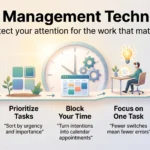
Not every decision deserves the same process. Sort by two questions: how much does the outcome matter, and how easily can it be reversed? High-stakes and hard to undo earns real deliberation. Low-stakes and easily reversed — which is most of them — deserves a fast, good-enough answer and nothing more.
- Handle consequential, hard-to-reverse decisions during your peak window.
- Set a time limit for everything else, and accept the first option that clears the bar.
- Delegate or automate anything recurring and low-impact.
Deliberately choosing “good enough” is the skill most people underuse. For structured ways to sort the queue, the 4 D’s of time management and our overview of decision-making techniques both give you a usable filter.
Delegation: Sharing the Decision-Making Burden
If you manage people, you are absorbing decisions that do not need to reach you. Every one you hand off is capacity returned to the calls only you can make.
When and How to Delegate Effectively
Start by matching decisions to expertise rather than seniority. A project lead who routes budget questions to the finance specialist gets better answers and a lighter load at the same time. Practical steps:
- Map which recurring decisions currently need your sign-off, and why.
- Name a decision owner for each, and say explicitly what they can settle alone.
- Agree the threshold that escalates something back to you — a number, a risk level, a deadline.
The threshold matters more than the handover.
The Value of Collaboration in Complex Decisions
For genuinely complex calls, bringing in other perspectives surfaces options and risks a single person tends to miss. Keep it bounded: define the question, gather views once, and name who decides. Collaboration should widen the option set, not turn one decision into six meetings — which is why a periodic meeting audit pays for itself.
Creating a Decision-Making Framework
A framework is simply a decision you make in advance about how you will decide.
Implementing a Standardized Evaluation Approach
Set your criteria before you look at the options. Write down the two or three factors that actually determine a good outcome for this class of decision, then evaluate against them. Pair this with standing rules — when a decision gets made, who is consulted, what evidence is required — and you eliminate the meta-decision of how to approach it.
Assessing Potential Outcomes with a Rubric
For recurring decisions of real consequence — hiring, vendor selection, prioritizing a roadmap — a simple scored rubric adds consistency. Rate each option on impact, feasibility, and fit with your goals, and the comparison stops depending on which option you happened to consider last.
Managing Information Overload to Reduce Decision Paralysis
More information does not reliably produce better decisions. Past a certain point it produces hesitation, because every additional input creates another thing to weigh.
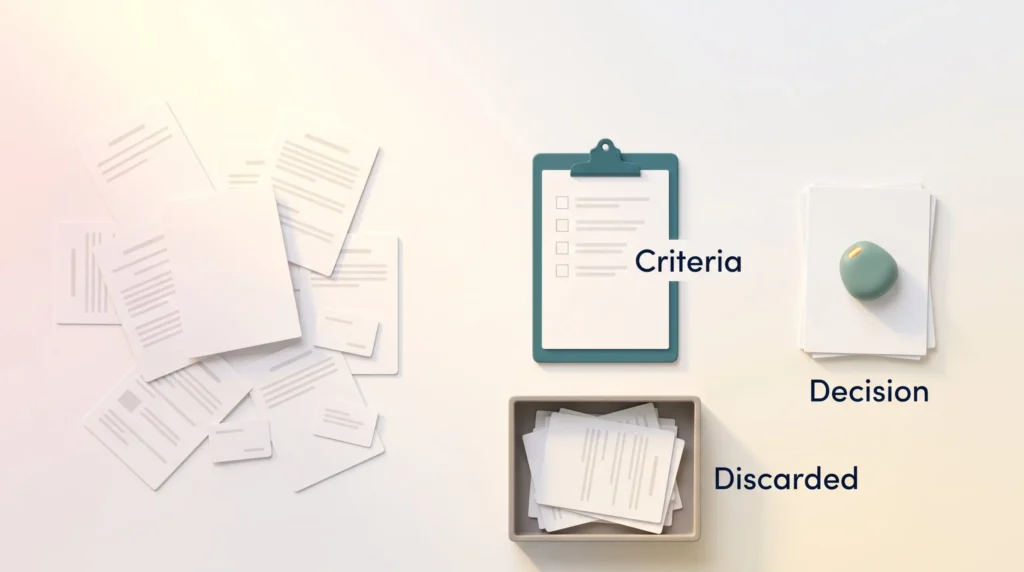
Filtering Out Unnecessary Choices
Shrink the field before you start deciding:
- Fix your criteria first, then discard anything that fails them without further review.
- Limit your input sources deliberately — three good ones beat fifteen partial ones.
- Revisit your priorities weekly so the filter stays aligned with what you are actually trying to do.
A regular weekly planning session is where this filter gets reset, and a periodic brain dump clears the backlog of half-decisions that clutter the field in the first place.
Using Technology to Simplify Your Choices
Used well, tools remove decisions: rules that route messages, recurring templates, automations that handle a routine step without asking. Used badly, they add them. Before adding software, check whether you can remove some — the answer to managing digital overload is rarely another app. And switching between tools costs more than it appears, as the research on multitasking shows.
Understanding the Consequences of Decision Fatigue
Left unaddressed, the effects spread well past the decisions themselves.
Impaired Self-Control and Its Effects on Work Performance
As capacity thins, you default rather than decide — and the default is usually the status quo. Nothing gets rejected, but nothing gets chosen either. The cost is rarely one visible bad call. It is a long series of adequate ones where a better option was available.
Strained Relationships Due to Cognitive Exhaustion
The spillover into home life is real and usually unacknowledged. Recognizing the mechanism helps: the irritability is a load symptom, not a verdict on the relationship. Using routines to separate work from personal time does more here than any amount of trying harder.
Conclusion
Decision fatigue is a load problem, not a discipline problem. Once you see it that way, the useful moves become obvious: protect the hours when your judgment is best, convert recurring choices into defaults, set criteria before you look at options, and push decisions to whoever is closest to the work.
The evidence is more modest than the popular version suggests. There is no verified count of daily decisions, and the willpower-as-fuel model has not survived replication. What holds up is narrower and more practical — that complex choices with unclear criteria are genuinely expensive, and that reducing their number works better than trying to power through more of them.
Start with one recurring decision this week and make it once, permanently. Then do it again next week. That is a slower story than a productivity breakthrough, and it is the one that actually compounds.
Found this useful?
Make SmartKeys a preferred source on Google, and our articles will surface more often in your Top Stories, AI Overviews, and AI Mode.
Add as Preferred Source