Tools
Tools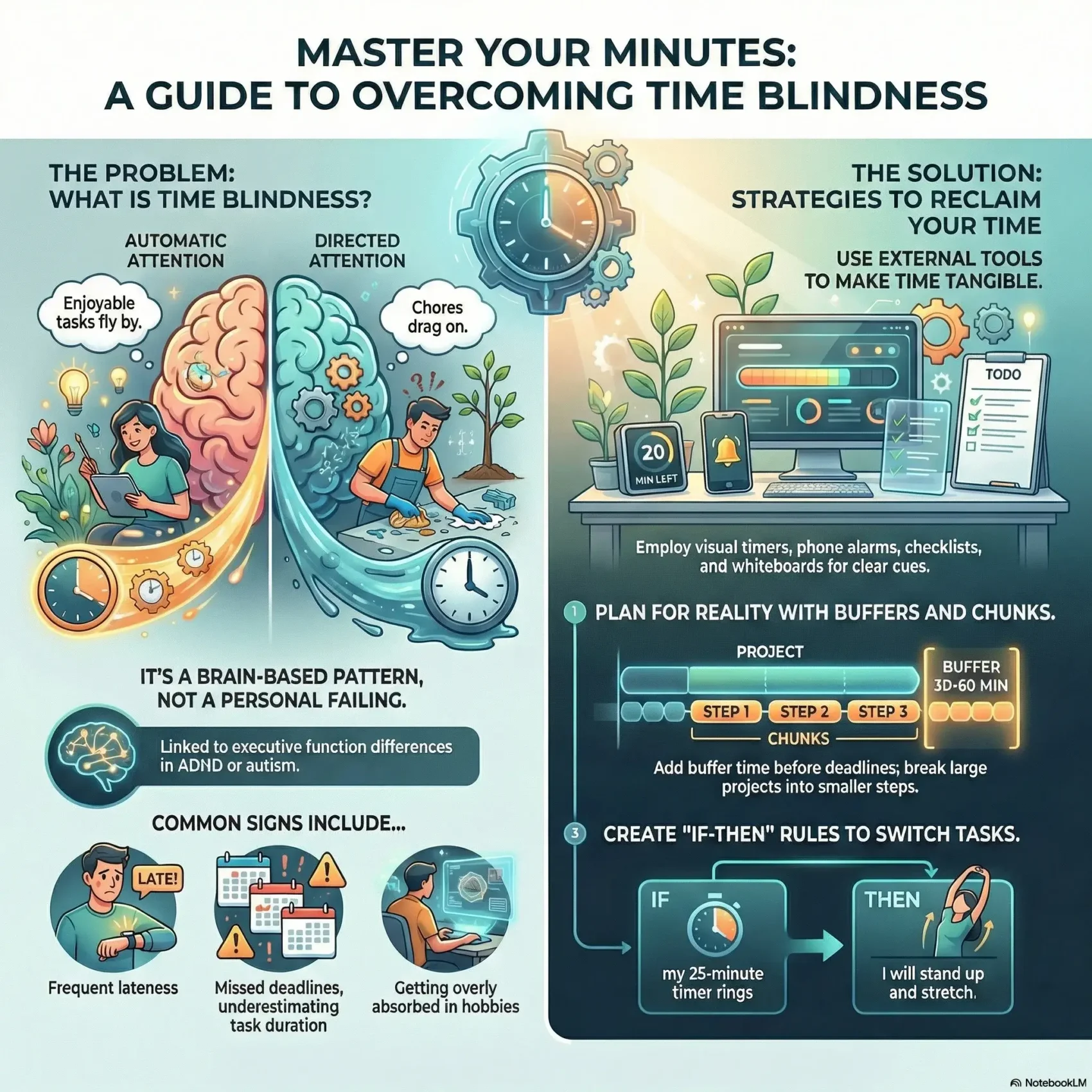
Last Updated on March 14, 2026
You’re not failing—you’re facing a common struggle. The phrase time blindness describes a persistent difficulty in judging how quickly moments pass and in planning tasks. Many people with adhd report this, and it can also show up with autism or low mood.
The effect makes joyful activities fly by and dull tasks crawl. That shift in perception comes from how automatic and directed attention work in your brain. Left unchecked, it chips away at school, work, and relationships.
This short guide helps you spot the pattern and try practical strategies that improve management without overhauling your whole routine. You’ll learn clear ways to protect what matters, notice when activities steal your minutes, and build simple systems that help you function better each day.
Key Takeaways
- Learn what time blindness looks like and why it happens.
- See how your perception shifts with different tasks and feelings.
- Find small, practical strategies to manage life and work more calmly.
- Get tips adults and teens can use to redirect runaway activities.
- Measure progress and celebrate small wins to stay motivated.
What Is time blindness and Why You Lose Track of Time
Some moments slip away without you noticing, and others stretch out endlessly. Time blindness describes that mismatch: a symptom where you can’t tell how long something took or how much remains.
The brain alternates between two modes that shape perception. Automatic attention pulls you toward engaging, enjoyable activities. In this state you may fall into deep focus and find hours have gone by with little sense that time passed.
By contrast, directed attention manages effortful, “have-to” tasks. When a task is low stimulation, your perception stretches and minutes feel like much time. That makes chores and paperwork drag and productivity dip.
These shifts explain common experiences: getting absorbed in a hobby, bingeing shows, or underestimating how long a task will take. The effect may be amplified by conditions that affect executive function, such as ADHD or autism.
How hyperfocus and automatic attention make hours disappear
- You’ll notice enjoyable activity accelerates perceived time.
- You’ll learn to label which activities pull you in so you can plan guardrails.
- You’ll get a simple mental model to spot when automatic attention is running the show.
Directed attention: why “have-to” tasks feel longer
Directed effort drains resources. You may underestimate the work a task needs and overestimate how much time remains. Small, function-focused adjustments can reduce this symptom without removing the things you love.
Signs You Might Be Struggling With Time Perception
Small, predictable slips—late arrivals, missed plans, or half-finished chores—can hint at a bigger pattern.
You may find yourself frequently late, missing deadlines, or leaving tasks unfinished even when you meant to do them. Those repeats are common symptoms and worth noting without blame.
People often underestimate how long a task takes or overpack their day and then scramble. You might also become absorbed in absorbing activities and lose awareness of how long you’ve been working.
Common symptoms: missed deadlines, lateness, and unfinished tasks
- You’ll check for clear signs: running late, missed deadlines, or half-done tasks despite good plans.
- You’ll notice patterns like underestimating a task’s length or cramming too many things into one block.
- You’ll reflect on whether adults at work or home regularly prompt you to switch tasks and how that feels.
- You’ll weigh if these difficulties are occasional or persistent to decide on at-home fixes or extra support.
- You’ll connect these signs to time blindness in a practical way and pick small next steps—buffers, alarms, or simpler schedules.
“Recognizing patterns is the first step; the next is choosing one small change to try this week.”
How Your Brain’s Executive Function Shapes Time Management
Your brain has a control center that helps you plan, start, and finish tasks. This system links working memory, attention, and impulse control so goals actually get done.

The prefrontal cortex as your “conductor” for goal-directed tasks
The prefrontal cortex coordinates sequences of action like a conductor leading an orchestra. Dr. Geeta Grover calls it the “conductor” because it brings together planning, inhibition, and monitoring.
“The prefrontal cortex ensures all parts work together to complete a goal.”
ADHD, autism, depression, and other conditions that affect time
Differences in this part of the brain can change how people estimate duration and switch tasks. In adhd and related disorder profiles, executive function variations make perception of moments uneven.
- You’ll see which skills to build: initiation, inhibition, and monitoring.
- You’ll learn practical moves: external alarms, visual cues, and short checkpoints to support your internal timing.
- You’ll understand that these struggles are a brain-based pattern—not willful failure—and you can choose supports that fit how your brain works.
The Real-Life Impact on Work, School, and Relationships
When minutes slip without notice, the fallout shows up as missed deadlines and strained trust. Left unchecked, the effect alters your daily life and can harm career or school success.
If you have adhd or similar executive challenges, planning and follow-through often feel harder. That makes simple tasks pile up, and important dates get missed.
Small delays often grow into larger costs: rush fees, lost offers, or arguments that seem disproportionate to the original slip.
- You’ll see how missed deadlines at work or late arrivals at school events affect other people and your reputation.
- You’ll notice home routines (chores, childcare handoffs) can break down unless expectations are reset.
- You’ll map which tasks—long reports vs. quick emails—need buffers to avoid last-minute scrambling.
- You’ll learn how clear communication and simple visible strategies restore trust and ease stress.
“Small, consistent management changes can rebuild confidence and repair strained relationships.”
Use this awareness to pick one small fix that gives the biggest benefit to your life and work.
Quick Self-Check: Are Your Daily Habits Hiding Time Blindness?
Small habits often hide a bigger pattern: you might be losing track of how your hours add up. This short check helps you spot practical signs without judgment.
Questions to assess your productivity and goal follow-through
Answer these honestly and keep notes. If several feel familiar, consider discussing them with a clinician.
- Are you often late, missing deadlines, or struggling to finish tasks you start during the day?
- Can you accurately track time for routine activities, or are your estimates usually off?
- Do screens or hobbies pull you in so you lose track and crowd out other priorities?
- Does your perception time shift with stress or boredom in predictable ways?
- How many prompts from other people (texts, calls, pings) do you need to stay on track?
- Pick one or two tasks that always expand and plan a short timebox this week to test a fix.
- Rate how confident you feel estimating durations, then repeat the check in two weeks to track change.
- Use your answers to shape a tiny planning experiment—keep it simple and doable.
- If multiple items are true, consider consulting a doctor or specialist about these symptoms.
- Choose one behavior to change today (for example, set a mid-task alarm) and one to evaluate at week’s end.
“Small checks and tiny experiments often reveal where the real problem lives.”
For a guided method to audit how you track time and boost daily productivity, try a focused audit like this one: track time.
Plan Your Day the ADHD-Friendly Way
Planning with buffers and clear steps makes your schedule work with your brain, not against it. Start each day with one short ritual: ten minutes to set priorities, place alarms, and mark buffers before key deadlines.
Build buffer time and add extra prep for key deadlines
Experts recommend adding 30–60 minutes before crucial deadlines to absorb the unexpected. Front-load prep the night before—pack bags, print documents, or lay out clothes—to avoid morning friction.
Chunk tasks and time-block with realistic estimates
Break big work into small chunks with clear scope. Put start-and-stop points on your calendar and use two alarms for critical transitions: one to wrap up, one to move.
- Sequence by energy: do the hardest chunk when you’re freshest.
- Keep schedules visible: digital plus a simple whiteboard reduces context switching.
- Log actual durations: compare estimates to reality each week to improve management.
“Small buffers and realistic blocks make deadlines less scary and goals more reachable.”
Tools That Help You Track Time in the Moment
A few tactile tools turn vague stretches of work into clear, finishable chunks. Pick simple gear that fits how you focus and make tracking part of the task, not extra work.
Timers, alarms, and hourglasses for visual and auditory cues
Pick a primary timer—phone app, kitchen alarm, or a Pomodoro tool—and add a visual backup like an hourglass. Hourglasses (5-, 15-, 30-minute) give a steady visual cue, and some people use ticking to stay accountable while others find it distracting.
Checklists and whiteboards to prioritize and finish
Use a whiteboard or paper checklist to list the top three items and a visible “Done/Next” lane. Physically crossing items off builds momentum and helps you accurately track progress.
Rewards: do the hard thing first, then treat yourself
Stack rewards: tackle the hardest task first, then take a short break as a treat. Keep a small desk timer and a travel timer in your bag so you always have a way to mark work. These tools and small rituals give you real data on how long tasks take and help prevent losing much time.
- Choose one main timer and a visual backup.
- Set start and midpoint alarms to check progress.
- Capture one insight daily to refine your estimates.
Routines, Mindfulness, and Environmental Tweaks
When your day follows a steady rhythm, you spend fewer decisions on routine and more on what matters. Small, regular habits cut mental load so you conserve attention for important tasks.
Set daily rhythms to reduce decision fatigue
Create simple morning and evening rituals that require little thinking. Keep a launchpad with your keys, wallet, and laptop so departures go smoothly.
Batch similar activities to cut context switching. That protects longer focus blocks and makes your schedule fit your life.
Use mindfulness to re-anchor attention to the present
Practice a one-minute breathing reset before a critical activity. This quick skill re-centers your attention and improves perception of the next step.
Try mindfulness in motion—walking or doing dishes—to ground yourself without adding chores to the day.
Limit high-absorption activities before critical tasks
Set a “no social scrolls or games” rule in the 30–60 minutes before departures or meetings. Add a last-responsible-moment alarm to wind down a fun activity.
- Use visual cues (post-its, phone wallpaper) to nudge you back to the present.
- Turn off nonessential notifications and add website blockers during deep work.
- Review weekly what worked, then lock in one or two changes that improved your health and productivity.
“Small environmental tweaks often give the biggest, most sustainable gains.”
If-Then Strategies to Break Hyperfocus and Switch Tasks
A short, pre-decided trigger can pull you out of an absorbing task without drama.
The if-then technique links a clear cue to a tiny action so you move on with purpose. For example: If I finish chopping dinner, then I set a 10-minute tidy timer. That ties the cue to a simple goal and keeps attention anchored.
Use physical reminders in your environment—sticky notes, a water bottle on the keyboard, or a visible checklist. Pair these with a brief alarm sound you like so you notice the cue and don’t ignore it.
- If the 25-minute timer rings, then stand, stretch, and decide the next step.
- If it’s 9:30 p.m., then close the laptop and set clothes for morning.
- If you’re off track, then take one micro-step only to restart momentum.
- If a task pulls you in, then use a visible note to remind your goal and exit plan.
- If a rule works, then keep it; if not, tweak wording and try again next week.
Keep rules small and concrete. Add one rule per week, test it in the same context, and set a regular review to prune or upgrade your management plan.
“Small if-then prompts turn huge absorption into short, manageable blocks.”
time blindness in ADHD: What’s Different and What Works
Many people with ADHD notice an intense pull toward engaging tasks that makes switching feel nearly impossible. This strong automatic attention leads to quick hyperfocus, which can make hours vanish while urgent chores go unmet.
Stronger automatic attention and the pull of enjoyable tasks
Your brain rewards high-interest activity, so enjoyable things win attention fast. That’s why people adhd often slip into deep focus and lose track of the clock.
Directed attention fatigue and practical workarounds
Directed attention tires easily. You may avoid dull tasks or stall when energy dips. Use short sprints with clear end points and built-in recovery breaks to protect focus.
- Double-cue systems: pair a visual timer and an alarm so you notice shifts even when absorbed.
- External structure: checklists, time-blocked calendars, and startup rituals reduce resistance to starting work.
- Body interrupters: stand, walk, or drink water at fixed checkpoints to reset attention.
“Small, consistent systems help people adhd redirect attention without shame.”
When to Seek Professional Support
If your daily struggles are costing your health, relationships, grades, or job performance, it’s a good sign to seek professional support. Getting help is practical, not a failure.
Behavioral strategies, cognitive therapy, and medication
Clinicians can teach concrete behavioral approaches and cognitive techniques that build planning and follow-through skills. These strategies make routines easier to start and finish.
For some people, medication for attention-deficit hyperactivity disorder or related conditions can reduce executive strain and improve daily management. Discuss risks and benefits with a clinician.
- You’ll explore behavioral methods and cognitive therapy to strengthen organization and monitoring.
- You’ll review whether medication fits your diagnosis and goals.
- You’ll evaluate tools with a professional to avoid low-value purchases.
Coaching and school/work accommodations
ADHD coaching helps translate plans into usable routines—especially for adults juggling work, family, and studies. Coaches focus on practical steps you can repeat.
At school or work, reasonable accommodations like structured deadlines, reminders, or extra time can level the playing field. Asking for them is part of effective self-advocacy.
- You’ll consider coaching if you need help turning strategies into daily habits.
- You’ll request accommodations that match how you work best.
- You’ll include family or supervisors in planning when that helps keep expectations clear.
“Treat professional support as building durable skills, not a quick fix.”
Map your history of conditions and any prior diagnoses so your provider can tailor management. Revisit the plan regularly and adjust as life demands change.
Track Progress: How to Know You’re Managing Time Better
Small data points about your day reveal big patterns if you collect them consistently. Start with a short, honest log and treat it like useful feedback—not judgment.
Log actual durations by noting start and stop times for a handful of tasks each day. Compare each estimate to the time passed so you learn where your schedule stretches or collapses.
Log task durations and adjust future schedules
- You’ll log start and stop times to compare estimates with time passed, so your next schedule is more accurate.
- You’ll color-code entries by task type to see which categories run long and which finish faster.
- You’ll calculate average overrun and add that buffer to similar tasks to better manage time.
- You’ll review weekly totals to spot patterns—days you do your best work and things that derail you.
- You’ll use a simple template: task, estimate, actual, difference, insight—so function lessons live in minutes.
Keep logs lightweight (phone note or sticky sheet). Repeat the cycle monthly and set one tiny goal: improve one estimate each week.
“Small, regular tracking turns guesswork into reliable scheduling.”
For a guided audit to help you track time, try this focused method: track time.
Conclusion
You can learn to notice pattern shifts and choose small, steady steps that make daily plans stick.
Remember: time blindness is common and not a diagnosis. It is partly a result of how your brain’s attention systems and executive function work, not a moral failing.
Use simple strategies—routines, visible tools, buffers, and if‑then rules—to manage time with less friction. Pick one or two tips to try this week and treat slips as data, not defeat.
If attention challenges or hyperactivity disorder affect your life, professional help and accommodations can move you forward. Share your plan with someone supportive and celebrate concrete wins as you reach your goal.