Tools
Tools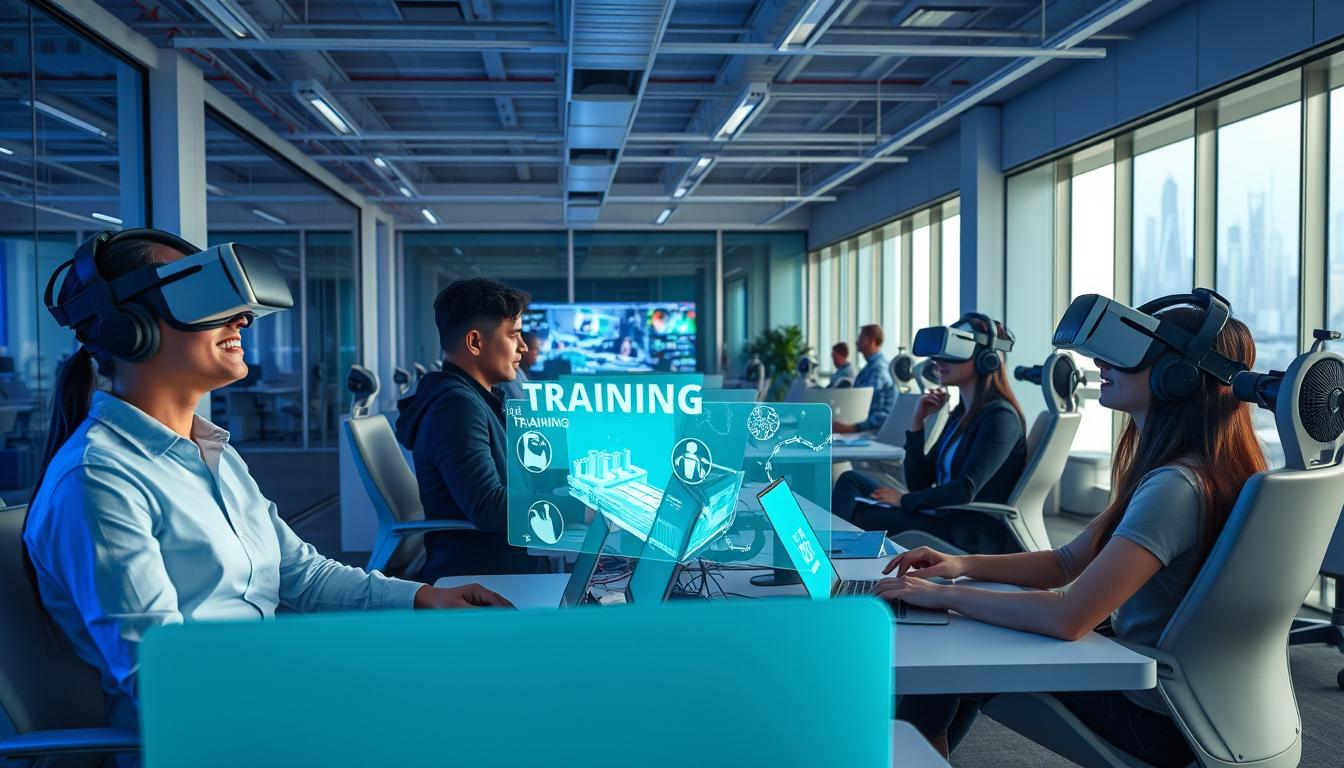
Last Updated on December 9, 2025
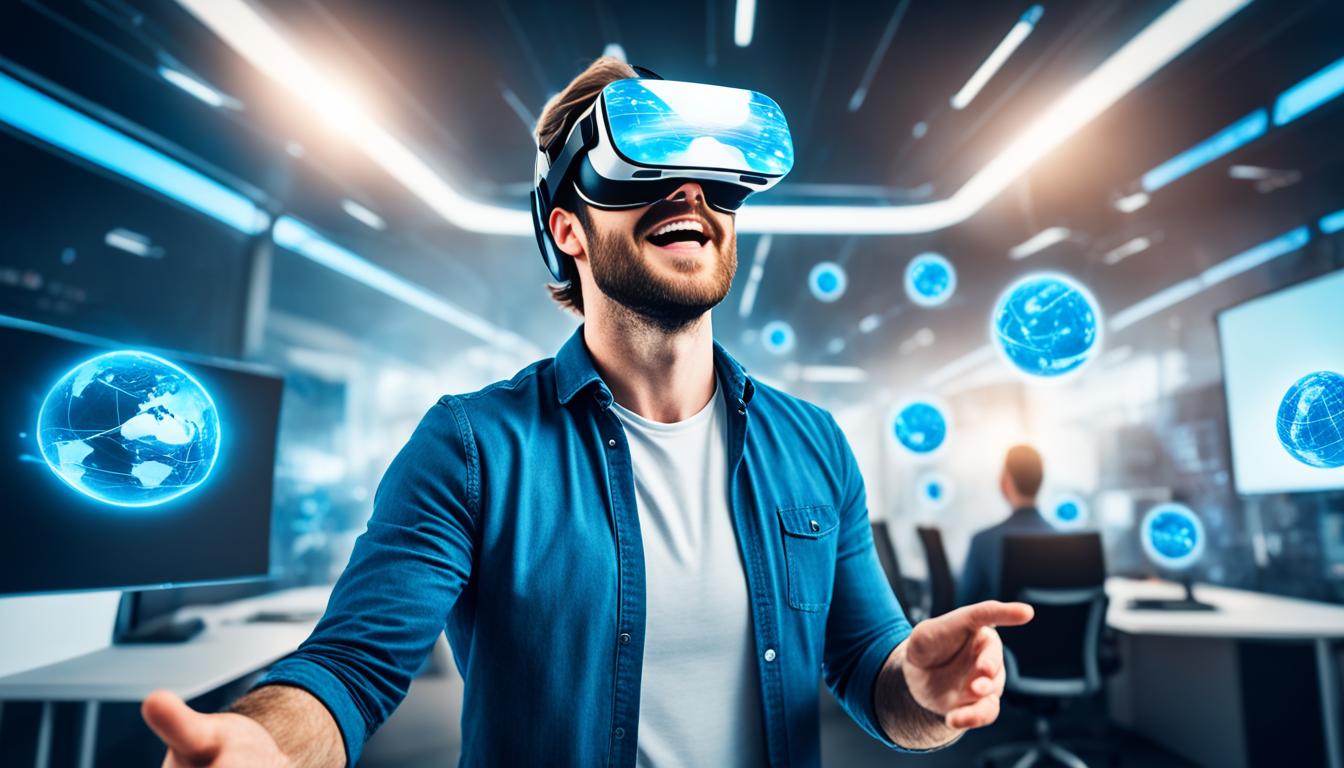
Technology’s rapid advancement is reshaping how we approach employee development. Virtual Reality (VR) training stands at the forefront, offering a fresh approach to engage and develop your team. It transforms traditional training methods into immersive experiences, creating realistic simulations that boost learning. With 91% of businesses either using or planning to use VR, this technology is poised to transform the future of training.
In today’s fast-paced business environment, companies are keen on innovation. Virtual reality training enhances engagement and knowledge retention, meeting the pressing need for upskilling. It results in a 76% increase in learning effectiveness, preparing your workforce to tackle new challenges head-on.
Key Takeaways
- VR is rapidly becoming the preferred method for employee training.
- 76% increase in learning effectiveness via VR training.
- VR training significantly decreases workplace injuries by 43%.
- Engaging in immersive training can lead to a more confident workforce.
- Adopting VR can result in substantial time and cost savings for training.
- Companies are leveraging VR to promote wellness and soft skills development.
The Rise of VR in Employee Training
The world of employee training is changing fast, with more companies turning to VR Employee Training. This new method grabs learners’ attention with its immersive and interactive nature. It’s clear why virtual training is so appealing. It boosts engagement, retention, and allows for safe practice, making VR a top pick for training.
Understanding the Appeal of VR Training
As work environments change, so do the skills needed to succeed. Skills like communication, teamwork, and leadership are now crucial. Yet, 59% of hiring managers find it hard to find candidates with these skills. VR offers a way to practice and improve these abilities in real-like scenarios.
This approach not only enhances skills but also engages learners more than traditional methods can. It’s a game-changer for training.
Statistics Supporting VR Adoption
VR’s adoption in employee training is on the rise, backed by compelling statistics. A survey of over 300 learning and development leaders shows growing interest in VR. It’s expected to play a big role in the global economy.
Reports show 89% of executives struggle to find candidates with the right soft skills. Meanwhile, 61% of users say VR simulations help them grasp job duties better. Verizon’s success with VR training for customer service reps is a prime example of its benefits.
Such data highlights the need for companies to adopt VR. It’s key to building a more skilled workforce.
Benefits of VR Employee Training
Virtual reality (VR) in employee training brings significant advantages, boosting organizational performance. The skilled labor gap highlights the urgency for effective training methods. VR training offers benefits like better knowledge retention, cost savings, and safer training environments.
Enhanced Engagement and Knowledge Retention
VR learners show increased engagement and knowledge retention. Sprouts Farmer’s Market saw a 16 times higher retention of core values with VR training. This high engagement leads to better learning outcomes, enabling teams to apply new skills effectively.
Cost-Effective and Safe Learning Environments
VR training enhances safety and saves costs. Walmart reduced new technology proficiency time by 96%, improving efficiency. VR minimizes travel and material costs, offering interactive, immersive training safely. It also results in a 4X faster completion rate than traditional classroom learning.
Filling the Skilled Labor Gap
The skilled labor gap is a major workforce challenge. VR training effectively addresses this by enabling rapid skills acquisition. Immersive experiences build confidence in tackling complex tasks, like safety protocols in hazardous environments. Verizon saw 97% of its frontline associates feeling more prepared for dangerous situations after VR training.
Discover more about the comprehensive benefits of virtual reality training. See how it can revolutionize your training programs, boosting employee morale and operational success.
How VR Training Works
Virtual Reality (VR) training is a game-changer in employee education. It leverages cutting-edge tech to offer a dynamic learning platform. This approach caters to different learning styles, making training more engaging and memorable.
The Mechanism of Immersive Learning
At its core, VR training creates lifelike, 3D environments. These environments boost learning effectiveness, allowing you to practice skills in controlled yet realistic settings. Studies show learners can train up to four times faster than in traditional classrooms.
They also feel a deeper emotional connection to the experience. This increased immersion builds confidence, making participants 275% more likely to apply their new skills in real-world scenarios.
Types of Training Scenarios Available
VR training scenarios cover a wide range of industries and roles. They include:
- Safety training in hazardous environments, ensuring employees are familiar with potential risks before real exposure.
- Healthcare simulations, allowing medical professionals to practice procedures multiple times and develop empathy for patients.
- Construction-related scenarios, where electricians, engineers, and other professionals can get hands-on experience without the safety risks.
Each scenario is designed to provide a realistic experience, preparing you for job-specific challenges. Experts suggest limiting VR sessions to 20 minutes to avoid fatigue and maximize training impact.
Implementing a VR Learning Platform
Integrating a VR learning platform into your organization can revolutionize your employee training initiatives. The journey begins with securing executive buy-in. This commitment is crucial as it ensures all stakeholders grasp the advantages VR training offers. These include lower safety incidents and increased employee engagement.
Steps to Get Executive Buy-In
To secure the necessary executive buy-in, follow these essential steps:
- Identify specific challenges that VR training can address for your organization.
- Offer a compelling argument supported by data, highlighting cost savings and better learning outcomes from VR programs.
- Show how VR training supports the company’s broader goals and mission.
- Share success stories from other companies that have adopted VR learning platforms.
Identifying Training Needs and Objectives
It’s crucial to understand your company’s training objectives. Start by:
- Assessing your current training methods and identifying areas for improvement.
- Engaging with different departments to determine specific skill needs and learning preferences.
- Setting clear objectives that align with your organization’s strategic goals.
- Exploring how VR training can meet these objectives effectively.
A well-thought-out strategy for implementing VR training ensures a significant return on investment. This is reflected in improved employee performance and satisfaction.
Best Practices for VR Corporate Training
Integrating virtual reality (VR) into corporate training offers a unique opportunity to enhance employee engagement and productivity. Following the best practices VR training ensures a successful transition. Starting with pilot programs allows you to assess effectiveness and make necessary adjustments before a broader rollout.
Pilot Programs and Rollout Strategies
Launching pilot programs serves as an essential first step when implementing VR training rollout. These small-scale tests produce valuable insights into user experience and help refine training content. Consider these strategies for effective pilot programs:
- Define clear learning objectives for the pilot.
- Select a representative group of participants.
- Gather feedback on the VR experience to identify strengths and areas for improvement.
- Adjust and optimize the content based on participant feedback.
- Prepare for a full-scale deployment based on pilot outcomes.
Key Metrics for Measuring Success
Tracking key metrics is vital for evaluating the effectiveness of your VR training initiatives. Consider measuring:
- Training scores to compare VR performance against traditional methods.
- User feedback to understand participant engagement and satisfaction.
- Retention rates to gauge how well information is absorbed.
- Skills application to observe how learned skills translate to real-world performance.
- Time efficiency to assess reductions in training duration.
Continuous assessment of these metrics allows for a meaningful VR training rollout, leading to quantifiable improvements in employee skills and overall training outcomes. To explore more about enhancing employee engagement, check out this link: Employee Engagement Strategies.
Addressing Safety and Compliance with VR Training
Integrating safety compliance VR training into your organization boosts employee learning, especially in dangerous work settings. Traditional training methods often fail to engage, but VR offers a fresh approach. It immerses participants in realistic simulations, preparing them for hazardous scenarios. This ensures workers are ready to tackle real risks effectively.
Realistic Simulations for Hazardous Situations
VR training creates a safe space for employees to practice safety protocols without risk. For example, VR driving simulations engage participants, enhancing their driving skills with realistic controls. This boosts confidence and competence in handling machinery and navigating dangers.
Immersive technology fosters a unified safety culture, improving consistency across locations. Employees retain critical information better when practicing in a simulated environment. VR trains for specific scenarios, including:
- Conducting pre-trip inspections and using Personal Protective Equipment (PPE) correctly.
- Practicing Lockout, Tagout (LOTO) procedures safely.
- Mastering high-altitude skills and emergency protocols in simulated conditions.
- Gaining experience in confined space training, reducing the risks associated with such environments.
- Improving hazard recognition skills to spot and respond to dangers effectively.
VR platforms like Mercury XRS provide data analytics to track employee performance and KPIs. This helps organizations monitor progress, ensuring safety compliance remains a priority.
When considering VR for training, remember it enhances learning and builds a resilient workforce. With evidence showing better information retention and skill mastery, it’s clear why forward-thinking organizations adopt VR for training.
Engaging Diverse Workforce through VR
Organizations are now focusing on creating an engaging diverse workforce. They understand the value of diversity, equity, and inclusion in their training. VR soft skills development is becoming a key tool for enhancing learning experiences. It helps employees better interact with each other and understand diverse backgrounds.
Utilizing VR for Soft Skills Development
VR offers a unique space for developing crucial soft skills. Through interactive role-play scenarios, employees can hone their communication, conflict resolution, and teamwork abilities. This method allows for a deeper understanding of unconscious biases by offering different perspectives. In a virtual environment, tackling tough topics like micro-aggressions becomes safer, boosting empathy and respect among colleagues.
Case Studies of Successful Implementation
Many companies have successfully incorporated VR into their training, seeing significant improvements in employee engagement and skills. McDonald’s and Walmart are examples where VR training has made a substantial difference. These success stories highlight how immersive experiences can overcome barriers, fostering strong teams. They prepare employees for the complexities of a diverse work environment.
Future Trends in VR Employee Training
The VR training landscape is rapidly evolving, thanks to groundbreaking technological advancements. Companies are now integrating augmented reality and mixed reality into their training programs. This approach creates dynamic learning environments that boost employee engagement and knowledge retention. As you delve into these emerging trends, observe how they transform traditional training methods.
Technological Advancements on the Horizon
The VR training market is expected to grow significantly, reaching $142.1 billion by 2030. Industries like healthcare and automotive are quickly adopting VR for training. Already, 77% of healthcare organizations have incorporated VR into their programs. Innovations such as AI-powered learning paths and adaptive platforms are driving this growth. These technologies personalize content based on individual interactions and learning styles, enhancing both engagement and effectiveness.
The Role of AR and Mixed Reality
The inclusion of augmented reality and mixed reality in training is a significant trend. AR enables the creation of immersive simulations that mimic real-world scenarios. For example, it can be used for customer service training in retail or for medical practice in healthcare. Walmart’s success with VR training shows its value across various sectors. As more companies explore these technologies, expect to see more targeted learning experiences. These will address specific skill gaps, leading to more effective workforce development.

Challenges in Adopting VR for Training
Organizations eager to adopt VR training encounter numerous obstacles. These hurdles can impede the successful integration of this technology. It’s crucial to understand these challenges to overcome them and unlock VR’s full potential.
Overcoming Resistance to Change
Emotional resistance is a major hurdle in VR training adoption. Employees might feel awkward using AR/VR, leading to hesitation. This is especially true for neurotypical individuals and those with disabilities, requiring a thoughtful, inclusive onboarding process. To ease this resistance, consider the following strategies:
- Offer individualized support during the transition.
- Establish peer support groups.
- Emphasize the efficiency and effectiveness of VR training.
Companies like Walmart and Bank of America have successfully implemented VR training. They’ve seen training time drop from 30-45 minutes to just 3-5 minutes. This shows the potential when resistance is actively addressed.
Setting Up Infrastructure for VR Training
Creating a solid VR training infrastructure is a significant challenge. The cost of hardware and software can be high. A custom AR app, for instance, might cost around $63,000, depending on its complexity. Key considerations include:
- Ensuring smooth frame rates (ideally 90 frames per second or higher) to prevent motion sickness and enhance user comfort.
- Creating high-quality graphics for an immersive experience.
- Planning for remote access options, particularly beneficial for older generations facing emotional resistance.
While the challenges of VR training adoption may seem daunting and costly, the right expertise can help overcome them. Starting this journey with knowledge and support can significantly improve training efficacy. This sets your organization apart in a competitive landscape.
Conclusion
Reflecting on the future of VR employee training, it’s clear that this cutting-edge tech could transform your training initiatives. Integrating VR into your programs can dramatically boost engagement and retention of knowledge. Research indicates that VR training simulations outperform traditional methods in recall. This immersive and interactive approach to training is a game-changer, offering solutions that fit a wide range of workforces.
The initial cost of VR technology might seem steep, but the long-term benefits are substantial. Companies like Shell, BP, Walmart, and Hilton have seen safety improvements and cost savings. When planning to adopt VR, remember to address technical hurdles and update content regularly for success.
By embracing VR, your organization can lead in employee development. As training methods evolve, using effective training solutions in VR will be key. It will help create a workforce that’s not only skilled but also adaptable to future challenges.