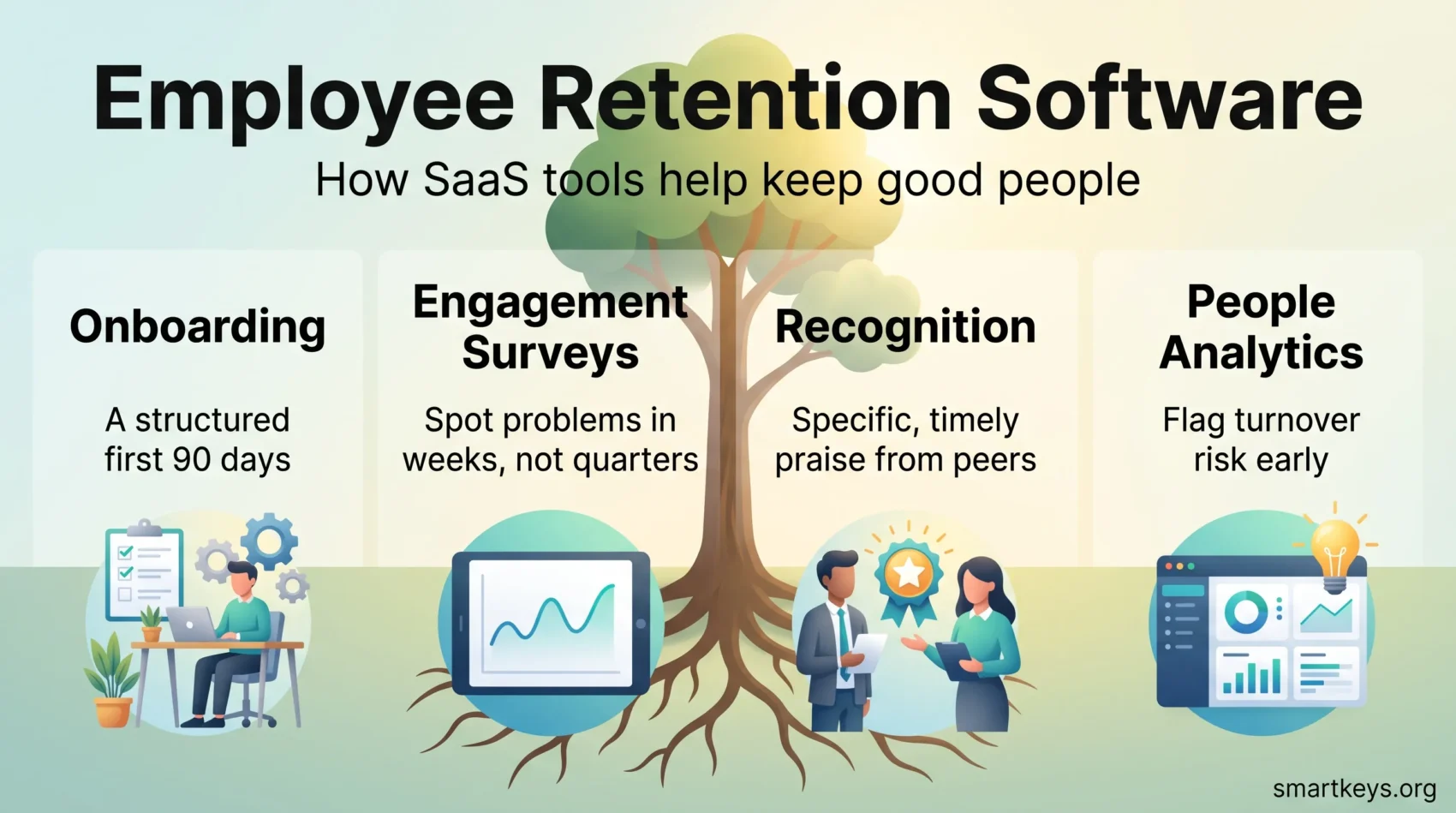
Keeping good people has become a software problem as much as a management problem. Gallup’s State of the Global Workplace 2026 report puts global employee engagement at 20% for 2025, with manager engagement at 22% and just 34% of employees thriving in their overall lives. Gallup estimates the cost of that disengagement at roughly $10 trillion in lost productivity, around 9% of global GDP.
The good news is that quitting has slowed. US Bureau of Labor Statistics JOLTS data for June 2026 shows 3.2 million quits at a rate of 2.0% a month, well below the Great Resignation peak. The bad news is that a calmer labor market hides the same underlying problem: people who stay but disengage cost almost as much as people who leave. This is where employee retention software earns its budget. Onboarding platforms, engagement surveys, recognition apps and people analytics do not create a good workplace on their own, but they make the difference between noticing a problem in week two and noticing it in the exit interview.
Key Takeaways
- Global engagement sits at 20%, so retention work starts with the manager relationship, not the tool.
- Gallup puts the cost of replacing an employee at one-half to two times their annual salary.
- Onboarding software shortens time to productivity and gives new hires a consistent first 90 days.
- Personalized communication strategies enhance the employee onboarding experience.
- People analytics can flag turnover risk early, but only if managers act on what it shows.
- Software cannot fix low pay, no career path or a bad manager. Those stay human problems.
Why Retention Is Worth Paying For
Turnover is expensive in ways that rarely show up on one line of a budget. Gallup estimates that replacing an employee costs between one-half and two times their annual salary, once recruiting, lost output and ramp-up time are counted. For a team of 50 with 15% annual turnover, that is a meaningful share of payroll spent standing still.

The reasons people leave are consistent and well documented. When the Pew Research Center asked US workers who quit a job in 2021 why they went, 63% cited low pay, 63% cited no opportunities for advancement and 57% said they felt disrespected at work. None of those three is a software gap. What software does is make them visible sooner and make the fixes easier to run at scale.
Career development is the piece most directly served by workforce retention software. LinkedIn’s 2025 Workplace Learning Report found career progression is the top reason employees give for wanting to learn, and that organizations treating career development as a priority track retention and internal mobility far more closely than their peers. A learning platform is only useful if it connects to a visible path, which is why an internal talent marketplace tends to outperform a course catalogue on its own.
- Measure the cost of turnover in your own organization before buying anything. It sets the budget.
- Separate regretted from unregretted attrition. A flat turnover number hides both good and bad news.
- Look at first-year attrition on its own. Early leavers usually point at hiring or onboarding, not culture.
Pay sits underneath all of this. Pay transparency practices and a defensible salary band will do more for retention than any engagement app if compensation is the actual problem.
What SaaS Changed About Retention Work
Before cloud HR tooling, most retention work happened once a year in a spreadsheet. An annual survey went out, results arrived three months later, and by then the people who answered honestly had often already gone. Moving these processes to cloud-based software changed the cadence more than the content.
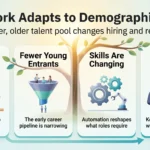
Three things are genuinely different now. Feedback runs continuously, so a dip in one team shows up in weeks rather than quarters. Data from recruiting, onboarding, learning and performance sits in one place, which makes it possible to ask why a specific cohort leaves. And the tooling reaches distributed staff, which matters when a quarter of US paid full days are worked from home, according to WFH Research.
The trade-off is sprawl. Most companies now run more HR and collaboration tools than they can govern, and the consolidation trend across SaaS is partly a reaction to that. More dashboards do not mean more insight.
Where SaaS Actually Moves the Needle
It helps to be specific about which retention problems software can address and which it cannot. Tools work well when the problem is one of consistency, visibility or reach.
Consistency means every new hire gets the same structured first month regardless of which manager they report to. Visibility means an HR business partner can see that engineering onboarding satisfaction fell two months running. Reach means a colleague in another time zone gets the same recognition and one-to-one cadence as someone in the head office.
Tools work badly when the problem is trust. An engagement survey that never produces a visible change trains people to stop answering. A recognition platform used by only two departments becomes a running joke. In both cases the software is fine and the follow-through is missing.
Onboarding: The Weeks That Decide the Rest
Onboarding is the highest-leverage place to put software, because the failure mode is early and expensive. Gallup has reported that only 12% of employees strongly agree their organization does a great job of onboarding new hires, which is a low bar that most companies still miss.
A decent onboarding software setup does four things: it handles paperwork and access before day one, it sequences learning over weeks rather than dumping it in a single orientation, it assigns a buddy or mentor, and it checks in at fixed points such as day 30, 60 and 90. None of that is exotic. The value is that it happens every time.
- Pre-boarding: equipment, accounts and reading sent before the start date, so week one is about people rather than IT tickets.
- Structured sequencing: role-specific tasks released over 90 days, with clear owners for each.
- Progress visibility: managers can see what a new hire has completed without asking.
- Scheduled check-ins: short, calendared conversations rather than an open invitation to ask questions.
For distributed teams, remote onboarding and training needs more deliberate structure than in-office onboarding, because none of the informal learning happens by accident. Some organizations add gamified onboarding elements such as progress bars and milestone badges. These help with completion rates; they do not substitute for a manager who has time in week one.
Communication and Engagement Tools
Communication platforms are the most widely deployed retention-adjacent tools, and the easiest to get wrong. Slack, Microsoft Teams and their equivalents solve the problem of reaching people. They create a new one: the expectation of constant availability.

The organizations that get this right treat norms as part of the tooling decision. Response-time expectations, meeting-free blocks and a written default all matter more than which app you picked. Asynchronous communication tools and clear conventions around them are what make a cross-time-zone team workable rather than exhausting.
- Pulse surveys, run often enough to spot trends but not so often that people stop answering.
- Recognition features that let peers, not only managers, acknowledge good work.
- Engagement analytics that segment by team and tenure rather than reporting one company-wide score.
Watch for the failure case: tools that measure activity rather than outcomes. Message counts and online status say very little about contribution, and staff notice quickly when they are being watched instead of supported.
Cloud Platforms and Team Cohesion
Remote and hybrid arrangements have settled rather than disappeared. WFH Research data puts around a quarter of US paid full days at home, concentrated in professional and technical roles. That is enough to make cohesion a design problem rather than something that takes care of itself.
Cloud platforms help by giving distributed teams a shared record: goals in one place, decisions written down, achievements visible to people who were not in the room. HR systems such as BambooHR and Workday cover the administrative layer, while project tools such as Trello, Asana and Notion carry the day-to-day work. Hybrid workforce tools sit between the two and are usually where the gaps appear.

What actually builds cohesion is narrower than most vendor material suggests:
- Written decisions and visible goals, so nobody has to be in a call to know what changed.
- Predictable overlap hours rather than everyone being available all the time.
- Recognition that reaches people outside the head office as reliably as those inside it.
Gallup’s 2026 data is a useful corrective here: remote and hybrid workers often report higher engagement than fully on-site staff, and also more loneliness. Both facts can be true, and only one of them is solved by better software. Engagement in remote teams depends heavily on whether managers hold regular one-to-ones.
Retention Strategies SaaS Makes Practical
Most retention strategies are not new ideas. What SaaS changes is whether they survive contact with a busy quarter.
Flexible scheduling is the clearest example. Flexible work schedules are consistently among the most valued non-pay benefits, but they only work if capacity, coverage and handovers are visible to everyone. That is a tooling job. The same applies to development: a promise of growth means little without a mechanism, which is where upskilling and reskilling programmes and structured learning paths come in.

Three strategies are worth prioritizing because they compound:
- Continuous feedback: short, frequent check-ins beat annual reviews. Continuous performance management tooling exists mainly to keep this habit alive when calendars fill up.
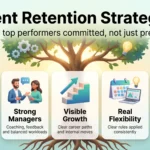
- Career visibility: employees who can see the next two roles and the skills required for them are markedly less likely to look outside. Investing in employee engagement activities supports this only when it connects to a real path.
- Manager enablement: Gallup’s finding that manager engagement fell to 22% matters, because managers are the main lever on everyone else’s engagement. Tools that reduce administrative load free them to do the part that counts.
An employee experience platform can tie these together, though the integration work is usually underestimated. Start with one process done well rather than a full-suite rollout.
HR Tech for Development and Career Growth
Development tooling is where HR tech solutions have matured most in the past two years. The useful categories are narrower than the market suggests.
Learning platforms deliver content and track completion, which is necessary but weak on its own, since completion is not capability. Skills platforms map what people can actually do against what roles require, and that is what makes internal mobility possible. Performance tools capture goals and feedback in a form that survives a manager change. Microlearning helps with adoption, because 15 minutes fits into a working week in a way a two-day course does not.
AI features now appear across all of these, mostly as recommendation and summarization. They are helpful for surfacing relevant content and drafting development plans. They are not a substitute for a manager conversation, and anything that feeds into pay or promotion decisions needs documented human review. The EU AI Act treats employment-related AI systems as high risk, so companies operating in Europe should be able to explain how any such tool reaches its outputs.
Feedback and Recognition Platforms
Recognition is cheap relative to its effect, which is why it is the most common first purchase after a communication tool. The mechanics matter more than the platform.
Recognition works when it is specific, timely and visible to peers. It stops working when it becomes a monthly quota, when only managers can give it, or when it substitutes for compensation. A points-and-rewards catalogue is fine, but the note explaining what someone did well is the part people remember.
Feedback tooling has a similar rule. Ask less often than you think, act visibly on what you hear, and close the loop in public. An employee net promoter score is a reasonable headline metric, but it is only useful alongside the free-text comments and segmented by team. Recognition and feedback programs only pay off when people can see that something changed because they spoke up.
People Analytics and Turnover Risk
People analytics is the most oversold and most genuinely useful category here. The oversell is the promise of predicting exactly who will resign. The real value is spotting patterns that a manager cannot see from one team.
Workforce analytics tools are typically used for four things:
- Attrition analysis: which teams, tenures and roles lose people, and whether that is changing.
- First-year attrition: the clearest signal about hiring and onboarding quality.
- Turnover risk modeling: cohort-level flags that prompt a conversation, not individual scores that prompt suspicion.
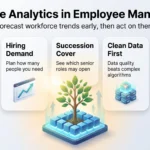
- Succession planning: where a single departure would cause real disruption.
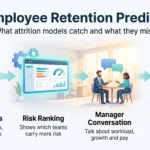
Platforms such as Visier, SAP SuccessFactors, Workday and the analytics modules inside major HRIS products all cover this ground. Predictive analytics for employee turnover is worth using with two guardrails: treat the output as a prompt for a human conversation rather than a verdict, and be transparent with employees about what is being analyzed. Models trained on historical data reproduce historical bias, and an opaque flight-risk score is a fast way to damage the trust the whole exercise depends on. If you want to go further into how machine learning flags at-risk employees, what these models catch and miss, and which EU and US rules now apply, read our guide to AI employee retention prediction.
Flexible Work and Employee Satisfaction
Flexibility is now a baseline expectation in knowledge work rather than a perk, and it consistently ranks near the top of what people say they want after pay. The interesting question is no longer whether to offer it but how to run it without the coordination costs eating the benefit.
The practical answer is fewer, better-governed tools. Let teams choose within a curated set rather than either mandating one stack or letting everyone buy their own. Unmanaged tool sprawl creates security and data-protection exposure, and it fragments the record of how work actually got done.

Flexibility also has a wellbeing edge that software can blunt or sharpen. Always-on notifications turn location flexibility into time inflexibility, which is one of the reliable routes into remote work mental health problems. Default-off notifications outside working hours, explicit response-time norms and calendars that show real availability do more for satisfaction than another engagement feature.
What Software Cannot Fix
It is worth being blunt about the limits, because retention budgets are often spent in the wrong place.
No platform compensates for below-market pay. No survey tool fixes a manager who does not run one-to-ones. No learning library creates a promotion that does not exist. The Pew findings on why people quit point at pay, advancement and respect, and all three are decided by leadership choices rather than procurement.
The honest framing is that SaaS tools are instrumentation and leverage. They tell you where the problem is, they make good practice repeatable, and they extend a manager’s reach across time zones. Bought for that purpose, they pay for themselves. Bought as a substitute for management attention, they become another subscription nobody opens.
Conclusion
Retention in 2026 is a management problem with a software layer, not the other way round. Engagement at 20% globally, quits at 2.0% a month and a replacement cost of up to two times salary describe an environment where the cheapest win is usually keeping the people you already have.
The sequence that works is unglamorous. Measure what turnover costs you and where it happens. Fix onboarding first, because it is early, cheap and measurable. Give managers time and tools to hold regular conversations. Make career paths visible. Use analytics to find patterns, then send a human to ask about them. And keep the tool count low enough that people can learn the ones you have.
AI will keep changing what these platforms can do, particularly around personalization and early warning. The fundamentals are unlikely to move: people stay where they are paid fairly, can see a future, and work for someone who notices them.
Found this useful?
Make SmartKeys a preferred source on Google, and our articles will surface more often in your Top Stories, AI Overviews, and AI Mode.
Add as Preferred Source