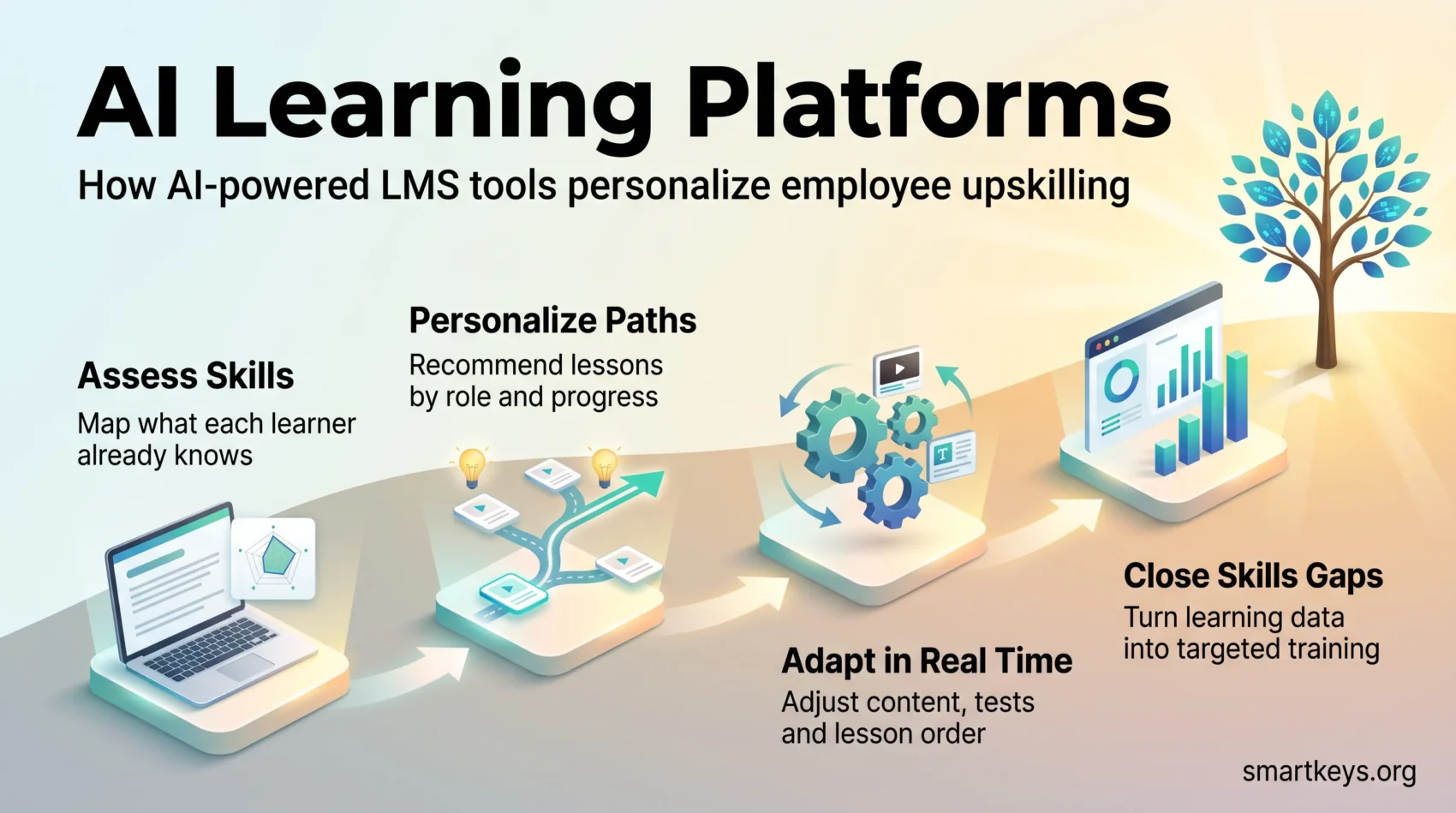
Most companies know their people need new skills. The hard part is delivering training that fits each person instead of pushing everyone through the same course. AI learning platforms tackle exactly that problem. They are learning management systems (LMS), the software companies use to assign, deliver, and track training, with artificial intelligence built in to personalize what each employee learns next.
The pressure is real. The World Economic Forum’s Future of Jobs Report 2025 expects nearly 40% of the skills required on the job to change by 2030. It also projects that 59 out of every 100 workers will need upskilling or reskilling in that period. For the strategy behind that shift, from skills gap analysis to learning culture, see our guide on how upskilling and reskilling prepare teams for future jobs. This article zooms in on the tools. You will learn what AI learning platforms actually do, which vendors lead the market, how adaptive learning works inside them, and what to watch out for before you buy.
Key Takeaways
- AI learning platforms personalize training paths based on each employee’s role, skill level, and progress.
- Adaptive learning adjusts both the content and the assessments in real time, so no one wastes hours on material they already know.
- Leading AI-powered LMS vendors include Docebo, Absorb, LearnUpon, SC Training, Cornerstone, and 360Learning.
- AI skills gap analysis turns performance and HR data into concrete training recommendations.
- Data privacy, algorithmic bias, and low adoption are the main risks, and all three can be managed with clear rules and a pilot phase.
What Are AI Learning Platforms?
An AI learning platform is training software that learns from its users. A classic LMS hands every employee the same course list. An AI-powered LMS looks at what a person already knows, what their role requires, and how they perform in quizzes. It then recommends the next lesson, skips what is redundant, and repeats what did not stick.
Think of a new sales rep and a ten-year veteran taking the same product training. On a traditional platform, both sit through all twelve modules. On an AI learning platform, the veteran tests out of the basics in ten minutes and goes straight to the new pricing model. The new rep, meanwhile, gets extra practice on objection handling.
Not every tool that claims to be “adaptive” deserves the label. Some simply branch to a different page after a wrong answer. True adaptive learning is built on instructional design: the platform keeps a model of what each learner knows and uses it to decide what comes next. Ask vendors to show you how that learner model works before you sign.
Core Features
Most AI learning platforms share three building blocks:
- Personalized learning pathways: sequences of courses and lessons that adjust to each learner’s pace, goals, and role.
- Skill-based assessments: quizzes and practical tasks that check ability in real time and set the right level of challenge.
- Adaptive learning capabilities: content and teaching methods that change as the learner progresses.
Key Technologies Behind AI Learning Platforms
Three technologies do most of the work in the background:
- Natural language processing (NLP): the part of AI that understands everyday language. It powers chat-based learning assistants that answer questions like “How do I file an expense report?” inside the platform.
- Machine learning: algorithms that find patterns in learner data, such as which modules people fail most often, and use them to improve recommendations.
- Generative AI: models that draft course outlines, quizzes, and summaries from existing documents, so a trainer can build a first version of a course in hours instead of weeks.
If some of these terms are new to you, our plain-language AI glossary explains them in more detail.
Types of Adaptive Learning in AI Platforms
“Adaptive learning” covers several different mechanisms. When you compare AI-powered LMS tools, it helps to know which ones a platform actually supports.
Adaptive Content Delivery
The platform changes the material itself based on how the learner engages. If someone breezes through a video on data protection basics, the next lesson moves to real case examples. If they struggle, it offers a shorter explainer or a different format, such as an interactive simulation instead of text.
Adaptive Assessment
Tests adjust their difficulty to the learner’s answers. A correct answer leads to a harder question, a wrong one to an easier one. This gives a more precise picture of real ability with fewer questions, and it shows both strengths and the exact topics that need work.
Adaptive Sequencing and Custom Learning Paths
Here the order of lessons changes. The platform decides which module comes next based on role, prior knowledge, and results. Some platforms also let learners choose between optional topics, which keeps motivation high without losing the required core.
Real-Time Feedback
Instead of waiting for a final exam, learners get immediate hints and explanations while they practice. Managers see progress dashboards, so they can step in early when someone is stuck rather than after a failed certification.
Benefits of AI-Powered Learning Platforms
For companies, the value of AI learning platforms comes down to three things: better fit, more reach, and lower effort per learner.
Personalized Learning Experiences
Because content adapts to each person’s pace and style, learners spend their time on what they actually need. That keeps engagement higher than in one-size-fits-all courses and helps new knowledge stick.
Scalable Training for Organizations
An AI-powered LMS can train hundreds of employees in different time zones at once. People learn from anywhere, on laptop or phone, without travel or fixed classroom dates. This matters most for growing companies and distributed teams.
Lower Cost Than Traditional Methods
Automation handles much of the administrative work: enrolling people, sending reminders, grading quizzes, and building reports. AI authoring tools also speed up course creation. Content can be updated centrally instead of reprinting materials or rescheduling workshops. The savings depend heavily on your setup, so measure them against your own baseline rather than trusting vendor averages.

AI Learning Platforms and Employee Upskilling
Upskilling means teaching people new skills for their current or next role. AI learning platforms make this practical at scale. They connect three things that used to live in separate systems: the skills a job requires, the skills a person has, and the courses that close the gap.
Tailored Learning Pathways for Skill Development
Assessments reveal individual gaps, and the platform recommends matching courses. A marketing coordinator who wants to move into analytics, for example, might get a path covering spreadsheet modeling, basic SQL, and data storytelling, in that order and at their pace. The same logic helps companies prepare staff for the skills that will be most in demand over the next few years.
Continuous Learning Instead of One-Off Courses
Skills now change too fast for an annual training day. AI learning platforms support continuous learning by nudging employees with short lessons when new content is relevant to them. This also works for human skills: platforms increasingly offer AI-driven soft skills training with role-play simulations for feedback conversations or negotiations.

Assessing Skills Gaps with AI
A skills gap is the difference between the skills your team has and the skills your business needs. Finding it used to mean spreadsheets and manager interviews. AI learning platforms speed this up considerably.
Using Data to Identify Learning Needs
The platform combines assessment results, course completion data, and job profiles to build a skills map of the workforce. Some tools also infer skills from job titles and work history. The result is a detailed picture of current competencies and a ranked list of training needs. Our guide to running a digital skills gap analysis walks through the process step by step.
Planning for Future Skill Requirements
Skills gap analysis is not only about today. Good platforms let you compare the current skills map with the roles you plan to hire or build internally over the next years. That turns training from a reactive exercise into part of workforce planning, and it shows which gaps you can close through training and which require new hires.

Curating Learning Experiences with AI
Beyond recommendations, AI changes how learning content is created, packaged, and delivered.
Adaptive Algorithms for Personalized Journeys
Adaptive algorithms study learner behavior: where people pause, which questions they miss, which formats they finish. From that, the system picks the most suitable resources from a large library. It also flags outdated modules that many learners skip or fail, which helps L&D (learning and development) teams keep content current.
Microlearning and Retention
Many AI learning platforms deliver content in short units of a few minutes. Breaking complex topics into small pieces makes them easier to digest and remember, and it fits into a busy workday. For formats, timing, and examples, read our microlearning strategy guide for continuous workforce upskilling.
Gamification and Peer Content
Game elements such as points, badges, and team challenges add motivation, especially for compliance topics that feel dry. Our overview of gamification in the workplace shows what works and what feels forced. Many teams also pair AI automation with peer learning platforms, where colleagues write and review short lessons themselves instead of waiting for a formal course. For hands-on skills, some companies add VR employee training modules that the LMS tracks like any other course.
Top AI Learning Platforms on the Market
The market for AI-powered LMS tools is crowded, and almost every vendor now advertises AI features. The platforms below are widely used in corporate training and each has a distinct focus.

Overview of Leading Providers
- Docebo targets mid-sized and large companies. Its AI features include content generation, a virtual coach that answers learner questions, automatic tagging, and a recommendation engine.
- Absorb LMS is known for a clean interface and strong reporting. Absorb AI helps admins create content and helps learners find it through smarter search.
- LearnUpon is popular for training employees, customers, and partners in one system. With Create+, it added AI-assisted content authoring directly inside the LMS.
- SC Training (formerly EdApp, now part of SafetyCulture) is a mobile-first LMS for frontline teams, with an AI course creator for quick microlessons.
- Cornerstone serves large enterprises and focuses on skills intelligence, mapping workforce data to capabilities and development paths.
- 360Learning combines collaborative learning, where subject experts build courses with colleagues, with AI skill tagging and course recommendations.
Features and pricing change quickly in this category. Always request a demo with your own content and check current reviews before deciding.
Features to Look for in an AI Learning Platform
- Real adaptive learning with a learner model, not just simple branching.
- An interface that learners can use without training on the tool itself.
- Skills mapping that connects to your job profiles or HR system.
- Analytics that show who is falling behind early enough to help.
- AI authoring that works with your existing documents and videos.
- Clear data protection settings, including where data is stored and whether it trains the vendor’s AI models.
How to Implement an AI Learning Platform
Buying the software is the easy part. Getting people to use it takes planning.
- Define the goal first. Pick one or two measurable training goals, such as faster onboarding for a specific role or higher pass rates in a certification.
- Involve stakeholders early. HR, IT, the works council or employee representatives, and a few team leads should shape the rollout, not just approve it.
- Start with a pilot. Test the platform with one team and real content for a few weeks before a company-wide launch.
- Set up a measurement plan. Decide in advance which numbers you will compare before and after, for example time to productivity or error rates.
- Train the trainers. Admins and content creators need to understand how recommendations work, or they will not trust them.
Challenges and Risks of AI Learning Platforms
AI learning platforms bring real benefits, but they also create new problems. Addressing them early decides whether a rollout succeeds.
Overcoming Resistance to Change
Many employees are used to classroom training and are skeptical of software that “decides” what they should learn. Explain openly how recommendations are made and give people control, for example the option to skip a suggestion. Making AI decisions understandable is the core idea behind explainable AI, and it builds trust faster than any launch campaign.
Data Privacy
These platforms collect detailed data about what employees know and where they struggle. That data is sensitive. Limit collection to what training really needs, define who can see individual results, and check data processing agreements with each vendor. Our guide on data privacy at work covers the basics. If you operate in the EU, also check how the EU AI Act’s compliance requirements apply, since AI systems used for evaluating employees can fall into stricter categories.
Bias in Recommendations
An algorithm trained on past data can repeat past patterns. If only certain groups were sent to leadership training before, the system may keep recommending it mainly to them. Test recommendations regularly across teams and demographics, and let humans review high-stakes decisions such as promotion-relevant certifications. A clear AI governance model defines who is responsible for these checks.
Too Little Human Interaction
AI tutors are available around the clock, but they do not replace mentors and colleagues. Critical thinking and people skills grow through discussion and feedback. The strongest programs combine AI personalization with live sessions, coaching, and peer exchange.
The Digital Divide
Not every employee has the same access to devices or the same comfort with digital tools. Frontline staff without a company laptop can be left out. Mobile-friendly content, offline access, and short introductory sessions help make upskilling available to everyone. For a broader look at where AI helps companies beyond training, see our overview of AI in business.
Found this useful?
Make SmartKeys a preferred source on Google, and our articles will surface more often in your Top Stories, AI Overviews, and AI Mode.
Add as Preferred Source