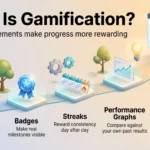
Gamification means adding game mechanics such as points, badges, levels, progress bars and leaderboards to work that is not a game. In practice that means a sales dashboard that ranks the team, a training course that awards badges for finished modules, or an onboarding checklist that fills a progress bar as a new hire works through it.
The idea keeps coming back because the underlying problem refuses to go away, and it has sharpened as work has become more distributed. Our overview of remote work trends covers that shift. Gallup’s State of the Global Workplace 2026 report puts global employee engagement at 20%, down from a peak of 23% in 2022, and estimates that low engagement costs the world economy around $10 trillion a year, roughly 9% of global GDP. Manager engagement sits at 22%. Those are the numbers that make executives look for something, anything, that makes work feel less like a queue of tasks.
Gamification is one of the answers on offer, and not a bad one. But the marketing around it is far stronger than the published evidence, and a badly designed points system damages trust. This guide separates what is documented from what is repeated because it sounds good.
Key Takeaways
- Gamification adds points, badges and leaderboards to ordinary work tasks.
- Global engagement sits at 20% (Gallup, 2026), which keeps interest in engagement tools high.
- Most public gamification statistics are self-reported perceptions or vendor case studies, not controlled research.
- The mechanics that hold up tie to autonomy, visible competence and real feedback.
- Publicly ranking people is the most common way these programs backfire.
- Measure a baseline before launch, or you will never know whether anything changed.
What Gamification at Work Actually Means
Gamification is not turning work into a video game. It borrows the feedback structures games use and applies them to tasks people already have to do.
Games are unusually good at one thing: telling you where you stand. You always know your score, what the next level requires, and whether the last thing you did helped. Most jobs are the opposite. Work disappears into a system, and you hear about it at a review six months later, if at all.
The toolkit itself is small: points for defined actions, badges for skills or milestones, progress bars and levels, leaderboards, and short challenges or streaks. Our guide to gamification and its core mechanics explains each one and the psychology behind it. At work, what decides whether they help is which behavior you attach them to, and whether employees had any say in the design. A gamified onboarding process that shows a new hire what is left to complete solves a real problem. A leaderboard ranking support agents by ticket count usually creates one.
Why Engagement Is the Problem Gamification Is Sold Against
It helps to be precise about what companies are trying to fix, because gamification addresses only part of it. Gallup’s 2026 figures describe a workforce that is present but not invested. Twenty percent of employees are engaged, and 34% report thriving in their overall lives. Manager engagement has fallen nine points since 2022, which matters because managers set the tone for the people around them. Our overview of HR trends in 2026 covers what else is moving.
Gamification does not fix low pay, an unclear strategy, or a manager nobody trusts. It can make repetitive and invisible work feel less repetitive and less invisible. That narrower claim is the one worth making. Companies that expect a points system to replace regular performance conversations get a short spike in activity, then a return to the old baseline.
What the Evidence Actually Supports
This is the part most articles skip. Gamification has plenty of enthusiastic survey data, a handful of first-party company results, and very little controlled measurement.
Self-Reported Perceptions
The most widely quoted numbers come from TalentLMS, which surveyed nearly 900 employees for its 2019 Gamification at Work report. Of the roughly 526 respondents who had actually encountered gamified elements, 89% said gamification made them feel more productive, 88% said it made them happier at work, and 78% said gamification in recruiting would make a company more desirable.
Read those carefully. They measure how people feel, not what they produced, and the survey is several years old. It is useful evidence that employees do not resent well-built gamification. It is not evidence of an output gain.
Company-Reported Results
Microsoft published results from a gamified program in its call centers in 2019: a 10% productivity improvement as agents took more calls to earn points, a 12% reduction in absenteeism, and a large difference in knowledge retention, with 89% of agents demonstrating understanding when information arrived through gamified simulations against 23% using standard notifications.
Deloitte’s Leadership Academy is the other case cited constantly. Reported in Forbes in 2013, the program added missions, badges and leaderboards to its executive training and saw a 47% increase in the number of users returning to the site each week.
Both are real, attributable results. Both are also self-selected success stories published by the organizations that ran them, with no control group. Treat them as proof that gamification can work in training and in high-volume, metric-heavy roles, not as an expected return.
What Is Missing
You will see claims that gamification makes companies “seven times more profitable” or accounts for “60% of employee engagement.” Those figures circulate widely and trace back to no published study, so we have left them out. If a gamification statistic does not name a study, a sample and a year, assume it is marketing.
The Psychology Behind Why Game Mechanics Work
The strongest explanation comes from self-determination theory, developed by psychologists Edward Deci and Richard Ryan. It holds that motivation is strongest when three needs are met: autonomy (having real choices), competence (feeling capable and improving), and relatedness (feeling connected to other people).
Good mechanics touch all three. A progress bar makes competence visible. A badge for a skill you chose to learn respects autonomy. A team challenge builds relatedness. This is why training programs are the most reliable place to start: learning already has clear milestones, and the person doing it wants the feedback.
There is an important limit. Decades of motivation research show that heavy external rewards can weaken motivation someone already had. If an employee enjoyed mentoring colleagues and you start paying points for it, the points quietly become the reason, and the behavior stops when the points do. Use game mechanics to make progress visible on work people already care about, rather than to bribe them into work they do not.
Where Gamification Backfires
Most failed programs fail in one of five predictable ways. Knowing them in advance is worth more than any list of platform features.
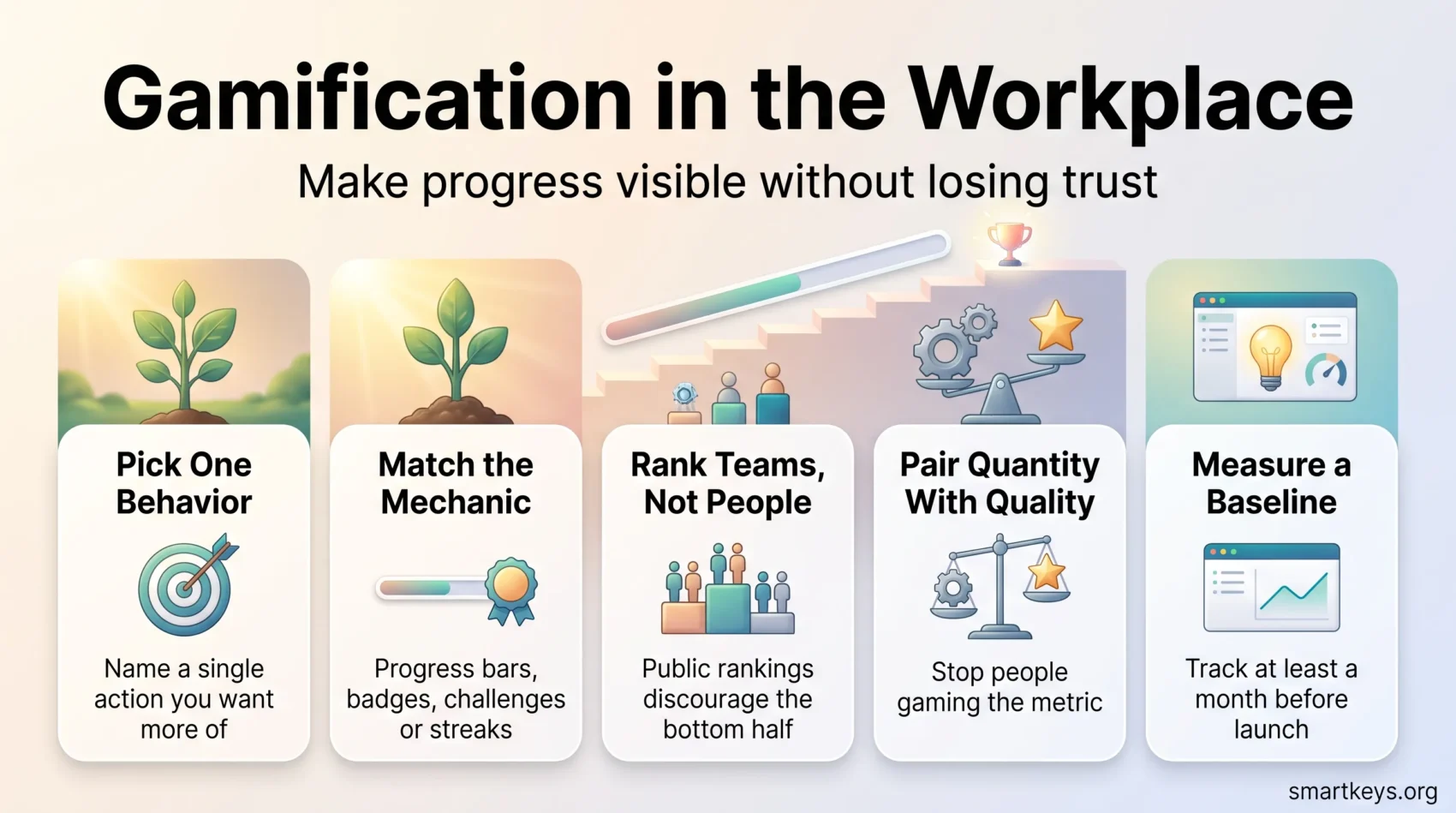
Public rankings demotivate the bottom half. A leaderboard energizes the people near the top and discourages everyone else, week after week. The fix is to rank teams rather than individuals, or to show each person their progress against their own previous performance.
People optimize the metric, not the job. Award points for calls handled and calls get shorter, whether or not the problem was solved. Any measure that becomes a target stops being a good measure. Pair every quantity metric with a quality one.
The novelty wears off. Participation is almost always highest in the first few weeks. Programs that never change their challenges or rewards flatten out fast. Plan refresh cycles from the start.
It reads as surveillance. A points system built on activity tracking sits very close to employee monitoring, and employees notice. Be explicit about what is tracked, who can see it and what it is used for. If the answer includes performance reviews, say so.
It is unfair across roles. If a points system rewards volume, the person handling complex escalations always loses to the person handling simple ones. Score within comparable roles, or score improvement rather than absolute output.
How to Implement Gamification Without Wrecking Trust
Start With One Behavior, Not a Platform
Name the specific behavior you want more of before you look at any tool. “Complete the compliance module within two weeks of assignment” is a behavior. “Improve engagement” is not. Programs anchored to a single observable action are far easier to design, explain and evaluate. Our guide to setting goals you actually reach applies here almost unchanged.
Choose Mechanics That Match the Work
Match the mechanic to the task:
- Long processes with clear stages, such as onboarding or certification: progress bars.
- Skill development: badges tied to demonstrated competence, not attendance.
- Short pushes with a defined end, such as a quarterly data clean-up: time-boxed challenges.
- Consistent daily habits: streaks, used gently, with a way to recover a broken streak.
Avoid leaderboards as your opening move: they are the most visible mechanic and the most likely to cause damage.
Make It Optional, and Let the Team Design It
A program people can opt out of without consequence tells you something honest about whether it works. If participation collapses once it stops being mandatory, the design was the problem. This is also the cleanest answer to the surveillance objection.
Before launch, ask a small group from the affected team to review the scoring. They will find the loopholes in an afternoon, because they know which parts of their job are easy to inflate.
Reward Recognition, Not Just Output
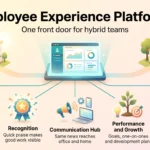
The most durable mechanics have nothing to do with competition. Peer recognition, where colleagues award each other badges for help given, works like positive reinforcement and is much harder to game than a volume counter. It also suits distributed teams, where informal appreciation otherwise disappears. See our notes on building connection in remote teams.
Where Gamification Fits Best
Three areas have the strongest track record.
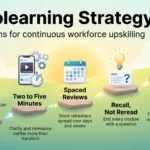
Training and development. Learning has natural milestones, and learners want feedback on whether they are improving. Most learning platforms ship with points, badges and progress tracking built in, so there is often nothing extra to buy. Our LearnWorlds review covers one such platform, and our overview of AI-powered learning platforms looks at how personalization is changing course design.
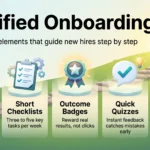
Onboarding. A new hire’s first two weeks are a long list of tasks with no visible end, and a progress bar removes that uncertainty immediately. This matters most in remote onboarding, where a new joiner cannot glance around the room to see how everyone else is doing.
High-volume, metric-heavy roles. Contact centers, sales development and claims processing already run on counts. Adding feedback and recognition on top of numbers people were being measured on anyway is a smaller change than it looks, which is why the documented results cluster here.
It fits worst where work is ambiguous, creative or long-cycle. Scoring a research project produces either meaningless metrics or resentment.
Tools and Platforms
Fortune Business Insights valued the global gamification market at $36.86 billion in 2025 and projects $46.69 billion for 2026, growing at about 27% a year to 2034. That figure spans consumer apps, education and marketing as well as workplace tools, so read it as a signal of interest rather than workplace adoption.
Three kinds of tool are worth knowing about:
- Dedicated engagement platforms such as Centrical and Bunchball Nitro (now part of BI WORLDWIDE) layer points, challenges and coaching over existing systems. They suit large operational teams and are priced accordingly.
- Built-in features in tools you already pay for. Learning platforms, CRMs and service desks increasingly ship with badges and leaderboards included, so check before buying anything new.
- Recognition tools focused on peer appreciation rather than scoring. The lightest option, and the least likely to feel like monitoring.
The platform is the smallest part of the decision. A well-designed program in a spreadsheet beats a badly designed one in expensive software.
Measuring Whether It Actually Worked
Most gamification programs cannot say whether they succeeded, because nobody recorded what things looked like beforehand. Take a baseline for at least a month, then track a few indicators:
- The behavior you targeted, measured the same way before and after.
- A quality counterweight, so you can see whether people are gaming the metric.
- Participation over time, which tells you when novelty is fading.
- Voluntary turnover in the team, watched over quarters rather than weeks.
- Direct feedback, gathered through short pulse surveys or your employee net promoter score.
Where you can, leave one comparable team out of the program for the first quarter. An informal control group is unglamorous and far more informative than a before-and-after chart. Broader guidance on indicators sits in our piece on workforce analytics tools. If participation drops and the target behavior does not move, end the program rather than expanding it.
What Changes Next
Two shifts are worth watching. AI is moving gamification from fixed rules to adaptive ones, with challenges sized to an individual’s current performance rather than a company-wide target. Our look at AI performance coaching covers that.
The second is generational. Younger employees arrive having used progress systems in every app they own, and expect feedback faster than an annual review. That is less about games than about cadence, as our overview of Gen Z at work discusses. Companies that get the cadence right often need fewer game mechanics than they expected.
Gamification makes progress and recognition visible. Used on the right work, with the people being scored involved in the design, it earns its place. Used as a substitute for management, it becomes another dashboard nobody opens.
Found this useful?
Make SmartKeys a preferred source on Google, and our articles will surface more often in your Top Stories, AI Overviews, and AI Mode.
Add as Preferred Source