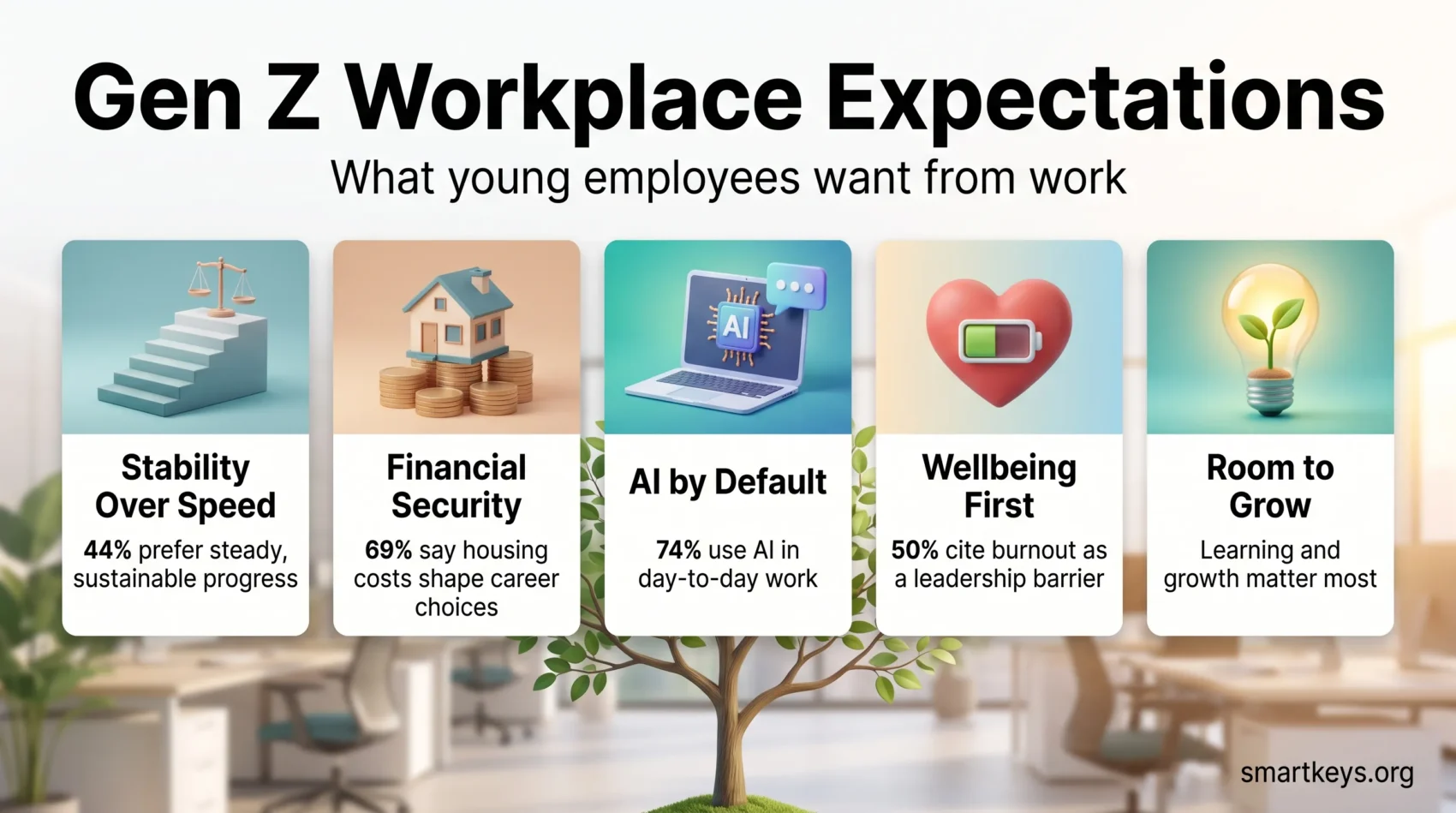
Generation Z, born roughly between 1997 and 2012, is no longer the new arrival in the workforce. The oldest members are approaching thirty, many are managing people, and the assumptions built around them in 2020 have not aged well. What Gen Z workplace expectations really are is now measurable rather than speculative.
Deloitte’s 2026 Gen Z and Millennial Survey, based on 22,595 responses across 44 countries collected between 24 November 2025 and 15 January 2026, is the clearest recent read on this group. It shows a generation prioritising stability, skills and wellbeing over speed. Only 25% of Gen Z respondents said they prefer fast-paced career progression with rapid promotions, and just 6% named reaching a leadership position as their primary career goal.
That is not a lack of ambition: 76% said they are interested in a senior role eventually. They are simply more deliberate about the conditions under which they will take one, and understanding those conditions separates employers that retain young talent from those that keep refilling the same roles.
Key Takeaways
- Only 25% of Gen Z want rapid promotions; 44% prefer steady, sustainable progress (Deloitte, 2026).
- 55% have delayed a major life decision because of their finances, and 69% say housing costs shape their career choices.
- 74% use AI in their day-to-day work, and 79% use it to find learning opportunities.
- 50% name stress and burnout as a reason to avoid leadership roles.
- Among Gen Z and younger US millennials, agreement that they had chances to learn and grow fell to 37% in 2025 from 48% in 2020 (Gallup).
- About 25% of US paid days were worked from home in May 2026, so flexibility is a baseline expectation, not a perk.
Gen Z Workplace Expectations Explained in 6 Minutes (Video)
Prefer to watch? In just 6 minutes, this video shows you what Gen Z really expects from work, where employers get it wrong, and the one fix that matters most.
The Rise of Gen Z in the Workforce
Glassdoor projected in its 2024 Workplace Trends report that Gen Z would overtake baby boomers in full-time US work during 2024. That milestone has passed, so the question is no longer when Gen Z arrives but what happens to employers that never adjusted. Gen Z’s arrival is one part of a broader reshuffle, covered in our guide to how workforce demographics are shifting: fewer young entrants and more older workers change the hiring math for every employer.
This generation entered work during a pandemic, a burst of inflation and the fastest workplace technology shift in decades, which produced a pragmatic cohort rather than an idealistic one. Gen Z workers question processes they cannot see the logic of, and treat a manager’s credibility as earned rather than granted by title.
Their reputation for job-hopping is weaker than it looks: what reads as restlessness is usually a response to a job that stopped teaching them. As our overview of future work trends toward 2030 shows, the labour market they face rewards skill accumulation over tenure.
What Gen Z Actually Wants From Work
Two priorities dominate: durable financial footing and work that builds capability. Neither is unique to this generation, but the emphasis has shifted from what employers expected five years ago.
Stability Over Speed
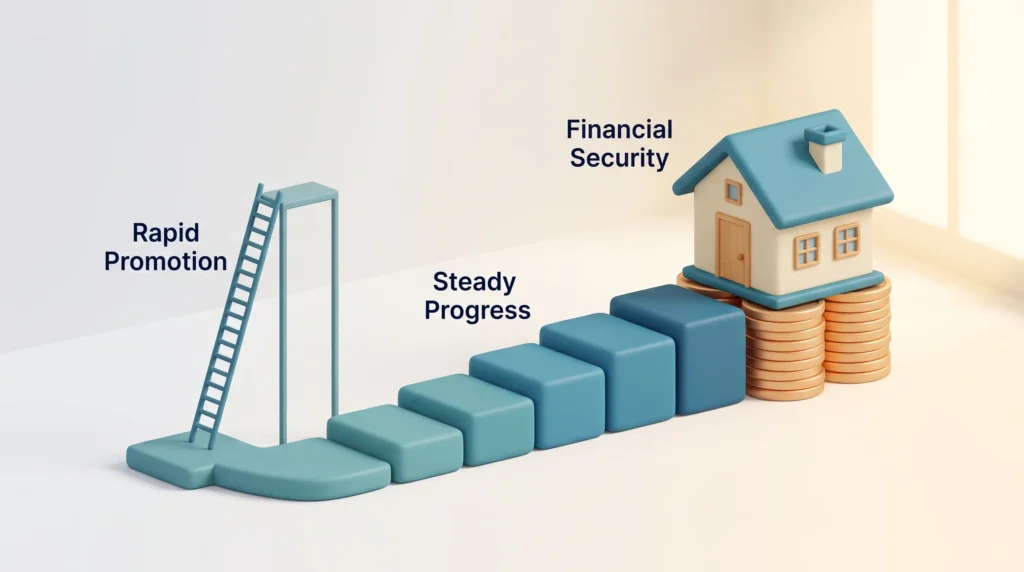
The Deloitte data shows 44% of Gen Z respondents favouring steady progression against 25% who want rapid promotion. Asked why they hesitate about leadership, 50% pointed to stress and burnout and 41% to work-life balance. Gen Z is watching what management costs those doing it.
That reframes the retention problem. Offering a faster title track to someone who has decided the title is not worth the cost will not work. What does work is showing the job is survivable: realistic workloads, managers who are not permanently underwater, and a route into senior work that does not cost everything else. Our leadership trends analysis points the same way.
Financial Security and Housing
Financial pressure is the loudest signal in the 2026 survey. Fifty-five percent of Gen Z respondents said they have delayed a major life decision because of their finances, and 69% said housing availability or affordability directly affects their career decisions. Location, relocation policy and pay adequacy now sit inside one conversation.
This favours employers transparent about pay bands, whose benefits package addresses real financial strain. A generation counting the cost of rent notices the difference between a wellbeing app and a pension contribution.
Flexibility Has Settled Into a Pattern
The flexibility debate has largely resolved itself. Stanford’s Survey of Working Arrangements and Attitudes put about 25% of US paid days as work-from-home days in May 2026, a level steady for roughly three years. Hybrid is the norm for remote-capable roles, and Gen Z treats it as a starting condition rather than a negotiating point.
Where the Work Happens
What still varies is how well the arrangement is run. A hybrid policy with no rules about which days matter produces offices that are full on Wednesday and empty otherwise, the worst outcome for people trying to learn from colleagues. Our guide to hybrid workspaces and wellbeing covers what separates a functional hybrid model from a nominal one, as do the questions behind virtual office setups.
Early-career staff carry a specific risk. Junior employees learn by proximity: overhearing how a difficult call is handled, being pulled into a problem they were not assigned. Remote work does not remove that, but it has to be arranged deliberately rather than left to chance.
Collaboration Expectations
Gen Z expects collaboration to be quick, written and visible, and is impatient with meetings that could have been a document. That suits distributed teams if the tooling is coherent. Our review of AI collaboration tools for global teams looks at where these platforms reduce coordination overhead and where they add another inbox.
Mental Health and Wellbeing at Work
Wellbeing has moved from a benefits-page topic to a structural one. Gen Z is more willing than earlier cohorts to name burnout, ask for support and leave a job that damages their health. That candour is often read as fragility; it is better read as information employers previously did not get.
What the Stress Data Shows
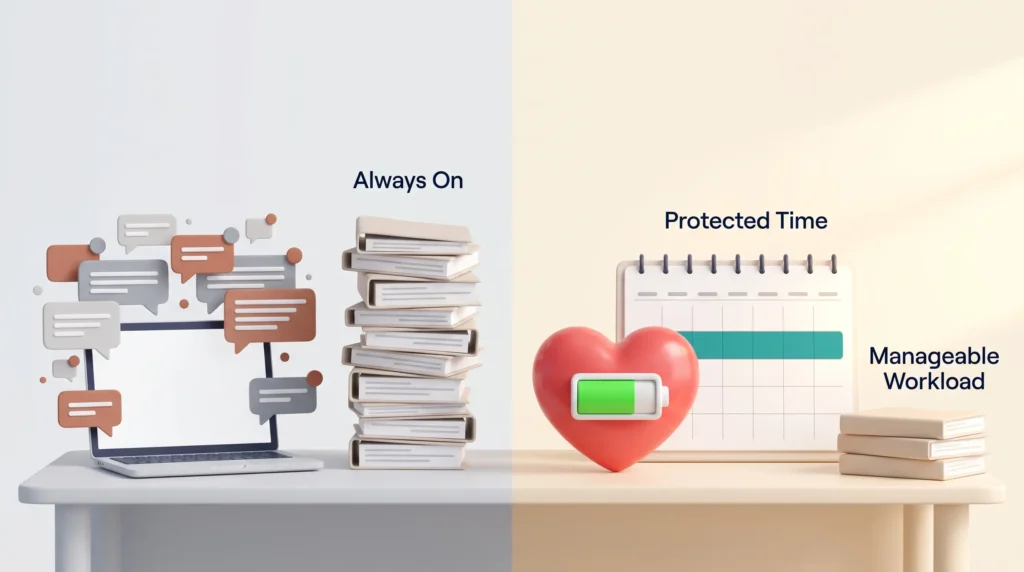
Fifty-eight percent of Gen Z respondents in Deloitte’s 2026 survey reported digital fatigue, the highest of any group measured. With the 50% who cite stress and burnout as a barrier to leadership, this points to exposure to always-connected work rather than sensitivity to pressure.
The engagement picture supports that. Gallup’s State of the Global Workplace 2026 put global engagement at 20% in 2025, down from 21% a year earlier and the lowest since 2020, with an estimated $10 trillion in lost productivity attached. US engagement fell to 31% in 2025 from 36% in 2020, and the drop among Gen Z and younger millennials was the steepest of any group at eight points.
What Employers Can Actually Change
Meditation subscriptions do not fix workload. The interventions that hold up are structural: protected time without meetings, clear expectations about response times outside hours, manageable caseloads, and managers trained to spot strain early. Our coverage of remote work and mental health and managing employee burnout sets out what the evidence supports. Support programmes still matter, but as a second layer: offering counselling to someone carrying an impossible workload treats the symptom and signals that nobody intends to treat the cause.
Gen Z and Millennials: Less Different Than Expected
The generational gap is narrower than most commentary suggests. In Deloitte’s 2026 data, 25% of Gen Z and 21% of millennials preferred rapid promotion, 50% and 49% cited stress and burnout as a leadership barrier, and 74% of both groups use AI in daily work. On most questions the two cohorts answer within a few points of each other.
They diverge in circumstance rather than values. Millennials are further into careers, mortgages and caregiving; Gen Z is earlier and more exposed to entry-level disruption from automation, as our analysis of how workers are adapting to job automation explains. The practical implication: policies designed for “young workers” usually turn out to be policies most of the workforce wanted anyway. For the day-to-day side, such as communication norms and reverse mentoring, see our playbook on managing multigenerational teams.
How Technology Shapes Gen Z Work Preferences
Technology is where the generational difference is real, and it is a difference of default rather than skill.
AI Is Already the Default Tool
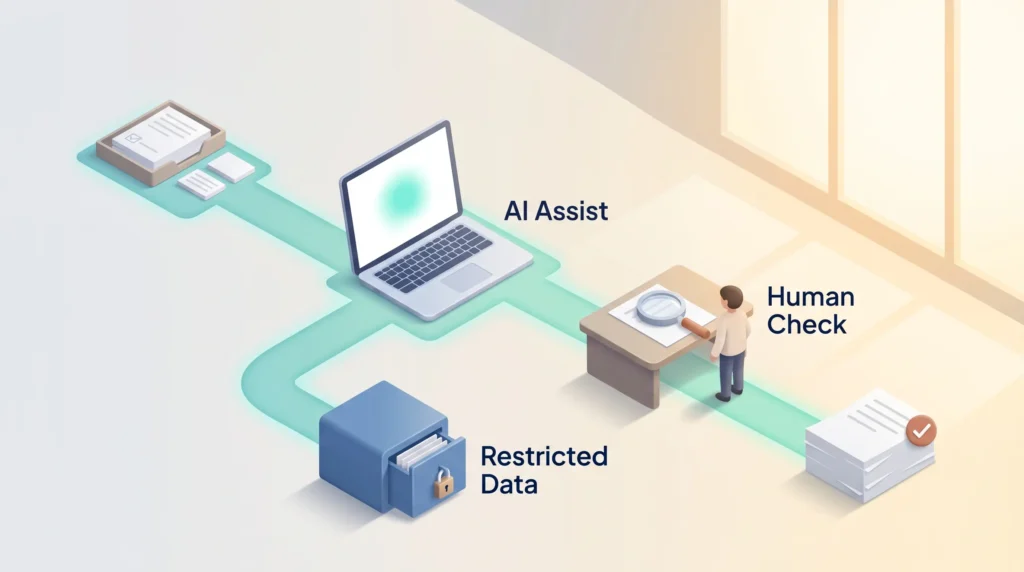
Seventy-four percent of Gen Z respondents told Deloitte they use AI in day-to-day work, up sharply on the previous year. Seventy-nine percent use it to identify learning opportunities and 72% have asked it for career advice. Many report adapting faster than their employers, which leaves young staff using tools their organisation has not approved or evaluated.
That is a governance problem before it is a productivity one. Clear guidance on what may go into which tool, what a human must check, and how AI use counts in reviews is now basic hygiene. See our review of AI and automation at work, and AI hiring tools for the duties that apply when recruiting this cohort.
There is a quieter risk. Only 54% of Gen Z respondents were confident their team could maintain performance if a key expert left, suggesting knowledge is concentrating in fewer heads while routine work moves to software. Organisations that let AI replace the tasks juniors learned from will find the expertise pipeline thinner in five years.
Digital Communication and Digital Fatigue
Gen Z prefers short, direct, chat-based communication and expects information to be findable rather than requested. Yet the same group reports the highest digital fatigue. More channels is not more responsiveness: consolidating tools, agreeing which channel carries which kind of message and leaving genuine gaps in the day does more than any additional platform.
Social media remains central to how this generation finds work and evaluates employers before applying. What a company’s own people post about working there carries more weight than its careers page, a dynamic explored in our piece on social media and business growth.
Inclusion and Corporate Responsibility
Gen Z scrutinises whether stated values match observable behaviour. Representation in leadership, pay transparency and how complaints are handled count as evidence; campaigns and statements do not. That scepticism has sharpened as public commitments have been scaled back in several markets.
The durable version is not a communications exercise. It is inclusive practice built into hiring, promotion and everyday work design, of the kind covered in our article on neurodiversity in the workplace. Our corporate social responsibility trends analysis shows the parallel shift from pledges to auditable disclosure, which is the proof this cohort responds to.
Career Growth Is the Weakest Link
If there is one finding employers should act on immediately, it is this. Among Gen Z and younger millennials in the US, the share agreeing they had opportunities to learn and grow in the past year fell to 37% in 2025 from 48% in 2020, according to Gallup: an eleven-point drop in the factor this generation values most.
Learning and Skill Development
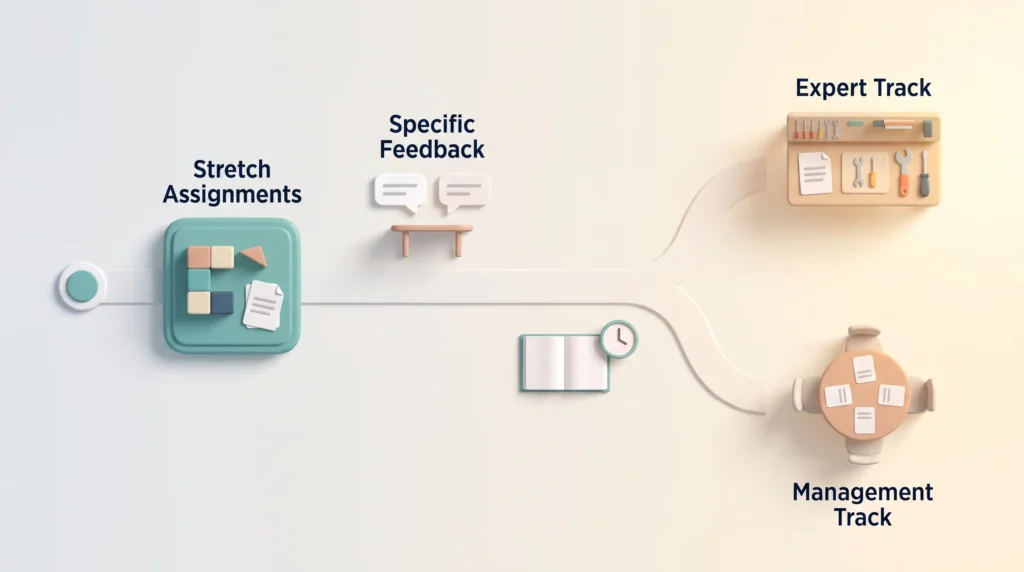
Development does not mean a course catalogue. It means stretch assignments, exposure to decisions above your level, feedback specific enough to act on, and protected learning time. Our look at upskilling and reskilling and at which skills hold their value covers what is worth investing in; our guide to remote onboarding and training sets out what a first ninety days needs.
Clear Paths, Not Just Promotions
Gen Z wants to know what progression looks like even when in no hurry to take it. Published criteria for the next level, honest conversations about where someone stands, and recognition for depth as well as management keep people from assuming the only way up is out. See our piece on tools that support employee retention and our review of human resource management trends.
None of this is exotic. It is ordinary management done consistently, which is what the engagement data suggests has slipped.
Found this useful?
Make SmartKeys a preferred source on Google, and our articles will surface more often in your Top Stories, AI Overviews, and AI Mode.
Add as Preferred Source