Tools
Tools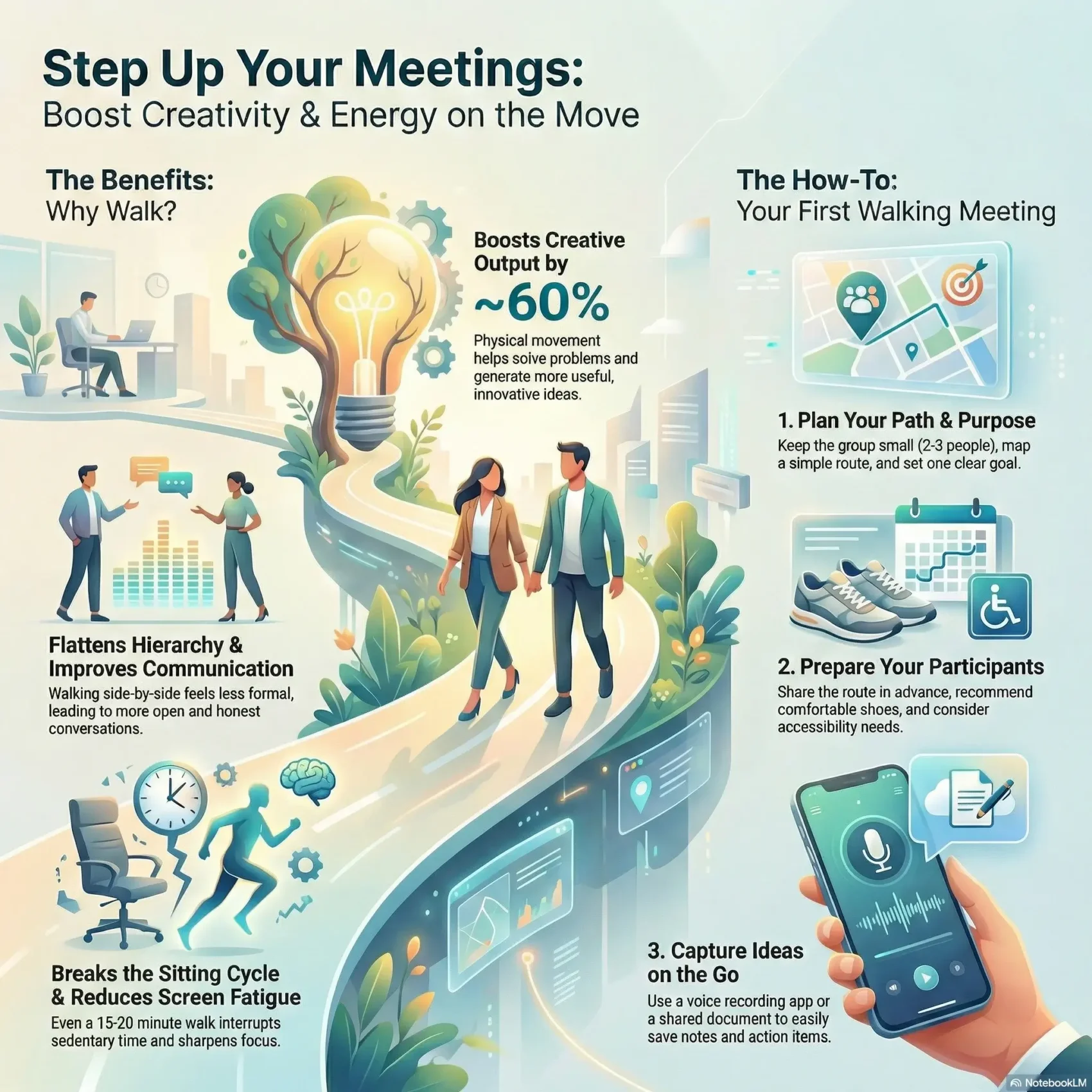
Last Updated on February 4, 2026
You can refresh your team’s routine with a simple move that frees people from screens and chairs. From Friedrich Nietzsche to Steve Jobs, leaders have long praised a brisk approach to idea work. A study called “Give Your Ideas Some Legs” found walking can raise creativity by about 60%.
A short walking meeting shifts the dynamic. Side-by-side chats feel less formal, so people share ideas more openly. This low-cost practice breaks long sit times, helps meet step goals, and keeps you on task without adding extra time to calendars.
Bring the concept indoors when weather blocks a stroll. Treadmills, bikes, or steppers let your team keep momentum year-round. The real benefit is how movement changes the way you work: more energy, quieter hierarchies, and fresher ideas for your business.
Key Takeaways
- Try walking meetings to refresh minds and reduce prolonged sitting.
- A short walking meeting can boost creativity and keep agendas tight.
- Side-by-side talks often lower hierarchy and spark open idea sharing.
- Indoor devices let teams adopt this practice year-round.
- Even one weekly walk helps people connect and advance business goals.
Why Walking Meetings Work Right Now for Energy, Creativity, and Better Conversations
Stepping away from desks can deliver a quick hit of focus and fresh ideas. Research shows that moving boosts creative output by about 60%, so a short session can help you solve stuck problems fast.
Break the sitting cycle: Too much desk time harms health and focus. Even a 15–20 minute walk interrupts sedentary stretches, supports concentration, and keeps your body safer from long-term risks.
Science-backed creativity boost
When you change posture and pace, your mind opens up. Studies report higher creativity and more useful ideas during movement. That lift makes brainstorming and coaching feel more productive.
Side-by-side reduces hierarchy
Being shoulder-to-shoulder lowers pressure. People and leaders trade formal roles for honest input. Small groups find faster alignment on issues and clearer next steps.
Fewer screens, more focus
Step away from notifications and your conversation stays on track. Participants stay present, and the activity feels purposeful. To try this format for routine problem-solving, consider how to hold walking meetings for short, targeted topics during your day.
- Boost creativity and surface new ideas.
- Break sedentary time and improve focus.
- Lower hierarchy and invite honest conversation.
- Reduce screen distractions and lift productivity.
How to Hold Walking Meetings: A Step-by-Step Guide You Can Use Today
Start by picking just a few people so conversation stays focused and everyone speaks. Limit the group to two or three participants. Small groups keep the discussion tight and let each person contribute without side chats.
Choose participants and map a safe route
Invite only the essential colleagues. Map a simple loop that begins and ends at the same place. Pick quiet streets, a park path, or wide hallways to reduce interruptions.
Check conditions and pack light
Confirm the weather and time of day so you have adequate daylight. Recommend comfortable shoes and layers so nobody gets distracted by the elements.
Set goals, capture notes, and respect others
Keep a single, clear agenda and one goal. Capture minutes with a voice app or quick notes. Agree on pace and volume, stay side by side, and yield to others using the shared space.
- Plan a backup: end in a conference room if decisions need detail.
- Consider accessibility and share the route in advance.
- Use this format for status updates, coaching, or brief brainstorms.
Pro Tips to Make Every Walking Meeting Count
Simple prep makes activity-based conversations smoother and easier to join. Start by planning routes that match your participants’ needs. Share the location and a route preview in advance so people know what to expect.
Adapt for accessibility and different comfort levels
Choose step-free paths and offer a slower pace option for anyone who needs it. Confirm lip-reading visibility for those who rely on it, and pick wider sidewalks or quiet hallways.
Bring movement indoors: treadmills, bike desks, or hallway loops
When the weather or time blocks outdoor options, use treadmills, bike desks, or short hallway loops. These keep the team moving and preserve energy without losing focus.
Scale thoughtfully: pairs, rotating partners, and follow-up in a conference room
For larger groups, split into pairs or trios and rotate partners every few minutes. Then reconvene in a conference room or café to capture notes and agree on minutes and action items.
- Set a clear time window and quiet start/end place.
- Pick a route with few crossings and low foot traffic.
- Use a shared doc or voice note to save minutes before everyone returns to desk work.
- Be mindful of others: keep voices low and avoid sensitive topics near crowds.
Conclusion
Close your day with a short, intentional walk that turns loose ideas into actions. Start with a 15-minute walking meeting focused on one goal. Use a brief agenda and a quick voice note to capture next steps.
Keep people at the center: pick routes that suit comfort and accessibility. Use small groups for candid conversations and end in a room or café when details need a seated review.
You’ll gain real benefits: sharper thinking, lighter conversations, and steady productivity. For more on energy and focus, see energy management tips. Pick a partner, set a route, and take that first walk—your mind and your business will thank you.