You need a simple, repeatable check-in that saves time and protects the relationship at the heart of great work. This intro gives you a clear template to run efficient 1:1s focused on feedback, goals, and career growth rather than status updates.
Research shows regular feedback boosts engagement. Google’s Project Oxygen links frequent 1:1s to stronger manager performance, and Gallup finds weekly touchpoints raise motivation. Use a short agenda and capture notes so action items don’t slip.
In practice, aim for weekly or biweekly 30–60 minute sessions. Whenever possible, meet in person; if not, use high-quality video to keep nonverbal cues. Share talking points ahead of time and keep conversations focused on coaching, problem-solving, and performance.
Key Takeaways
- You’ll get a compact template that protects trust while saving time.
- Set a clear agenda and capture outcomes to maintain accountability.
- Weekly or biweekly cadence works best for feedback and growth.
- Use video when remote to preserve nonverbal cues.
- Short, purposeful sessions improve team performance and career development.
Understand What a one on one meeting Is and Why It Matters Today
The best check-ins protect trust and accelerate growth. These sessions are employee-focused conversations that go beyond status updates. They give you a safe space to raise issues and let a manager hear early signals.
Your purpose: relationship, feedback, and growth—not status updates
Use this time to focus on the person, the relationship, and their work. Make the purpose explicit: coach for growth, give timely feedback, remove roadblocks, and clarify the role within the team.
Present-day context: remote/hybrid realities and time constraints
In hybrid settings, richer communication matters. If you cannot meet in person, prefer video so nonverbal cues stay visible—Zapier’s distributed teams use video with strong internet and audio for that reason.
- Protect trust: create confidentiality and active listening norms.
- Respect time: set an intention before the day so the conversation flows to outcomes.
- Adapt: tailor the way you engage to each person’s energy and priorities that week.
For a practical guide to focused habits that support productivity and presence, see mindfulness and productivity tips.
The Business Case: Trust, Engagement, and Performance Gains
Consistent check-ins shrink feedback loops and keep teams moving toward goals. Gallup found that weekly feedback yields higher motivation and engagement. Google’s Project Oxygen shows managers who hold frequent check-ins score better in performance.
How regular check-ins boost motivation, retention, and productivity
When employees see how their work connects to company strategy, engagement rises.
Weekly touchpoints give timely feedback so people can course-correct and pursue development and growth.
Why manager effectiveness improves with frequent 1:1s
Managers learn faster through candid questions and upward feedback. That clarity sharpens expectations and reduces wasted time.
- You increase engagement by linking tasks to broader goals.
- Retention improves because people feel heard and have clear paths for development.
- Performance lifts as coaching replaces guesswork and teams remove blockers quickly.
- Trust compounds when leaders follow through on commitments from each meeting.
“Regular, focused check-ins are a competitive advantage for team and company.”
Choose the Right Cadence and Format for Your Team
Find a rhythm that protects deep work while keeping feedback fresh. Set a clear default and adjust as needs change. The best practice is regular sessions of 30–60 minutes every week or every two weeks.
Weekly vs. biweekly: finding your sweet spot without canceling
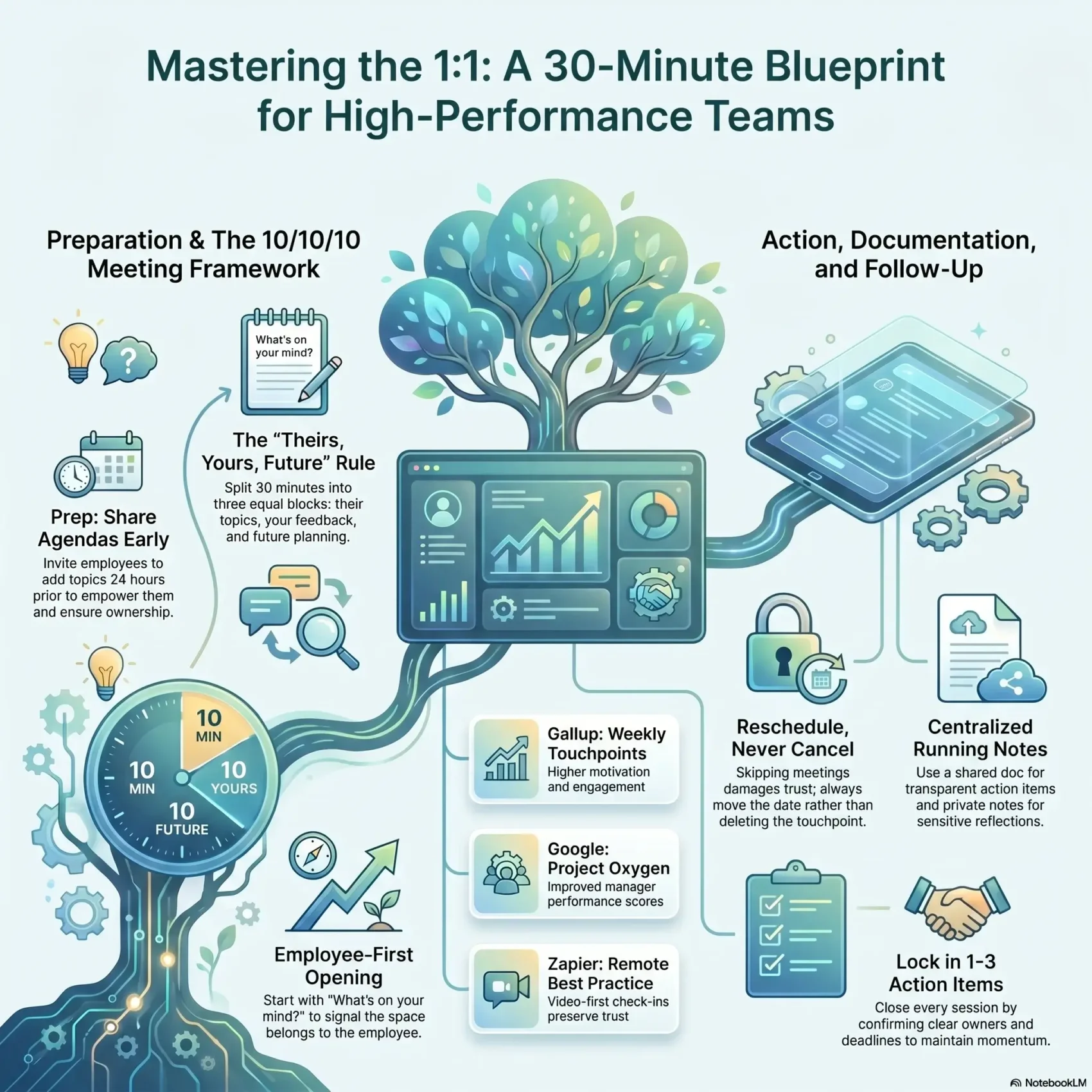
Start with a weekly 30-minute slot and shift to biweekly when collaboration depth or team size allows. If you must change a date, reschedule instead of skipping.
Never cancel—missing a week sends the wrong message about priorities and trust.
- Default: weekly 30 minutes, flexible to biweekly.
- Reschedule, don’t skip: preserve continuity and respect the person’s time.
- Quarterly review: revisit cadence to match workload and goals.
In-person vs. video: prioritize rich communication and psychological safety
Face-to-face yields the richest cues. When in-person isn’t possible, use video with stable internet and good audio. Remote teams benefit from consistent links and tested tech so the day runs smoothly.
- Choose quiet, comfortable spaces that encourage openness.
- Vary locations occasionally—walks or cafés—to change perspective while keeping safety in mind.
- Allow short questions between sessions so small items don’t derail your agenda.
“Reschedule rather than skip—continuity builds trust.”
Your Core One-on-One Agenda Template
A simple template ensures your time together centers on what matters most this week. Treat the thirty-minute slot as three equal parts: their topics, your updates, and future planning. This structure gives predictability and protects the relationship at the heart of coaching.
Theirs, Yours, Future: a simple 30-minute structure
Start with a stable opener like “What’s on your mind?” Give them the mic first and listen without interrupting.
Use the middle block for focused feedback, clarifications, and status on past action items. Keep it specific so performance gaps are clear and solvable.
The final ten minutes track long-term goals, career development, and alignment with team priorities. Add light accountability so progress continues between sessions.
Opening and closing rituals that build consistency and trust
Open with the same prompt each week to signal this space is theirs. Close with a repeatable question such as “How can I help you this week?” to reinforce support and surface last-minute needs.
“Put their agenda first and be flexible if it runs long.”
When to flex the template for deeper coaching or urgent issues
Trade depth for breadth when urgent items appear, but never skip the check-in entirely. If a crisis needs more time, schedule a follow-up longer session and keep this slot for quick alignment.
- Predictable opener: sets a calm tone.
- Ten-minute guide: theirs, yours, future — not a strict rule.
- Visible agenda: shared before the week so employees add items and feel ownership.
Prep Like a Pro: Agenda, Topics, and Expectations
A short plan before the session helps employees bring their best topics and questions. Share a lightweight agenda so the conversation reflects their priorities and saves time. When people add items ahead of the call, conversations feel fair and productive.
Share talking points ahead to empower employees
Send a brief agenda and invite employees to add questions or private items. Co-creating topics builds ownership and lets you prepare targeted feedback with examples.
Align on goals and what success looks like this week
Define expectations for the week together: the top two goals and how you’ll measure progress. Collect status, blockers, and needed resources before the session so you spend time on decisions, not discovery.
Capture notes and protect psychological safety
Decide which items stay private and which are shared. Use private notes for candid takeaways and shared notes for team-facing follow-ups. After the meeting, summarize outcomes and next steps in writing to protect productivity.
- Prep: send agenda and invite additions.
- Focus: set goals, success criteria, and resources.
- Follow-up: share notes and clear action items fast.
“Sharing talking points in advance empowers employees to guide the conversation.”
Run the Conversation: Coaching, Feedback, and Action
Begin each session by letting the person lead the agenda, then use focused listening to find practical steps. You listen to understand, reflect back what you heard, and ask clarifying questions before offering solutions. This builds psychological safety and clear direction.
Active listening: distinguishing vents from solvable problems
When people need to vent, your role is to hold space and show empathy. If the issue is solvable, pivot to defining the problem and possible fixes.
Reflecting feelings and facts helps you decide the best way to respond. That balance grows trust.
Deliver feedback with timeliness and specificity
Give feedback tied to goals and outcomes, not vague impressions. Use recent examples and clear suggestions so the employee can act fast.
Translate discussion into clear action items and owners
- Capture one to three actions with owners and due dates.
- Confirm everyone understands responsibilities before you close.
- Send a short recap after the session to reinforce accountability.
“Close with agreed actions and check them at the next session to keep momentum.”
High-Value Topics and Questions You Can Reuse
Rotate topics each session so conversations stay relevant and action-focused. Keep a short set of prompts that cover recurring priorities and let you dive deep where it matters that week.
Performance and goals: progress, blockers, and metrics
Ask about current progress, the biggest blocker, and how success will be measured. Track metrics and confirm the next steps for improving performance.
Career development and growth: skills, pathways, and support
Schedule a career conversation at least annually. Discuss skills needed, clear pathways, and what support you will provide for development.
Feedback, recognition, and resources
Bring 360 feedback and celebrate wins. Ask which tools or processes would boost productivity and remove friction for the team.
- You keep a rotating list so questions never run dry and each meeting targets that week’s priorities.
- Review performance and goals regularly: progress, blockers, and metrics for success.
- Be transparent about compensation, benefits, and organizational changes within company guidelines.
- Invite feedback on your manager effectiveness and check work-life balance to strengthen trust both ways.
“Use this list as a living tool — revisit items at the right time rather than cramming everything into one session.”
Notes, Follow-Ups, and Accountability
Keeping shared running notes helps you and your employee track progress without rehashing past conversations. Use a centralized doc so both of you can add agenda items between sessions and arrive prepared.
Shared running notes vs. private notes: what to capture and why
Keep a shared space for transparent items and status updates. That doc makes it easy to scan past topics, spot patterns, and link work to goals.
Private notes belong to you when sensitivity or candid feedback needs context. Capture observations that require a later in-person talk and protect psychological safety.
Recaps and timelines that keep momentum between meetings
Write a short recap right after each session with action items, owners, and due dates. A quick email or doc update locks in accountability and saves time the next week.
Use consistent labels so scanning notes is fast. Review prior notes at the start to pick up where you left off instead of rehashing. Track themes across meetings to spot recurring blockers, feedback trends, or workload issues.
- You keep shared running notes so both of you can add items during the week and arrive prepared.
- You decide what lives in shared notes versus private notes to balance transparency with candid reflections.
- You write a quick recap right after the session with action items, owners, and due dates to lock in accountability.
- You encourage the employee to propose questions in the doc so the agenda reflects their priorities too.
“Centralized notes reduce recency bias and make performance conversations fairer over time.”
Tools, Templates, and Culture: Scaling One-on-Ones Across Your Organization
Good software turns scattered feedback into a searchable history that helps managers coach better. Use platforms that let you share talking points, add shared or private notes, and link goals to follow-ups. That saves time and keeps context alive across the organization.
Using performance management software for agendas and adoption
Standardize agendas and templates inside your performance system so meetings scale without losing quality. Track adoption so managers who need a nudge get support. Centralized notes cut recency bias and make performance reviews fairer.
HR and leadership’s role in building a consistent culture
HR and company leaders must model habits, explain the why, and celebrate teams that follow through. Use survey and 360 data to secure buy-in where trust gaps exist.
Alternate strategies: small groups or daily micro check-ins
Experiment with small-group sessions for peer problem-solving or brief daily micro check-ins via Slack or walking the floor. Align tools, rituals, and measurement so meetings become a natural part of how your people do their best work.
- Standardize: templates in your system so scaling keeps quality.
- Measure: track adoption and outcomes, not just activity.
- Connect: link goals, feedback, and notes to speed decision-making.
“Equip managers with simple tools and clear data so the habit spreads across the company.”
Conclusion
,
Turn short, regular check-ins into a system that surfaces ideas and fast fixes. Use the 1:1 template, keep the agenda employee-first, and meet weekly or biweekly to protect trust and speed development.
Prepare ahead, share topics, and close with clear actions so feedback turns into measurable growth. Keep notes tidy and link actions to career goals to make performance reviews fairer.
Equip managers with simple tools and clear sponsorship from HR so the approach scales across the organization. When you show up, follow through, and address concerns quickly, the team gains clarity, resources, and engagement.
Found this useful?
Make SmartKeys a preferred source on Google, and our articles will surface more often in your Top Stories, AI Overviews, and AI Mode.
Add as Preferred Source