Tools
Tools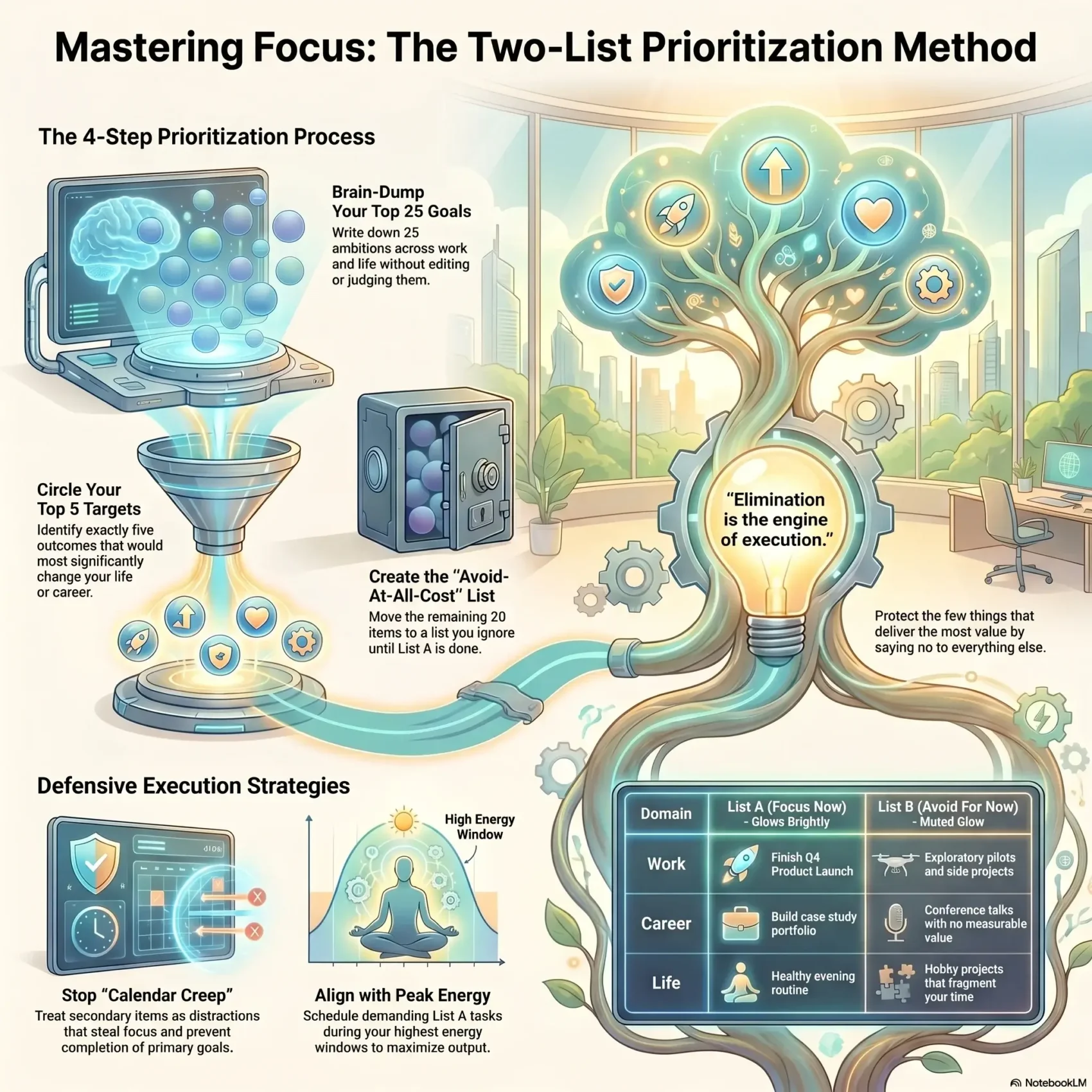
Last Updated on May 18, 2026
You can cut through noise with a clear, practical way to pick the most important work. The two list method asks you to capture goals, pick top targets, and treat everything else as a pause until those tops are done.
This approach is tied to warren buffett stories and a famed strategy used at Berkshire Hathaway. It helps you turn vague ideas into concrete actions you can use each day. The result is better productivity and steady progress toward long-term success.
You’ll learn how to guard your attention, spot true priorities, and stop scattering effort. This simple framework adds value across your career and life by helping you say no without guilt and yes with more confidence.
Key Takeaways
- Write many goals, then mark the top targets to focus on first.
- The approach helps you protect time and reduce overwhelm.
- Use it daily to turn ideas into actions that move your goals.
- It teaches clear prioritization that compounds into career success.
- Apply the strategy to work or life to increase meaningful productivity.
Why Focus Matters Right Now: The Case for Ruthless Prioritization
Focus is not a luxury — it’s the deciding factor between progress and perpetual busywork. Your attention, time, and energy are finite. You can’t do everything, and treating all things as equal quietly erodes forward motion.
Your attention gets chopped into fragments when you allow low-impact activities to fill your day. Quick checks, minor emails, and small chores take up real time and space. They leave you with motion but not measurable progress.
When you remove the inessential, you protect the resources that matter most. Clear priorities reduce context switching and help you align tasks with what actually moves the needle.
- You’ll learn to spot neutral tasks that drain time and energy before they hijack your calendar.
- Deliberate decision-making shrinks mental clutter and boosts productivity by keeping your top priorities front and center.
- Without prioritization, lists become queues of distraction rather than engines of progress.
- Use a focused approach and practical tools like to-do lists to protect deep work and finish what matters.
The two list method, inspired by Warren Buffett
A simple exercise used by warren buffett and his circle reveals how to protect your highest ambitions. Mike Flint, Buffett’s personal pilot for a decade, wrote down his top 25 career goals. He then circled the five that mattered most and separated the remaining 20 into an avoid list.
The Mike Flint story: from 25 goals to an Avoid-At-All-Cost list
Flint’s step cut through indecision. By naming the top five, he made a clear set of priorities. The other items became a protective boundary. Buffett’s guidance was blunt: don’t work on those secondary items until you finish your top five.
Why items 6-25 are attractive distractions
Those items often look valuable because they are real opportunities. But they steal focus. Spending time on them creates more started projects and fewer completions.
“Complete your top priorities before you let other good ideas pull you away.”
- Clarity: You separate what to pursue now from what to postpone.
- Defense: Naming avoid items reduces decision fatigue and shields deep work.
- Career impact: This strategy helps you pick the project that advances your goals, not just the most tempting thing.
How to do it: a friendly step-by-step guide you can start today
Begin with a fast brain dump and commit a short block of uninterrupted time. Write 25 goals without editing. Use a lifetime horizon or shrink it to a year or this week to make choices easier.
Brain-dump your top 25 goals
Write quickly. Capture big ambitions, small wins, and work you want to finish. Don’t judge—just collect.
Circle your top five
Ask which outcomes would change your life if completed. Mark exactly five as your top goals.
Create List A and List B
Copy your circled five into List A. Move the remaining 20 into List B, your avoid-at-all-cost boundary.
Execute List A only
Protect calendar time and turn each goal into the next single task. Delay anything that does not advance List A.
- Write, select, separate, execute—then repeat after you finish the five.
- Use this simple step to sharpen decisions and protect deep work.
“The difference between successful people and very successful people is that very successful people say no to almost everything.”
Make it practical: templates, examples, and a weekly workflow
Turn the framework into a habit by putting simple templates and a weekly review on your calendar. Use one page that shows List A on top and the avoid list below so your priorities and paused items stay visible.
Sample List A vs. List B for work, career, and life
Work (List A): finish Q4 product launch. Work (List B): exploratory pilots that sound fun but delay launch.
Career (List A): build a portfolio of three case studies. Career (List B): conference talks that don’t add measurable value yet.
Life (List A): healthy evening routine for energy. Life (List B): side hobby projects that fragment your time.
A weekly cadence to protect focus time and track progress
Reserve two blocks each week for deep work on List A goals. At the end of the week, review progress and update capacity for the next week.
- Block calendar time for focused tasks and single-task on projects.
- Batch routine chores so they don’t crowd out deep focus.
- Keep the one-page template visible as a quick reminder of priorities.
Turning opportunities into decisions: what you will say no to
Make quick decisions by asking, “Does this move a List A goal?” If it doesn’t, it goes on the avoid list until your top goals are done.
“The avoid-at-all-cost framing turns attractive secondary goals into explicit no’s until primary goals are done.”
Write standing decisions that shield your calendar. This keeps opportunity costs visible and makes it easier to say yes to the right work, career, or life changes sooner.
Common mistakes that derail your priorities (and how you avoid them)
Small choices can wreck a big plan. Calendar creep happens when attractive tasks slip in and look harmless.
Letting List B creep into your calendar
Treat the avoid list as To Be Avoided At All Costs. Say no to tempting items that masquerade as quick wins.
- Spot calendar creep: block short slots and watch for disguised interruptions.
- Create blockers: rules that keep items from your paused group off your schedule.
- Use a single check: if a task belongs to List B, it doesn’t go on your calendar.
Setting too many “top” goals or moving the goalposts
Limit your top goals to five and define done criteria before you start. That discipline prevents you from spreading effort thin and keeps your priority clear.
- Make decisions once and stick to them to cut decision-making churn.
- Run a lightweight weekly review to catch errors and realign effort.
- Learn from successful people: finish a few important things rather than juggling many half-done projects.
Apply these fixes with simple tools like to-do lists so your execution matches your intention and drives real success.
From intention to execution: strategies for sustained focus
Move beyond planning: create routines that funnel energy into the projects that matter most. The power of elimination keeps your top five from getting buried in attractive distractions. Use simple rules so your day supports steady progress.
Time blocking and decision-making rules that safeguard your top five
Block deep work for your highest goals and protect those hours like appointments. Set clear decision rules such as “no new projects until one finishes.”
Keep ad-hoc requests off your calendar. Batch communication windows and default to do-not-disturb during focus blocks.
Energy management: aligning tasks with your peak hours
Schedule demanding tasks in your peak energy slots and reserve lower-energy periods for admin work. Use a short startup and shutdown routine to check progress and pick the next task.
Review rhythm: when to iterate your lists as your goals evolve
Track value delivered weekly, not just effort. Run a brief review and update priorities as goals change. Repeat the method after you finish your five so fresh realities guide your next choices.
- Park ideas off the calendar so inspiration stays captured but harmless.
- Use small checkpoints to turn intention into visible progress.
- Choose a simple, durable strategy you can keep using.
“Elimination is the engine of execution—protect the few things that deliver value.”
Conclusion
End by making a short decision: guard the tasks that deliver the most value. Use the two list method as a daily habit: write down goals, pick your top five, and protect the time that advances them. This simple strategy echoes the Warren Buffett approach and helps you stop scattering effort.
Keep the avoid list as a firm boundary so attractive ideas don’t steal focus. Measure progress by finished items, not busyness, and use friendly rules to turn decisions into action.
You can start today: pick 25 goals, choose the five that matter, and repeat after you finish them. This habit will improve productivity, protect your time energy, and help your career and work move toward meaningful success.